
Sign up to save your podcasts
Or

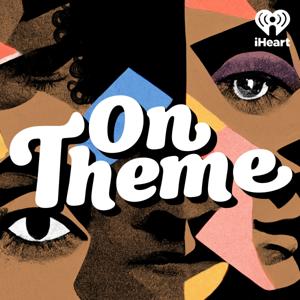


Ever wonder why news can feel so different depending on where you read it? In today’s episode, Katie and Yves compare how Black and white newspapers cover the same topics. From big events to everyday stories, we'll explore why the news isn't always so black and white.
Get show notes at ontheme.show
Follow us on Instagram @onthemeshow
Email us at [email protected]
See omnystudio.com/listener for privacy information.
People have been branding themselves for a long time, but personal branding is a whole new beast in the digital age -- especially for Black folks. Katie and Yves speak with Bridget Todd of There Are No Girls on the Internet about what it means to share carefully crafted personas on social media.
Get show notes at ontheme.show
Follow us on Instagram @onthemeshow
Email us at [email protected]
See omnystudio.com/listener for privacy information.
We're done with the trauma for trauma's sake. But can we trust folks to make informed, nuanced stories about enslaved people? Cheyney McKnight of Not Your Momma's History is skeptical. Katie and Yves speak with her about the horror of slavery films in Hollywood, her favorite movie about an enslaved person, and the kinds of slavery movies she wants to see in the future.
See omnystudio.com/listener for privacy information.
Join us on Juneteenth for a special edition of Write Club Atlanta!
Write Club is a literary event where writers go head-to-head on opposing topics. Expect amazing writers, stories that will take you on an emotional roller coaster, and an appropriate amount of joyous yelling.
All Black writers. Blackity Black themes. Come see 'bout it.
This event will take place at 7 Stages Theatre in Atlanta.
Doors at 7:30 p.m., show at 8.
Tickets $10 at the door.
Head to ontheme.show/juneteenth-write-club-atlanta for more info.
See omnystudio.com/listener for privacy information.
Crunk music. Snap music. They go together like Atlanta and hip-hop. For the brief and delightful time that crunk and snap were in the limelight, hip-hop felt so carefree (and chaotic). Katie and Yves take a trip back to the aughts to pay homage to the two genres that brought people together — in real life and on the internet.
See omnystudio.com/listener for privacy information.
Yves and Katie share the mic with archivists who detail the funniest or most poignant stories they’ve discovered while in the stacks.
Get show notes at ontheme.show
Follow us on Instagram @onthemeshow
Email us at [email protected]
See omnystudio.com/listener for privacy information.
Katie and Yves share a very important announcement about the show.
See omnystudio.com/listener for privacy information.
Many anthologies of nature poetry and Black poetry have excluded Black nature poetry. But Black people have always written poetry about nature. We write about the land that supports us and challenges us. We write about the animals we care for and the disasters that destroy our homes. We write about the rivers we cross and the soil we till.
Black nature poems reflect the enormous range of experiences that we have in our physical environments. As they show us, nature can haunt, and nature can heal. In today’s episode, Katie and Yves discuss the work of a few writers who train their words on the natural world.
Get show notes at ontheme.show
Follow us on Instagram @onthemeshow
Email us at [email protected]
See omnystudio.com/listener for privacy information.
Every photo tells a story. In this week’s episode, Katie and Yves take a look at specific instances when pictures were used for good…and for evil. Sometimes they expose the truth, but sometimes they obscure it.
Act I: The Most Photographed Man In America
How Frederick Douglass used his portraits to advance the abolitionist movement.
Act II: The Polaroid Protest
Two Polaroid employees discover that the company's technology was being used by the South African government to enforce apartheid. How they forced Polaroid into becoming the first major American company to withdraw from South Africa.
Get show notes at ontheme.show
Follow us on Instagram @onthemeshow
Email us at [email protected]
See omnystudio.com/listener for privacy information.
Pauline Hopkins was a literary pioneer in the science fiction, fantasy, romance, and detective genres. She wrote plenty of short stories, essays, books, and plays.
But as is the case with so many Black women writers from the 19th and early 20th centuries, Hopkins’s work fell into relative obscurity. Thanks to the work of scholars like Dr. Claudia Tate, Dr. Mary Helen Washington, and Ann Allen Shockley, Hopkins is now getting recognition for being the literary pioneer that she was.
There are many more pieces to Pauline’s puzzle that have yet to be found. But the rediscovery of Pauline’s legacy is an ongoing labor of love. In this episode, Yves and Katie honor the life and work of the legendary author and editor Pauline Hopkins.
Get show notes at ontheme.show
Follow us on Instagram @onthemeshow
Email us at [email protected]
See omnystudio.com/listener for privacy information.
From the publisher's feed
Black stories are more than a fad or fodder for opportunistic outsiders. We know them. We love them. We’re moved by them. They change our lives. And on this podcast, Black stories are the…
4,674 Listeners
244 Listeners

11 Listeners
8 Listeners
352 Listeners

63 Listeners
249 Listeners

142 Listeners

237 Listeners
1,550 Listeners
839 Listeners
63 Listeners
277 Listeners

159 Listeners
1,032 Listeners

18 Listeners
189 Listeners

59 Listeners

34 Listeners

27 Listeners