
Sign up to save your podcasts
Or



Based on Podcast App listening data
This week, we’re featuring an episode of The Green Blueprint featuring Drew Baglino, a former SVP at Tesla. Subscribe here.
In 2014, Drew Baglino was helping build Tesla's energy division with a passionate, scrappy team. Using parts from Tesla's vehicles, they created the first Powerwall home battery. But as demand grew, they hit a critical bottleneck: cell shortages.
Customers across multiple markets were already excited about the Powerwall, but Drew’s team struggled to keep up with demand. With Powerwall 2 already announced, pressure mounted while the supply chain faltered. And with Tesla prioritizing vehicles, the energy team was left to "get the scraps and figure it out.”
In this episode, Lara Pierpoint talks with Drew Baglino, former senior vice president of powertrain and energy at Tesla, about building a new product category through bootstrapping and creative resource sharing. Drew shares how a couple dozen "Swiss Army knife" engineers created a residential battery system that would ultimately define the market.
Open Circuit is brought to you by Sungrow, the trusted provider of PV inverters and battery storage. With over 605 GW installed worldwide and a BloombergNEF ranking of “most bankable” in power conversion and energy storage, Sungrow provides solar tech you can count on. Learn more at sungrowpower.com.
Open Circuit is brought to you by Natural Power. Natural Power specializes in renewable energy consulting and engineering, supporting wind, solar, and battery storage projects from concept through financing. Discover how we're creating a world powered by renewable energy at naturalpower.com.
The Green Blueprint is hosted by Lara Pierpoint. Produced by Erin Hardick. Edited by Anne Bailey and Stephen Lacey. Original music and engineering by Sean Marquand. Stephen Lacey is executive editor.
America is facing an uncomfortable question: do we know how to build anymore?
House Republicans just passed a reconciliation bill that would repeal much of the Inflation Reduction Act while adding up to $5 trillion to the national debt. The legislation doesn't just gut clean energy incentives — it hinders the most realistic path to meeting exploding electricity demand.
After leveraging hundreds of billions in clean energy investments, 80% flowing to Republican districts, every GOP House member who promised to protect these programs voted to eliminate them anyway.
"Who wants this?" asked Costa Samaras, former White House energy advisor and current director of Carnegie Mellon's Scott Institute for Energy Innovation. "Who wants to have more expensive energy and less manufacturing in the United States?"
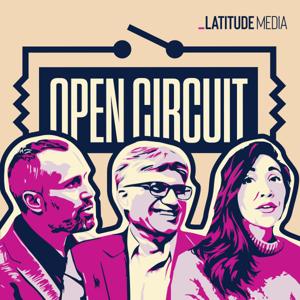
This week, Samaras joins Open Circuit to talk about the potential impact of the legislation, lessons learned from the IRA, and whether the abundance framework offers a viable alternative for scaling the clean energy economy.
As the country faces 150 gigawatts of new electricity demand by 2030, the reconciliation bill would make deploying and manufacturing a wide range of clean resources more expensive — likely forcing investment overseas.
This sets up a direct collision with the "abundance agenda," which argues that America has become too good at stopping things and not good enough at building them. The abundance solution: make it easier to build infrastructure, accept some messiness in exchange for progress, and focus relentlessly on outputs rather than process.
But can abundance thinking survive an era of deep political instability? We explore what an "IRA 2.0" might look like — one that pays for performance, builds government capacity, and creates durable coalitions for getting big things done.
Get tickets for Transition-AI: Boston to see Open Circuit live, with Google’s Caroline Golin.
Open Circuit is brought to you by Sungrow, the trusted provider of PV inverters and battery storage. With over 605 GW installed worldwide and a BloombergNEF ranking of “most bankable” in power conversion and energy storage, Sungrow provides solar tech you can count on. Learn more at sungrowpower.com.
Open Circuit is brought to you by Natural Power. Natural Power specializes in renewable energy consulting and engineering, supporting wind, solar, and battery storage projects from concept through financing. Discover how we're creating a world powered by renewable energy at naturalpower.com.
Credits: Co-hosted by Stephen Lacey, Jigar Shah, and Katherine Hamilton. Produced and edited by Stephen Lacey. Original music and engineering by Sean Marquand.
Texans take pride in their competitive electricity market, a system designed to let the cheapest resources win. And that market is increasingly choosing clean energy, with wind, solar, and batteries dominating new generation. Nearly 40 gigawatts have been added in just four years, equivalent to the capacity of a mid-sized European country.
This market-driven boom has unequivocally lowered costs and improved reliability. But now, in a major ideological reversal, some Texas lawmakers are trying to stop it. Bills advancing through the legislature would override market signals, impose unprecedented restrictions on renewables, and cap economic growth in the eighth-largest economy in the world.
"People aren't choosing renewables out of any ideology or just because they like it better or it's clean or anything like that. It's low cost and that matters a lot to the business community," said Doug Lewin, who runs the Texas Energy and Power Newsletter and hosts the Energy Capital podcast.
Lewin joined Open Circuit to explain the high stakes in the Lone Star State. He describes how the oil and gas industry is increasingly inking power purchase agreements with wind and solar as they electrify operations. Data centers are flocking to Texas because of the attractive energy picture. And distributed energy is poised for explosive growth as virtual power plants come online.
So why are some lawmakers trying to slam the brakes on this economic engine? According to Lewin, it's a mix of well-funded disinformation campaigns and social media algorithms that keep feeding anti-renewable content.
"There are people out there that are clearly not acting in good faith and are putting information out there that is really misinformation and they know it," said Lewin.
Bills like SB 715 and SB 388 would require solar and wind to have backup and exclude batteries from being counted as dispatchable resources. Lewin calls this an attempt to tie Texas' economic growth to gas turbine availability, "which just seems like a spectacularly bad idea."
Modeling shows these bills could cause blackouts and add billions in costs for consumers. With the legislative session in its final weeks, the business community is pushing back — but Lewin says anything could happen.
Get tickets for Transition-AI: Boston to see Open Circuit live, with Google’s Caroline Golin.
Open Circuit is supported by Kraken, the only proven, AI-powered operating system for utilities. Learn how Kraken helps unlock excellent customer experiences, increased innovation and reduced operational costs at kraken.tech.
Open Circuit is brought to you by On.Energy. As one of the fastest-growing battery storage IPPs, On.Energy delivers turnkey resiliency solutions for utilities and enterprise customers. Whether you’re managing data centers or local grids, we help bring storage to your fleet. Learn more at on.energy.
Credits: Co-hosted by Stephen Lacey, Jigar Shah, and Katherine Hamilton. Produced and edited by Stephen Lacey. Original music and engineering by Sean Marquand.
When Elon Musk canceled Tesla's affordable Model 2 last year to go all-in on Robotaxis, he may have made the most consequential decision in the company's history. As Chinese automaker BYD captures global market share with lower-cost vehicles and superior charging technology, has Tesla prematurely surrendered the market it created?
"In his mind, I think he ushered in the EV revolution for the world, and that problem is solved, and now he wants to move on to AI and robotics," said Bloomberg reporter Dana Hull.
This pivot comes as Tesla's growth story has fundamentally changed, with the company abandoning its promise of 50% year-over-year growth and its target of making 20 million cars annually by 2030. Meanwhile, the political transformation of Musk has created massive challenges for Tesla's brand.
The departure of key executives has also left critical initiatives like virtual power plants and grid services without clear leadership, despite Tesla Energy showing promising growth.
This week, Dana Hull, veteran auto and tech reporter at Bloomberg who has covered Elon Musk's companies since 2009, joins us to discuss Tesla's strategic pivot and uncertain future in an increasingly competitive EV landscape. Dana is a regular contributor to the Elon, Inc. podcast.
"The company's product lineup is very murky right now," said Hull. Tesla's refreshed Model Y isn't selling as well as expected, and more consumers are refusing to buy from a company whose CEO has become so closely aligned with Donald Trump.
With the Cybertruck underperforming and no affordable model in sight, is Tesla setting itself up for a painful reckoning? Or will AI and robotics justify the company’s trillion dollar valuation?
Get tickets for Transition-AI: Boston to see Open Circuit live, with Google’s Caroline Golin.
Open Circuit is supported by Kraken, the only proven, AI-powered operating system for utilities. Learn how Kraken helps unlock excellent customer experiences, increased innovation and reduced operational costs at kraken.tech.
Open Circuit is brought to you by On.Energy. As one of the fastest-growing battery storage IPPs, On.Energy delivers turnkey resiliency solutions for utilities and enterprise customers. Whether you’re managing data centers or local grids, we help bring storage to your fleet. Learn more at on.energy.
Credits: Co-hosted by Stephen Lacey, Jigar Shah, and Katherine Hamilton. Produced and edited by Stephen Lacey. Original music and engineering by Sean Marquand.
The Department of Energy is losing talent at an alarming rate. Described by insiders as a "hostile takeover," the agency's transformation under Trump has pushed out thousands of scientists, engineers, and policy experts. What's left behind are gutted offices, stalled infrastructure projects, and billions in funding commitments thrown into question.
This isn't a typical government transition — it's a systematic dismantling of America's energy brain trust.
This week, we're joined by Latitude Media founding reporter Maeve Allsup, who has been breaking news on the transformation underway at DOE. Together with Jigar Shah, who ran the DOE's Loan Programs Office during the Biden administration, and policy expert Katherine Hamilton, we examine the real-world consequences of this agency-wide upheaval.
The chaotic transition has left companies in the dark about billions in committed funding. Meanwhile, career civil servants with decades of technical expertise find themselves reporting to appointees with little relevant experience — in one case, a 21-year-old former SpaceX intern with no energy background.
Energy Secretary Chris Wright outlines nine pillars for "American energy dominance" including nuclear expansion, grid strengthening, and critical minerals development. Yet the offices responsible for executing these priorities are being decimated.
The long-term consequences could be severe: manufacturing investments delayed or canceled, critical scientific talent fleeing to other countries, and a fundamental erosion of trust in government as a reliable partner for energy development. We examine what this means for America's ability to compete globally in energy innovation and infrastructure development.
Get tickets for Transition-AI: Boston to see Open Circuit live, with Google’s Caroline Golin.
Open Circuit is supported by Kraken, the only proven, AI-powered operating system for utilities. Learn how Kraken helps unlock excellent customer experiences, increased innovation and reduced operational costs at kraken.tech.
Open Circuit is brought to you by On.Energy. As one of the fastest-growing battery storage IPPs, On.Energy delivers turnkey resiliency solutions for utilities and enterprise customers. Whether you’re managing data centers or local grids, we help bring storage to your fleet. Learn more at on.energy.
Credits: Co-hosted by Stephen Lacey, Jigar Shah, and Katherine Hamilton. Produced and edited by Stephen Lacey. Original music and engineering by Sean Marquand.
Alan Cooper and Ricardo de Azevedo have been business partners since they were teenagers. Today, they're tackling one of the most critical infrastructure challenges of the AI revolution: how to manage the massive, volatile power demands of modern data centers.
Founded in 2016, On.Energy has grown into an integrated energy storage company that designs, builds, and manages battery systems for customers across six countries. The company deploys batteries ranging from behind-the-meter commercial installations to utility-scale projects, specializing in what they call "distribution-level storage."
As co-founders of On.Energy, Cooper and de Azevedo have developed a medium voltage uninterruptible power supply (UPS) that acts as a buffer between power-hungry AI data centers and the electrical grid.
"We're discussing with a client that is developing a thousand-megawatt facility, and they were telling us the load swings are going to be 400 megawatts every 10 seconds," says Azevedo, CTO of On.Energy. "The grid is just not designed to handle that."
Their innovation takes traditional UPS technology, typically used for backup power, and transforms it into an active grid asset that can both protect sensitive computing equipment and provide grid services.
"From the utilities' perspective, you have a data center who is a dream customer 98% of the time, and an absolute nightmare in the 2% of the time when the grid is at its maximum strain," explains Alan Cooper, the company’s CEO. "If you have a dispatchable data center, then they become the perfect customer."
In this episode, produced in partnership with On.Energy, Stephen Lacey talks with Cooper and de Azevedo about the company's approach to enabling resilient, grid-interactive data centers with storage.
They discuss how their technology could solve power quality issues, while also creating new revenue opportunities through grid services.
This is a partner episode, brought to you by On.Energy. Learn more about how On.Energy delivers turnkey resiliency solutions for utilities and enterprise customers at on.energy.
This week, we’re asking the central question of the energy transition: How fast are we going?
Clean energy is bringing in $2 trillion of investment annually. Wind and solar now account for the vast majority of new electricity capacity globally. And we may already be at “peak trade” of fossil fuels.
And yet, when we look at the share of renewables in final energy consumption, they’re increasing only incrementally around the world. At the current linear pace, meaningful decarbonization may take decades longer than needed.
This week, we’re joined by one of the most prolific and respected market analysts for a 360-degree view of how the transition is playing out.
In this episode, Michael Cembalest, chairman of market and investment strategy for J.P. Morgan Asset & Wealth Management and author of the influential "Eye on the Market" newsletter, walks us through his annual energy analysis – a comprehensive assessment that covers dozens of economic and financial trends in energy.
This conversation has a little bit of everything. Cembalest walks us through his "scorpion bowl chart" that shows the gap between clean energy deployment and impact. We also dig into the transmission crisis, rising costs, equipment delays, and tariffs. And we cover the data center challenge, Europe’s economic challenges, and China’s rise.
But it’s not all gloomy. Cembalest also identifies where real progress is happening, and what a realistic path forward might look like.
Open Circuit is supported by Kraken, the only proven, AI-powered operating system for utilities. Learn how Kraken helps unlock excellent customer experiences, increased innovation and reduced operational costs at kraken.tech.
Open Circuit is brought to you by On.Energy. As one of the fastest-growing battery storage IPPs, On.Energy delivers turnkey resiliency solutions for utilities and enterprise customers. Whether you’re managing data centers or local grids, we help bring storage to your fleet. Learn more at on.energy.
Credits: Co-hosted by Stephen Lacey, Jigar Shah, and Katherine Hamilton. Produced and edited by Stephen Lacey. Original music and engineering by Sean Marquand.
When tech giants build massive data centers to power AI, they're often negotiating confidential deals with utilities that few people will ever see — but that everyone might pay for.
Harvard legal expert Ari Peskoe has uncovered a pattern across 40 state regulatory proceedings: special contracts between utilities and data centers being approved with minimal public scrutiny, potentially shifting billions in infrastructure costs to regular ratepayers.
With tech companies planning up to $1 trillion in spending on AI infrastructure, some utilities project their energy sales could nearly double by 2030. Are state regulators allowing utilities and tech companies to ink billion-dollar contracts, and pass the costs on to ratepayers without transparently proving the system-wide benefits?
This week, Ari Peskoe, Director of the Electricity Law Initiative at Harvard Law School, joins us to talk about the new report he co-authored, “How Utility Customers Are Paying for Big Tech’s Power.”
This hidden cost transfer is just one front in a broader battle over energy regulation. At the federal level, the White House is making an unprecedented grab for control over FERC, the independent commission governing interstate energy markets.
Meanwhile, another executive order gives the Department of Energy extraordinary authority to force struggling coal plants to stay open regardless of economics — creating what critics describe as a consumer-funded bailout for uneconomic generation. We talk with Ari about how these regulatory battles are shaping up, and why they could be so damaging.
Open Circuit is supported by Kraken, the only proven, AI-powered operating system for utilities. Learn how Kraken helps unlock excellent customer experiences, increased innovation and reduced operational costs at kraken.tech.
Open Circuit is brought to you by On.Energy. As one of the fastest-growing battery storage IPPs, On.Energy delivers turnkey resiliency solutions for utilities and enterprise customers. Whether you’re managing data centers or local grids, we help bring storage to your fleet. Learn more at on.energy.
Credits: Co-hosted by Stephen Lacey, Jigar Shah, and Katherine Hamilton. Produced and edited by Stephen Lacey. Original music and engineering by Sean Marquand.
The business world is facing a tsunami of uncertainty. Across nearly every industry, investment is seizing up amid unpredictable tariffs and contradictory domestic policies.
In this week’s episode of Open Circuit, we examine how this compounding uncertainty is impacting clean energy during a critical moment of spiking demand and rising costs.
We dissect the signals from the market, revealing that despite the chaos, certain sectors are finding unexpected advantages. While utility-scale projects face delays, distributed generation is experiencing renewed interest as companies seek certainty through on-site solutions. Virtual power plants and grid-enhancing technologies may emerge as clear winners in an environment where traditional infrastructure planning has become extremely difficult.
Plus, we play a round of "Transmission Lines," testing our hosts' knowledge of the news through provocative energy quotes, and take live audience questions about the volatile landscape.
Open Circuit is supported by Kraken, the only proven, AI-powered operating system for utilities. Learn how Kraken helps unlock excellent customer experiences, increased innovation and reduced operational costs at kraken.tech.
Open Circuit is brought to you by On.Energy. As one of the fastest-growing battery storage IPPs, On.Energy delivers turnkey resiliency solutions for utilities and enterprise customers. Whether you’re managing data centers or local grids, we help bring storage to your fleet. Learn more at on.energy.
Credits: Co-hosted by Stephen Lacey, Jigar Shah, and Katherine Hamilton. Produced and edited by Stephen Lacey. Original music and engineering by Sean Marquand.
President Trump promised energy dominance. But his sweeping new tariffs are delivering the opposite – creating unprecedented uncertainty for every sector of the energy economy.
Faced with a market in revolt, the president blinked. Just hours after his tariffs went into effect, he put a 90-day pause on reciprocal tariffs, keeping a 10% baseline tariff and a 125% tariff on China.
In this episode of Open Circuit, we examine the contradictions at the heart of the administration's economic agenda. With trade expert John Smirnow, we explore how the "biggest trade shock in history" is upending global supply chains, raising costs, and complicating America's energy future.
We dive into the philosophy driving trade populism — a growing intellectual movement now reaching the height of power. Smirnow explains the three-part strategy behind these tariffs: rebuilding domestic manufacturing, enhancing national security, and containing China's influence on global supply chains.
We unpack the mechanics of how these tariffs will impact clean energy specifically. Plus, we examine whether these tariffs signal a temporary disruption or the beginning of long-term U.S. policy. Will they accelerate reshoring of production or simply raise costs while slowing deployment? And how do businesses make investment decisions when policy signals are deeply contradictory and unstable?
Sign up for our live virtual show on April 16 at 1:00 PM Eastern.
We'll also be live in person at Latitude's Transition-AI conference on June 12th in Boston with special guest Caroline Golin of Google.
Open Circuit is supported by Kraken, the only proven, AI-powered operating system for utilities. Learn how Kraken helps unlock excellent customer experiences, increased innovation and reduced operational costs at kraken.tech.
Open Circuit is brought to you by On.Energy. As one of the fastest-growing battery storage IPPs, On.Energy delivers turnkey resiliency solutions for utilities and enterprise customers. Whether you’re managing data centers or local grids, we help bring storage to your fleet. Learn more at on.energy.
Credits: Co-hosted by Stephen Lacey, Jigar Shah, and Katherine Hamilton. Produced and edited by Stephen Lacey. Original music and engineering by Sean Marquand.
From the publisher's feed
Ranked by our users in the last 21 days
1,246 Listeners
403 Listeners
125 Listeners
503 Listeners
123 Listeners
167 Listeners
103 Listeners
137 Listeners

76 Listeners

82 Listeners
637 Listeners
281 Listeners
203 Listeners

227 Listeners
118 Listeners