
Sign up to save your podcasts
Or

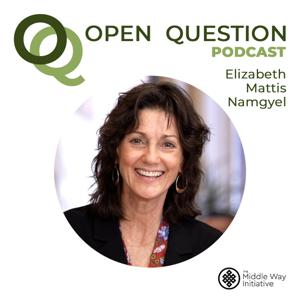


In this episode, Elizabeth takes us on a journey through the term 'faith.' We may assume we know what faith is, but most of us have never truly explored its nuance or spectrum of meanings. We often use the term faith to refer to: dogma, fundamentalism, doctrine, confidence, devotion conviction, just to name a few. In the context of contemporary culture, there are those who suggest that we replace the world faith with spirituality, but Elizabeth requests us not to write-off faith so glibly. Faith carries with it the undeniable tension between our search for security and the limits of our ability to know. Faith keeps us connected to the heart of the human condition.
Elizabeth shares the classic Buddhist narrative of Avaloketeshvara, the bodhisattva of compassion, and asks us to contemplate the story carefully, adding, "because something similar could happen to you." Continuing her exploration of the self, Elizabeth navigates the common responses to our challenging human experience: fixing, despairing or withdrawing…all of which are rooted in misunderstanding. Elizabeth takes inspiration, instead, from Avaloketeshvara's example to bear steadfast witness to experience.
In previous episodes we engaged in the liberating practice of looking and not finding, as we searched for something singular or independent. In this episode, Elizabeth explores the topic of permanence - the 3rd in this triad of classical Middle Way inquiries.
Elizabeth drops back into her grandmother's kitchen for a tour of the nature of time, what it might mean to 'live in the moment,' and the difference between impermanence and emptiness.
Continuing with the theme - The Self: Walking the Middle Way Path, we meet the 2nd Century spiritual genius, Nagarjuna, who is considered the father of the Middle Way school. Nagarjuna once paid homage to the Buddha, saying, "I prostrate to he who has abandoned all views." Looking into the topic of views, Elizabeth will take us on a fascinating quest.
The most intimate relationship you will ever have is the relationship you have with your SELF! Ironically, when looking for a singular, permanent or autonomous self, all we find is a myriad of dynamic, contingent relationships. In this episode, Elizabeth introduces us to the Buddha's most essential insight - dependent arising - and guides us through a classic Middle Way investigation, leading us to a deeper understanding of mind and its world.
Many of us can recall our earliest encounters with the quandary of death. As children, we possess a natural longing to make sense of the world; to find explanations for things that disturb or amaze us. Throughout our lives, we are continually confronted by the conundrum of existence and extinction. How do we straddle the tension between our longing to exist and our fear of extinction? Are these dualistic constructs an accurate framework? And what does it mean to either be or not be?
Our life - our world - can be rich…and it can also be a bitch. We walk the terrain of multiple - maybe infinite - grounds. We move in and out of these overlapping spaces.They are not geographical territories, but rather various ways we encounter our human condition as our mind and its world engage in the playful exchange we call, 'experience.'
What do you see when you think about the world? You might picture a rainforest or desert. You might envision a crowded subway terminal. You might imagine a household or a war zone. You might think: "the world is a mess," or feel touched by the beauty and the beings that inhabit it. Where exactly is "the" world? Is it conscious or material? Does it exist within our individual mind streams or outside of us? Is it cruel, mundane or sacred? Is it one or many? Is "the" world even findable?
In Open Question 303, Elizabeth explores the power of words and what it means to go beyond them in the tradition of Prajnaparamita.
The Buddha Nature teachings of Mahayana Buddhism reason that all beings possess natural intelligence. We can observe in ourselves and others that the instinct for wellbeing drives everything we do. We bend toward wellbeing like a plant bends toward the light of a sunny window. How is it then, that we create so much suffering? To bring our actions together with our true intentions requires discernment, or prajna. Prajna is our inherent resource—but unrecognized, it remains dormant. How do we wake it up?
From the publisher's feed

55 Listeners

278 Listeners
52 Listeners

15,882 Listeners