
Sign up to save your podcasts
Or

By ABC, ABC Australia


4.5
191191 ratings


The podcast currently has 910 episodes available.
The most played episodes among Podcast App listeners.
If I pick up a tree branch and smash your window with it, you're going to be angry, and your anger will rightly be directed at me. But if a tree branch smashes your windscreen during a cyclone whose intensity has been caused by global warming, you're still going to be angry — but who or what exactly should you be angry with? This week, a conversation about responsibility for systemic injustice. Guest: Stephanie Collins, Associate Professor in Philosophy, Monash University Melbourne Producer: David Rutledge *The 2026 Alan Saunders Lecture* - Alexandre Lefebvre on 'The return of the moral state: philosophy and the good life', Thursday September 24 at 6.30 pmRegister on the 2026 Alan Saunders Lecture event page, registrations close on September 17

One of the more utopian promises of technology has always been that it will free us from the necessity of work - but not having to work poses its own problems. What will we do instead? how will we make money? and what might a leisure-oriented society look like? Technophiles - from the early cybernetics enthusiasts to today's AI promoters - have looked to ancient Athens as an example of a society where citizens were free to engage in culture, reflection and political participation. But was ancient Athens really such a place? and how likely is it that today's tech lords will deliver 'the good life' to us all? Guest: Michele Kennerly, Associate Professor Communication Arts and Sciences, and Classics and Mediterranean Studies, Pennsylvania State University Producer: David Rutledge Automated Athens: Ancient Greek Ideals in the Early Age of Automation by Michele Kennerly (University of Chicago Press 2026)
Australian feminist philosopher Kate Manne memorably coined the term "himpathy" to describe what happens when a man commits a crime against a woman and finds himself the object of disproportionate sympathy. But as useful as this description is, the psychological mechanism behind himpathy remains unexplored in Manne's account. To remedy this, we're turning this week to Catharine Macaulay, a fascinating late 18th century English philosopher whose work on sympathy provides some valuable psychological insights. Guest: Elena Gordon, Assistant Professor of Philosophy at University College Dublin Producer: David Rutledge Catharine Macaulay on cultivating our sympathetic potential - Elena Gordon in Journal of Modern Philosophy Volume 7 (2025) About Catharine Macaulay *The 2026 Alan Saunders Lecture* - Alexandre Lefebvre on 'The return of the moral state: philosophy and the good life', Thursday September 24 at 6.30 pmRegister on the 2026 Alan Saunders Lecture event page, registrations close on September 17
Ever since AI was founded in the 1950s, people have talked and written about 'intelligence' as though we all broadly agree on what that word means. But there's considerable debate on that score, and among the debaters are philosophers - like this week's guest - who question the degree to which machines can be said to be intelligent at all, and think that claims of intelligence can all too easily deflect attention from the real ethical issues around AI. Guest: Tim Crane, Professor of Philosophy at the Central European University (CEU) in Vienna, Austria Producer: David Rutledge *The 2026 Alan Saunders Lecture* - Alexandre Lefebvre on 'The return of the moral state: philosophy and the good life', Thursday September 24 at 6.30 pmRegister on the 2026 Alan Saunders Lecture event page, registrations close on September 17
If someone's behaving badly, it can be hard to know how much of their behaviour stems from a deep character flaw, and how much of it is incidental - the stuff we might charitably filter out as unreflective of their true self. And the same goes for achievement: how much credit for a Nobel prize should go to the person themselves, and how much to their fortunate circumstances, or to the people who helped them? This week we're asking if philosophy can help us discern the signal from the noise. Guest: Mark Schroeder, Professor of Philosophy at the University of Southern California Producer: David Rutledge When Things Get Personal: A Philosophical Guide to Conflict by Mark Schroeder (Princeton University Press 2026) *The 2026 Alan Saunders Lecture* - Alexandre Lefebvre on 'The return of the moral state: philosophy and the good life', Thursday September 24 at 6.30 pmRegister on the 2026 Alan Saunders Lecture event page, registrations close on September 17
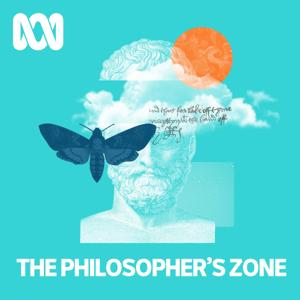
The Philosopher's Zone is your guide through the strange thickets of logic, metaphysics and ethics.
The podcast currently has 910 episodes available.
96 Listeners
63 Listeners
119 Listeners

88 Listeners

21 Listeners

44 Listeners

1,737 Listeners
769 Listeners
1,538 Listeners
761 Listeners
312 Listeners

130 Listeners
62 Listeners
65 Listeners

43 Listeners

463 Listeners

158 Listeners

1,077 Listeners

10 Listeners

200 Listeners
114 Listeners

234 Listeners

1,007 Listeners

66 Listeners