
Sign up to save your podcasts
Or

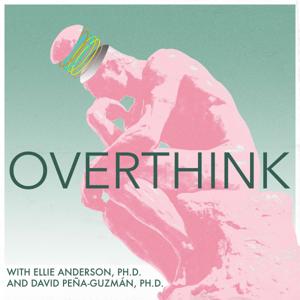

Tell us who you pity and we’ll tell you who you are! In episode 93 of Overthink, Ellie and David guide you through the philosophy behind this “well-meaning” emotion. From Aristotle’s account of pity in theater, to problematic portrayals of disability in British charity telethons, pity has had an outsized role our social and cultural worlds. But who is the object of our pity, and why? Your hosts dissect various archetypes of pity, such as Father Mackenzie (a character in Eleanor Rigby by the Beatles) and the elusive Corn Man (a figure invented by Ellie while in Greece!). Where is the line between pity and compassion? How does pity interact with our social responsibilities and power structures? And, is pity a meaningful part of the good life, or is it an emotion we would all be better off without?
Check out the episode's extended cut here!
Works Discussed
Aristotle, Poetics & Rhetoric
The Beatles, Eleanor Rigby
David Hume, A Treatise of Human Nature
Kristján Kristjánsson, “Pity: A Mitigated Defense”
Martha Nussbaum, “Tragedy and Self-Sufficiency: Plato and Aristotle on Fear and Pity”
Jean-Paul Sartre, Anti-Semite and Jew
Adam Smith, The Theory of Moral Sentiments
Joseph Stramondo, “How an Ideology of Pity is a Social Harm for People With Disabilities”
Bernard Whitley, Mary Kite, and Lisa Wagner, Psychology of Prejudice and Discrimination
Special thanks to Alexandra Peabody for her support in researching this episode!
Support the show
Substack | overthinkpod.substack.com
Website | overthinkpodcast.com
Instagram & Twitter | @overthink_pod
Email | [email protected]
YouTube | Overthink podcast
See Privacy Policy at https://art19.com/privacy and California Privacy Notice at https://art19.com/privacy#do-not-sell-my-info.
 View all episodes
 By Ellie Anderson, Ph.D. and David Peña-Guzmán, Ph.D.

4.8
452452 ratings
Tell us who you pity and we’ll tell you who you are! In episode 93 of Overthink, Ellie and David guide you through the philosophy behind this “well-meaning” emotion. From Aristotle’s account of pity in theater, to problematic portrayals of disability in British charity telethons, pity has had an outsized role our social and cultural worlds. But who is the object of our pity, and why? Your hosts dissect various archetypes of pity, such as Father Mackenzie (a character in Eleanor Rigby by the Beatles) and the elusive Corn Man (a figure invented by Ellie while in Greece!). Where is the line between pity and compassion? How does pity interact with our social responsibilities and power structures? And, is pity a meaningful part of the good life, or is it an emotion we would all be better off without?
Check out the episode's extended cut here!
Works Discussed
Aristotle, Poetics & Rhetoric
The Beatles, Eleanor Rigby
David Hume, A Treatise of Human Nature
Kristján Kristjánsson, “Pity: A Mitigated Defense”
Martha Nussbaum, “Tragedy and Self-Sufficiency: Plato and Aristotle on Fear and Pity”
Jean-Paul Sartre, Anti-Semite and Jew
Adam Smith, The Theory of Moral Sentiments
Joseph Stramondo, “How an Ideology of Pity is a Social Harm for People With Disabilities”
Bernard Whitley, Mary Kite, and Lisa Wagner, Psychology of Prejudice and Discrimination
Special thanks to Alexandra Peabody for her support in researching this episode!
Support the show
Substack | overthinkpod.substack.com
Website | overthinkpodcast.com
Instagram & Twitter | @overthink_pod
Email | [email protected]
YouTube | Overthink podcast
See Privacy Policy at https://art19.com/privacy and California Privacy Notice at https://art19.com/privacy#do-not-sell-my-info.

43,956 Listeners

43,622 Listeners
15,271 Listeners

10,740 Listeners
2,112 Listeners

147 Listeners
10,361 Listeners

1,461 Listeners

1,541 Listeners
315 Listeners
5,526 Listeners
586 Listeners

1,346 Listeners

523 Listeners

747 Listeners

146 Listeners

582 Listeners

205 Listeners
1,237 Listeners

574 Listeners

502 Listeners

194 Listeners
289 Listeners

2,528 Listeners
94 Listeners

0 Listeners

79 Listeners
234 Listeners
717 Listeners

11 Listeners

316 Listeners
8,842 Listeners

358 Listeners
39 Listeners

27 Listeners