
Sign up to save your podcasts
Or

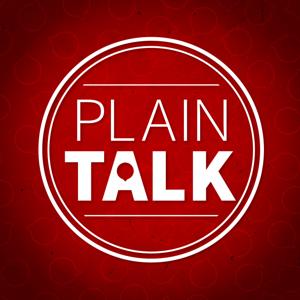


While the Plain Talk team is taking the holiday off, we're bringing back one of our most-listened-to episodes of the past year — an interview that's become even more relevant as debates over data centers continue across North Dakota.
In this replay, Applied Digital CEO Wes Cummins joins the show to discuss the company's rapid expansion in North Dakota, including two operational data center projects and a third planned near Fargo. That expansion has sparked a high-stakes tug-of-war between the city of Fargo and the city of Harwood, each looking to annex the land and capture the tax revenue generated by the new facility.
He also responds directly to concerns raised around the Harwood project, including public frustration over nondisclosure agreements signed by local officials, questions about transparency, and fears that large data-center power demands could drive up electric rates for residents.
Whether you've followed the Harwood–Fargo battle closely or you're just trying to understand what data centers mean for North Dakota's economy, energy grid, and future competitiveness, this conversation is worth a listen.
We'll be back with a new episode on December 3 — enjoy the replay and the rest of your holiday weekend!
Robin Nelson, a member of the Fargo School Board who is chairing a ballot measure committee aimed at universal school lunches, says her group tried to get their goal accomplished through the legislative process. It didn't work, so now they're taking their case to the voters.
"We went through two legislative sessions, and we're thankful. There was some movement, but that is not what our goal was," she said on this episode of Plain Talk, referring to expansions to the lunch program made by lawmakers. "We respectfully followed that process, and due to the overwhelming support through polls in the state of North Dakota that support this concept of universal school meals, the next logical step was to take it to the voters in an initiated measure."
Nelson took questions on how the measure will work, including how it will cover school lunches served through the existing program in private and tribal schools, as well as what it will cost.
When a bill similar to what Nelson and her group are looking to put on the ballot was considered by lawmakers earlier this year, the Department of Public Instruction estimated the cost at $140 million. "I think it's a fair estimate" of what this new measure would cost if implemented, Nelson said, though she also pointed out that a new fiscal note will be created through the ballot measure process.
If the measure passes, it would shift the cost of paying for the school lunch program away from just parents, who foot the bill through user fees, and to the broader tax base. Nelson said it will also cut out some red tape at the schools which must currently levy and collect lunch fees. "We won't have to worry about collection efforts," she said. "It will save a lot of time on the back end.
Also on this episode, my co-host Chad Oban and I discuss Sen. Kevin Cramer's tough trip to Halifax, and we respond to some reader messages.
If you want to participate in Plain Talk, just give us a call or text at 701-587-3141. It's super easy — leave your message, tell us your name and where you're from, and we might feature it on an upcoming episode. To subscribe to Plain Talk, search for the show wherever you get your podcasts or use one of the links below.
Apple Podcasts | Spotify | YouTube | Pocket Casts | Episode Archive
There is an increasingly intense debate among state lawmakers and leaders in the North Dakota University System about the impact online education is having on the state's public campuses.
"My concern is about this conversation becoming so toxic," university system Commissioner Brent Sanford said on this episode of Plain Talk.
Sanford -- who is now using the title "commissioner" instead of "chancellor" like his predecessors because the former is the term used in state law -- says he understands the concerns some lawmakers have, but also wants them to understand his argument, which is that most of the online students are a boon to the state.
Sure, some of them might never step foot in the state, and it doesn't make a lot of sense for North Dakota taxpayers to subsidize them, but in the aggregate students taking online courses from our public institutions of higher education is a good thing, he argues.
What needs to happen, Sanford says, is for the various campuses to better illustrate who we're talking about for lawmakers. "The chore I've been giving the presidents on this is you need to come back to the legislators with who these students are, how is there value from these students," he said.
"Bismarck State allowed an online energy management bachelor degree, giving credit for the entire associate degree," Sanford continued, citing one example. Students currently working as electrical linemen "could finish that online, stay in their job, and all sudden they can be a grid operator instead of being a lineman."
He also suggested that students seeking agriculture-related degrees could continue living on the family farm, and helping with things like planting and harvest, even as they take their classes.
Sanford also discussed the NDUS efforts to fill four presidential vacancies at various institutions, including the departure of President David Cook from North Dakota State University.
Also on this episode, co-host Chad Oban and I discuss the ongoing controversy around the Ethics Commission.
If you want to participate in Plain Talk, just give us a call or text at 701-587-3141. It's super easy — leave your message, tell us your name and where you're from, and we might feature it on an upcoming episode. To subscribe to Plain Talk, search for the show wherever you get your podcasts or use one of the links below.
Apple Podcasts | Spotify | YouTube | Pocket Casts | Episode Archive
Artificial intelligence is much on the minds of North Dakotans.
Well, not just North Dakotans. It's on the minds of Americans, but here in North Dakota we're having debates about the construction of massive, power-hungry data centers that will serve AI companies, not to mention discussions about the appropriate role for AI in academic and business settings.
One question in this debate that's on a lot of minds is, will AI come for our jobs? Revana Sharfuddin is a research fellow specializing in AI for the Mercatus Center at George Mason University. She recently spoke at North Dakota State University's Challey Institute as part of the Menard Family distinguised speaker series. On this Plain Talk, she said she understands the trepidation many feel about the emergence of AI.
"The headline numbers are scary," she said, "and if we kind of say 'well, you know it's, another technology shock just just move along with the new world, don't worry about it,' I think we will be making a little bit of mistake even if we are champions of innovation."
The fear of new technology isn't new. Today we use the term "luddite" to describe someone who is hostile to technology, but that term comes from a labor movement from centuries ago during the Industrial Revolution. At that time, workers were upset about new machines like the spinning jenny stealing their jobs. Today, it's voice actors and writers worried about AI taking over.
One way to help address this problem, Sharfuddin said, is to make some changes to the tax code to allow businesses to better invest in their workers. Right now, investments in new technology (including AI) often bear all manner of tax advantages that investments in training, or re-training, human workers do not. It may not be a silver bullet to solve the problem, but it can help.
Also on this episode, co-host Chad Oban and dicussed the vote in Congress to release the Epstein files, and U.S. Rep. Julie Fedorchak drawing a primary challenge from military veteran Alex Balazs, who also ran against her in the 2024 cycle.
If you want to participate in Plain Talk, just give us a call or text at 701-587-3141. It's super easy — leave your message, tell us your name and where you're from, and we might feature it on an upcoming episode. To subscribe to Plain Talk, search for the show wherever you get your podcasts or use one of the links below.
Apple Podcasts | Spotify | YouTube | Pocket Casts | Episode Archive
Now that the government shutdown is over, Congress will need to figure out what to do about an impending spike in health insurance premiums for Americans (including tens of thousands of North Dakotans) who purchase individual plans through the Affordable Care Act exchanges.
Those premiums currently enjoy heavy subsidies that are set to expire at the end of the year unless Congress renews them, which would mean dramatic cost increases for the insured. On the other side of that coin is that years of fiscal profligacy, which has become particularly acute under the terms of Presidents Donald Trump and Joe Biden, has left our nation with little capacity to continue them.
We are already $38 trillion in debt, and adding a couple of trillion dollars more every year.
But the debate over the subsidies is beside the point Marvin Lein said on this episode of Plain Talk.
Lein is a retired healthcare professional with 30 years of senior healthcare administrative and CEO experience, including managing large multi-entity, private, for-profit physician practices. He served as CEO of Mid Dakota Clinic in Bismarck from 2013 to 2022. According to him, moving Americans to a single-payer system for delivering health care is the only sustainable path forward.
"We've run the current model, the free market model, to the point where we can no longer bury, redistribute, hide systemwide costs," he said, and while we can have a debate about whether the status quo, where most Americans get their health insurance through a third party, is truly a "free market," he has a point.
He recalled that when he started in 1994, the industry reacted strongly to the Centers for Medicare & Medicaid Services setting price controls, fearing it would be "socialized healthcare" and "the end of healthcare."
"Well, that didn't happen," he said, arguing that a Medicare-for-all plan could bring spiking prices under control. "Medicare is price setting. Medicare is managed delivery. Right? Medicare is much more like the European model than the insurance products that you and I purchase on the commercial marketplace. which is the old model that is failing has failed."
Also on this episode, guest co-host Pat Finken and I discussed my story about a stalker in North Dakota's state house and the City of Fargo's ongoing efforts to annex a proposed AI data center despite objections from just about everybody else.
If you want to participate in Plain Talk, just give us a call or text at 701-587-3141. It's super easy — leave your message, tell us your name and where you're from, and we might feature it on an upcoming episode. To subscribe to Plain Talk, search for the show wherever you get your podcasts or use one of the links below.
Apple Podcasts | Spotify | YouTube | Pocket Casts | Episode Archive
From the publisher's feed

13,637 Listeners

1,451 Listeners

19 Listeners

39 Listeners

8 Listeners

8 Listeners

877 Listeners

24 Listeners

9 Listeners

937 Listeners

1 Listeners

914 Listeners

716 Listeners
10,397 Listeners

4 Listeners

5 Listeners

3 Listeners

83 Listeners

5 Listeners

1 Listeners

1 Listeners
3,342 Listeners
3,520 Listeners

3 Listeners
3,437 Listeners

37 Listeners

6 Listeners

9 Listeners

4 Listeners

6 Listeners

0 Listeners

6 Listeners

7 Listeners

1,587 Listeners