
Sign up to save your podcasts
Or



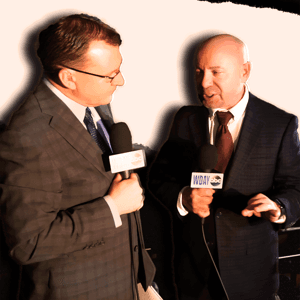
Alex Balazs, the out-of-nowhere candidate who won the North Dakota Republican Party's convention endorsement last week, ended his interview on this episode of Plain Talk by joking about the tough questions we asked him.
We did run him through the ringer, on everything from abortion, to Trump's claims about the 2020 election and January 6, to the farm bill, Ukraine, and Social Security.
One question I thought was important to get him on the record about was how he'd handle the dysfunction that has roiled the Republican caucus in the United States House of Representatives. One of his opponents, former lawmaker Rick Becker, has promised to go to Washington D.C. and contribute to the chaos by being a "bull in a china shop."
"If you just want to stir things up you're not doing your job," Balazs told us of that approach.
Balazs says he was "very humbled" to receive the convention endorsement. He said he made his decision to run for Congress "at the kitchen table."
"I guess you could call me a Trump Republican, he said when asked about his support for the former president, "but I'm also the first one in the kitchen to say 'why did he have to say that?'"
Did Trump win the 2020 election? "We went through a process that elected Joe Biden," he said, though he also said there was some fraud in the voting, and that Democrats should acknowledge it. As for January 6? "There was no insurrection," he said.
"I'm never going to support anyone who broke a window or something," he added, but said he felt there have been many people put in jail for merely walking into the capitol that day. He added that what happened on January 6 was "less wrong than what happened after."
On abortion, Balazs says "the answer is no on a federal abortion ban" but that he's a "conception to death kind of person" who wants to put "more teeth in the law."
Balazs also said his campaign is mostly self-funded. He claims to have raised only $2,035 from contributors so far.
So far in his campaign, he's leaned heavily on his resume in the military. When asked if he could offer documentation to substantiate that record, he said he doesn't want personal information made public --"they're very sensitive documents," he said -- but would be willing to make arrangements to have them reviewed.
To subscribe to Plain Talk, search for the show wherever you get your podcasts, or click here for more information.
By the time you listen to this podcast, we will know if Cara Mund is going to turn the three-way Republican House primary into a four-way race. Whatever choice the former Miss America makes, North Dakota politics has gotten a lot more interesting since the North Dakota Republican Party's state convention in Fargo. And the Democratic-NPL's convention, as well.
On this episode of Plain Talk, co-host Chad Oban recap the convention, and analyze what it will all mean for the June primary vote, and the November general election.
A political unknown named Alex Balazs won the U.S. House endorsement over Public Service Commissioner Julie Fedorchak, but former lawmaker Rick Becker, who was ineligible for the endorsement, encouraged his supporters to try and spoil the vote. Now Mund may enter the race, adding an additional level of complexity.
Also, the convention endorsed James Bartlett for Superintendent of Public Schools despite an amateurish campaign promoting some pretty extreme ideas, such as pushing the Christian 10 commandments into classrooms.
Is the NDGOP's convention even still relevant?
Also, Oban attended the Democratic-NPL convention, saying the energy level there was higher than in past years behind statewide contestants like gubernatorial candidate Merrill Piepkorn, U.S. House candidate Trygve Hammer, and U.S. Senate candidate Katrina Christiansen.
To subscribe to Plain Talk, search for the show wherever you get your podcasts, or click here for more information.
When state Sen. Merrill Piepkorn, gubernatorial candidate for the Democratic-NPL, joined this episode of Plain Talk with me and my co-host Chad Oban, the first question I wanted to ask him was how he plans to unite North Dakota voters at a time when even Republicans here seem deeply divided against themselves.
Piepkorn accused me of not "pussy footing around." Joking aside, he thinks the right approach is "making the effort" to get to know people and understand their issues.
The candidate says one of the challenges Democrats running in North Dakota have is that they get lumped in with the national Democratic brand. Which, he argues, isn't nearly so moderate as the North Dakota iteration of the party.
"I don't even know what AOC stands for," he said, referring to the oft-used initials of U.S. Rep. Alexandria Ocasio-Cortez, one of the most visible national figures representing the progressive wing of the Democratic party.
Piepkorn also took questions about what his agenda would be for North Dakota, if elected, how he feels about the ballot measure to abolish property taxes (he's against it), and how he might try to appeal to Republican voters who are feeling disillusioned.
His answer to that last was candidate. He says he doesn't know, and that he'd rather say that than "make stuff up."
"I have stuff to do," he said.
"We're going to talk to people and find out," he added.
Also on this episode, Chad and I discuss Gov. Doug Burgum's trip to Mar-a-Lago to schmooze Donald Trump, and the controversy over District 37's delegates to the NDGOP's state convention.
To subscribe to Plain Talk, search for the show wherever you get your podcasts, or click here for more information.
Resolutions are, once again, causing headaches for North Dakota Republicans ahead of the 2024 statewide convention.
One party resolution to be voted on at the convention calls for laws that would put a pregnant woman who seeks an abortion in jail, along with anyone who helped her. Another denigrates public schools as places where children are indoctrinated. Yet another opposes vaccinations using demonstrably false information.
Rep. Jim Jonas, a Republican from West Fargo, was on the committee that screened these resolutions. He joined this episode of Plain Talk to talk about the process and why, from his point of view, most of them "don't align" with the majority of Republicans.
Jonas told co-host Chad Oban and I that he sees "authoritarianism" in the efforts to force elected Republicans to abide by policy resolutions developed and approved by a small sliver of North Dakota's Republican citizens. Jonas, a long-time educator, says he used to teach world history, and that this expectation of loyalty to party is the sort of thing you'd seen in places like China.
"I'm going to represent the people of West Fargo," he said, adding that many of his fellow Republicans "would like to do away with this process."
"Let's get back to making North Dakota better for its citizens" he said.
Also on this episode, Oban and I discuss Tom Campbell's decision to bow out of the NDGOP's U.S. House primary.
To subscribe to Plain Talk, search for the show wherever you get your podcasts, or click here for more information.
"The reality is we knew the campaign team," U.S. Rep. Kelly Armstrong told me and my co-host Chad Oban on this episode of Plain Talk.
Armstrong was responding to a question about his decision to go negative first against his opponent, Lt. Gov. Tammy Miller, in North Dakota's Republican gubernatorial primary.
"We are going to play the game by the rules as they are not as we wish them to be," he said, adding that the political team running Miller's campaign "has never not gone scorched earth."
Asked if going negative so early is a sign that he's nervous about losing this election, Armstrong admitted that he is. "I'm in a campaign," he said. "I'm always nervous."
The attack ad branded Miller as "Tall Tale Tammy." Asked about why he chose that approach, Armstrong said it's because he has a strong dislike of politicians who present themselves other than as they are. "The one thing I hate in politics, I just despise it, is inauthenticity," he said.
I've reported on messaging polling that the Miller campaign has done, testing potential attacks on Armstrong. Some of the questions in that polling dealt with Armstrong's past work as a criminal defense attorney, pointing out that he represented clients accused of some heinous crimes, like spousal abuse and child abuse.
But Armstrong said he was proud of his work. "I've been fighting for people's civil liberties, sometimes even in really unpopular venues," he said, pointing out that all Americans have a right to legal counsel in a criminal proceeding.
"If they think I'm going to back away from my record as a criminal defense attorney, they're mistaken," he added.
Also on this episode, Oban and I discuss my recent reporting about New Song Church in Bismarck, a religious institution with deep political connections that has seemingly embraced partisan politics and Christian nationalism.
To subscribe to Plain Talk, search for the show wherever you get your podcasts, or click here for more information.
It's campaign season, and unfortunately in the news cycle that often means substantive policy discussions takes a back seat to aspersions and invective from political campaigns.
We have a bit of both on this episode of Plain Talk. Yes, we talk about U.S. Rep. Kelly Armstrong throwing the first punch in what promises to be a nasty gubernatorial primary against Lt. Gov. Tammy Miller. And yes, we interviewed U.S. House candidate Tom Campbell, who said one of his primary opponents, Julie Fedorchak, has "threatened" him in an attempt to force him out of what is now a four-way race.
But before we got to any of that, we had a conversation with Travis Finck, the executive director of North Dakota's woefully underfunded public defender system. Finck recently delivered a report to state lawmakers detailing problems he has with filling open positions and providing legal services to criminal defendants who have a constitutional right to them.
He said his office is very close to telling district court judges that they may have to prioritize cases, and may not be able to have someone appear at every hearing. "I'm not sure that we're achieving justice at this point," he told co-host Chad Oban and I on this episode of Plain Talk.
Campbell, meanwhile, says he is under intense pressure to get out of the House race. "Julie's campaign called my campaign and threatened me," he said, claiming Fedorchak's people said they would bring up his supposed residency issues as well as his family's decision to sell farm land to billionaire Microsoft founder Bill Gates.
Campbell said the residency issue -- which he says has to do with his owning a lake residence in Minnesota -- is "beyond ridiculous." As for the land sale, he says he's had questions about it on the campaign trail. "Once I tell them the truth they're like, you need to tell people about that," he said.
He says he hopes North Dakota's House race doesn't get as negative as the gubernatorial primary. When I asked him how he squares that preference with his support for former President Donald Trump, who is notorious for his pugnacious demeanor, he said that "Donald Trump is his own enemy." He said Trump has done "immoral" things, and while he prefers the presumptive Republican nominee to the incumbent, President Joe Biden, "I wish we could have found someone better," he said.
Want to subscribe to Plain Talk? Search for the show wherever you get your podcasts, or click here for more information. And if you can, consider leaving a rating and review on whatever platform you use to listen.
The North Dakota Republican Party will be holding what will be a very interesting event on April 5.
Interesting in the conventional way in that it will be a showcase of (most) of the party's statewide candidates. Interesting also in that there is a divide among Republicans between those who think the party's most ardent activists, the one who fill up the seats at the party's conventions, are increasingly out of touch with not only the larger electorate, but rank-and-file Republican voters as well.
I don't know that this convention will be the answer to that debate, but it will be informative. Talking about that issue on this episode of Plain Talk is NDGOP executive director Andrew Nyhus.
"Rob, sometimes you make us money," he told me and my co-host Chad Oban, referencing my frequent criticisms of the party. "The checks come in," he claims. He also spoke to rumors that there may be an attempt to set aside rules at the convention to allow U.S. House candidate Rick Becker to seek the convention endorsement.
Becker is from the MAGA wing of the NDGOP, and the conventions are his base of political power. In 2022, after losing the convention endorsement to U.S. Senate incumbent John Hoeven, he then challenged Hoeven in the general election as an independent. The NDGOP has a rule stating that any candidate who seeks office as an independent, or the candidate for another party, cannot seek the Republican endorsement for three political cycles.
"If you say you believe in the rule of law, and you have rules...you can't really suspend the rules," he said of potential efforts to get Becker before the delegates.
"Suspending the rules is not possible," he added, and defended the rule barring Becker from the endorsement. His challenge to Hoeven in the general election "could have cost us a win," he said. "A U.S. Senate seat."
Nyhus also discussed divides in the party over the platform, and the role of the party in activism.
Also on this episode, Chad and I discuss the recent polling in North Dakota U.S. House race released by Becker's campaign.
To subscribe to Plain Talk, search for the show wherever you get your podcasts, or click here for more information.
There is a shift happening in North Dakota politics. Republicans are divided between Trump-style populists, and more traditional conservatives.
The legislative primary in District 8 may well be a bellwether for the future of both North Dakota's dominant political party, and the way in which our state is governed.
That jurisdiction is home to state Rep. Brandon Prichard, one of the most polarizing figures in state politics today, a young man just a few years removed from high school who has made a name for himself with vile and bigoted social media antics and professional activism aimed at defeating many of his fellow Republican lawmakers.
Now, he's got primary challengers of his own. Mike Berg, the co-founder of an engineering firm in Bismarck, and Ken Rensch, who has a background in emergency medical response, have announced campaigns for the state House of Representatives in District 8. They'll be seeking the Republican nomination on the June primary, challenging Prichard and his fellow incumbent Rep. SuAnn Olson.
"The people of District 8 could have people in the House of Representatives who represent them better," Berg said on this episode of Plain Talk.
Also on this episode, we discuss politicians who say they aren't politicians, U.S. Rep. Kelly Armstrong's recent comments about double standards at a high-profile House Judiciary hearing this week, and Democrats making President Joe Biden apologize for saying "illegal immigrant."
To subscribe to Plain Talk, search for the show wherever you get your podcasts, or click here for more information.
"It's strategically dumb," says Sen. Kevin Cramer, referring to those who heckled President Joe Biden during the State of the Union address, and otherwise made a spectacle of themselves.
Cramer joined this episode of Plain Talk to discuss the president's speech, the Senate's GOP's progress toward picking a new leader, and the prospect for tackling border security during an election year.
Cramer had tough words in his assessment of the speech -- "I thought it was the worst State of the Union address I have ever listened to or sat through," he said in his official statement -- but thought those who felt the need to shout at the president during the speech were "giving up the moral high ground."
He said those who got up to antics -- such as Rep. Majorie Taylor Greene wearing a Trump campaign hat -- "have to trust the view public more."
Cramer also acknowledged that Biden is conceding some points on border security to Republicans, and that he believes Republicans ought to press the issue. He said he'd be in favor of the Senate passing a border security bill through regular order and sending it to the House, even though former President Donald Trump opposes making progress on the issue before he's elected, and Speaker of the House Mike Johnson has said that any such bill is "dead on arrival" in the House.
Why, then, did Cramer vote against the border deal negotiated with Democrats by Oklahoma Republican Sen. James Lankford? He says because it wasn't brought forward through regular order.
As for the new leader for Senate Republicans, Cramer says that right now the race is between South Dakota Sen. John Thune and Texas Sen. John Cornyn, but that he expects a third name to emerge. He wasn't ready to say who he supports, and added that the election of a new leader will take place after the November election, the results of which will have a big impact on the choice.
Want to subscribe to Plain Talk? Search for the show wherever you get your podcasts, or click here for more information.
For people of a certain age, who entered adulthood around the turn of the last century, the music of Five for Fighting is a cultural touchstone. The song, "Superman (It's Not Easy)" was an anthem post 9/11. John Ondrasik, the man who is Five for Fighting, performed it at the 2001 Concert for New York.
Ondrasik, who will be playing the Fargo Theater in Fargo on March 26, accompanied by a string quartet, has never been shy about tackling controversial issues with his music. He wrote a song critical of the way American troops were ordered to depart Afghanistan. He wrote a song in support of Ukraine in their fight against the bloody, revanchist aggression of Vladimir Putin's regime.
Most recently, Ondrasik has weighed in on the war between Israel and Hamas. Called "OK," it juxtaposes images of the Hamas terror attack on Israelis, and Hamas sympathizers here in America supporting it, with a call for moral clarity on the issue.
Ondrasik joined this episode of Plain Talk to discuss the song, and the dangers of artists taking on touchy political issues.
"I think it's the right thing to do," he said when I asked him why he would take the risk of releasing these songs.
"If I was 22 years old and trying to have a career in the music industry would I still be writing these songs? I don't know," he said. "I hope so."
He noted that these issues -- Ukraine, Israel, Afghanistan -- are not necessarily partisan. Actor Debra Messing, an outspoken liberal, and right-wing talk radio host Mark Levine agree on Israel, he pointed out. The positions on Ukraine don't break down neatly along ideological or partisan lines either.
Ondrasik said he doesn't consider the politics of these situations when he chooses to write about them. "OK" is a moral message, not a political one, he claims.
But he did say there is an overall leftward bias in his industry. "If Donald Trump had been responsible for that Afghanistan disaster I'd probably have a Grammy in my hand."
If you interested in attending Ondrasik's show in Fargo, you can purchase tickets at FiveforFighting.com or on the website for the Fargo Theatre.
Also on this episode, my co-host Ben Hanson and I discuss Gov. Doug Burgum's refusal to say whether he'd certify the 2020 election, and the recent NDGOP presidential caucus vote.
To subscribe to Plain Talk, search for the show wherever you get your podcasts, or click here for more information.
From the publisher's feed
13,637 Listeners

1,451 Listeners

19 Listeners

39 Listeners
8 Listeners

8 Listeners
877 Listeners
24 Listeners
9 Listeners

937 Listeners

1 Listeners
914 Listeners

716 Listeners
10,397 Listeners
4 Listeners

5 Listeners

3 Listeners
83 Listeners
5 Listeners

1 Listeners
1 Listeners

3,342 Listeners
3,520 Listeners

3 Listeners
3,437 Listeners
37 Listeners

6 Listeners
9 Listeners
4 Listeners
6 Listeners

0 Listeners

6 Listeners
7 Listeners

1,587 Listeners