
Sign up to save your podcasts
Or



Based on Podcast App listening data
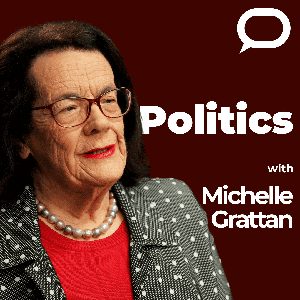
As well as her interviews with politicians and experts, Politics with Michelle Grattan includes “Word from The Hill”, where she discusses the news with members of The Conversation politics team.
Michelle and Peter Browne from the Politics + Society team discuss Anthony Albanese's visit to Ukraine, and the desirability of Australia reopening its embassy there as soon as it can. More generally, Australia's diplomatic presence has slipped and needs to be beefed up.
With the PM now home, he's off to the flood affected areas of NSW. Labor has learned from the former government's experience, and has acted quickly to get in resources, seeking to avoid the criticism Scott Morrison faced in the earlier floods.
Meanwhile the Reserve Bank has again increased interest rates, with the cash rate rising by half a percentage point. Also hitting people's pockets – the latest floods will have some impact on fresh food prices.
Mentioned in this episode:
The Making of an Autocrat
Search: "The Conversation Weekly" for our new series.
Your support matters
Support non-profit journalism you can trust.
Donations 2025
As well as her interviews with politicians and experts, Politics with Michelle Grattan includes “Word from The Hill”, where she discusses the news with members of The Conversation politics team.
Michelle and Peter Browne from the Politics + Society team discuss Anthony Albanese’s weighing a Ukraine visit and whether Australia will announce more support for that country and reopen its embassy there.
They also canvass the just-released Lowy Institute’s poll, which found a narrow majority of Australians support increased defence spending, and Defence Minister Richard Marles’ announcement extending the terms of the military’s top brass.
Meanwhile Parliament House has been like the first week of school, with new MPs being briefed on how the place works. Crossbenchers are in a row with the government over Albanese’s plan to cut back the additional staff they will get, above the entitlement of government and opposition backbenchers, from four in the last parliament to just one.
Mentioned in this episode:
The Making of an Autocrat
Search: "The Conversation Weekly" for our new series.
Your support matters
Support non-profit journalism you can trust.
Donations 2025
Julian Assange, the founder of WikiLeaks, is facing extradition to the United States after this was given the green light by the British Government. Assange faces charges of espionage over the publication of classified information about US actions in the Iraq War.
Barrister Greg Barns has worked pro bono on Assagne’s case for the last nine years as part of the Australian Assange campaign.
Barns argues the Assange issue “goes to fundamental questions like freedom of the press and freedom of speech.”
The election of the Albanese government has reignited calls for Australia to do more to try to bring Assange home.
“We’ve certainly been heartened by the approach taken by the new government,” Barns says.
“I think Anthony Albanese himself has been committed for some time now in his public statements and certainly been supportive privately of Assange’s position. He’s made that clear in a number of statements with a theme really that this has gone long enough.”
“There has been a marked change in rhetoric on the part of Mr Albanese, but also I think in his very telling statement that he did not want to pursue this matter through megaphone diplomacy, which we respect, because of course you’re dealing with Australia’s closest ally.”
“He wants to do something, but he wants to do it in a way that respects the friendship between Australia and the United States.”
On what US President Joe Biden should consider when it comes to the relationship with Australia and the issue of Assange, Barns notes Biden has “given a number of speeches now talking about democracy and the importance of democratic values”.
“This is an opportunity to assert those values by saying that freedom of speech and freedom of the press are fundamentally important in a democracy and in the democratic world. And so there are certainly plenty of avenues and plenty of reasons why President Biden might deal with this matter.”
“This case has gone on too long. There are fundamental principles at stake and it’s time to end it.”
Mentioned in this episode:
Your support matters
Support non-profit journalism you can trust.
Donations 2025
The Making of an Autocrat
Search: "The Conversation Weekly" for our new series.
As well as her interviews with politicians and experts, Politics with Michelle Grattan includes “Word from The Hill”, where she discusses the news with members of The Conversation politics team.
Politics editor Amanda Dunn and Michelle discuss Reserve Bank Governor Philip Lowe’s Tuesday statements about the economic outlook. Lowe has again warned of more rate rises, indicating the bank is determined to reduce inflation from a likely 7% at year’s end down to the 2-3% target range. But the Governor says he doesn’t expect Australia to face a recession.
Meanwhile Home Affairs Minister Clare O'Neil has visited Sri Lanka this week amid concerns the people smugglers are looking to test Australia’s borders now there’s a new government. Australia, which needs Sri Lanka to be as active as possible in stopping boats leaving, has announced $50 million in aid for that country, directed to its food and health needs.
With Wikileaks founder Julian Assange facing extradition from Britain to the United States, Anthony Albanese is under pressure to make strong representations to have the Australian freed. Albanese is sympathetic, but whether he can achieve any progress is another matter.
The calendar for the new parliament has now been released, showing only four sitting weeks between now and the October budget.
Mentioned in this episode:
Your support matters
Support non-profit journalism you can trust.
Donations 2025
The Making of an Autocrat
Search: "The Conversation Weekly" for our new series.
As the energy crisis continues to grip Australia’s east coast with consumers told to limit their consumption and warnings of blackouts Tony Wood, director of the energy program at the Grattan Institute, speaks with Michelle Grattan about why this has happened and what can be done to fix the system.
The crisis is unprecedented, Wood says. “We’ve certainly seen situations where things have got very tight[…] But this sort of extended period when we’ve had major power outages and real stress on the entire system for such a long time has never been seen before.”
He says the crisis could have been minimised if past governments had worked to “address climate change” and “bring on more renewables” as well as all the technology to support a renewables industry.
That being said, Wood points out there are other factors also driving the crisis.
“We still would have had the weather patterns we had in the south, on the east coast of Australia, that caused all the rain and caused all the flooding of the coal mines that interrupted power supply. And of course, we wouldn’t have prevented the Ukraine war and we probably would have had real stress on the gas supply system.”
Wood argues that “things became very complicated very quickly”, as the crisis developed.
On whether the crisis is in part a result of power companies playing the system, he says: “I don’t honestly think the companies were trying to game the system, but I think the commercial arrangements were so complicated [that the Australian Energy Market Operator taking over the system] was the only solution.”
Some have suggested the crisis has been worsened because many assets have been privatised. Wood disagrees. “I don’t think this is a fundamental failure of privatisation […] I do think it’s a fundamental physical problem and government ownership wouldn’t have made much difference.”
“Transitions are always difficult things […] I think we can see where we’re going. It’s got to be a system which is overwhelmingly dominated by renewable energy.”
“In the short term, we are going to manage this transition carefully, which means as we adopt more and more renewables, we’re going to need some of these coal-fired power stations and gas-fired power stations to maintain the stability and the reliability of the system. They should only be there as necessary to support that transition.”
“I have no doubt we can move to net zero by 2050. But remember, it will be net zero. It won’t be absolute zero. And of course, the sooner we start really seriously creating momentum in that direction, the more likely we are to get there and the more likely it is we’ll get there without too much cost.”
Mentioned in this episode:
Your support matters
Support non-profit journalism you can trust.
Donations 2025
The Making of an Autocrat
Search: "The Conversation Weekly" for our new series.
As well as her interviews with politicians and experts, Politics with Michelle Grattan includes “Word from The Hill”, where she discusses the news with members of The Conversation politics team.
This week Michelle and politics editor Amanda Dunn discuss the apparent early signs of a thaw in China’s attitude towards Australia. But Anthony Albanese has responded by saying China needs to do something tangible – removing trade restrictions it has imposed on Australia.
On the domestic front, Energy Minister Chris Bowen warns of a “bumpy” time ahead for power supplies but says you should keep the heater on (just switch off outside lights if they’re not needed).
Amanda and Michelle also canvass the people smugglers testing the new government on border protection, and Friday’s national cabinet meeting where premiers will be pressing the federal government for more funds for their struggling health systems.
Mentioned in this episode:
Your support matters
Support non-profit journalism you can trust.
Donations 2025
The Making of an Autocrat
Search: "The Conversation Weekly" for our new series.
As well as her interviews with politicians and experts, Politics with Michelle Grattan includes “Word from The Hill”, where she discusses the news with members of The Conversation politics team.
While Anthony Albanese this week continued to receive a warm reception abroad, at home the new government faced more difficult news. In this podcast Michelle and politics + society editor Amanda Dunn canvass Tuesday’s 50 basis points rise in interest rates – the latest cost of living blow for many families – and Albanese’s trip to deepen Australia’s relationship with Indonesia. They also take a look at the new shadow ministry, announced by Peter Dutton and David Littleproud on Sunday.
Mentioned in this episode:
Your support matters
Support non-profit journalism you can trust.
Donations 2025
The Making of an Autocrat
Search: "The Conversation Weekly" for our new series.
Tony Burke is the minister for employment and workplace relations and minister for the arts, as well as the leader of the House of Representatives.
If the Fair Work Commission gives a 5.1% rise, in line with inflation, is there a case for it not flowing through to awards, or all awards?
"I can't imagine a situation where there was no flow-through at all. The commission always has the capacity to work out how the flow-through might happen." He notes one option floated has been a flat dollar increase so the flow-through happened differently.
"The commission will work that through. But certainly there are many awards that are not far from the minimum wage.
"And when we talk about the heroes of the pandemic a lot of those people are on those awards. So while the focus has been specifically minimum wage, I tend to use the term low-paid workers."
On reforming parliament, Burke says he is not trying to get rid of the anger. He doesn't want to turn parliament into "a quiet, polite dinner party".
"The debate is fierce and passionate and real. I think that matters and I think it's good for democracy."
Nor is he in favour of scrapping "dorothy dixers", because the government needs the opportunity to tell the house what it is doing.
But there will be more questions for the larger crossbench, and he flags the government won't so routinely shut down opposition moves for debates.
"Standing Orders say there's one question from the crossbench. With a crossbench as large as what we're now facing, that's just not sustainable."
Without changing that, "you're effectively telling a very large number of Australians that because they didn't vote for a major party, their voice is going to be heard less."
Burke says he has a passion for the arts – he was briefly arts minister at the end of the last Labor government – and laments a lack of a cultural policy in recent years.
Mentioned in this episode:
The Making of an Autocrat
Search: "The Conversation Weekly" for our new series.
Your support matters
Support non-profit journalism you can trust.
Donations 2025
As well as her interviews with politicians and experts, Politics with Michelle Grattan includes “Word from The Hill”, where she discusses the news with members of The Conversation politics team.
In this podcast Michelle and politics + society editor Amanda Dunn canvass Anthony Albanese’s ministry, with its record number of women in cabinet but one woman, Tanya Plibersek, having her portfolio unexpectedly switched.
Peter Dutton, on being elevated to Liberal leader, flagged he’d pitch to the suburbs and small business. Meanwhile the Nationals showed that holding all the party’s seats (and winning an extra one) doesn’t guarantee the leader keeps his job. Barnaby Joyce was dispatched, in favour of the rather less flamboyant David Littleproud, to the relief of many Liberals.
Meanwhile, Anthony Albanese will be off to Indonesia next week, in his second overseas trip since winning office.
Mentioned in this episode:
Your support matters
Support non-profit journalism you can trust.
Donations 2025
The Making of an Autocrat
Search: "The Conversation Weekly" for our new series.
Every election is unique, but each also presents comparisons and contrasts with elections past.
In this podcast, Australian National University history professor Frank Bongiorno gives his insights into the current battle but also takes the long views of campaigns.
Bongiorno talks about the role of leaders in what’s often dubbed the “presidential” election age (“a kind of proxy for judgements about policy”) and how Scott Morrison and Anthony Albanese are presenting themselves.
The debate on wages and inflation has overtones of the arguments in the 1970s and 1980s, but “sort of minus the policy”.
This was supposed to be a “khaki” election, but the khaki has faded during the campaign, perhaps unsurprisingly. Most often, Australians are solidly focused on domestic issues when they vote.
The “teals” have been a special feature of this campaign. But are they a new version of other breakaways, like the Australian Democrats of old?
The rise of voter disillusionment is a feature of recent elections, as is the detachment of voters from the major parties. Not so long ago, about seven in ten voters voted at each election the same way as they had voted throughout their lives, Bongiorno says, based on the ANU’s Australian Election Study. But now it is just under four in ten. “That means there’s a growing number of voters whose support is biddable, and the independents and minor parties are benefiting from that kind of loosening of the hold of the major parties over the voters.”
Mentioned in this episode:
Your support matters
Support non-profit journalism you can trust.
Donations 2025
The Making of an Autocrat
Search: "The Conversation Weekly" for our new series.
From the publisher's feed
Ranked by our users in the last 21 days
89 Listeners
21 Listeners
6 Listeners
43 Listeners

19 Listeners
22 Listeners
16 Listeners
80 Listeners
49 Listeners
63 Listeners

2 Listeners
8 Listeners
1 Listeners
316 Listeners
68 Listeners

0 Listeners
25 Listeners

113 Listeners

5 Listeners

160 Listeners

0 Listeners

0 Listeners

0 Listeners

12 Listeners

65 Listeners

0 Listeners

0 Listeners
0 Listeners
0 Listeners

51 Listeners
5 Listeners
64 Listeners

3 Listeners
0 Listeners