
Sign up to save your podcasts
Or



Based on Podcast App listening data
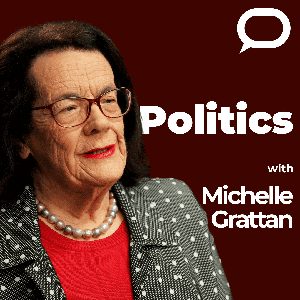
As well as her interviews with politicians and experts, Politics with Michelle Grattan now includes “Word from The Hill”, where she discusses the news with members of The Conversation politics team.
In this episode, politics + society editor Amanda Dunn and Michelle discuss the House of Representatives' slapdown of controversial Nationals MP George Christensen after his attack on COVID-19 lockdowns and mask-wearing.
They also canvass Scott Morrison's initial response to the Intergovernmental Panel on Climate Change report.
Mentioned in this episode:
Your support matters
Support non-profit journalism you can trust.
Donations 2025
The Making of an Autocrat
Search: "The Conversation Weekly" for our new series.
In the lead up to the 2019 election, the Shorten opposition attacked the government's planned 2024 tax cuts, and promised to curb negative gearing and halve the capital gains tax discount.
Last week, the Albanese opposition said it wouldn't try to unwind the tax cuts and would leave negative gearing intact - a pragmatic decision designed to make the party a small target at next year's election.
Speaking to The Conversation in the Mural Hall in Parliament House – COVID restrictions prevented a visit to his office – Shadow Treasurer Jim Chalmers defended the change of stance:
"I think people understand that the highest priority right now needs to be the management of this pandemic, which is doing such damage to the economy and to local communities, and also what the economy and our society will look like after Covid-19. And what we're able to do now is to focus properly on that. And that's why we took that decision and why we announced it immediately."
In a populist move this week, the opposition called on the government to provide a $300 incentive to anyone who was fully vaccinated by 1 December. Such an initiative – vehemently rejected by the government – would cost $6 billion, which Chalmers concedes "is not a small amount of money" but "is a fraction of the money that the government has given in JobKeeper for companies whose profits actually went up and didn't need JobKeeper support. $13 billion at least wasted there."
Chalmers says $300 per vaccinated person would be "a lot of bang for buck in terms of public health outcomes, but also in terms of economic outcomes."
If successful at the election, as treasurer Chalmers would be inheriting an enormous debt, with not much room for spending. Despite this, he says Labor's approach to spending "won't be held to constraints that the government's not held to."
"The government spent a 100 billion dollars in one night on budget night[...]not a dollar offset, and nobody's saying to the government 'what taxes are you raising to pay for that 100 billion dollars in spending?'
"The commitment I give to the Australian people as the alternative treasurer is our budget position will reflect the needs of the Australian people and the economy[...]
"It will be more responsible than the Liberals. We won't be taking a lecture on responsibility from the most wasteful government since Federation, and our budget settings will reflect the economy."
Mentioned in this episode:
The Making of an Autocrat
Search: "The Conversation Weekly" for our new series.
Your support matters
Support non-profit journalism you can trust.
Donations 2025
As well as her interviews with politicians and experts, Politics with Michelle Grattan now includes “Word from The Hill”, where she discusses the news with members of The Conversations’s politics team.
In this episode, politics + society editor Amanda Dunn and Michelle talk about the outcome of last Friday’s National Cabinet meeting - an updated four-point plan for exiting COVID restrictions via vaccination levels of 70% and 80%.
They also discuss Scott Morrison’s vehement rejection of Anthony Albanese’s proposal that Australians be given $300 incentive to get vaccinated.
Mentioned in this episode:
Your support matters
Support non-profit journalism you can trust.
Donations 2025
The Making of an Autocrat
Search: "The Conversation Weekly" for our new series.
Since his retirement from parliament in 2012, Bob Brown has remained an activist on environmental causes - from campaigning against the Adani coal mine to fighting the threat to Tasmania’s Tarkine forest.
Brown was leader when after the 2010 election the Greens helped Julia Gillard retain government by entering an agreement with her. A key part of that deal was the requirement that a price on carbon be introduced.
These days Brown labels Labor “Liberal-lite” - condemning what he sees at its timid stance on climate policy as a lost opportunity to catch up with “public sentiment”.
“No doubt there are people with Labor, a younger set of people who can see this, but the old guard, and that includes Anthony Albanese, don’t see it…”
“Labor is on the edge, trying to make itself look a little bit greener that Morrison[…]but that really doesn’t cut the mustard”.
On Friday, the UNESCO World Heritage committee will vote on whether the Great Barrier Reef should be declared “in danger” - trying to head that off, Australian government has proposed an amendment that the decision be delayed until 2023. Brown believes the listing should have been made “years ago” because the reef is “not only in danger, it’s dying”.
Mentioned in this episode:
Your support matters
Support non-profit journalism you can trust.
Donations 2025
The Making of an Autocrat
Search: "The Conversation Weekly" for our new series.
As well as her interviews with politicians and experts, Politics with Michelle Grattan now includes “Word from The Hill”, where she discusses the news with members of The Conversations’s politics team.
In this episode, politics + society editor Amanda Dunn and Michelle talk about where we never expected to be in mid 2021 – 13 million people locked down in three states.
They also canvass the "car park rorts" in which marginal electorates were brazenly targeted in a $389 million car park construction program for the 2019 election, and if such misconduct will ever be stemmed.
Mentioned in this episode:
Your support matters
Support non-profit journalism you can trust.
Donations 2025
The Making of an Autocrat
Search: "The Conversation Weekly" for our new series.
Barnaby Joyce's sudden elevation to deputy prime minister has put a significant obstacle in the way of Scott Morrison's creep this year to a commitment to a net zero 2050 target. More generally, it has made internal Coalition relations more unpredictable.
In this podcast Joyce reiterates his opposition to embracing the target, while leaving some wriggle room. "With the information that I've got at the moment, it's not on [...] And that's because there is no information."
"What we know at the moment is that there is no list of 'these are the costs to people in regional Australia'." Still, he says, it's not a binary choice. And he stresses that the final decision on the Nationals' stance will be taken in its party room, although he wouldn't expect a formal vote.
Pressed about his controversial dropping of the resources portfolio from cabinet to the outer ministry in his reshuffle, Joyce redefines "cabinet", saying resources is "still in cabinet, even if it is in the outer cabinet".
On the proposal for a coal-fired power station at Collinsville in Queensland – which most observers do not believe will get off the ground – Joyce says he would have "no objections" to the government underwriting the project, but he'd want to see the details before being more positive. "I'm very consistent in the approach I take, which is before you want me to underwrite what you're doing, let me have a look at what it costs and then I'll decide."
Asked about his future if the Coalition wins the election, Joyce says he would intend to stay the full term as leader – but he is also "quite open" to transitioning the party. "I'm not going to hang around like Sir Earle Page [leader of the Country party 1921-39]".
Meanwhile he wants to grow the number of Nationals seats at the election, not just hold onto current ones. He says his eyes are on Lingiari (NT), opportunities in NSW's Hunter Valley and Senate positions.
Mentioned in this episode:
The Making of an Autocrat
Search: "The Conversation Weekly" for our new series.
Your support matters
Support non-profit journalism you can trust.
Donations 2025
As well as her usual interviews with experts and politicians about the news of the day, Politics with Michelle Grattan now includes “Word from The Hill”, where all things political will be discussed with members of The Conversations’s politics team.
In this episode, politics + society deputy editor Judith Ireland and Michelle discuss the allegation by former Liberal MP Julia Banks that she was inappropriately touched at Parliament House by an unnamed cabinet minister, and her labelling of Prime Minister Scott Morrison as a "menacing, controlling wallpaper".
They also canvass the government's decision to reduce the intake of returning international travellers, and the four-stage plan announced to eventually exit the pandemic's restrictions.
Mentioned in this episode:
Your support matters
Support non-profit journalism you can trust.
Donations 2025
The Making of an Autocrat
Search: "The Conversation Weekly" for our new series.
Following her pre-selection victory, Alice Springs deputy mayor Jacinta Nampijinpa Price will now be the Country Liberal party's Senate candidate at the election.
This essentially assures her of victory. The Northern Territory returns one Senate seat to each side of politics.
Price has made a name for herself already as a conservative Indigenous voice, critical of what she labels a paternalistic approach to Aboriginal autonomy. She is also well known for her advocacy work - bringing attention to high rates of domestic violence in Aboriginal and Torres Strait Islander communities.
Her stances on a range of issues have made her a controversial figure within the broad Indigenous community.
In discussing her political agenda, Price highlights affording traditional owners the ability to create business opportunities and own homes on their own land.
"A lot of traditional owners, and in my own experience as a traditional owner, have not had the opportunity to be able to access their own country for economic development opportunities and, and/or have the opportunity to own their own homes."
Price doesn't consider constitutional recognition for Indigenous peoples a policy priority, favouring instead "practical measures that are going to generate outcomes."
"I certainly don't mind the idea of being recognised in our nation's constitution[...][but] I'm more focused on the more immediate, practical issues, trying to provide outcomes for the betterment of Indigenous Australians, as opposed to, you know, symbolic gestures."
Nor does she call herself "a fan of" the voice to parliament, a proposal which would give Aboriginal and Torres Strait Islanders a say in law and policy affecting them.
"I think we do have Indigenous voices in parliament - I guess it's upon them who have been there already to actually be doing a better job[...]if we need a voice to parliament, then clearly that's saying something about the representatives who have been there already."
"If we're reaching for equality, true equality, then that means that Indigenous Australians be on the same footing as all other Australians"
Mentioned in this episode:
Your support matters
Support non-profit journalism you can trust.
Donations 2025
The Making of an Autocrat
Search: "The Conversation Weekly" for our new series.
As well as her usual interviews with experts and politicians about the news of the day, Politics with Michelle Grattan now includes “Word from The Hill”, where all things political will be discussed with members of The Conversations’s politics team.
In this episode, politics + society editor Amanda Dunn and Michelle discuss Scott Morrison's Monday night announcement encouraging younger people to discuss with their doctors getting the AstraZeneca vaccine - despite this not being recommended by the official technical expert group which advises the government
They also dive into how the government's handling of the pandemic is affecting its wider support, and the opposition's ability to cut through in the wake of the pandemic.
Mentioned in this episode:
The Making of an Autocrat
Search: "The Conversation Weekly" for our new series.
Your support matters
Support non-profit journalism you can trust.
Donations 2025
The government's response to the UNESCO recommendation that the Great Barrier Reef be listed as "in danger" was one of surprise and shock.
The recommendation will be considered at UNESCO's World Heritage Committee meeting next month.
While the proposal calls attention to the need to address the effect of climate change and other factors which are degrading the reef, the government alleges it's part of wider global politics.
Environment Minister Sussan Ley is adamant UNESCO's recommendation represents "international politics at play" which have "subverted the normal and proper process."
In the background, the government points to China – which chairs the World heritage Committee – but Ley treads carefully.
"Others can make judgements about what those international politics are..."
"If the politicisation of a process that we have constructively contributed to for over 40 years is now going to be the norm, the points that I will make with the 21 member countries [on the committee] and others who might influence them is that this is the moment to reflect on what the World Heritage Committee is all about and consider the risk to your own properties.
"Because if the entire system is politicised, then we aren't going to be acting in the interests of the natural heritage values of these places."
Her opposition "shadow" Terri Butler wouldn't speculate on what might be underlying the decision but "Australians would be very disappointed if they thought there was anything behind the decision other than concern for the reef."
"What's important here is for people to be able to have confidence in UNESCO in this decision making process."
Butler says heading off the listing is important not just to avoid discouraging tourists from overseas but also for Australia's image on the global stage.
"It's really important [the government] demonstrate to the world they're serious about protecting the reef, preserving it for future generations. And if they do that, they should also be in a position to fight really hard to avoid this particular listing.
Mentioned in this episode:
Your support matters
Support non-profit journalism you can trust.
Donations 2025
The Making of an Autocrat
Search: "The Conversation Weekly" for our new series.
From the publisher's feed
Ranked by our users in the last 21 days
90 Listeners
21 Listeners
6 Listeners

43 Listeners

19 Listeners
22 Listeners

16 Listeners
79 Listeners
49 Listeners
61 Listeners

2 Listeners
8 Listeners
1 Listeners
318 Listeners
68 Listeners

0 Listeners
24 Listeners

114 Listeners

5 Listeners

159 Listeners

0 Listeners

0 Listeners

0 Listeners

12 Listeners

65 Listeners

0 Listeners

0 Listeners
0 Listeners
0 Listeners

51 Listeners
5 Listeners
64 Listeners

3 Listeners
0 Listeners