
Sign up to save your podcasts
Or



Based on Podcast App listening data
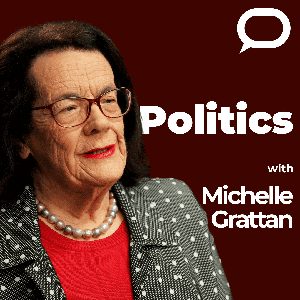
From inside the lockup political and economic journalist Tim Colebatch speaks to Michelle Grattan about his assessment of the budget.
He says the income tax cuts are “well targeted” and that he can’t see any “significant negatives” from the budget. However Colebatch is “surprised the government hasn’t made more effort to find other sources of compensating tax income or making bigger spending cuts in areas where they thought there was waste”.
Ahead of Tuesday’s budget that will unveil the goverment’s tax cut plans, the Coalition is painting Labor as the big taxing party, while the ALP is attacking the government’s push to cut company tax for big business. Meanwhile the Business Council of Australia is taking its message to the public with a grassroots campaign.
Shadow treasurer Chris Bowen tells The Conversation he accepts that big business will “lobby on their own path”. “Clearly we have a difference of view with the Business Council,” he says, though not with every member of it. “Some members of the Business Council say they don’t see the business tax cut as a business priority.”
On budget repair, Bowen he says that “getting back to budget balance is very, very important, and not just budget balance but a good healthy budget surplus of at least 1% of GDP.”
Mentioned in this episode:
Your support matters
Support non-profit journalism you can trust.
Donations 2025
The Making of an Autocrat
Search: "The Conversation Weekly" for our new series.
Ahead of Tuesday’s budget that will unveil the goverment’s tax cut plans, the Coalition is painting Labor as the big taxing party, while the ALP is attacking the government’s push to cut company tax for big business. Meanwhile the Business Council of Australia is taking its message to the public with a grassroots campaign.
Shadow treasurer Chris Bowen tells The Conversation he accepts that big business will “lobby on their own path”. “Clearly we have a difference of view with the Business Council,” he says, though not with every member of it. “Some members of the Business Council say they don’t see the business tax cut as a business priority.”
On budget repair, Bowen he says that “getting back to budget balance is very, very important, and not just budget balance but a good healthy budget surplus of at least 1% of GDP.”
Professor Robert E Kelly from the Department of Political Science and Diplomacy at Pusan University is pessimistic about how much the upcoming Korean summits will achieve.
He told The Conversation that the Trump-Kim summit is likely "to be a bust" because the Americans aren't prepared for the negotiations, while the summit between the two Koreas is more important for issues of economic cooperation and military transparency.
On the reunification of Korea, Kelly says while he wouldn't put a timeline on it he would "be amazed if North Korea would hang on in perpetuity - it's just not designed to deal with modernity."
Robert E Kelly will be appearing in Canberra as part of the Lowy Lecture Series on Wednesday May 2 and at the Sydney Writers' Festival from Friday May 4 - Sunday May 6.
Mentioned in this episode:
The Making of an Autocrat
Search: "The Conversation Weekly" for our new series.
Your support matters
Support non-profit journalism you can trust.
Donations 2025
Professor Robert E Kelly from the Department of Political Science and Diplomacy at Pusan University is pessimistic about how much the upcoming Korean summits will achieve.
He told The Conversation that the Trump-Kim summit is likely "to be a bust" because the Americans aren't prepared for the negotiations, while the summit between the two Koreas is more important for issues of economic cooperation and military transparency.
On the reunification of Korea, Kelly says while he wouldn't put a timeline on it he would "be amazed if North Korea would hang on in perpetuity - it's just not designed to deal with modernity."
Robert E Kelly will be appearing in Canberra as part of the Lowy Lecture Series on Wednesday May 2 and at the Sydney Writers' Festival from Friday May 4 - Sunday May 6.
The Australia-China relationship is again in the headlines, with reports of strains between the two countries, resulting in federal ministers who want to visit finding it hard to get visas.
China is reacting against the Australian government’s rhetoric and especially its legislation, now before parliament, to combat foreign interference in Australian politics.
Malcolm Turnbull plays down the issue but admits “there is certainly some tension”, in the wake of the move on foreign interference.
In this podcast, Charles Sturt University’s Clive Hamilton talks about his controversial book Silent Invasion, in which he alleges a high level of penetration by Chinese officialdom into Australian institutions.
On the flip side, the Australian National University’s Richard Rigby is confident Australian institutions are strong enough to head off any dangers.
Mentioned in this episode:
Your support matters
Support non-profit journalism you can trust.
Donations 2025
The Making of an Autocrat
Search: "The Conversation Weekly" for our new series.
The Australia-China relationship is again in the headlines, with reports of strains between the two countries, resulting in federal ministers who want to visit finding it hard to get visas.
China is reacting against the Australian government’s rhetoric and especially its legislation, now before parliament, to combat foreign interference in Australian politics.
Malcolm Turnbull plays down the issue but admits “there is certainly some tension”, in the wake of the move on foreign interference.
In this podcast, Charles Sturt University’s Clive Hamilton talks about his controversial book Silent Invasion, in which he alleges a high level of penetration by Chinese officialdom into Australian institutions.
On the flip side, the Australian National University’s Richard Rigby is confident Australian institutions are strong enough to head off any dangers.
With the debate about equality heating up ahead of the federal election, Dr Michael Keating, the former head of three federal government departments, warns that while past economic reforms have served Australia well, there’s a risk some people may be left behind if we don’t “change the debate”.
A new book co-authored by University of Queensland Political Economy Professor Stephen Bell and Keating called Fair Share identifies lagging wages, low taxation and technological change as causes of inequality, and outlines comprehensive policy solutions for addressing these.
Keating told The Conversation that taxation revenue will need to rise by another 3 percentage points of GDP in the next three decades.
Mentioned in this episode:
The Making of an Autocrat
Search: "The Conversation Weekly" for our new series.
Your support matters
Support non-profit journalism you can trust.
Donations 2025
With the debate about equality heating up ahead of the federal election, Dr Michael Keating, the former head of three federal government departments, warns that while past economic reforms have served Australia well, there’s a risk some people may be left behind if we don’t “change the debate”.
A new book co-authored by University of Queensland Political Economy Professor Stephen Bell and Keating called Fair Share identifies lagging wages, low taxation and technological change as causes of inequality, and outlines comprehensive policy solutions for addressing these.
Keating told The Conversation that taxation revenue will need to rise by another 3 percentage points of GDP in the next three decades.
From the publisher's feed
Ranked by our users in the last 21 days
90 Listeners

21 Listeners
6 Listeners

43 Listeners

19 Listeners
22 Listeners

16 Listeners
79 Listeners
49 Listeners
61 Listeners

2 Listeners

8 Listeners

1 Listeners
318 Listeners
68 Listeners

0 Listeners
24 Listeners

114 Listeners

5 Listeners

159 Listeners

0 Listeners
0 Listeners

0 Listeners

12 Listeners

65 Listeners

0 Listeners

0 Listeners
0 Listeners

0 Listeners

51 Listeners

5 Listeners

64 Listeners

3 Listeners
0 Listeners