
Sign up to save your podcasts
Or

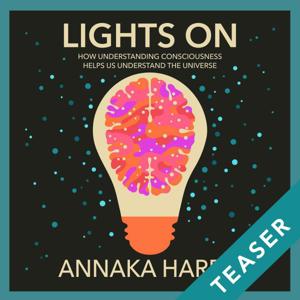

At the heart of science, we face an utterly perplexing question: What is physics describing? What is it fundamentally about? What are the natural laws, laws of? From the perspective of physics, the fundamental stuff of the universe still eludes us, especially if we try to fit the findings of quantum mechanics into a traditional conception of matter and energy. From the perspective of neuroscience, we’ve learned that the world “out there” is not a direct perception, and our perceptions may have even evolved to hide the truth from us, as Donald Hoffman argues. And then from the perspective of the philosophy of mind, Annaka’s own research, reading, and further thinking leads her to believe that consciousness is more likely a fundamental property than an emergent one. Could this different approach help us answer the age-old question? And how would the sciences even attempt to move forward with the hypothesis that consciousness is fundamental? How might we conceivably acquire evidence or validate it experimentally?
 View all episodes
 By Annaka Harris

4.8
3131 ratings
At the heart of science, we face an utterly perplexing question: What is physics describing? What is it fundamentally about? What are the natural laws, laws of? From the perspective of physics, the fundamental stuff of the universe still eludes us, especially if we try to fit the findings of quantum mechanics into a traditional conception of matter and energy. From the perspective of neuroscience, we’ve learned that the world “out there” is not a direct perception, and our perceptions may have even evolved to hide the truth from us, as Donald Hoffman argues. And then from the perspective of the philosophy of mind, Annaka’s own research, reading, and further thinking leads her to believe that consciousness is more likely a fundamental property than an emergent one. Could this different approach help us answer the age-old question? And how would the sciences even attempt to move forward with the hypothesis that consciousness is fundamental? How might we conceivably acquire evidence or validate it experimentally?

90,994 Listeners

43,898 Listeners

43,528 Listeners
15,251 Listeners

9,237 Listeners

26,250 Listeners

6,435 Listeners

9,532 Listeners
4,170 Listeners

7,230 Listeners

1,645 Listeners

29,207 Listeners

15,950 Listeners
630 Listeners

1,146 Listeners