
Sign up to save your podcasts
Or

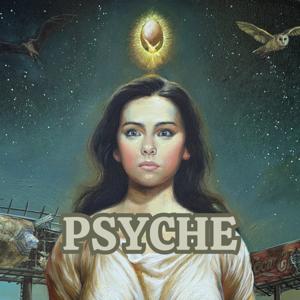


In this episode, I speak with Barbara Daughter. Here's Barbara in her own words:
Since a young teen, I have ardently pursued my personal and spiritual growth and development through a variety of practices and religious / spiritual traditions. Raised as a Lutheran, I entered my undergraduate years, thinking I would become a counseling pastor. Instead, I left that tradition in the 1970s when I discovered for myself that God is beyond our concepts of gender. Since the early 1980s, I have followed pre-Christian wisdom traditions as they have been shared by exemplars like Z. Budapest and Starhawk. Because I view our spiritual understanding as the foundation for our choices in the world, decades later, I was led to completing my Master's degree in Philosophy & Religion with a concentration in Women's Spirituality, as well as working directly with advanced spiritual teachers, honing my awareness of and connection to the world beyond the seen and what is widely-accepted as "true." Through both my academic studies and personal explorations, I have continued to return to and deepen my connection with our Mother Earth and many of Her nature-teachers.
As an artist, I work primarily in acrylics, preferring large-scale “magical realism” paintings of imaginal, inspirational, and mythical women. I have studied with Shiloh Sophia, internationally-renowned artist, and founder of Intentional Creativity, but am otherwise self-taught. As a teacher of Intentional Creativity, I create the space for others to explore their own creativity, inner messages, and healing, while rendering and illuminating them on canvas and in their lives.
In this episode we explore:
Website: https://www.becomingyouart.com
In this episode of the podcast, I speak with Eliot Rosenstock. Eliot is a psychotherapist and author. In this episode, we discuss ideas from his two books, Zizek in the Clinic and The Ego and Its Hyperspace. In the end, the therapist does not tell the client what to think or how to live. The therapist works with the client, helping them to learn how to think and construct their own identity in the world.
Books:
https://www.johnhuntpublishing.com/zer0-books/authors/eliot-rosenstock
Social Media:
https://twitter.com/CtrlRetrnRpresd?ref_src=twsrc%5Egoogle%7Ctwcamp%5Eserp%7Ctwgr%5Eauthor
https://www.facebook.com/Eliot-Rosenstock-Clinical-Psychology-MA-RAMFT-375670716175350/
In this episode, I speak with Kenyatta Sadiki. Kenyatta is a human services professional. He works for Advantage Lifecare Solutions. They are dedicated to meeting specific needs in four main categories:
In this episode, we explore many topics:
Connect with Kenyatta: https://www.advantagelifecaresolutions.com
This is the third installment of my series with Patrick McGrath-Muñiz exploring the first twenty-two cards or the Major Arcana of the Tarot. Patrick is a professional artist from Puerto Rico. His work has been featured in museums across the country.
In this episode, we explore the symbolism and significance of the Popess card. Some of the ideas we explore include:
Website: https://www.patrickmcgrath-art.com/
Texas Monthly Article: https://www.texasmonthly.com/arts-entertainment/houston-artist-neocolonial-tarot-deck/
Crossing Waters : Undocumented Migration in Hispanophone Caribbean and Latinx Literature & Art
In this episode, I speak with Rick Lee James. Rick Lee James is a worship leader, singer and songwriter, speaker, author, and podcast host with over two decades of experience in ministry. In 2021 he enrolled as a graduate student at Loyola University and in 2022 began his clinical pastoral education working for Kettering Health, as an intern hospital chaplain, and as of August 2022, accepted a residency.
Over the years Rick has used music to share the gospel in numerous venues from the National Worship Leader Conference to the world famous Ryman Auditorium.
As host of the podcast “Voices In My Head” Rick has worked with Jason Gray, Andrew Peterson, Sara Groves, Paul Baloche, All Sons and Daughters, Michael Card, Brian Zahnd, Tripp York, Brothers McClurg, Brett McCracken, Ian Morgan Cron, Steven Tobolowsky, Walter Brueggemann and many more.
Rick also created and curates the popular Twitter account @MisterRogersSay where he daily posts quotes from Fred Rogers. As an outgrowth of the popularity of the Twitter account, Rick also created and hosts the podcast Welcome To The Neighborhood: A Mister Rogers Tribute Podcast where he has welcomed guests such as Tom Junod, François (Officer) Clemmons, David Newell (Mr. McFeely), Joe (Handyman) Negri, Jon Secada, Jaci Velasquez, Tom Bergeron, Lee Greenwood, and more.
In this episode we explore:
Website: https://www.rickleejames.com
In this episode, I speak with Dr. Niki Kasumi Clements. Niki is the Watt J. and Lilly G. Jackson Associate Professor of Religion at Rice University. Dr. Clements is an ethicist working on how humans can shape their lives through daily practices and come to critique the social, political, cultural, economic, and ecological factors that render humans differentially vulnerable to structural violence. Clements’s first monograph, Sites of the Ascetic Self (2020), approaches these questions through the ethics of John Cassian (c.360-c.435), the late ancient ascetic whose views of human ability contributed to new forms of life in a shifting empire. Between 1977 and 1984, philosopher Michel Foucault became particularly interested in Cassian as part of the genealogy of the desiring subject–and Sites reconsiders these readings through Cassian’s attention to embodied, affective, and inter-relational practices.
Clements’s research for her second monograph, Foucault the Confessor, engages Foucault’s fascination with Christianity and ethics through both his published works and the archives at the Bibliothèque nationale de France. The posthumous publication of History of Sexuality, Volume 4, Les Aveux de la chair (2018, translated as Confessions of the Flesh in 2021) confirms the extent of his engagement with early Christianity and ancient sexual ethics as an art of living; it also confirms just how important the study of religion is for engaging Foucault’s work on subjection, alongside the possibilities for self-formation and challenges to structures of domination.
Influenced by her mentors at Brown University (Ph.D., 2014), Harvard Divinity School (M.T.S., 2007), and Sarah Lawrence College (B.A., 2003), as well as her students at Rice, Clements’s teaching and service share her research attention to recognizing human ability and critiquing structural disparities.
In this episode, we explore a various topics:
Michel Foucault (some of the exciting new findings from the archives)
Ancient philosophical and spiritual self-care practices
Why Christianity (through St. Augustine) routed sexuality and subjectivity so closely together
How to think about the cultivation of individual autonomy while also participating in collective spaces of resistance
Why modern figures like Jordan Peterson are dangerous (even if they have some useful points to make)
How men can think about their complicity in systems of oppression while also listening to themselves and others as a means of self-care and political engagement.
Website: http://www.nikiclements.com
In this episode, I am joined by Aaron Inkrott and Amy Galpin. Aaron is the Brew Master at Saint Arnold Brewing Company. Amy is a Licensed Professional Counselor Supervisor in Katy, TX. We have a great conversation about Thich Nhat Hanh's book, "Living Buddha, Living Christ."
In this conversation we explore various topics including:
In this episode, I have a conversation with James A. Godley. He is a postdoctoral fellow in the Society of Fellows at Dartmouth College. James's work explores mourning as a process of retroactive invention in literary and philosophical works. His current book project, “Unthinkable Loss: Mourning and the Object of Speculation in Nineteenth Century U.S. Literature,” examines how slavery, the privatization of mortality, and the Civil War brought vast changes to the ritual structure and philosophy of death in the 19th century, impelling American literary authors to find new ways of mapping speculative futures for those who would otherwise have been condemned to a futureless end. Combining literary-historical, philosophical, and psychoanalytic perspectives, the project will constitute the first of a two-volume set devoted to the problem of “infinite grief” in modern and contemporary U.S. literature. Godley’s publications include Inheritance in Psychoanalysis, a co-edited anthology of theoretical interventions into biological, anthropological, aesthetic, and clinical notions of inheritance, and an article on the critique of finitude in Hegel and Lacan in Angelaki.
In this episode, we discuss Herman Melville's The Confidence-Man and its implications for modern political engagement. We weave together a variety of ideas including Freud's myth of the primal horde, Jacques Lacan's notion of the phallus and the exception of masculinity as well as William James' pragmatic philosophy. When it comes to political engagement, we can't reduce everything to knowledge. We have to wrestle with the potent reality of enjoyment.
If you want to connect with James: [email protected]
Here's the article by Jacqueline Rose that we mention:
https://www.theguardian.com/commentisfree/2016/nov/15/trump-disaster-modern-masculinity-sexual-nostalgian-oppressive-men-women
From the publisher's feed

90,540 Listeners

15,257 Listeners

2,107 Listeners

1,461 Listeners

131 Listeners
314 Listeners

515 Listeners

584 Listeners

596 Listeners

355 Listeners

3,592 Listeners

57 Listeners

202 Listeners

285 Listeners
236 Listeners