
Sign up to save your podcasts
Or

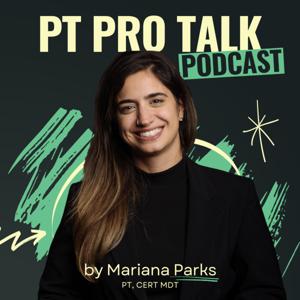


💡 In this episode of PT Pro Talk, host Mariana Parks sits down with Dr. Danilo De Oliveira Silva, Associate Professor at La Trobe University, to unravel the last 40 years of research on Patellofemoral Pain (PFP).
They take a deep dive into the history of PFP, debunking the effectiveness of early surgical interventions and the long-standing obsession with Vastus Medialis (VMO) isolation. Dr. Danilo clarifies current best practices, explaining why general quadriceps and hip strengthening are the gold standard and how treatments like foot orthoses and taping fit into the clinical puzzle.
You will also learn about the "Envelope of Function" theory by Scott Dye, why "too much, too soon" is often the real culprit behind the pain, and why you should stop telling your patients to cease the activities they love
💭 “If you don’t overload your knee, even if you have an impaired quadriceps, high subtalar pronation, or weak hip muscles, you will not have pain.” - Dr. Danilo De Oliveira Silva
📚You will learn about:
How thinking around patellofemoral pain has changed over the last few decades
What the evidence shows about strength, movement, and biomechanics
The role of pain processing and neural mechanisms in ongoing symptoms
How load management and the envelope of function guide treatment today
🔎 Danilo's resources of information:
My Knee Cap
Track education
📲 Danilo's contact information:
IG
X
🎥Link to interview on Youtube
🚨Try Hanna Health free for 30 days - a customizable HEP platform where you can use your own videos, edit quickly, and track patient access. Start your trial here.
👉 Share Your Feedback
🎙Join our email list to receive podcast updates
📸Instagram
📱Facebook
💻LinkedIn
🐦Twitter
📩Email: [email protected]
PT Pro Talk Podcast is only possible with the support of forward-looking and innovative companies like Hanna Health and SaraHealth.
💡 In this episode of PT Pro Talk, host Mariana Parks sits down with Dr. Robert Medcalf, Physical Therapist and MDT expert. They discuss the challenges of assessing and treating Spondylolisthesis without relying solely on imaging results.
Dr. Medcalf shares insights on differentiating between a stable and unstable slip and how to guide patients through recovery using Mechanical Diagnosis and Therapy principles. The conversation also dives deep into the myth that all spondylolisthesis patients must avoid extension, offering a logical framework for when to load the spine and when to focus on stabilization.
💭 “The interesting thing about that study is that they found there was no association between spondylolisthesis and back pain..” - Dr. Robert Medcalf
📚You will learn about:
What spondylolisthesis is, how it’s classified, and why imaging findings don’t tell the whole story
Where pain in spondylolisthesis truly comes from
How to assess and manage spondylolisthesis conservatively using mechanical principles
When surgery may be appropriate
🔎 Robert's resources of information:
SPRATT, Kevin F. et al. Efficacy of flexion and extension treatments incorporating braces for low-back pain patients with retrodisplacement, spondylolisthesis, or normal sagittal translation. Spine, v. 18, n. 13, p. 1839–1849, 1993
OH, Jacob Yoong-Leong et al. Paradoxical motion in L5-S1 adult spondylolytic spondylolisthesis. European Spine Journal, v. 21, n. 2, p. 262-267, 2011.
HARDWICK, D. et al. Outcomes of strengthening approaches in the treatment of low-grade spondylolisthesis. Physical Therapy Reviews, v. 17, n. 5, p. 284-291, 2012. DOI: 10.1179/1743288X12Y.0000000025.
📲 Robert's contact information:
🎥Link to interview on Youtube
🚨Try Hanna Health free for 30 days - a customizable HEP platform where you can use your own videos, edit quickly, and track patient access. Start your trial here.
👉 Share Your Feedback
🎙Join our email list to receive podcast updates
📸Instagram
📱Facebook
💻LinkedIn
🐦Twitter
📩Email: [email protected]
PT Pro Talk Podcast is only possible with the support of forward-looking and innovative companies like Hanna Health and SaraHealth.
💡In this episode of PT Pro Talk, host Mariana Parks sits down with Dr. Clare Ardern, Editor-in-Chief of JOSPT and researcher at the University of British Columbia. They discuss the challenges of bridging the gap between research and clinical practice.
Dr. Clare shares insights on how busy clinicians can stay updated and how to sift through the overwhelming volume of new information. The conversation also dives deep into the emerging role of physiotherapists in Emergency Departments, as well as the ethical implications (and failures) of using AI and digital triage tools in musculoskeletal care.
💭 “It’s not just about publishing research - it’s about how we disseminate it so clinicians can actually use it.” - Dr. Clare Ardern.
👉🏻Dr. Clare Ardern is a physiotherapist, senior researcher, and Editor-in-Chief of the Journal of Orthopaedic & Sports Physical Therapy (JOSPT) and JOSPT Open. She leads the DigiMSK research team at the University of British Columbia, which brings together researchers, clinicians, patients, designers, and policymakers to re-imagine musculoskeletal care.
Clare’s work focuses on helping clinicians translate high-quality evidence into practical decisions, understanding the impact of health research on policy and society, and improving return-to-sport outcomes after injury. She also hosts the weekly JOSPT Insights podcast, downloaded over 35,000 times each month.
📚You will learn about:
How JOSPT prioritizes research that directly impacts clinical decision-making
Practical ways clinicians can stay current with evidence without information overload
Why research and guidelines should guide - not dictate - clinical care
How physiotherapists are shaping MSK care in primary care, emergency departments, and digital health
🔎 Dr. Clare's resources of information:
Building Trusted Networks: Reach out to trusted colleagues to create a support system. Use this network to openly discuss evidence-based practice and support each other in driving continuous improvement.
📲 Dr. Clare's contact information:
University of British Columbia
🎥Link to interview on Youtube
🚨Try Hanna Health free for 30 days - a customizable HEP platform where you can use your own videos, edit quickly, and track patient access. Start your trial here.
👉 Share Your Feedback
🎙Join our email list to receive podcast updates
📸Instagram
📱Facebook
💻LinkedIn
🐦Twitter
📩Email: [email protected]
PT Pro Talk Podcast is only possible with the support of forward-looking and innovative companies like Hanna Health and SaraHealth.
💡In this episode of PT Pro Talk, Chris Prentiss, Dr. Alyson Hackett, and Kayla Rathbone share real-world insights on what makes home exercise programs effective, and why so many fail. Drawing from decades of clinical experience, they discuss common frustrations clinicians face, from unclear instructions and time-consuming workflows to technology that creates barriers instead of solutions.
The conversation explores how clarity, simplicity, patient education, and flexible tools can improve adherence, efficiency, and clinical outcomes.
💭 “Having videos and pictures all in one place, in a way that reflects how I practice with an MDT background, has been a big change and saves me a lot of time.” - Kayla Rathbone
👉🏻 Chris Prentiss, PT, Cert. MDT - Chris is a physical therapist with over 30 years of experience specializing in spine and orthopedic care. A SUNY Stony Brook graduate and certified McKenzie practitioner, he focuses on accurate diagnosis and individualized treatment for sports injuries and spinal disorders.
👉🏻 Dr. Alyson Hackett, PT, DPT, Cert. MDT, OCS - With 20+ years of experience, Dr. Alyson is board-certified in orthopaedics, vestibular rehab, and the McKenzie method. Currently an injury prevention specialist at Work Right NW, she integrates physical therapy with ergonomics, yoga, and wellness coaching to improve employee health.
👉🏻 Kayla Rathbone, MScPT, Cert. MDT, Cert. OAC™ - Kayla is an Ontario-based physiotherapist and certified MDT clinician with 12+ years of experience. She specializes in treating persistent muscle and nerve pain using nervous-system strategies and lifestyle factors. Beyond the clinic, she is a business owner and mom of two.
📚You will learn about:
Why patients struggle with HEPs and what improves adherence
How clinicians can save time and reduce workflow frustrations
Practical ways to make HEPs clearer, more engaging, and easier to follow
How flexible HEP tools support better outcomes for both clinicians and patients
📲 Kayla's contact information:
Clinic website
IG
Email: [email protected]
📲 Dr. Alyson's contact information:
Email: [email protected]
📲 Chris's contact information:
IG
Website
Email: [email protected]
🎥Link to interview on Youtube
🚨Try Hanna Health free for 30 days - a customizable HEP platform where you can use your own videos, edit quickly, and track patient access. Start your trial here.
👉 Share Your Feedback
🎙Join our email list to receive podcast updates
📸Instagram
📱Facebook
💻LinkedIn
🐦Twitter
📩Email: [email protected]
PT Pro Talk Podcast is only possible with the support of forward-looking and innovative companies like Hanna Health and SaraHealth.
💡In this episode, researcher and exercise physiologist Brendan Mouatt explores how language, context, and perception influence the experience of pain, the response to exercise, and clinical outcomes.
He discusses how patients construct meaning from what they feel and see, why overly anatomical explanations can reinforce fear and fragility, and how professionals can create environments that promote safety, autonomy, and adaptation.
A practical and current conversation about communication, behavior, and the complexity of pain.
💭 “What we say - and the words we use - really do matter… It affects whether a person feels fragile or adaptable and can be nudged in the right direction." - Brendan Mouatt
👉🏻Brendan Mouatt is an Accredited Exercise Physiologist focused on pain, injury, human behaviour, and biopsychosocial healthcare. His Doctoral research at the University of South Australia investigates how clinician communication and behaviour shape patient self-perception, capability, and future actions.
He develops and delivers continuing education for allied health professionals and GPs, translating contemporary pain science into practical clinical application.
Brendan is also the CEO of the Neuro Orthopaedic Institute (Noigroup), a science-driven organisation in Adelaide dedicated to improving the lives of people experiencing pain through evidence-based publications, education, and resources.
📚You will learn about:
How words and clinical decisions shape patient confidence and recovery.
How exercise cues can help or hinder beliefs about the body.
Practical tips for pain education that don’t backfire.
Simple ways to apply these insights in everyday practice.
📲 Brendan's contact information:
X
E-mail: [email protected]
📲 NOI Group's contact information:
X
IG
YouTube Channel
🔎 Brendan's resource of information:
Noi Group courses
Pain Revolution
🎥Link to interview on Youtube
🚨Try Hanna Health free for 30 days - a customizable HEP platform where you can use your own videos, edit quickly, and track patient access. Start your trial here.
👉 Share Your Feedback
🎙Join our email list to receive podcast updates
📸Instagram
📱Facebook
💻LinkedIn
🐦Twitter
📩Email: [email protected]
PT Pro Talk Podcast is only possible with the support of forward-looking and innovative companies like Hanna Health and SaraHealth.
💡In this episode of PT Pro Talk, Professor Jill Cook clearly explains why many people misdiagnose, what types of load irritate tendons, and how to identify the true trigger that initiates pain (re-airing).
Jill also presents valuable insights into clinical evaluation, classic signs for each tendon, myths about rest, how to use isometric exercises correctly, and when not to rely solely on imaging findings.
💭 “We would expect that, immediately after the isometrics, there would be at least a 50% drop in their pain." - Prof. Jill Cook
👉🏻Professor Jill Cook is an Emeritus Professor in Musculoskeletal Health at the La Trobe Sport & Exercise Medicine Research Centre in Melbourne, Australia, and one of the world’s leading researchers in tendon health. With more than 30 years of clinical and research experience, she is internationally recognized for her work on tendinopathy and for co-developing the widely used Tendon Continuum Model.
Since completing her PhD in 2000, Prof. Cook has focused on tendon pathology, rehabilitation, load management, treatment options, and the risk factors that contribute to tendon injury - helping bridge the gap between research and real-world clinical practice. Alongside her academic role, she runs a specialist tendon physiotherapy practice and teaches globally, delivering lectures and workshops to help clinicians better understand and manage tendon conditions.
📚You will learn about:
Tendinopathy mechanism of injury
The different stages of tendinopathy pathology development
What you should look for in the clinical assessment
Tendinopathy differential diagnosis
Treatment strategies
📲 Jill's contact information:
X
🔎 Jill's resource of information:
Barcelona's 2021 TENDON GUIDE focuses on tendon injuries in football players.
🎥Link to interview on Youtube
🚨 Try Hanna Health free for 30 days - a customizable HEP platform where you can use your own videos, edit quickly, and track patient access. Start your trial here.
👉 Share Your Feedback
🎙Join our email list to receive podcast updates
📸Instagram
📱Facebook
💻LinkedIn
🐦Twitter
📩Email: [email protected]
PT Pro Talk Podcast is only possible with the support of forward-looking and innovative companies like Hanna Health, NeckCare and SaraHealth.
💡 In this episode of PT Pro Talk, Dr. Alison Grimaldi, a world-renowned physical therapist and researcher, talks with Mariana Parks about the complexities of gluteal tendinopathy and the evolution of understanding lateral hip pain.
During the interview, explore the myths and evidence of gluteal tendinopathy, understand the clinical reasoning behind differential diagnosis, and the latest evidence-based strategies for effective treatment.
💭 “The clam can be particularly provocative for gluteal tendinopathy, as well as for anterior rim pathologies or hip flexor issues." - Dr. Alison Grimaldi
👉🏻Dr. Alison Grimaldi is an Australian Sports Physiotherapist, a fellow of the Australian College of Physiotherapists and the practice principal of PhysioTec Physiotherapy in Brisbane, with over 30 years of clinical experience and a special interest in the management of hip conditions.
She has a Bachelor of Physiotherapy, Masters of Sports Physiotherapy and a PhD through the University of Queensland, Australia. Alison was a key investigator on the multicentre LEAP randomised clinical trial comparing the effects of treatment for gluteal tendinopathy.
She has had involvement in research for over 20 years, and has co-authored over 40 peer-reviewed scientific papers. Alison also runs a Hip Academy with online learning and live mentoring at www.dralisongrimaldi.com
📚You will learn about:
How to confidently differentiate gluteal tendinopathy from other sources of lateral hip pain using a practical cluster of clinical tests.
Why traditional approaches like the clam exercise, ITB stretching, and corticosteroid injections may worsen or delay recovery - and what to do instead.
How to design a progressive, evidence-based exercise program without aggravating symptoms
The key education and load management strategies from the LEAP trial that improve long-term outcomes.
📲 Alison's contact information:
Website
X
Email: [email protected]
🔎 Alison's resource of information:
Article about Myths
LEAP Results
Hip Academy
Course for patients on Gluteal Tendinopathy
Book about Hip Tendinopathies
🎥Link to interview on Youtube
PS: To join the HEP interest list, please click here
👉 Share Your Feedback
🎙Join our email list to receive podcast updates
📸Instagram
📱Facebook
💻LinkedIn
🐦Twitter
📩Email: [email protected]
PT Pro Talk Podcast is only possible with the support of forward-looking and innovative companies like Hanna Health, NeckCare and SaraHealth.
💡 In this episode of PT Pro Talk, physiotherapist Andrew Wynd dives deep into the rehabilitation process for ankle sprains - one of the most common yet often misunderstood injuries in sports and daily life.
Andrew breaks down the difference between lateral ankle sprains and syndesmosis (high ankle) injuries, explaining how the mechanism of injury directly influences treatment choices and recovery timelines.
💭 “If you don’t know how to find the subtalar joint, how to assess it well, then how are you gonna know if it’s got a normal range or not?" - Andrew Wynd
👉🏻Andrew Wynd is an APA-Titled Sports Physiotherapist and is the founder and director of Balwyn Sports & Physiotherapy Centre in Melbourne. He also is the CEO of Freestyle Feet, an innovative company that aims to solve foot/ankle issues through education and products. Andrew is globally recognised for his foot & ankle clinical work, holding a Post Graduate Master’s Degree in Sports Physiotherapy. Andrew has been a casual academic teacher at La Trobe University and is passionate about ongoing clinician development and mentoring.
📚You will learn about:
💥 Learn how to spot the difference between ankle sprains and high ankle injuries
🦶 Key tips for assessment — and when imaging is really needed
💪 Rehab progressions that actually work (surgical & non-surgical)
⚡ Common mistakes to avoid and how to prevent long-term instability
📲 Andrew's contact information:
Clinic Website
YouTube
🔎 Andrew's resource of information:
YouTube
Freestyle Feet
Course
The Ankle Sprain Masterclass
🎥Link to interview on Youtube
PS: To join the HEP interest list, please click here
👉 Share Your Feedback
🎙Join our email list to receive podcast updates
📸Instagram
📱Facebook
💻LinkedIn
🐦Twitter
📩Email: [email protected]
PT Pro Talk Podcast is only possible with the support of forward-looking and innovative companies like Hanna Health, NeckCare and SaraHealth.
💡 In this episode of PT Pro Talk, Dr. Michael Rowe discusses the impact of artificial intelligence on physical therapy, from clinical reasoning to how we learn, communicate, and make decisions.
He explains how AI can serve as a thought partner, helping physical therapists reflect on their own practices, identify biases, and explore new perspectives on care.
💭 “I think about AI as a thinking partner, not like a calculator where you ask it to do something and it's gonna give you a perfect response" - Dr. Michael Rowe
👉🏻 Dr Michael Rowe is the Director of Teaching and Learning in the School of Health and Care Sciences at the University of Lincoln in the United Kingdom. Michael's scholarship focuses on the transformative potential of digital technologies in professional education, with an emphasis on how they mediate relationships between teachers and students in learning environments. More recently, he has concentrated on the implications of generative AI in higher education and professional practice.
📚You will learn about:
How AI can be your partner in clinical reasoning - from notes to diagnosis.
Smart ways to use AI ethically in your everyday practice.
Where AI helps… and where your clinical judgment is still key.
How AI is shaping physical therapy education and professional growth.
📲 Michael's contact information:
Website
🎥Link to interview on Youtube
PS: To join the HEP interest list, please click here
👉 Share Your Feedback
🎙Join our email list to receive podcast updates
📸Instagram
📱Facebook
💻LinkedIn
🐦Twitter
📩Email: [email protected]
PT Pro Talk Podcast is only possible with the support of forward-looking and innovative companies like NeckCare and SaraHealth.
💡 In this episode, Dr. Jean-Philippe Deneuville discusses the key findings from his recently published research, which explores whether directional preference can truly be used to identify discogenic pain.
He shares how his study contributes to understanding directional preference diagnostic accuracy, discogenic pain subgroups, and how these insights can improve clinical reasoning, diagnosis accuracy, and treatment outcomes.
💭 “If we can identify directional preference in a patient, we have a very good probability of having discogenic pain." - Dr. Jean-Philippe Deneuville
👉🏻Dr. Jean-Philippe Deneuville is a French physiotherapist specializing in musculoskeletal disorders. He holds an International MDT Diploma, a Master’s in Musculoskeletal Physiotherapy from the University of Dundee, and a Ph.D. in Mechanical Bioengineering. A McKenzie Institute faculty member since 2017, he has taught over 100 courses worldwide. His research focuses on intervertebral disc disorders and spinal pain, working closely with the PRISMATICS team to develop new diagnostic and treatment technologies. He currently balances clinical practice, teaching, and research.
📚You will learn about:
Directional Preference accuracy - how it identifies discogenic low back pain.
Screening limits - why the absence of Directional Preference doesn’t rule out discogenic pain.
Directional Preference vs. Centralization Phenomenon - key similarities and subtle differences.
Discogenic pain subgroups - including Modic changes and what it means for patient care.
🔎 Jean-Philippe's resource of information:
DENEUVILLE, Jean-Philippe; LASLETT, Mark; et al. Concurrent validity of the directional preference phenomenon compared to controlled lumbar discography: A supplementary analysis of a diagnostic accuracy study. Musculoskeletal Science and Practice, v. 80, 2025. Available here.
📲 Jean-Philippe's contact information:
Email: [email protected]
🎥Link to interview on Youtube
PS: To join the HEP interest list, please click here
👉 Share Your Feedback
🎙Join our email list to receive podcast updates
📸Instagram
📱Facebook
💻LinkedIn
🐦Twitter
📩Email: [email protected]
PT Pro Talk Podcast is only possible with the support of forward-looking and innovative companies like NeckCare and SaraHealth.
From the publisher's feed

43,358 Listeners

38,650 Listeners

111 Listeners
370 Listeners

363 Listeners
40 Listeners
40 Listeners

6,168 Listeners