
Sign up to save your podcasts
Or

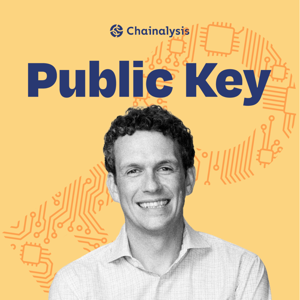


The Intersection of Blockchain, NFTs and Intellectual Property Law
“Code is Law” is one of the big myths when it comes to IP Law and blockchain. In this episode, host Ian Andrews talks to Moish Peltz (Partner, Co-Chair of Emerging Technologies & Blockchain Practice Group, FRB Law) to demystify this myth and explain how the courts will apply copyright and IP laws to emerging technology like blockchain, NFTs and AI generated content.
In the episode, Moish explains recent cases between luxury brands and NFT creators, and how those cases will impact the industry as regulatory, legal and tax requirements increasingly cause NFT marketplaces to phase out creator royalties.
Moish also touches on how the music industry still faces challenges that were first presented by file sharing sites like Napster, and highlights current and future legal cases that will shape the blockchain and NFT industry forever.
Check out more resources provided by Chainalysis that perfectly complement this episode of the Public Key.
This website may contain links to third-party sites that are not under the control of Chainalysis, Inc. or its affiliates (collectively “Chainalysis”). Access to such information does not imply association with, endorsement of, approval of, or recommendation by Chainalysis of the site or its operators, and Chainalysis is not responsible for the products, services, or other content hosted therein.
Our podcasts are for informational purposes only, and are not intended to provide legal, tax, financial, or investment advice. Listeners should consult their own advisors before making these types of decisions. Chainalysis has no responsibility or liability for any decision made or any other acts or omissions in connection with your use of this material.
Chainalysis does not guarantee or warrant the accuracy, completeness, timeliness, suitability or validity of the information in any particular podcast and will not be responsible for any claim attributable to errors, omissions, or other inaccuracies of any part of such material.
Unless stated otherwise, reference to any specific product or entity does not constitute an endorsement or recommendation by Chainalysis. The views expressed by guests are their own and their appearance on the program does not imply an endorsement of them or any entity they represent. Views and opinions expressed by Chainalysis employees are those of the employees and do not necessarily reflect the views of the company.
The Future of Investigations and Privacy on the Blockchain
One of the biggest challenges in overseeing the evolving blockchain space is balancing privacy with blockchain investigations.
Check out more resources provided by Chainalysis that perfectly complement this episode of the Public Key.
This website may contain links to third-party sites that are not under the control of Chainalysis, Inc. or its affiliates (collectively “Chainalysis”). Access to such information does not imply association with, endorsement of, approval of, or recommendation by Chainalysis of the site or its operators, and Chainalysis is not responsible for the products, services, or other content hosted therein.
Our podcasts are for informational purposes only, and are not intended to provide legal, tax, financial, or investment advice. Listeners should consult their own advisors before making these types of decisions. Chainalysis has no responsibility or liability for any decision made or any other acts or omissions in connection with your use of this material.
Chainalysis does not guarantee or warrant the accuracy, completeness, timeliness, suitability or validity of the information in any particular podcast and will not be responsible for any claim attributable to errors, omissions, or other inaccuracies of any part of such material.
Unless stated otherwise, reference to any specific product or entity does not constitute an endorsement or recommendation by Chainalysis. The views expressed by guests are their own and their appearance on the program does not imply an endorsement of them or any entity they represent. Views and opinions expressed by Chainalysis employees are those of the employees and do not necessarily reflect the views of the company.
Everything you Need to Know About Blockchain-Based Payment Systems
Napster evolved into Spotify, Skype evolved to Whatsapp Calls and Facetime, even speaking to a teller at a bank has evolved into the ATMs and internet banking, but the payment industry seemingly hasn’t progressed much in the last century and in our latest episode, host Ian Andrews sits down with Joey Garcia, Director and Head of Public Affairs, Policy, Regulatory Affairs at Xapo Bank, who explains why.
Joey shares his early days involved in digital asset regulation in Gibraltar and how Xapo Bank is bridging the gap between traditional banking and blockchain-based payment settlement systems.
He shares the promise of stablecoins in the future of the digital asset landscape and how the defunct Facebook Libra / Diem project may have paved the way for thoughtful contributions to the EU’s MiCA Regulation.
He touches on grassroots adoption and use cases in Africa and LATAM and tries to shine a light on where DeFi will land when it comes to regulatory oversight.
Check out more resources provided by Chainalysis that perfectly complement this episode of the Public Key.
This website may contain links to third-party sites that are not under the control of Chainalysis, Inc. or its affiliates (collectively “Chainalysis”). Access to such information does not imply association with, endorsement of, approval of, or recommendation by Chainalysis of the site or its operators, and Chainalysis is not responsible for the products, services, or other content hosted therein.
Our podcasts are for informational purposes only, and are not intended to provide legal, tax, financial, or investment advice. Listeners should consult their own advisors before making these types of decisions. Chainalysis has no responsibility or liability for any decision made or any other acts or omissions in connection with your use of this material.
Chainalysis does not guarantee or warrant the accuracy, completeness, timeliness, suitability or validity of the information in any particular podcast and will not be responsible for any claim attributable to errors, omissions, or other inaccuracies of any part of such material.
Unless stated otherwise, reference to any specific product or entity does not constitute an endorsement or recommendation by Chainalysis. The views expressed by guests are their own and their appearance on the program does not imply an endorsement of them or any entity they represent. Views and opinions expressed by Chainalysis employees are those of the employees and do not necessarily reflect the views of the company.
Exploring the Complexities of Crypto Taxes and Accounting
Crypto and digital asset taxation and accounting still seems to leave many crypto goer’s and institutions looking to hold crypto on their balance sheets, with sleepless nights.
They explain the challenges of tracking and reporting crypto transactions, the distinction between tax and accounting and explore the concept of cryptocurrency as property, while leaving room for the potential of stablecoins being treated as currency.
They highlight the importance of cost basis interchange and lend their insights into the future of tokenization and the exciting developments with regulatory guidelines in the USA and around the world.
Check out more resources provided by Chainalysis that perfectly complement this episode of the Public Key.
This website may contain links to third-party sites that are not under the control of Chainalysis, Inc. or its affiliates (collectively “Chainalysis”). Access to such information does not imply association with, endorsement of, approval of, or recommendation by Chainalysis of the site or its operators, and Chainalysis is not responsible for the products, services, or other content hosted therein.
Our podcasts are for informational purposes only, and are not intended to provide legal, tax, financial, or investment advice. Listeners should consult their own advisors before making these types of decisions. Chainalysis has no responsibility or liability for any decision made or any other acts or omissions in connection with your use of this material.
Chainalysis does not guarantee or warrant the accuracy, completeness, timeliness, suitability or validity of the information in any particular podcast and will not be responsible for any claim attributable to errors, omissions, or other inaccuracies of any part of such material.
Unless stated otherwise, reference to any specific product or entity does not constitute an endorsement or recommendation by Chainalysis. The views expressed by guests are their own and their appearance on the program does not imply an endorsement of them or any entity they represent. Views and opinions expressed by Chainalysis employees are those of the employees and do not necessarily reflect the views of the company.
Unleashing the Power of Real-time Crypto Data for Developers
With blockchain data becoming the apex of most decentralized and centralized protocols and platforms, the Chainalysis team is extremely excited to invite to the podcast and the company, Alexander Langshur, Michael Calvey, and Harry Mellsop of Transpose.
The team describes use cases of their on-chain data collection for tax, compliance and crypto investigations purposes and highlights the emerging trends that they are seeing in their real-time crypto data.
The Transpose team walks through the journey of building a company amidst a downturn in the market and the decision to join Chainalysis to accelerate the scalability of their data.
Check out more resources provided by Chainalysis that perfectly complement this episode of the Public Key.
This website may contain links to third-party sites that are not under the control of Chainalysis, Inc. or its affiliates (collectively “Chainalysis”). Access to such information does not imply association with, endorsement of, approval of, or recommendation by Chainalysis of the site or its operators, and Chainalysis is not responsible for the products, services, or other content hosted therein.
Our podcasts are for informational purposes only, and are not intended to provide legal, tax, financial, or investment advice. Listeners should consult their own advisors before making these types of decisions. Chainalysis has no responsibility or liability for any decision made or any other acts or omissions in connection with your use of this material.
Chainalysis does not guarantee or warrant the accuracy, completeness, timeliness, suitability or validity of the information in any particular podcast and will not be responsible for any claim attributable to errors, omissions, or other inaccuracies of any part of such material.
Unless stated otherwise, reference to any specific product or entity does not constitute an endorsement or recommendation by Chainalysis. The views expressed by guests are their own and their appearance on the program does not imply an endorsement of them or any entity they represent. Views and opinions expressed by Chainalysis employees are those of the employees and do not necessarily reflect the views of the company.
Everything You Need to Know About Staking and Crypto Regulations in Canada
With the crypto regulatory climate heating up in the US, Ian Andrews sits down with Dean Skurka (President & Interim CEO, WonderFi), Lorien Gabel (Co-Founder & CEO, Figment) and Jennie Levin (Chief Regulatory Officer, Figment) to discuss Canada’s innovative approach to crypto regulation and staking.
The panel explains what staking as a service (SaaS) is and demystifies the difference between yield and rewards and how this discrepancy impacts custodians, token holders and the risk for regulators around the world.
Check out more resources provided by Chainalysis that perfectly complement this episode of the Public Key.
This website may contain links to third-party sites that are not under the control of Chainalysis, Inc. or its affiliates (collectively “Chainalysis”). Access to such information does not imply association with, endorsement of, approval of, or recommendation by Chainalysis of the site or its operators, and Chainalysis is not responsible for the products, services, or other content hosted therein.
Our podcasts are for informational purposes only, and are not intended to provide legal, tax, financial, or investment advice. Listeners should consult their own advisors before making these types of decisions. Chainalysis has no responsibility or liability for any decision made or any other acts or omissions in connection with your use of this material.
Chainalysis does not guarantee or warrant the accuracy, completeness, timeliness, suitability or validity of the information in any particular podcast and will not be responsible for any claim attributable to errors, omissions, or other inaccuracies of any part of such material.
Unless stated otherwise, reference to any specific product or entity does not constitute an endorsement or recommendation by Chainalysis. The views expressed by guests are their own and their appearance on the program does not imply an endorsement of them or any entity they represent. Views and opinions expressed by Chainalysis employees are those of the employees and do not necessarily reflect the views of the company.
Exploring Web3 Gaming and DeFi Solutions in APAC Built on Tezos
Our APAC focused episodes continue as Ian Andrews discusses the factors impacting the massive grassroots adoption of crypto and DeFi in Asia with Jivan Tulsiani (Head of Marketing, TZ APAC).
Jivan talks about the popularity of Tezos’ layer one proof of stake blockchain in the APAC region and how artists, developers and founders are attracted to the affordable and community-driven entry point for all creators and the ability to leverage Tezos’ self-amending mechanism.
Check out more resources provided by Chainalysis that perfectly complement this episode of the Public Key.
This website may contain links to third-party sites that are not under the control of Chainalysis, Inc. or its affiliates (collectively “Chainalysis”). Access to such information does not imply association with, endorsement of, approval of, or recommendation by Chainalysis of the site or its operators, and Chainalysis is not responsible for the products, services, or other content hosted therein.
Our podcasts are for informational purposes only, and are not intended to provide legal, tax, financial, or investment advice. Listeners should consult their own advisors before making these types of decisions. Chainalysis has no responsibility or liability for any decision made or any other acts or omissions in connection with your use of this material.
Chainalysis does not guarantee or warrant the accuracy, completeness, timeliness, suitability or validity of the information in any particular podcast and will not be responsible for any claim attributable to errors, omissions, or other inaccuracies of any part of such material.
Unless stated otherwise, reference to any specific product or entity does not constitute an endorsement or recommendation by Chainalysis. The views expressed by guests are their own and their appearance on the program does not imply an endorsement of them or any entity they represent. Views and opinions expressed by Chainalysis employees are those of the employees and do not necessarily reflect the views of the company.
Malaysia's Crypto Regulations and Role of Third Party Custodians for Consumer Protection
Our APAC focused episodes continue as Ian Andrews ventures into discussions about Malaysia with the CEO of MX Global, Fadzli Shah and discovers why Malaysia is one of the strictest crypto regulatory environments in Asia.
Fadzli describes the Malaysian Crypto Regulations compared to other jurisdictions in the APAC region and substantiates the clarity in legislation as cryptocurrency is deemed as a security and the burden and onus of regulation and compliance are on the cryptocurrency exchanges.
The conversation covers the importance of the mandatory third party custodianship and how that has helped with consumer protection and segregation of funds. He also describes the rate of institutional adoption and the best use cases to come out of the emerging Malaysian blockchain ecosystem.
Check out more resources provided by Chainalysis that perfectly complement this episode of the Public Key.
This website may contain links to third-party sites that are not under the control of Chainalysis, Inc. or its affiliates (collectively “Chainalysis”). Access to such information does not imply association with, endorsement of, approval of, or recommendation by Chainalysis of the site or its operators, and Chainalysis is not responsible for the products, services, or other content hosted therein.
Our podcasts are for informational purposes only, and are not intended to provide legal, tax, financial, or investment advice. Listeners should consult their own advisors before making these types of decisions. Chainalysis has no responsibility or liability for any decision made or any other acts or omissions in connection with your use of this material.
Chainalysis does not guarantee or warrant the accuracy, completeness, timeliness, suitability or validity of the information in any particular podcast and will not be responsible for any claim attributable to errors, omissions, or other inaccuracies of any part of such material.
Unless stated otherwise, reference to any specific product or entity does not constitute an endorsement or recommendation by Chainalysis. The views expressed by guests are their own and their appearance on the program does not imply an endorsement of them or any entity they represent. Views and opinions expressed by Chainalysis employees are those of the employees and do not necessarily reflect the views of the company.
Everything You Need to Know About APAC Digital Asset Regulations
It's becoming increasingly hard to keep up with the pace of the evolving crypto regulatory landscape in APAC.
In this episode, Ian Andrews is joined by Chengyi Ong (Head of Policy, APAC, Chainalysis) to discuss Hong Kong legalising retail crypto trading, Japan setting a high standard for crypto compliance requirements and Singapore’s approach to digital asset regulation.
Chengyi also sheds some light on the biggest takeaway from the FATF forum held in Japan and provides insights on how the APAC countries can remain innovative, while complying with regulations and not wanting to take their operations abroad.
Chengyi highlights success stories in the region regarding consumer protection and market integrity and forecasts the extensive policy work that will go into regulating real world asset tokenization in ASIA and APAC.
Check out more resources provided by Chainalysis that perfectly complement this episode of the Public Key.
This website may contain links to third-party sites that are not under the control of Chainalysis, Inc. or its affiliates (collectively “Chainalysis”). Access to such information does not imply association with, endorsement of, approval of, or recommendation by Chainalysis of the site or its operators, and Chainalysis is not responsible for the products, services, or other content hosted therein.
Our podcasts are for informational purposes only, and are not intended to provide legal, tax, financial, or investment advice. Listeners should consult their own advisors before making these types of decisions. Chainalysis has no responsibility or liability for any decision made or any other acts or omissions in connection with your use of this material.
Chainalysis does not guarantee or warrant the accuracy, completeness, timeliness, suitability or validity of the information in any particular podcast and will not be responsible for any claim attributable to errors, omissions, or other inaccuracies of any part of such material.
Unless stated otherwise, reference to any specific product or entity does not constitute an endorsement or recommendation by Chainalysis. The views expressed by guests are their own and their appearance on the program does not imply an endorsement of them or any entity they represent. Views and opinions expressed by Chainalysis employees are those of the employees and do not necessarily reflect the views of the company.
Exploring the Path to Digital Asset Adoption in Traditional Financial Markets
Traditional and regulated financial institutions have always found entering into the digital asset space rather complex and even scary.
In this episode, Ian Andrews is joined by Adam Levine (VP, Head of Corporate Strategy, Fireblocks) to discuss how their company has onboarded over 1800 organizations as the industry’s leading digital asset custody and settlement service provider.
Adam talks about the recent travel rule partnership with Notabene, Fireblocks role in the first completed cross border stablecoin transaction with NAB and how the US may be slipping behind other jurisdictions when it comes to innovation and crypto regulation.
Adam describes the payments and remittance use cases he is seeing in the digital asset space and explains how his company is helping TradFi institutions to ease safely and securely into DeFi protocols and permissioned pools.
Check out more resources provided by Chainalysis that perfectly complement this episode of the Public Key.
This website may contain links to third-party sites that are not under the control of Chainalysis, Inc. or its affiliates (collectively “Chainalysis”). Access to such information does not imply association with, endorsement of, approval of, or recommendation by Chainalysis of the site or its operators, and Chainalysis is not responsible for the products, services, or other content hosted therein.
Our podcasts are for informational purposes only, and are not intended to provide legal, tax, financial, or investment advice. Listeners should consult their own advisors before making these types of decisions. Chainalysis has no responsibility or liability for any decision made or any other acts or omissions in connection with your use of this material.
Chainalysis does not guarantee or warrant the accuracy, completeness, timeliness, suitability or validity of the information in any particular podcast and will not be responsible for any claim attributable to errors, omissions, or other inaccuracies of any part of such material.
Unless stated otherwise, reference to any specific product or entity does not constitute an endorsement or recommendation by Chainalysis. The views expressed by guests are their own and their appearance on the program does not imply an endorsement of them or any entity they represent. Views and opinions expressed by Chainalysis employees are those of the employees and do not necessarily reflect the views of the company.
From the publisher's feed

3,326 Listeners

3,053 Listeners

1,977 Listeners

1,087 Listeners
1,207 Listeners

193 Listeners

643 Listeners

735 Listeners

292 Listeners

10,185 Listeners

8,430 Listeners
262 Listeners

680 Listeners

11 Listeners

152 Listeners