
Sign up to save your podcasts
Or

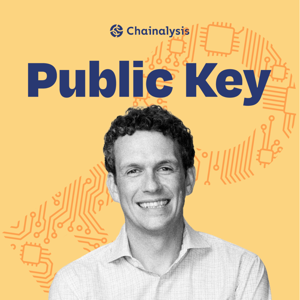


You wouldn’t expect a centralized crypto exchange to be launching a self-custody digital asset product, but Simon McLoughlin (CEO, Uphold) speaks with Ian Andrews (CMO, Chainalysis) on the podcast to talk about VAULT, a self-custody wallet that aims to make holding digital assets easy and convenient for users.
Simon shares the growth and challenges Uphold faced during the 2017 bull market and emphasizes Uphold's unique trading infrastructure, which allows for seamless trading between different assets.
Check out more resources provided by Chainalysis that perfectly complement this episode of the Public Key.
This website may contain links to third-party sites that are not under the control of Chainalysis, Inc. or its affiliates (collectively “Chainalysis”). Access to such information does not imply association with, endorsement of, approval of, or recommendation by Chainalysis of the site or its operators, and Chainalysis is not responsible for the products, services, or other content hosted therein.
Our podcasts are for informational purposes only, and are not intended to provide legal, tax, financial, or investment advice. Listeners should consult their own advisors before making these types of decisions. Chainalysis has no responsibility or liability for any decision made or any other acts or omissions in connection with your use of this material.
Chainalysis does not guarantee or warrant the accuracy, completeness, timeliness, suitability or validity of the information in any particular podcast and will not be responsible for any claim attributable to errors, omissions, or other inaccuracies of any part of such material.
Unless stated otherwise, reference to any specific product or entity does not constitute an endorsement or recommendation by Chainalysis. The views expressed by guests are their own and their appearance on the program does not imply an endorsement of them or any entity they represent. Views and opinions expressed by Chainalysis employees are those of the employees and do not necessarily reflect the views of the company.
The year is 2023 and crypto prices are rising, so why are we approaching private key management like the pirates secured gold in the 1700s?
Diogo explains the need for better private key management and the security challenges faced by institutions in the crypto industry and highlights the importance of Anchorage's federal bank charter and its role in providing trusted custody services to large institutions.
Check out more resources provided by Chainalysis that perfectly complement this episode of the Public Key.
This website may contain links to third-party sites that are not under the control of Chainalysis, Inc. or its affiliates (collectively “Chainalysis”). Access to such information does not imply association with, endorsement of, approval of, or recommendation by Chainalysis of the site or its operators, and Chainalysis is not responsible for the products, services, or other content hosted therein.
Our podcasts are for informational purposes only, and are not intended to provide legal, tax, financial, or investment advice. Listeners should consult their own advisors before making these types of decisions. Chainalysis has no responsibility or liability for any decision made or any other acts or omissions in connection with your use of this material.
Chainalysis does not guarantee or warrant the accuracy, completeness, timeliness, suitability or validity of the information in any particular podcast and will not be responsible for any claim attributable to errors, omissions, or other inaccuracies of any part of such material.
Unless stated otherwise, reference to any specific product or entity does not constitute an endorsement or recommendation by Chainalysis. The views expressed by guests are their own and their appearance on the program does not imply an endorsement of them or any entity they represent. Views and opinions expressed by Chainalysis employees are those of the employees and do not necessarily reflect the views of the company.
When Tommy Nicholas (CEO of Alloy) wrote a blog titled, Your Fraud Model Is Broken, you had to know he and Ian Andrews (CMO, Chainalysis) were going to have a fun and insightful conversation.
Check out more resources provided by Chainalysis that perfectly complement this episode of the Public Key.
This website may contain links to third-party sites that are not under the control of Chainalysis, Inc. or its affiliates (collectively “Chainalysis”). Access to such information does not imply association with, endorsement of, approval of, or recommendation by Chainalysis of the site or its operators, and Chainalysis is not responsible for the products, services, or other content hosted therein.
Our podcasts are for informational purposes only, and are not intended to provide legal, tax, financial, or investment advice. Listeners should consult their own advisors before making these types of decisions. Chainalysis has no responsibility or liability for any decision made or any other acts or omissions in connection with your use of this material.
Chainalysis does not guarantee or warrant the accuracy, completeness, timeliness, suitability or validity of the information in any particular podcast and will not be responsible for any claim attributable to errors, omissions, or other inaccuracies of any part of such material.
Unless stated otherwise, reference to any specific product or entity does not constitute an endorsement or recommendation by Chainalysis. The views expressed by guests are their own and their appearance on the program does not imply an endorsement of them or any entity they represent. Views and opinions expressed by Chainalysis employees are those of the employees and do not necessarily reflect the views of the company.
As a young prosecutor, Jonathan Skrmetti (Tennessee Attorney General) worked on cases that had similar plots to the movie, Training Day. His early cases ranged from law enforcement corruption, human trafficking and presidential assassination attempts.
John emphasizes the need for technical literacy in the judicial system and the evolving nature of technology and emphasizes the importance of collaboration between law enforcement agencies and the need for technological countermeasures to combat online scams and crimes.
Check out more resources provided by Chainalysis that perfectly complement this episode of the Public Key.
This website may contain links to third-party sites that are not under the control of Chainalysis, Inc. or its affiliates (collectively “Chainalysis”). Access to such information does not imply association with, endorsement of, approval of, or recommendation by Chainalysis of the site or its operators, and Chainalysis is not responsible for the products, services, or other content hosted therein.
Our podcasts are for informational purposes only, and are not intended to provide legal, tax, financial, or investment advice. Listeners should consult their own advisors before making these types of decisions. Chainalysis has no responsibility or liability for any decision made or any other acts or omissions in connection with your use of this material.
Chainalysis does not guarantee or warrant the accuracy, completeness, timeliness, suitability or validity of the information in any particular podcast and will not be responsible for any claim attributable to errors, omissions, or other inaccuracies of any part of such material.
Unless stated otherwise, reference to any specific product or entity does not constitute an endorsement or recommendation by Chainalysis. The views expressed by guests are their own and their appearance on the program does not imply an endorsement of them or any entity they represent. Views and opinions expressed by Chainalysis employees are those of the employees and do not necessarily reflect the views of the company.
Our 2023 GEO Report revealed that across the Sub-Saharan African region, centralized exchanges are the most-used platform type, facilitating over half of all transaction volume and in this episode, Ian Andrews (CMO, Chainalysis) speaks to an expert on the ground, Marius Reitz (General Manager Africa, Luno), to understand what's driving this grass-root adoption.
Marius shares his early journey into the crypto industry and discusses the challenges and opportunities in the African market. He highlights the importance of education and the need for regulatory clarity and collaboration between the crypto industry and regulators, in order for growth and stability in the market.
He also identifies the rise of peer-to-peer trading, and the potential for real-world asset tokenization and how Luno’s products and services continue to evolve to meet the needs of its customers and expand its presence in the African market.
Check out more resources provided by Chainalysis that perfectly complement this episode of the Public Key.
This website may contain links to third-party sites that are not under the control of Chainalysis, Inc. or its affiliates (collectively “Chainalysis”). Access to such information does not imply association with, endorsement of, approval of, or recommendation by Chainalysis of the site or its operators, and Chainalysis is not responsible for the products, services, or other content hosted therein.
Our podcasts are for informational purposes only, and are not intended to provide legal, tax, financial, or investment advice. Listeners should consult their own advisors before making these types of decisions. Chainalysis has no responsibility or liability for any decision made or any other acts or omissions in connection with your use of this material.
Chainalysis does not guarantee or warrant the accuracy, completeness, timeliness, suitability or validity of the information in any particular podcast and will not be responsible for any claim attributable to errors, omissions, or other inaccuracies of any part of such material.
Unless stated otherwise, reference to any specific product or entity does not constitute an endorsement or recommendation by Chainalysis. The views expressed by guests are their own and their appearance on the program does not imply an endorsement of them or any entity they represent. Views and opinions expressed by Chainalysis employees are those of the employees and do not necessarily reflect the views of the company.
"Decentralization will not, absolutely not, be the reason for the average user to use Web3. The average user is not going to use Web3 until it's as easy to use as Web2 and unlocks features that Web2 cannot provide."
This is a powerful quote from this episode's conversation with Ian Andrews (CMO, Chainalysis) and the, Co- Executive Directors of the Web3 Working Group, Amy James and Devon James as they unravel the technical complexities of Decentralized Physical Infrastructure Networks (DePIN) and explain why they believe the next opportunity for wider adoption will not just be adoption in the financial space, but adoption in the technology space.
Check out more resources provided by Chainalysis that perfectly complement this episode of the Public Key.
This website may contain links to third-party sites that are not under the control of Chainalysis, Inc. or its affiliates (collectively “Chainalysis”). Access to such information does not imply association with, endorsement of, approval of, or recommendation by Chainalysis of the site or its operators, and Chainalysis is not responsible for the products, services, or other content hosted therein.
Our podcasts are for informational purposes only, and are not intended to provide legal, tax, financial, or investment advice. Listeners should consult their own advisors before making these types of decisions. Chainalysis has no responsibility or liability for any decision made or any other acts or omissions in connection with your use of this material.
Chainalysis does not guarantee or warrant the accuracy, completeness, timeliness, suitability or validity of the information in any particular podcast and will not be responsible for any claim attributable to errors, omissions, or other inaccuracies of any part of such material.
Unless stated otherwise, reference to any specific product or entity does not constitute an endorsement or recommendation by Chainalysis. The views expressed by guests are their own and their appearance on the program does not imply an endorsement of them or any entity they represent. Views and opinions expressed by Chainalysis employees are those of the employees and do not necessarily reflect the views of the company.
Bridge hacks, phishing scams and malicious code draining wallets have forced consumer protection to be a top priority in the crypto and DeFi industry.
Brandon explains that decentralized insurance is still in its early stages and has yet to be fully defined and believes that the current models in the space are trying to reinvent the wheel, even though the traditional insurance model is robust and resilient.
He also discusses the challenges of navigating the regulatory landscape in the insurance industry and explains that FairSide operates as a cost-sharing network rather than a traditional insurance product.
Check out more resources provided by Chainalysis that perfectly complement this episode of the Public Key.
This website may contain links to third-party sites that are not under the control of Chainalysis, Inc. or its affiliates (collectively “Chainalysis”). Access to such information does not imply association with, endorsement of, approval of, or recommendation by Chainalysis of the site or its operators, and Chainalysis is not responsible for the products, services, or other content hosted therein.
Our podcasts are for informational purposes only, and are not intended to provide legal, tax, financial, or investment advice. Listeners should consult their own advisors before making these types of decisions. Chainalysis has no responsibility or liability for any decision made or any other acts or omissions in connection with your use of this material.
Chainalysis does not guarantee or warrant the accuracy, completeness, timeliness, suitability or validity of the information in any particular podcast and will not be responsible for any claim attributable to errors, omissions, or other inaccuracies of any part of such material.
Unless stated otherwise, reference to any specific product or entity does not constitute an endorsement or recommendation by Chainalysis. The views expressed by guests are their own and their appearance on the program does not imply an endorsement of them or any entity they represent. Views and opinions expressed by Chainalysis employees are those of the employees and do not necessarily reflect the views of the company.
When we want to understand the new IRS proposed regulations on digital asset brokers, Ian Andrews (CMO, Chainalysis) knows to speak to Roger Brown (Global Head of Tax Strategy, Chainalysis) before anyone else.
Roger does an excellent job demystifying who is going to be captured by the proposed regs and defines key terms in the regulations such as brokers, digital asset middlemen and persons that will be impacted by the proposed legislation.
He also dissects the impact of these new tax rules on crypto exchanges, payment processors, decentralized platforms, and even DAOs to and describes what facilitative services are that are material to being captured under the regs.
Ian and Roger also discuss how travel rule requirements may be sufficient to satisfy tax rule reporting and highlight the importance of assessing effective KYC obligations.
Check out more resources provided by Chainalysis that perfectly complement this episode of the Public Key.
This website may contain links to third-party sites that are not under the control of Chainalysis, Inc. or its affiliates (collectively “Chainalysis”). Access to such information does not imply association with, endorsement of, approval of, or recommendation by Chainalysis of the site or its operators, and Chainalysis is not responsible for the products, services, or other content hosted therein.
Our podcasts are for informational purposes only, and are not intended to provide legal, tax, financial, or investment advice. Listeners should consult their own advisors before making these types of decisions. Chainalysis has no responsibility or liability for any decision made or any other acts or omissions in connection with your use of this material.
Chainalysis does not guarantee or warrant the accuracy, completeness, timeliness, suitability or validity of the information in any particular podcast and will not be responsible for any claim attributable to errors, omissions, or other inaccuracies of any part of such material.
Unless stated otherwise, reference to any specific product or entity does not constitute an endorsement or recommendation by Chainalysis. The views expressed by guests are their own and their appearance on the program does not imply an endorsement of them or any entity they represent. Views and opinions expressed by Chainalysis employees are those of the employees and do not necessarily reflect the views of the company.
Driving Web3 Adoption in TradFi
Real world asset tokenization is all the hype with traditional institutions looking to delve into the world of web3, but security, accuracy and reliability of data and price points, continues to keep many on the sidelines.
They delve into the benefits of Chainlink's Cross Chain Interoperability Protocol (CCIP) and the potential for real-world assets and data to be integrated into the blockchain in a secure and trust-minimized way.
Kemal identifies the tension between speed and security in DeFi bridge transfers and the need for interoperability between chains, in order to unleash the real value of on-chain assets.
Check out more resources provided by Chainalysis that perfectly complement this episode of the Public Key.
This website may contain links to third-party sites that are not under the control of Chainalysis, Inc. or its affiliates (collectively “Chainalysis”). Access to such information does not imply association with, endorsement of, approval of, or recommendation by Chainalysis of the site or its operators, and Chainalysis is not responsible for the products, services, or other content hosted therein.
Our podcasts are for informational purposes only, and are not intended to provide legal, tax, financial, or investment advice. Listeners should consult their own advisors before making these types of decisions. Chainalysis has no responsibility or liability for any decision made or any other acts or omissions in connection with your use of this material.
Chainalysis does not guarantee or warrant the accuracy, completeness, timeliness, suitability or validity of the information in any particular podcast and will not be responsible for any claim attributable to errors, omissions, or other inaccuracies of any part of such material.
Unless stated otherwise, reference to any specific product or entity does not constitute an endorsement or recommendation by Chainalysis. The views expressed by guests are their own and their appearance on the program does not imply an endorsement of them or any entity they represent. Views and opinions expressed by Chainalysis employees are those of the employees and do not necessarily reflect the views of the company.
Crypto and its Convergence with Institutional Trading
Institutional investment has long been the key to mass adoption in the crypto industry but with the chaos of 2022 and the demise of several large industry players, we have to start assessing what the real risks are in this space.
Kyle emphasizes the need for better infrastructure and risk management tools in the crypto space, particularly for institutional investors. and discusses the challenges and opportunities in the DeFi space and the importance of finding a balance between privacy and transparency.
Ian and Kyle double down on the industry needing to prioritize counterparty risk and also touch on what real world asset tokenization will look like for portfolio managers.
Check out more resources provided by Chainalysis that perfectly complement this episode of the Public Key.
This website may contain links to third-party sites that are not under the control of Chainalysis, Inc. or its affiliates (collectively “Chainalysis”). Access to such information does not imply association with, endorsement of, approval of, or recommendation by Chainalysis of the site or its operators, and Chainalysis is not responsible for the products, services, or other content hosted therein.
Our podcasts are for informational purposes only, and are not intended to provide legal, tax, financial, or investment advice. Listeners should consult their own advisors before making these types of decisions. Chainalysis has no responsibility or liability for any decision made or any other acts or omissions in connection with your use of this material.
Chainalysis does not guarantee or warrant the accuracy, completeness, timeliness, suitability or validity of the information in any particular podcast and will not be responsible for any claim attributable to errors, omissions, or other inaccuracies of any part of such material.
Unless stated otherwise, reference to any specific product or entity does not constitute an endorsement or recommendation by Chainalysis. The views expressed by guests are their own and their appearance on the program does not imply an endorsement of them or any entity they represent. Views and opinions expressed by Chainalysis employees are those of the employees and do not necessarily reflect the views of the company.
From the publisher's feed

3,326 Listeners

3,053 Listeners

1,977 Listeners

1,087 Listeners
1,207 Listeners

193 Listeners

643 Listeners

735 Listeners

292 Listeners

10,185 Listeners

8,430 Listeners
262 Listeners

680 Listeners
11 Listeners

152 Listeners