
Sign up to save your podcasts
Or

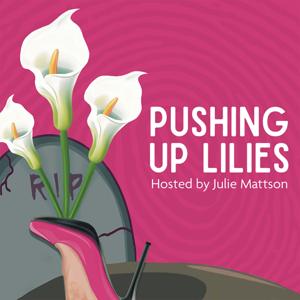
By Julie Mattson

5
7777 ratings


The podcast currently has 218 episodes available.
The most played episodes among Podcast App listeners.
The Lindsay Clancy trial has reached one of its most important moments. The witnesses are finished, both sides have made their closing arguments, and now twelve jurors are left to decide what happened inside that home on January 24, 2023, and whether Lindsay was criminally responsible when Cora, Dawson, and Callan died. In this episode of Pushing Up Lilies, I’m taking you through the final stretch of testimony without making you sit through every minute of psychiatrists and psychologists arguing over diagnoses. Because, y’all, even I recorded that version, and decided I wasn't going to do that to you. Instead, I want to focus on what actually matters. The Commonwealth brought in its final three experts, and while none of them suggested Lindsay was well or that her suicide attempt wasn't real, they disagreed with the defense over two critical issues: whether she was psychotic and whether she still had the capacity to understand that what she was doing was wrong. We’ll also talk about the moment religion entered the testimony and the defense asked for a mistrial, what happened during closing arguments, and the five possible decisions the jury can reach for each child, including what a finding of lack of criminal responsibility would actually mean. As a forensic nurse death investigator, I keep coming back to something I learned working scenes: evidence doesn't narrate itself. Phones, medications, searches, timelines, medical records and witness statements give us pieces. It's investigators, experts, attorneys, and ultimately jurors, who have to determine what those pieces mean. And that is exactly where this case now sits. The jury doesn't have to decide whether Lindsay suffered. Every expert agreed that she did. Their job is to determine whether the Commonwealth proved criminal responsibility beyond a reasonable doubt. And while we talk about mental illness, diagnoses, criminal responsibility and everything surrounding this trial, I don't want us to lose sight of the reason that courtroom exists in the first place: Cora, Dawson, and Callan. I'll continue following the case and bring you an update when something moves. Content Note: This episode discusses the deaths of children, strangulation, suicide, self-harm, and serious mental illness.

The Lindsay Clancy trial continues, and with each new day of testimony, the questions surrounding this case seem to become even more complicated. In this episode of Pushing Up Lilies, I’m continuing my coverage as the defense presents its case and the jury hears from family members, mental health professionals, and forensic experts offering very different perspectives on Lindsay’s state of mind. As a forensic nurse death investigator, I’m especially interested in what happens when experts examine the same evidence and reach very different conclusions. What does the testimony tell us? What questions remain unanswered? And how will the jury ultimately determine where severe mental illness ends and criminal responsibility begins? I’ll also take you inside some of the more unexpected moments in the courtroom and share my perspective on what stood out to me as the trial moves closer to its conclusion. There is a lot to unpack in this week’s testimony, and some of it may change the way you look at this case. Through it all, I’ll continue to keep Cora, Dawson, and Callan at the center of this story as we follow the evidence and wait to see what comes next. Content Note: This episode discusses the deaths of children, suicide, self-harm, postpartum mental illness, and other subjects that may be difficult for some listeners.
Last week, I took you through the devastating events of January 24, 2023, the night Lindsay Clancy’s three young children, Cora, Dawson, and Callan, were fatally harmed inside their family home in Duxbury, Massachusetts. This week, we move from the home to the courtroom. In The Lindsay Clancy Trial: Psychosis, Premeditation, or Both?, I take a closer look at one of the most complicated questions surrounding this case: What was happening in Lindsay Clancy’s mind when her children died? Lindsay’s mental health before the deaths has become a critical part of understanding the case. Her treatment, medications, reported symptoms, and concerns surrounding postpartum mental illness raise difficult questions about postpartum depression and postpartum psychosis, and about how severe psychiatric illness affects criminal responsibility. But there is another side to this case. The circumstances surrounding that night also raise questions about planning and awareness. Lindsay’s husband, Patrick, left the home to run errands. During the relatively short period he was gone, the lives of all three children were changed forever. So how does the legal system distinguish between an intentional, premeditated act and an act committed by someone experiencing profound psychosis? Can a person appear organized or purposeful while simultaneously experiencing a severe break from reality? And where does mental illness end and legal responsibility begin? As a nurse and former forensic death investigator, I’m particularly interested in the intersection between the medical evidence and the investigative evidence. A case like this cannot be understood through one piece of information alone. We have to look at the timeline, behavior, medical and psychiatric history, physical evidence, statements, expert opinions, and what investigators were able to establish. We also have to remember why this trial is happening. Three young children lost their lives. Whatever conclusions are ultimately reached about Lindsay’s mental state and criminal responsibility, Cora, Dawson, and Callan remain at the center of this case. In this episode, I explore the competing questions surrounding the Lindsay Clancy trial and the challenge of evaluating a case in which mental illness and evidence of apparent planning may exist alongside one another. Was this postpartum psychosis? Was it premeditation? Or is the truth more complicated than either explanation alone? Join me for Part Two of the Lindsay Clancy case on Pushing Up Lilies: The Lindsay Clancy Trial: Psychosis, Premeditation, or Both?
CONNECT WITH JULIE MATTSON: • Website: https://pushinguplilies.com• Facebook: https://www.facebook.com/pushinguplilies
CONNECT WITH JULIE MATTSON: • Website: https://pushinguplilies.com• Facebook: https://www.facebook.com/pushinguplilies
The podcast currently has 218 episodes available.

34,460 Listeners

3,455 Listeners

369,976 Listeners

7,436 Listeners
25,754 Listeners

10,894 Listeners

47,048 Listeners

10,455 Listeners

3,359 Listeners
4,378 Listeners
18,972 Listeners

11,535 Listeners

8,400 Listeners

391 Listeners