
Sign up to save your podcasts
Or

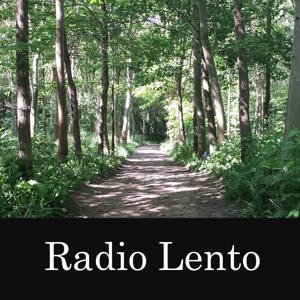


It was our first visit to Bayford Wood. A country walk, on a bright July day which was not quite as warm as it should be. A walk under an undecided sky, from time-to-time enhanced with inexplicable flurries of raindrops that fell like scattering beads. As we followed the track deeper into the woods, surrounded by tall trees, long growing and cathedral high, a small propeller plane buzzed over. It made us look. Then, with the quiet returned, our ears became tuned to the presence of countless myriad things high above us. Whispering things, hissing things, softly shushing things, filtering down their fine gossamer sounds in slow undulating waves. Lung easing. Chest expanding. Mind cleansing. All from up in the vaulted ceiling of green, forty feet above, millions upon millions of leaves, set in tiny individual motions by the breeze. We found a grassy bank set back from the track, pushed through a hedge of ivy, and left the microphones alone to record while we went off to brew tea on a camping stove.
It's all woods and rolling fields in rural Bedfordshire. Good for long walks under wide skies. A chance to get away from it all. On a wet February day, after splashing along muddy lanes and mud sliding footpaths, after passing a pair of Anderson shelters either side of an empty and waterlogged field, we saw a tumbledown wall cloaked in moss. Behind the wall, tucked down in a shallow dell, so quiet it hardly reached us, the melodious sound of a running winterbourne. Watery places always seem to cast a magic spell. So we climbed through the spiky trees peppered with lichen and left the microphones to record. It felt like a long forgotten spot, set back from people and the Iron Age track. When they were sure we had gone, tiny birds returned to flit about, distant cows lowed as the rain gently sifted down through the bare branches. A silvery sounding place, cool, and clean of clutter. In a few months the leaves will come, the fields will dry, and the landscape will sound of spring.
New this week! **Please help us keep Lento going. Buy us a coffee and / or get some lovely Lento cards to brighten your day or someone else's. Support Radio Lento on Ko-fi. **
Dusk.
There is a time when thin light broadens into day, when the sun is properly up and warm and every diurnal creature is settling into its daily rhythm. A time when the delicate trickles of the night stream can no longer be heard as the ambient sound within the forest has grown into a mellifluous hum, made up of birdsong, gentle wind, and of buzzing bees. It's the time before most people are awake, where all natural things are up and weaving themselves back into their world, threading their strands of aural colour through each and every tree, each and every tangled vine. An early corner of the day most often unheard. This episode, discovered in our archive due to ongoing lockdown restrictions, is the forest in late May 2019, just before 6am. Other parts of this same all-night recording can be heard in episodes 17, 30 and 38 (visit our blog for links to them all). We made this recording by leaving a pair of rain-proofed microphones hooked up to a field recorder on a long-life battery, hidden up against the trunk of an ancient oak tree, in a remote clearing inaccessible to people.
Locked-down and nowhere to go. With pounded pavements all pounded, and back gardens beleaguered under pallid skies so dull sodden with wet, it's hard to remember the feeling of travelling out of London to walk free through a forest in barmy summer heat. It feels important to think of it now though. More than ever. Really think of it. Reawaken it. The experience of a late summer walk through the Bayford Pinetum in Hertfordshire.
A day when the air was so warm to the skin that it disappeared, leaving one freer to move. And of all the other sensations. Of twisting along endless paths under trees. Of quietly and rhythmically stepping over dry leaves, between ruts in the ground, over fallen branches. Of an ankle caught by a bramble and a hand out to steady against a tree trunk. And an ear brushed by a leaf and a fleeing insect. And walking so unlike in a city, with head swung side to side to better smell the light perfumes. And to let the ears sponge up the atmosphere, the susurrating trees, the birdsong. The way birdsong echoes. The way their calls reveal the long spaces beyond what can be seen. The way muntjac deer bark like lost dogs. The way robins seem to sound sweeter the later in the year they sing. And remembering all of these experiences through a recording we made on that day.
This is a different spatial audio recording to the one that we used for episode 31. We made it as a fall-back, using a parallel set of mics positioned about 200 yards from the main pair. They picked up a completely different perspective of the Pinetum, with so many layers to hear. The trains gliding through the railway cutting sound wonderfully spatial reflected down from the tree canopy. There are more active birds compared from this angle too and a startlingly lovely buzzard.
Every year, on or near the 4th of April, we leave the microphones out in the back garden to record the dawn chorus. It's a simple ritual, partly to mark the beginning of a new season, and partly to compare how the dawn chorus sounds now compared to last year. Despite us living in Hackney in the North East of London, where the buildings and roads don't change much, the soundscape from year to year does. It's always different. We've been making these recordings for 12 years and, not surprisingly, last year saw the most dramatic change. London was in its first lockdown. The schools were closed, the roads mostly empty, reduced to a fraction of the normal traffic. And the skies had fallen silent. No more planes chasing the tail of another, minute by minute. As the day dawned and the sky lightened, the gardens behind the terraced houses woke to high circling seagulls and silky soft birdsong. Unimaginable, impossible in any other year. Gone the rumble and whining of jet engines, gone the rattling bumps of cars on speed bumps. Gone the heavy grey noise, the aural fog that coagulates the air. Instead see-sawing great tits, echoing, crisp and pure. The jovial cooing of wood pigeons. The cawing of rooks. Some screeching green parrots on a mission to get somewhere else fast, and little delicate chittering birds commuting from roof to roof. And like an operatic performer, like a musical instrument perched in a tree, the most totemic of garden birds began to sing its song. Melodious. Perfectly clear. Wonderfully inventive. Inflecting notes of cheer and even glee, as it embarks upon its journey into spring. A blackbird.
** Share the essence of spring. Now available as a sound card on our Ko-fi shop. **
High on a Derbyshire moor below the summit of Black Hill, between Disley and Whaley Bridge, there's an ancient trackway. It runs almost level across boggy ground with views over rough pastures and gritstone walls to a lone standing stone. After about half a mile the track descends sharply into a tree-lined dell. Nestled in amongst a wood, there's a small farmhouse mostly hidden from view. It was, more than a lifetime ago, in 1898 the home of Carl Fuchs, a distinguished cellist, who played in the Halle Orchestra and the Brodsky quartet. At the point where the gorse bushes are, where the path narrows and sinks below the gritstone walls, and the deep ruts get deeper, the traveller hears water. A babbling beck, waiting to cast its spell. A sonorous moorside stream that has to be forded, on tip toe, over exposed rocks. In his memoir, Carl Fuchs when working in the stream, once told travellers that the water was safe to drink. Clear, and from the mountain. Being within a natural cutting, overgrown with straggly trees, its sound is amplified. Shaped by the action of water over rocks, and conducted by gravity, the beck rills the air, as it has for centuries. The deep rocky pool into which the water tumbles, sings watery notes. Colourful, resonant, vibrant. We pushed through the undergrowth and left the microphones to record overnight, downstream of the pool. Time passes. Tiny flurries of rain fall onto the sheltering leaves. The beck flows mellifluously, down and away into the wide open valley to the right. The vastness is sometimes revealed by a passing plane, or a car on a distant road. The birds are asleep. Nocturnal things hold their silence. The beck casts its spell.
All is still in the wood. It is mid-way through a barmy August night. There is no breeze to rustle the trees. Dark bush crickets trichit the passage of time on crickle-dry carpets of leaves. Carried clear over the surrounding fields, the bell of Saint Mary's church chimes one. It's this time, in between the small hours, when the landscape is farthest from light, that the balance between what is near and what is distant shifts and blurs. Cows low. Geese and ducks fly high overhead. The nocturnal noise of the distant A12 has thinned, become a panoramic drape around the wood sharpening what's heard within. Echoes. Of owls. Far off. They're on the other side. Dead branches drop. Thump the hollow ground from where a hidden creature silently emerges to nibble at leaves. Then, they come. The Tawnies. A male and a female, maybe more. They land on high treetop boughs. Cast trembling calls. Haunt the breezeless voids. Time passes. The wood rests. The clock strikes 2.
This episode is now available as one of our unique sound cards. Keep one yourself as a momento of this episode or share with someone who might like it. All your contributions through Ko-fi help keep Lento on the air.
Through the bare limbed trees of Abney Park nature reserve in Hackney, London a song thrush sings sweetly. It's first light. The air and the microphones are frozen, left behind through a long night and its icy winds. Ivy hangs still, above the lion on the tomb. Abney Park is both a nature reserve and one of London's 'Magnificent Seven' cemeteries. It's early, silky quiet. The park hasn't opened yet. The derelict chapel is an angular shadow beneath leafless trees. Footpaths lie empty, gravestones unread. Everything's waiting for the people to appear. Bathed in the soft city rumble, the softest it can be, the rooks see the light and caw from the treetops. Wood pigeons wake up. Robins stationed on branches one, two, three, brightly twistle strong melodies, mark their territories, all puffed up against the cold. Seagulls wheel in the wide open above the wood, and a sparse few planes rumble by, long haulers coming in, they must be, this being Christmas Day. With the gathering light comes the dazzling spacious song of wrens. A woodpecker. A fleeting murmur of passing geese. A hint of a breeze, a moment of shift in the ivy. And then of alerting birds and far off the sounds of people, a family, happy children and their dog. The first in. The first through the gate. The first to breathe the pure crisp air of Abney Park, on this fast brightening Christmas Day of 2020. [This episode was produced in collaboration with the Abney Park Cemetery Trust.]
It took several miles, over claggy east Hertfordshire footpaths and a waterlogged bridleway, to find a quiet field. A peaceful spot where the susurrations of the natural landscape outweigh that of the distant A10. To break our winter walk, we came off the bridleway and followed a babbling brook into a spindly thicket, where we left the microphones alone to record. The water's running steady. Rilling over dark stones, flowing in and out of small pools hidden under grass, from where a bit of bobbing wood spins and softly knocks. Above small birds flutter and chitter in the leafless trees and far off, seagulls. An old Land Rover splashes its way down the empty puddled lane. A lofty buzzard circles and droops its whistling call high over the nearby wood. Behind tails of wood smoke, jagged shapes of crows, leap and caw between the trees. Somewhere deep in Young Wood, a pheasant creaks. It's waiting for the dusk.
From the publisher's feed

109 Listeners

378 Listeners

267 Listeners

101 Listeners

129 Listeners

284 Listeners

161 Listeners

246 Listeners

24 Listeners

785 Listeners

835 Listeners

175 Listeners

691 Listeners
42 Listeners

656 Listeners