
Sign up to save your podcasts
Or

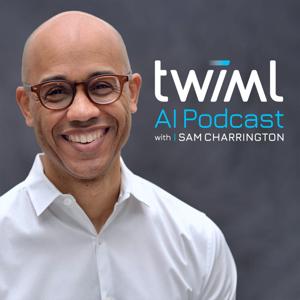

Today, we're joined by Jacob Buckman, co-founder and CEO of Manifest AI to discuss achieving long context in transformers. We discuss the bottlenecks of scaling context length and recent techniques to overcome them, including windowed attention, grouped query attention, and latent space attention. We explore the idea of weight-state balance and the weight-state FLOP ratio as a way of reasoning about the optimality of compute architectures, and we dig into the Power Retention architecture, which blends the parallelization of attention with the linear scaling of recurrence and promises speedups of >10x during training and >100x during inference. We review Manifest AI’s recent open source projects as well: Vidrial—a custom CUDA framework for building highly optimized GPU kernels in Python, and PowerCoder—a 3B-parameter coding model fine-tuned from StarCoder to use power retention. Our chat also covers the use of metrics like in-context learning curves and negative log likelihood to measure context utility, the implications of scaling laws, and the future of long context lengths in AI applications.
The complete show notes for this episode can be found at https://twimlai.com/go/750.
 View all episodes
 By Sam Charrington

4.7
422422 ratings
Today, we're joined by Jacob Buckman, co-founder and CEO of Manifest AI to discuss achieving long context in transformers. We discuss the bottlenecks of scaling context length and recent techniques to overcome them, including windowed attention, grouped query attention, and latent space attention. We explore the idea of weight-state balance and the weight-state FLOP ratio as a way of reasoning about the optimality of compute architectures, and we dig into the Power Retention architecture, which blends the parallelization of attention with the linear scaling of recurrence and promises speedups of >10x during training and >100x during inference. We review Manifest AI’s recent open source projects as well: Vidrial—a custom CUDA framework for building highly optimized GPU kernels in Python, and PowerCoder—a 3B-parameter coding model fine-tuned from StarCoder to use power retention. Our chat also covers the use of metrics like in-context learning curves and negative log likelihood to measure context utility, the implications of scaling laws, and the future of long context lengths in AI applications.
The complete show notes for this episode can be found at https://twimlai.com/go/750.
1,105 Listeners
166 Listeners
306 Listeners

343 Listeners

233 Listeners
212 Listeners
203 Listeners

313 Listeners
101 Listeners

551 Listeners
150 Listeners
101 Listeners
228 Listeners
688 Listeners
34 Listeners