
Sign up to save your podcasts
Or

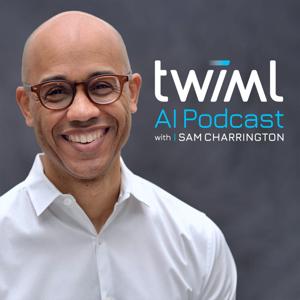

In this episode, Jure Leskovec, co-founder and chief scientist at Kumo and professor of computer science at Stanford, joins us to explore two fronts of his work: AI for science and relational deep learning. We begin with AI Virtual Cell, a multiscale effort to learn data-driven representations from proteins to cells to patients using single-cell RNA-seq data, protein language models like ESM, and structure models like AlphaFold—without hand-encoding biology. Jure then dives into relational deep learning, reframing enterprise databases as graphs and training neural networks directly on raw multi-table data. He explains Kumo’s Relational Foundation Model (RFM2), which performs in-context learning over subgraphs to make accurate predictions on new databases and tasks with no training, and how this approach benchmarks against RelBench and other multi-table datasets. We also discuss real-world deployments at companies like Reddit, DoorDash, and Coinbase, explainability via attention over tables and columns, integration with agentic systems, deployment options, and practical limitations.
The complete show notes for this episode can be found at https://twimlai.com/go/768.
 View all episodes
 By Sam Charrington

4.7
422422 ratings
In this episode, Jure Leskovec, co-founder and chief scientist at Kumo and professor of computer science at Stanford, joins us to explore two fronts of his work: AI for science and relational deep learning. We begin with AI Virtual Cell, a multiscale effort to learn data-driven representations from proteins to cells to patients using single-cell RNA-seq data, protein language models like ESM, and structure models like AlphaFold—without hand-encoding biology. Jure then dives into relational deep learning, reframing enterprise databases as graphs and training neural networks directly on raw multi-table data. He explains Kumo’s Relational Foundation Model (RFM2), which performs in-context learning over subgraphs to make accurate predictions on new databases and tasks with no training, and how this approach benchmarks against RelBench and other multi-table datasets. We also discuss real-world deployments at companies like Reddit, DoorDash, and Coinbase, explainability via attention over tables and columns, integration with agentic systems, deployment options, and practical limitations.
The complete show notes for this episode can be found at https://twimlai.com/go/768.
1,093 Listeners
169 Listeners
301 Listeners
345 Listeners

228 Listeners
208 Listeners
202 Listeners

314 Listeners
99 Listeners

576 Listeners

143 Listeners
101 Listeners
226 Listeners
682 Listeners

34 Listeners