
Sign up to save your podcasts
Or



Based on Podcast App listening data
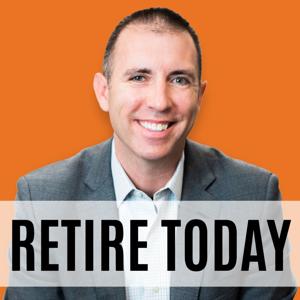
Choosing when to claim Social Security can have a lasting impact on your retirement income, but many retirees make this decision without fully understanding how the rules work. In this Q&A episode, Jeremy Keil answers three listener questions that uncover some of the most common Social Security misconceptions facing married couples.
Jeremy explains why your retirement date and your Social Security claiming date are two separate decisions, how poor health should factor into your planning, and why survivor benefits often deserve more attention than the higher earner's own benefit. He also clarifies common confusion around spousal benefits, outdated claiming strategies, and the way delayed retirement credits are actually applied after full retirement age.
Whether you're approaching retirement or helping a spouse make these important decisions, this conversation offers practical guidance to help you coordinate your retirement plan and make more informed Social Security choices.
For disclosures and conflicts visit keilfp.com/disclosures.
Three hundred episodes into the Retire Today podcast, the microphone is turned around as author and business strategist Nicole Gebhardt interviews Jeremy Keil about the journey that shaped his retirement philosophy and the framework behind his book, Retire Today: Create Your Retirement Master Plan in 5 Simple Steps.
Rather than focusing on a single retirement topic, Jeremy shares the evolution of his business, the development of the "Mr. Retirement" brand, and the mindset shifts that matter most for people approaching retirement. He explains why so many successful savers struggle to become confident spenders, why retirement planning is as much about psychology as it is about numbers, and how learning the math behind retirement decisions creates confidence to retire on your own terms.
As the Retire Today podcast celebrates its 300th episode, Jeremy reflects on lessons learned from working with thousands of retirees and explains why thoughtful planning isn't about predicting the future—it's about creating the flexibility to enjoy it.
For disclosures and conflicts visit keilfp.com/disclosures.
Healthcare is one of the biggest expenses retirees face, yet few people understand how the system behind their care actually works. Jeremy Keil welcomes physician, hospice doctor, and author Dr. Jordan Grumet to discuss the ideas behind his new book, The Healthcare Heist. Discover how financial incentives have reshaped modern healthcare, the growing influence of private equity, and why patients and providers often feel caught in a system that prioritizes business interests over care.
For disclosures and conflicts visit keilfp.com/disclosures.
Norman Calvo explains how he found a third act in retirement by going against the norm and choosing adventure instead of a typical retirement.
One of the questions I ask people as they approach retirement is deceptively simple:
What are you retiring to?
Most retirement planning conversations focus on finances. That’s understandable. People want to know if they’ve saved enough, whether their investments are positioned correctly, how Social Security fits into the picture, and what taxes might look like in retirement.
Those are important questions, and they’re exactly the kinds of issues my team helps clients navigate.
But once the financial pieces are in place, another challenge emerges—one that often receives far less attention.
What will make retirement meaningful?
Norman Calvo and I dug deeper into how he was able to find meaning in retirement after decades as a successful business owner in this week’s episode of the Retire Today podcast. Norman discovered an entirely new chapter of life after work. His true retirement story illustrates a lesson I’ve seen repeatedly among retirees: financial independence creates freedom, but it doesn’t automatically create purpose.
Most people spend years preparing for the financial risks of retirement.
They plan for market volatility.
They prepare for inflation.
They consider healthcare costs.
They evaluate longevity risk.
Yet many people never prepare for a different risk altogether: drift.
Drift rarely happens intentionally. In fact, most retirees who experience it worked incredibly hard to earn the freedom they now possess.
The challenge is that work provides structure. It creates goals, deadlines, responsibilities, relationships, and a sense of progress. For decades, many professionals wake up knowing exactly what needs to be accomplished that day.
Then retirement arrives.
The calendar empties.
The obligations disappear.
The structure that guided daily life for years suddenly vanishes.
For some retirees, that freedom feels exhilarating. For others, it becomes surprisingly disorienting.
Norman explained how many people gradually lose touch with the activities that once excited them. Careers expand, family responsibilities increase, and life’s demands naturally push hobbies and interests to the side.
By the time retirement arrives, some people have forgotten what they enjoyed doing before work consumed most of their attention.
As a result, retirement can unintentionally become a period of maintenance rather than growth.
Days become predictable.
Weeks begin to blend together.
And while there’s nothing wrong with relaxation, most people don’t spend decades saving and investing simply to become passive observers in their own lives.
Norman’s transformation didn’t begin with a grand retirement vision.
It started with a single decision.
A coworker encouraged him to train for a half marathon. At the time, he weighed 247 pounds, worked long hours, and had never been a runner. He wasn’t looking for a new identity. He simply agreed to try something different.
That one decision led to another.
Running led to additional races, including the New York City Marathon. Along the way, he discovered interests and opportunities he never would have anticipated. He joined a choir, performed in cabaret productions, taught English overseas, and even began learning handstands in his seventies.
What stands out isn’t the specific activities.
It’s the willingness to remain curious.
Too often we assume retirement is a time to narrow our world. Norman’s experience suggests the opposite may be true.
Retirement can be a time to expand it.
Throughout our working years, we create plans for almost everything.
Businesses have strategic plans.
Families have financial plans.
Organizations establish goals and objectives.
Yet many retirees never develop a plan for how they want to spend the freedom they’ve worked so hard to create.
That doesn’t mean every hour needs to be scheduled.
It does mean thinking intentionally about questions such as:
These questions may seem less urgent than investment allocation or tax planning, but they often determine whether retirement feels fulfilling.
Many successful retirees continue to grow long after they stop working.
They volunteer.
They mentor.
They travel.
They learn.
They teach.
They pursue interests that were postponed for decades.
Not because they have to.
Because they can.
Financial independence gives people options. The real challenge is deciding how to use those options in a way that creates a life that remains engaging and meaningful.
When people think about retirement, they often focus on what they’re leaving behind.
Work.
Commutes.
Deadlines.
Stress.
But retirement is ultimately less about what you’re leaving and more about what you’re building next.
The financial plan creates the opportunity.
The life you create afterward is what gives that opportunity meaning.
As Norman’s story demonstrates, some of the most rewarding experiences in life may not happen before retirement.
They may happen because of it.
Don’t forget to leave a rating for the “Retire Today” podcast if you’ve been enjoying these episodes!
Subscribe to Retire Today to get new episodes every Wednesday.
Apple Podcasts: https://podcasts.apple.com/us/podcast/retire-today/id1488769337
Spotify Podcasts: https://bit.ly/RetireTodaySpotify
About the Author:
Jeremy Keil, CFP®, CFA is a retirement financial advisor with Keil Financial Partners, author of Retire Today: Create Your Retirement Income Plan in 5 Simple Steps, and host of the Retirement Today blog and podcast, as well as the Mr. Retirement YouTube channel.
Jeremy is a contributor to Kiplinger and is frequently cited in publications like the Wall Street Journal and New York Times.
Additional Links:
Connect With Jeremy Keil:
Media Disclosures:
Disclosures
This media is provided for informational and educational purposes only and does not consider the investment objectives, financial situation, or particular needs of any consumer. Nothing in this program should be construed as investment, legal, or tax advice, nor as a recommendation to buy, sell, or hold any security or to adopt any investment strategy.
The views and opinions expressed are those of the host and any guest, current as of the date of recording, and may change without notice as market, political or economic conditions evolve. All investments involve risk, including the possible loss of principal. Past performance is no guarantee of future results.
Legal & Tax Disclosure
Consumers should consult their own qualified attorney, CPA, or other professional advisor regarding their specific legal and tax situations.
Advisor Disclosures
Alongside, LLC, doing business as Keil Financial Partners, is an SEC-registered investment adviser. Registration does not imply a certain level of skill or expertise. Advisory services are delivered through the Alongside, LLC platform. Keil Financial Partners is independent, not owned or operated by Alongside, LLC.
Additional information about Alongside, LLC – including its services, fees and any material conflicts of interest – can be found at https://adviserinfo.sec.gov/firm/summary/333587 or by requesting Form ADV Part 2A.
The content of this media should not be reproduced or redistributed without the firm’s written consent. Any trademarks or service marks mentioned belong to their respective owners and are used for identification purposes only.
Additional Important Disclosures
Joe Schmitz Jr. and Jeremy Keil explore the 2% Club of retirees and the unique challenges that come with significant retirement savings and a pension.
Most retirement conversations focus on one question:
Will I have enough?
But there’s another retirement challenge that doesn’t get talked about nearly enough:
What happens when you’ve done everything right?
Joe Schmitz Jr. has been working with a very specific group of retirees he calls the 2% Club.
His definition:
People who have both:
That combination creates opportunities.
But it also creates a different set of retirement decisions.
For decades, these retirees did what they were told:
Now retirement arrives…
…and suddenly the challenge isn’t accumulating wealth.
It’s using it wisely.
Joe shared one statistic that stood out:
“80% of people out there will pay no federal income taxes in retirement… while this 2% club is part of that 20% that will have to pay taxes and typically much more.”
That means retirement planning shifts.
Less focus on accumulation.
More focus on:
One of the most interesting parts of this conversation was Joe’s concept of the Midwestern Millionaire.
His description:
Hard-working.
Frugal.
Disciplined.
Excellent savers.
Often reluctant spenders.
And that creates an unexpected retirement problem.
People who spent 40 years training themselves to save don’t automatically become comfortable spending.
Even when they can afford it.
Joe described clients who had millions saved but still struggled emotionally to use their money because restraint had become part of their identity.
That’s where retirement planning becomes less about spreadsheets and more about permission.
Joe offered a simple framework.
Your money ultimately goes somewhere.
You can:
That framework creates an important question:
If you’re not spending your money intentionally…
where is it going?
That doesn’t mean everyone should spend aggressively.
But it does mean retirees should think intentionally about:
Because choosing not to decide is still a decision.
Joe also emphasized something I see frequently:
People often make pension elections based on coworkers.
Someone retires.
Takes a lump sum.
Everyone follows.
But pension elections are often irreversible.
Joe’s advice was simple:
Run the numbers.
Questions like these matter:
The right answer isn’t universal.
It’s personal.
For some retirees, fear of crossing an income threshold and triggering Medicare IRMAA surcharges becomes bigger than the actual cost itself.
Joe’s point wasn’t to ignore taxes.
It was to understand them.
Tax planning matters.
But taxes shouldn’t become the only goal.
Because avoiding taxes at all costs can sometimes prevent people from living the retirement they actually built.
One story Joe shared captured this perfectly.
A retired couple promised each other they’d spend intentionally during their early retirement years.
Two years later…
They had spent nothing.
Not because they couldn’t.
Because they hadn’t learned how.
Eventually they created a spending plan and began enjoying experiences they had delayed for decades.
That’s the shift retirement requires.
You don’t stop being disciplined.
You simply redirect that discipline.
Retirement success isn’t measured by how much money you leave untouched.
It’s measured by whether your money helps support the life you actually wanted.
Because after decades of saving…
Retirement planning becomes deciding what your wealth is for.
Don’t forget to leave a rating for the “Retire Today” podcast if you’ve been enjoying these episodes!
Subscribe to Retire Today to get new episodes every Wednesday.
Apple Podcasts: https://podcasts.apple.com/us/podcast/retire-today/id1488769337
Spotify Podcasts: https://bit.ly/RetireTodaySpotify
About the Author:
Jeremy Keil, CFP®, CFA is a retirement financial advisor with Keil Financial Partners, author of Retire Today: Create Your Retirement Income Plan in 5 Simple Steps, and host of the Retirement Today blog and podcast, as well as the Mr. Retirement YouTube channel.
Jeremy is a contributor to Kiplinger and is frequently cited in publications like the Wall Street Journal and New York Times.
Additional Links:
Connect With Jeremy Keil:
Media Disclosures:
Disclosures
This media is provided for informational and educational purposes only and does not consider the investment objectives, financial situation, or particular needs of any consumer. Nothing in this program should be construed as investment, legal, or tax advice, nor as a recommendation to buy, sell, or hold any security or to adopt any investment strategy.
The views and opinions expressed are those of the host and any guest, current as of the date of recording, and may change without notice as market, political or economic conditions evolve. All investments involve risk, including the possible loss of principal. Past performance is no guarantee of future results.
Legal & Tax Disclosure
Consumers should consult their own qualified attorney, CPA, or other professional advisor regarding their specific legal and tax situations.
Advisor Disclosures
Alongside, LLC, doing business as Keil Financial Partners, is an SEC-registered investment adviser. Registration does not imply a certain level of skill or expertise. Advisory services are delivered through the Alongside, LLC platform. Keil Financial Partners is independent, not owned or operated by Alongside, LLC.
Additional information about Alongside, LLC – including its services, fees and any material conflicts of interest – can be found at https://adviserinfo.sec.gov/firm/summary/333587 or by requesting Form ADV Part 2A.
The content of this media should not be reproduced or redistributed without the firm’s written consent. Any trademarks or service marks mentioned belong to their respective owners and are used for identification purposes only.
Additional Important Disclosures
From the publisher's feed
Ranked by our users in the last 21 days

1,984 Listeners

447 Listeners

799 Listeners
1,302 Listeners

459 Listeners
542 Listeners

753 Listeners

552 Listeners

700 Listeners
189 Listeners

832 Listeners
200 Listeners

593 Listeners

1,070 Listeners

359 Listeners