
Sign up to save your podcasts
Or

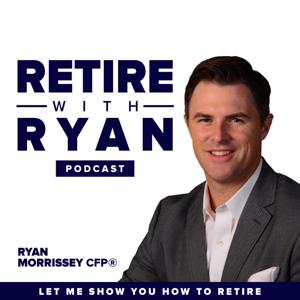


What are the current trends with ETFs? What's happening in the fixed-income market? How can investors tackle current challenges? Matthew Bartolini, CFA, CAIA—the head of ETF Research at State Street Global Advisors—joins me to dissect the ETF market and how investors can handle volatility.
Matthew believes the ETF market will only continue to grow and create opportunities for long-term wealth. He shares how to navigate the factors that impact the market—including Federal Reserve policy, elections, and general trends—in this episode of Retire with Ryan.
You will want to hear this episode if you are interested in...www.MorrisseyWealthManagement.com/contact
Subscribe to Retire With Ryan
How do you know if your financial advisor is delivering value? Is seeing a financial gain in your investments the only metric you should use? I've identified four key areas where your financial advisor should be delivering value to you: Awareness of costs and fees, performance of your portfolio, financial planning benefits, and communication.
I'll cover each of these areas in detail in this episode. I've also included a checklist you can use to make sure your current financial advisor is delivering value.
This is Part 5 of a five-part series about financial planners to celebrate the release of my first book, "Fiduciary: How to Find, Hire, and Establish a Trusted Partnership with a Fee-Only Advisor."
You will want to hear this episode if you are interested in...www.MorrisseyWealthManagement.com/contact
Subscribe to Retire With Ryan
What should you expect once you've hired a fee-only financial advisor? Fee-only financial advisors typically offer financial planning, investment management, or a combination of both.
In this episode, I'll cover what each process will be like because what you're hiring your financial advisor to do will determine how your experience will be (and what the relationship will look like).
This is Part 4 of a five-part series about financial planners to celebrate the release of my first book, "Fiduciary: How to Find, Hire, and Establish a Trusted Partnership with a Fee-Only Advisor."
You will want to hear this episode if you are interested in...www.MorrisseyWealthManagement.com/contact
Subscribe to Retire With Ryan
How do you find a fee-only financial advisor who's the right fit for you? I've outlined a detailed process that you can use to not create a list, research your list, and interview and hire the perfect fit for you. I'll cover it all in this episode.
This is Part 3 of a five-part series about financial planners to celebrate the release of my first book, "Fiduciary: How to Find, Hire, and Establish a Trusted Partnership with a Fee-Only Advisor."
You will want to hear this episode if you are interested in...To compile a list of fee-only financial advisors, you need to ask yourself some important questions:
Unfortunately, there isn't one website you check out to find all of the fee-only financial advisors in the United States.
However, one of the resources I like to use is the Certified Financial Planner Board of Standards website. This is the governing body through which people obtain their CFP certification.
The only downside of the CFP board is that they allow both fiduciary and non-fiduciary advisors to become members. It's difficult to act as a fiduciary if you're a broker or carrying an insurance license. If you do work with a CFP, I always recommend working with one that's fee-only.
You can use any of the sites in the resources below—filtered by location and specialty—to compile a list of potential options.
Step #2: Research the list you've compiledStart by heading to a financial planner's website and poking around a little. If they state that they're a fee-only financial advisor, confirm that.
Once you've done this, it's time to vet your top choices. Head over to my website for the full list of 10 questions that you must ask every potential advisor.
Resources Mentionedwww.MorrisseyWealthManagement.com/contact
What are the three different types of financial advisors? Why do I believe a fee-only financial advisor is the best? If you're considering hiring a financial advisor for the first time—or questioning if your current advisor has your best interests at heart—don't miss this one.
It's part 2 of my series in which I'm covering some of the topics in my upcoming book, "Fiduciary: How to Find, Hire, and Establish a Trusted Partnership with a Fee-Only Advisor." The goal is to help my listeners find a financial advisor that they can trust
You will want to hear this episode if you are interested in...The first type of advisor is a broker (stockbroker or insurance broker). They're compensated via commissions (the old-school way of doing business) and paid per transaction. The more transactions they make, the more turnover, and the more commissions they make.
Brokers are incentivized to change client's portfolios—even if it's not in their client's best interest. They're also obligated to do what's best for their brokerage firm (to make them more money).
That's why most financial advisors have moved away from the broker model. If you need to buy insurance, a stock, or a bond and you know this person isn't a financial advisor, it's fine to work with them—just don't expect objective advice.
Type #2: Registered Investment Advisor and BrokerA Registered Investment Advisor is someone who's registered with the state they do business in or the SEC as an investment adviser representative of a firm. They work with clients on a fee basis. However, these financial advisors are also licensed as a stockbroker/insurance broker. Because brokers don't have to disclose these conflicts of interest (currently), you don't know if they're acting as a broker or fee-only financial advisor.
Type #3: A Fee-Only Investment AdvisorA fee-only investment advisor is only compensated by the fees their clients pay them. They do not have a broker or insurance license. This is the best option for working with a financial advisor.
You know when you ask them a question, there will be no conflicts and they will be acting in your best interest. How do I know? Because a registered investment advisor has a legal obligation to put a client's interest ahead of their own and must disclose any conflicts of interest.
There are typically three types of fee-only financial advisors:
How are fee-only financial advisors compensated?
When you make more money, your financial advisor makes more money because their fee is tied to the value of your portfolio.
How do you know which option is the best for you? Learn more in this episode.
Resources Mentionedwww.MorrisseyWealthManagement.com/contact
Subscribe to Retire With Ryan
I've spent the last 18 months writing the first book, "Fiduciary: How to Find, Hire, and Establish a Trusted Partnership with a Fee-Only Advisor," which will officially be published on May 28th. I wrote this book to help everyone find a financial advisor who will put their interests first. Why? I see too many bad financial advisors harming their clients.
With that in mind, I'm going to kick off a series of episodes on financial advisors that will run over the next five weeks. I'll cover the different types of financial advisors and what they do. I'll share why the fiduciary model is best. I'll even cover how to find your ideal advisor, what to expect once you hire one, and how to ensure that your partnership is delivering value.
>
You will want to hear this episode if you are interested in...According to Wikipedia, "A financial advisor is a professional who provides financial services to clients based on their financial situation." Forbes says that a financial advisor is a professional "Who is paid to offer financial advice to clients."
Financial advisors can use many titles, such as financial planner, financial consultant, wealth manager, wealth advisor, investment manager—and so on. I'm guilty of this as I most often use the moniker, "Wealth advisor," because I help clients with both investment management and financial planning.
Not all financial advisors are fiduciaries. "Fiduciary" is an important term that most people aren't familiar with. A fiduciary doesn't receive commissions. Instead, they're only compensated by the fees their clients pay them to better represent their interests.
In essence, a fiduciary is a trusted advisor who acts in their client's best interest. You're legally obligated to put your client's interests ahead of your own (and disclose any conflicts of interest you may have).
There isn't a clear path or training to become a financial advisor. There are no higher education requirements. There's no experience required. There's no standardization of titles. My goal with this series is to educate you so that you can get what's best for you—and your money.
What can financial advisors do?Financial advisors can help with many different aspects of finances, which is also why they go by numerous titles:
These are just a few of the ways a financial planner can assist you. Financial advisors can help you navigate any major life decision. They keep their finger on the pulse of the financial industry. They have experience managing numerous life scenarios to help you avoid mistakes and take advantage of opportunities. A good financial advisor is an indispensable ally in the growth and preservation of your assets.
Resources Mentionedwww.MorrisseyWealthManagement.com/contact
Subscribe to Retire With Ryan
Have you inherited an IRA from a non-spouse who passed away after 1/1/2020? Beneficiaries of pre-tax retirement accounts have always had to pay taxes on what they inherit. However, on 1/1/2020, the SECURE Act was passed, changing the annual amount that beneficiaries would have to withdraw. Beforehand, non-spousal beneficiaries could:
Most non-spousal beneficiaries must empty their inherited account within 10 years following the original owner's death (there are some exceptions for someone who is disabled, the chronically ill, those who are within 10 years of age of the deceased, and minor children).
Unfortunately, the IRS made some changes. Learn what it is—and if it impacts you—in this episode of Retire with Ryan.
You will want to hear this episode if you are interested in...Everyone thought that non-eligible beneficiaries who opted for the 10-year window could choose how to withdraw the funds (as long as the account was emptied). We thought that you could minimize distributions in years where their income was higher and take higher distributions when their income was lower, choosing when to pay taxes on the account (and avoiding being in a higher tax bracket).
Unfortunately, in February 2022, the IRS issued regulations to reflect the changes in the SECURE Act. They divided non-eligible beneficiaries into two groups:
If you inherit an IRA from someone who hadn't yet reached their RMD age could wait until the 10th year to take distributions. However, if the person died after they'd started taking RMDs, the beneficiary would have to take distributions out every year (continuing the distributions of the original owner).
Thankfully, the IRS extended some relief and said if you were supposed to take RMDs in 2021–2024, the requirement would be waived.
The IRS also changed the penalty for missing IRA distributions from 50% and reduced it to 25%. If you missed a year where you were supposed to take it—as long as you make up the difference in two years—the penalty would be reduced to 10%.
What should you do with this information?It's time to do some tax projections of your future income. If you've inherited a retirement account, you must deplete it in the next 10 years. If you anticipate being in a higher tax bracket in the future, it may make more sense to take a distribution this year in a lower tax bracket.
If you inherited an IRA in 2020, you still have seven years left to empty the account. How will it impact your taxes? Where will a distribution land you on the tax bracket scale?
What if you inherited a Roth IRA? Listen to hear how required minimum distributions work for an inherited Roth IRA!
Resources MentionedConnect With Morrissey Wealth Management
www.MorrisseyWealthManagement.com/contact
Subscribe to Retire With Ryan
If you are divorced and approaching 62, you may qualify for social security benefits based on your ex-spouse's earning record. But who qualifies? When can you collect it? How much can you collect? Does your ex-spouse find out? I'll answer the things you need to know in this episode of Retire with Ryan.
You will want to hear this episode if you are interested in...You're eligible if:
Your own benefit cannot be higher than the spousal benefit. That simply means that you're able to apply for your benefits and the spousal benefit and choose the higher of the two. You're eligible for up to half of your ex-spouse's benefit or your own.
What else do you need to know?
If you were born after 1960, your full retirement age is 67 or later. For anyone born before 1959, your full retirement age is 66 and 10 months. Every year before that the full retirement age decreases by two months. Why is this important?
To get the full 50% ex-spousal benefit, you have to wait until your full retirement age. If your full retirement age is 67 and you want to collect at 62, you'd get 32.5% of your ex-spouse's full retirement benefit. If you waited until you turned 63, you'd get 35%. The percentage increases every year until it caps at 50% when you hit your full retirement age.
If you claim your benefit before your full retirement, there's also a limit to how much you can earn and still receive the benefit. The earnings limit in 2024 is $22,320. That limit is in effect from 62–66. If you earn over that amount, your benefit will be reduced by $1 for every $2 you make over $22,320.
The year you retire, you can make up to $59,520 before your benefit is reduced by $1 for every $3 you're over. Starting the month you retire, there's no limit and you can receive your full benefits.
How does it work if your ex-spouse is deceased?This is known as a surviving divorced spouse benefit. The same eligibility rules apply—with a few changes:
If your benefit is more than half of your deceased ex-spouse's benefit, you can collect the percentage you're eligible for while yours continues to defer. Your benefit caps out at 70 at which point you'd collect your benefit.
Resources Mentionedwww.MorrisseyWealthManagement.com/contact
Subscribe to Retire With Ryan
Medicare is confusing and complicated. Most people nearing retirement age have likely heard numerous mistruths regarding when to get it, what it does for you, and so much more. That's why I'm busting the 10 most commonly perpetrated Medicare myths so you'll know how to discern fact from fiction—and put your mind at ease.
You will want to hear this episode if you are interested in...This is false. If you have job-based health insurance with a company that has 20 or more employees, you don't have to sign up for Medicare immediately. You can wait to sign up until you stop working or you lose your health insurance. Why would you want to?
There may be excess costs you wouldn't need to pay if you still have insurance through your employer. But if you're self-employed or don't have an insurance policy that covers more than 20 people, and you don't want to sign up for Medicare, you'll get hit with a late enrollment penalty.
Myth:You're automatically enrolled in Medicare when you turn 65You're only automatically enrolled if you're already collecting Social Security when you turn 65. Everyone else has to enroll during the three months before they turn 65 or the three months after their 65th birthday month. If you're not going to enroll at 65, you have an 8-month window to enroll after your insurance coverage ends (or you'll be subject to a penalty).
Keep in mind that Medicare will not tell you when it's time to enroll. Though you'll get a lot of advertisements in the mail for supplemental plans, Medicare will not send you a reminder. To enroll, you go to SSA.gov and click on "enroll in Medicare."
Myth: Medicare is freeMedicare Part A covers part of the cost of a hospital stay. As long as you or your spouse has worked for 10 years or more in the United States, Part A is free. However, Part B (which covers preventative care) starts at $174.70 per month.
Everyone pays the minimum premium and depending on your income level, you may pay far more. The premium may increase every year. There are many other expenses that Medicare doesn't cover.
Many people also say that you should enroll in Medicare Part A as soon as you can because it's free. This makes sense—only if you don't have a high-deductible insurance plan. But with high-deductible health plans, you're typically eligible for an HSA.
As soon as you enroll in Part A, that disallows you—and your employer—from making contributions to an HSA. You also have to remove any contributions you'd made from the prior six months before enrolling.
I tackle a lot more myths you need to be aware of, so make sure you listen to the whole episode!
Resources Mentionedwww.MorrisseyWealthManagement.com/contact
Subscribe to Retire With Ryan
How can you protect your data and personal information from IRS scammers and criminals? Everyone is afraid of being audited by the IRS. Maybe you're scared you may have filed your taxes incorrectly. Criminals take advantage of that fear to perpetuate their scams. But there are some simple things you can do to avoid falling victim to these scams. I'll share 7 tips you can use to protect yourself from IRS scammers in this episode!
You will want to hear this episode if you are interested in...Did you know that the IRS doesn't make phone calls or leave voicemail messages? They won't send a text or contact you on social media. They don't use email either. If the IRS has a problem with you, they'll send you a letter.
So if you get a phone call saying someone is from the IRS and they need more information from you, hang up, and block their phone number (and report it as spam).
These scammers threaten people, saying they'll lose their immigration status, driver's license, business license, or they'll call law enforcement to arrest them. Don't fall victim to these threats.
If you do receive a letter from the IRS, don't panic. The majority of the time it's a simple fix that your CPA or financial advisor can help you navigate. It may be as simple as a missing 1099.
Be suspicious of emails from the "IRS"Anytime you get an email from someone unfamiliar, hover over the address of the email to see who it's from. You'll see mistakes in the email addresses (often misspellings) from scammers. Make sure you never click on any links in an email before you know it's from someone or a business you trust.
If you click on one of these links, you're allowing the scammer into your computer or phone. They can install spyware or hijack your files. They'll lock your files and demand a ransom to get them back. 10 years ago, this happened to me.
Protect your personally identifiable information (PII)PII is your social security number, DOV, driver's license, bank account information, etc. Don't email anything that contains your PII—even if it's to someone you know and trust. If your email is ever hacked, the hackers can access this information and use it to open accounts in your name. Most financial firms offer upload options such as Box or ShareFile.
One of the best things you can do to protect your information is to set up two-factor authentication whenever you can. Two-factor authentication requires that you offer two ways of proving that it's you logging in. You may need to provide a username, password, and PIN.
You can use an authenticator app that provides a PIN that resets every 30 seconds. Or, you can have a pin texted to you. If a scammer can steal your username and password, they probably can't breach the two-factor authentication.
Resources Mentionedwww.MorrisseyWealthManagement.com/contact
Subscribe to Retire With Ryan
From the publisher's feed
Ranked by our users in the last 21 days

799 Listeners

1,302 Listeners
542 Listeners
753 Listeners

552 Listeners
700 Listeners

576 Listeners

934 Listeners

832 Listeners

200 Listeners
147 Listeners

1,070 Listeners

187 Listeners

145 Listeners
103 Listeners