
Sign up to save your podcasts
Or

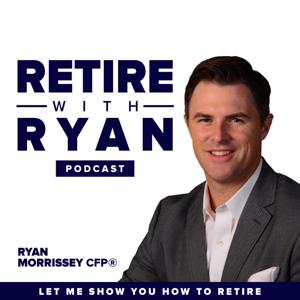


Do you usually get a tax refund? What do you typically do with your tax refund? Do you have it earmarked for a specific purpose? As we're inching closer to the tax filing deadline, I thought it would be interesting to share some ways you can wisely invest your tax refund. I'll cover 9 ideas you can consider to make good use of your money.
You will want to hear this episode if you are interested in...If you're getting a tax refund, you should be asking why. You're giving the government a free loan for the entire year. You aren't paid interest when you receive a refund. Why not investigate if you can increase your withholdings, so you can keep more of your money? If you are going to get a refund, here are some ways you could invest it.
9 ideas for investing your tax refundListen to the whole episode for a more in-depth look at each idea!
Resources Mentionedwww.MorrisseyWealthManagement.com/contact
Subscribe to Retire With Ryan
Do you own stock in the company that you work for in your 401K? Net unrealized appreciation could potentially save you a significant amount of money on your taxes when you start making withdrawals. I'll share how to take advantage of the process as well as mistakes to avoid making in this episode of Retire with Ryan.
You will want to hear this episode if you are interested in...www.MorrisseyWealthManagement.com/contact
Subscribe to Retire With Ryan
The Federal Reserve Met on 3/20/24 to discuss monetary policy and whether or not to raise or lower interest rates. They announced that they won't make any changes. Most experts believe that they'll lower interest rates in June.
So should you start selling your money market funds and short-term bond funds? When should you do it? Should you move the money into something that could benefit from decreasing interest rates? In this episode, I'll discuss why we invest in money market funds, if you should move your money out, and where you should consider shifting it.
You will want to hear this episode if you are interested in...Money market funds should be considered part of your overall asset allocation. We look at money in terms of buckets. You need some money in risky buckets to grow your money to pace against inflation (stocks, commodities, real estate investment, high-yield corporate bonds, etc.). The other money is your "safe" money (cash, money market funds, government bonds, short-term corporate bonds, etc.).
I've been recommending that you move money from your bank or other low-yielding accounts and move them into money market funds for the last year and a half. Why? Because you can now earn about 5% on your money market funds (depending on where you keep it). We typically use the Schwab Value Advantage Money Fund® (SWVXX). And as of 3/20/2024, its current yield is 5.18% with an annual expense ratio of 0.340%.
Money market funds are relatively low-risk and liquid. They trade for a dollar value that rarely changes. What changes? The interest rate that the funds pay (which can reset as often as every seven days).
Why move money out of your money market fund?You invest in a money market fund to help you earn more interest on your safe money. You want to choose what gives you the best rate possible. The rate you get is dependent on duration—the length of time that you're investing your money.
Currently, looking at the treasury yield curve, you'll earn more interest by having your money in shorter-term treasuries than you would versus long-term treasuries. Eventually, the curve will reverse and long-term investments will yield more interest. That's when you'd consider reducing the amount of money out of money market funds.
Until the Fed raised interest rates in 2022, money markets were paying almost nothing. As the Fed raised interest rates, the interest paid increased. What might make money market rates fall?
The primary driver is inflation. The Fed monitors inflation so they can make decisions about what to do with interest rates. Inflation has been high. The Fed doesn't want to cut rates too quickly because it could trigger more inflation.
What could you buy to replace money market funds? How do you reduce your exposure? Listen to hear some ideas!
Resources Mentionedwww.MorrisseyWealthManagement.com/contact
Subscribe to Retire With Ryan
As we get closer to the tax filing deadline (April 15th), I wanted to talk about contributing to a Roth IRA or traditional IRA. In this episode, I'll cover contribution and deduction limits, spousal IRAs, and non-deductible IRA contributions (and why you'd want to consider them).
You will want to hear this episode if you are interested in...Everyone with earned income can contribute to an IRA or Roth IRA (up until the filing deadline). Earned income includes wages, salaries, tips, and net self-employed income. Your spouse can contribute on your behalf if you don't have earned income.
The max you can contribute is $6,500 (if under 50) or $7,500 (if over 50). You can split the money between a traditional or Roth IRA. If you're looking for an additional tax deduction, you can contribute to a traditional IRA and get a tax deduction equal to the amount you contribute.
Do you have a retirement plan through your work (401K, 403B, 457 plan, etc.)? If you do, you have to look at your modified adjusted gross income (MAGI) to determine if you qualify to contribute. If you don't have a plan through work, you can contribute the full amount.
With a Roth IRA, you don't get a tax deduction on your contributions. But when you withdraw the money, the withdrawals are tax-free. To contribute to a Roth IRA, your MAGI must also be under certain limits.
I've linked documents in the resources that detail what each of those limits looks like for each filing status.
Non-deductible IRA contributionWhat is a non-deductible IRA contribution? It's where you make a contribution to a traditional IRA up to the limit of $6,500/$7,500 but you don't get a deduction on the contribution. Why would you want to do that?
What makes the most sense for you in 2023? Listen to learn more about each of the options.
Resources Mentionedwww.MorrisseyWealthManagement.com/contact
Subscribe to Retire With Ryan
What is Indexed Universal Life Insurance? Is it something you should consider investing in? Are the rumors you've heard about it true? In this episode, Andy Panko (of Tenon Financial) and I dispel 7 myths that are circulating about UILs and we cover what you need to know to make an informed decision about the insurance product.
You will want to hear this episode if you are interested in...Indexed Universal Life Insurance is often pitched and marketed as a retirement income tool under a host of other names. It's a complicated product, often sold via misleading information. At its core, It's a life insurance policy with a death benefit that can build cash value within the policy.
You can take loans against it and money out of it. Some of the benefits can be used toward long-term care expenses. It can be a useful and multi-purpose product. However, misleading claims are often made about these policies during the sales process.
Myth: The IUL cost is lower than a well-managed mutual fundAn IUL is a multi-decade-long product. It's a lifetime commitment. The up-front fees are large. It can be more than 10% the first year and 6–8% beyond that. By the time you get to the 10th year, the fees can be lower (under 5.5%). I bought an IUL and the up-front costs were 17% for the first year.
When you blend it out over the life of the product, it will not be as low as a managed index fund. It's not reasonable to expect. And you're not actually invested in index funds—you get exposure through the insurance company buying options on the underlying index.
Myth: An IUL means you can be your own bankYou aren't borrowing money from a bank. And the money in the policy continues to earn interest. You can borrow against the IUL and use the money however you'd like. But it's no different than if you took a home equity line of credit against your house. You still own the house and it's full price appreciation but you have a loan collateralized by your house.
People will say that Walt Disney founded Disney because he borrowed against his whole life insurance policy. People insinuate that Disneyland wouldn't exist without an IUL. All said and done, he took a $50,000 loan against his life insurance policy but it was only 0.66% of the total capital required to launch Disneyland. Life insurance wasn't the missing link.
Myth: IULs are a "can't lose" monetary assetThe cash value of your account earns interest and it will never be lower than zero. However, you can't own that cash value in isolation. There are annual fees associated with the policy. Even in the years where you get 0%, you have fees and costs that will cause your cash value to decline. That is still losing money.
Most of them also have a commitment period. If you want to walk away with your money, you'll likely get charged a hefty fee to do so. If you hold the product for the rest of your life, you will in time have more cash value than you put in. But in the early years, you will have less money than you put in.
Insurance products are designed to be long-term. The people who sell these products are paid on commission. So surrender penalties reimburse the insurance company if the policyholder bails out early.
Should you consider investing in an IUL? Listen to hear what Andy factors into the decision-making process.
Resources Mentionedwww.MorrisseyWealthManagement.com/contact
Subscribe to Retire With Ryan
On December 23rd, 2022, congress passed the SECURE 2.0 Act. Among the many changes, one of them had to do with 529 plans. You can now make tax-free and penalty-free rollovers from a 529 plan to a Roth IRA.
This became effective 1/1/2024. Before this, if you wanted to take a non-qualified withdrawal from a 529 plan (using the money for something outside of school expenses) the gain was subject to income tax and a 10% penalty. It's similar to taking a withdrawal from an IRA.
If you have unused money in a 529 plan, it can be rolled over to a Roth IRA for the beneficiary of that 529 plan—tax and penalty-free. The added benefit is tax-free growth and tax-free distributions when they take money out down the road.
What other details do you need to know? Who qualifies for these rollovers? Learn more in this episode of Retire With Ryan.
You will want to hear this episode if you are interested in...There is a $35,000 lifetime rollover limit per beneficiary. However, you can't roll over the entire amount at once. You're still subject to the annual Roth IRA contribution limits for 2024 and beyond.
Someone under 50 can roll over $7,000 to a Roth IRA. If they're over 50, they can roll over $8,000. If your child has already contributed $3,000 to their Roth IRA, you can only roll over $4,000. Here are some other rules to be mindful of:
What if the 529 account has been open for 15 years but you changed the beneficiary? Does the current beneficiary qualify? What if you change 529 companies during that time? When you hit the maximum of $35,000, can you change the beneficiary to someone else?
How does your state treat the rollover? Will it be taxed? Who is tracking the gains from contributions? These are some of the many questions that the IRS hasn't clarified yet.
How do you learn if your 529 plan provider allows rollovers? There are hundreds of 529 providers and no blanket answer. Reach out to your specific provider. The plan I have with Fidelity can process the rollovers. How a rollover is done will vary depending on the provider. For the CHET plan, you complete a form and submit it to make the transfer.
Can you make a rollover? Should you make a rollover? Listen to hear my thoughts!
Resources Mentionedwww.MorrisseyWealthManagement.com/contact
Subscribe to Retire With Ryan
What are some overlooked benefits of investing for retirement in a brokerage account? Why would you want to invest in a brokerage account in addition to a 401k or other retirement account? Shaun Jones—the President of Jones Fiduciary Wealth Management and author of "Unbrainwashed Investing"—shares 7 reasons to invest in a taxable brokerage account in this episode of Retire with Ryan.
You will want to hear this episode if you are interested in...You can only put so much into retirement accounts annually, by law. Once you've reached your annual limits, why not consider a brokerage account? Here are just a few reasons:
One of the biggest benefits is that it gives you more control over taxation.
The taxation of a brokerage accountGains, dividends, etc. that you receive in a brokerage account are taxable (versus a retirement account). Every dollar that comes out of a retirement account is taxable as ordinary income, which can push you into a higher tax bracket than you may want to be in.
Most people don't think about how much of their retirement balance is actually there's to keep. The IRS always gets to claim a portion of it. You have no idea how much you'll end up owning because you don't know what the tax laws will be then.
However, a brokerage account has the potential to reduce your effective tax rate in retirement. You have a lot of control over your taxable income between when you retire and when you start taking distributions. That's where 90% of tax planning happens. You can carefully consider when to take distributions to lower your overall effective tax rate.
One strategy for a brokerage accountA tendency toward index funds and passive investing will keep taxes and turnover low. Compared to other options, it's a tax-efficient way to hold investments. If you hold an S&P 500 index fund and you're continually dollar-cost averaging into it, you're paying tax on the dividends (assuming it doesn't create a high capital gain).
If you're not selling, you're not creating a capital gain. We usually advocate that our clients wait until they're in retirement to sell that fund, especially if they don't have a lot of other income and can stay in lower tax brackets.
We like to utilize tools that can project your average effective tax rate each year. It gives you a projection of what you'll do if you don't make provisions for tax management. If your effective tax rate will be 22% every year after taking RMDs, maybe you should trigger some at 15% or put money into a brokerage plan where you can control taxes.
Listen to hear the full conversation about what you need to know about taxable brokerage accounts and how they benefit you.
Resources Mentionedwww.MorrisseyWealthManagement.com/contact
Subscribe to Retire With Ryan
Are you aware of how your biases—both conscious and unconscious—impact your investment decisions? Brie Williams of State Street Global Advisors joins me in this conversation to talk not only about the impact of biases on decision-making but how to cultivate an awareness of your biases to change your behavior, ultimately leading to better decisions.
You will want to hear this episode if you are interested in...What are the most common biases that impact decision-making? Most can be grouped into cognitive and emotional biases. Hindsight bias, confirmation bias, and anchoring bias are typically the most impactful cognitive biases in the realm of finance.
Emotional biases stem from impulses or intuitions, heavily influenced by feelings. Examples are loss aversion and overconfidence.
We need to recognize that we all have conscious and unconscious biases. We need to gain self-awareness to reflect on how we approached past decisions. Self-reflection allows us to uncover blind spots and recognize patterns in decision-making. Brie points out this is always easier to do with an objective advisor.
How to overcome anchoring biasAnchoring bias comes into play when you're failing to adjust to new information. Do you have a sunnier outlook or focus on the more negative side of the equation? You have to recognize that your life view will impact your definition of success. You need to focus on objectivity when you come across new information so you don't overweight the past.
Mindset is just one factor of many that will shape your decisions and perceptions as an investor. How do you respond? Anchoring exists as a bias but it can be disrupted with practice. Mindfulness and how you approach decision-making is worth working on for a healthier construct for decision-making.
How do you avoid analysis paralysis? How can we close our behavior gap to improve decision-making to achieve better outcomes? Learn more in this thought-provoking episode with Brie.
Resources Mentionedwww.MorrisseyWealthManagement.com/contact
Subscribe to Retire With Ryan
Last year's Super Bowl set the record as the most-watched TV event in Nielsen rating history at over 150 million viewers. It's hypothesized that this year's Super Bowl is going to set a record for something completely different: The most amount of money bet on a Super Bowl. Why? Because sports betting is now legal in 38 states.
So if you're one of the 68 million Americans estimated to bet over $23.1 billion on the Super Bowl this year, how will winning impact your income taxes? Learn what you need to be mindful of—and some fun Super Bowl XLVIII facts—in this episode of Retire with Ryan.
Disclaimer: Make sure whatever money you bet will not impact you financially if you lose. If you have a gambling addiction and need help, call 1-800-662-4357.
You will want to hear this episode if you are interested in...The Super Bowl makes between $300 million and $1.3 billion a year. Much of the money generated is pocketed by the NFL. They receive 100% of ticket sales, millions of dollars from merchandise sales, and a lot of money from networks paying for broadcast rights for the game.
This year, Super Bowl ads will cost $7 million for a 30-second spot. This is the second year at the price. Super Bowl ads first cracked the million-dollar mark in 1995. For many companies, this ad spot is worth the cost because it gives them a broad reach to consumers.
How much of your winnings are taxable?If you know me, you know that I don't gamble (I'd rather make a long-term investment in the stock market). I've only made one sports bet in my lifetime. It was in 2021 when FanDuel offered 55-to-1 odds of picking the Super Bowl winner. It was only for new users who'd never opened an account. They set the bet limit at $5, so you could win a maximum of $275.
The Buccaneers were favored to win that year. My wife and I each opened an account and each of us bet on a different team. When the Buccaneers won, we collected our earnings, closed our accounts, and have never bet since.
If you're one of the $36 million expected to bet through legal means, how much of your winnings are taxable? If you bet through FanDuel or DraftKings and win more than $600 of net profit, you are legally obligated to report that. They'll send you a 1099-MISC that you must report to the IRS.
If you receive the winnings through PayPal, you'll likely receive a 1099-K form. If you don't receive either of these forms, the IRS still expects you to report all of your income, regardless of the amount.
So what are my predictions? As of 2/7/24, my Super Bowl XLVIII prediction is that the Chiefs will win, 21-20. The 49ers are actually favored by two points. Check back to see how close my prediction is to the actual score!
Resources Mentionedwww.MorrisseyWealthManagement.com/contact
Subscribe to Retire With Ryan
Before you think about when you're going to retire there's another question that should be addressed: Are you going to retire? It's assumed that when you turn 62 or 65, you're going to retire. And many people do count the days until they retire.
But many others love the careers they're in and can't imagine stopping. Their concern is that they'll get pushed out the door. The bottom line is that age tells us nothing. No one is the same. So we can't treat them the same.
That's one of the concepts that Mitch Anthony explores in his book, "The New Retirementality," and we'll dive into it in this episode.
You will want to hear this episode if you are interested in...Imagine waking up every day with nothing to do. You've played golf every day for six weeks and you're bored. Your social life was wrapped in your job. 60% of people who retire go back to work part-time within a year of retiring. If your whole purpose is wrapped up in your job and you leave it, what drives you to keep pushing forward?
Mitch points out that most people spend more time planning a two-week vacation than they do their retirement. They assume it's going to take care of itself. That's why most people don't have it all figured out on their first attempt.
What changes in the 24 hours from year 64 day 365 to year 65 day 1? Nothing. You're the same person. But the world at large assumes that everything's changed when you turn 65. The reality is that you need to plan for retirement.
The Retirementality ProfileMitch's book includes some exercises that help you determine your vision for "retirement." One of the first questions is "What have you observed watching other people retire?" What good examples have you seen? Which examples have become object lessons?
Is traditional retirement right for you? It's a conversation you need to have with a retirement coach. It's not a one-and-done conversation. Where do you start?
Most people only have the conversation of "Do you have enough money to retire?" You may have all of the money you need but lack purpose. Money will fund a purpose—but it won't find one.
Resources Mentionedwww.MorrisseyWealthManagement.com/contact
Subscribe to Retire With Ryan
From the publisher's feed
Ranked by our users in the last 21 days

799 Listeners

1,302 Listeners
542 Listeners
753 Listeners

552 Listeners

700 Listeners

576 Listeners

934 Listeners

832 Listeners

200 Listeners

147 Listeners

1,070 Listeners

187 Listeners

145 Listeners

103 Listeners