
Sign up to save your podcasts
Or

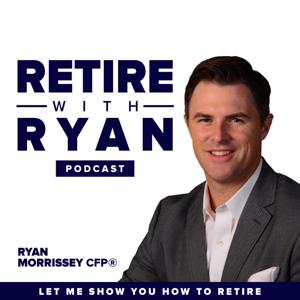


This week on the show, I'm joined in person by investment veteran Michael Sheldon, who brings over 26 years of experience in the financial services industry. We dig into essential strategies for investing as you approach and enter retirement, covering asset allocation, diversification, income planning, and how to handle inevitable market volatility.
Whether you're a pre-retiree, a recent retiree, or just looking to strengthen your investment approach, Michael offers some great actionable insights designed to help you build a resilient portfolio and stay on track toward your long-term financial goals.
You will want to hear this episode if you are interested in...Any successful investment journey begins with a clear financial plan. Michael emphasizes the importance of understanding your spending needs in retirement. This process often starts with creating a detailed budget. A thorough assessment of current and expected future expenses helps determine the appropriate rate of return necessary to achieve your retirement goals.
Once you have a handle on your budget, you can set a target allocation that aligns your risk tolerance with your required investment returns. Your personal plan should factor in not only your goals and time horizon, but also your comfort level with market volatility.
Balancing Risk and OpportunityAs you move closer to retirement, adjusting your asset allocation becomes increasingly important. Younger investors can often afford to be more aggressive, allocating a larger portion (often 70% - 100%) to equities, since they have time to recover from market downturns. However, those approaching or in retirement generally benefit from more conservative portfolios, emphasizing capital preservation.
A common rule of thumb discussed was to maintain 3 - 5 years of living expenses in cash or short-term bonds. This buffer allows retirees to weather market downturns without selling equities at a loss. Still, every investor is different. Some retirees, especially those with higher risk tolerance or substantial resources, may maintain large allocations to equities. The key is to structure your portfolio to ensure you can meet your expenses even during extended market declines.
Don't Chase Home RunsThe conversation stressed the dangers of seeking the next "big winner" stock. Instead, the focus should be on diversification, owning a broad mix of asset classes and geographies. While the past decade has seen U.S. large-cap growth stocks outperform other areas, this may not always be the case. International markets, small-cap stocks, and value stocks each tend to outperform at different points in the economic cycle.
Proper diversification can help reduce risk and smooth out returns, preventing the common mistake of buying high and selling low. It's wise to avoid concentrating your portfolio too heavily in a single sector, country, or investment style.
Beyond Chasing High DividendsOne of the big myths in retirement investing is the need to load up on high-dividend-paying stocks for income. Michael cautioned against focusing solely on high yields, as these companies might carry more risk or have unsustainable business models. Instead, look for companies with a solid history of gradually increasing their dividends, which indicates healthy cash flows and business stability.
Active vs. Passive Management and Cost ConsiderationsThe debate between active and passive management continues. For broad U.S. markets, low-cost index funds and ETFs have outperformed most active managers over time, thanks to lower costs and automatic portfolio updates.
Increasingly, investors are turning to ETFs for their tax efficiency, tradability, and lower fees compared to traditional mutual funds. As with any investment, understanding fees and their impact on long-term returns is vital.
The Power of DisciplineFinally, Michael shares a valuable perspective on market volatility. Historically, the S&P 500 has experienced average intra-year declines of over 14%, yet finished positive in 76% of years since 1980. Volatility is normal, and patient investors are rewarded for staying invested.
Resources Mentionedwww.MorrisseyWealthManagement.com/contact
Subscribe to Retire With Ryan
On this week's episode, I'm discussing the Federal Employees Retirement System, or FERS, a program that covers nearly all civilian federal workers. If you're a federal employee curious about when you're eligible to retire, how your pension is calculated, what the Thrift Savings Plan offers, or how special early retirement and survivor benefits work, this episode is your go-to resource.
We're breaking down the three key components of FERS: your Basic Benefit Plan (a pension), Social Security, and the Thrift Savings Plan, as well as important details like cost-of-living adjustments and tax considerations. Whether you're just starting your federal career or planning your retirement right now, you'll get practical insights to help you make the most of your retirement benefits.
You will want to hear this episode if you are interested in...As one of the most significant employment sectors in the United States, the federal government supports over 3 million workers, the majority of whom participate in the Federal Employees Retirement System (FERS). If you're a federal employee, understanding FERS is vital to planning a comfortable and financially secure retirement.
The Federal Employees Retirement System (FERS) is the primary retirement plan for U.S. civilian federal employees hired after 1983. According to the Office of Personnel Management, FERS provides retirement income from three sources:
FERS covers different federal professionals, from law enforcement and firefighters to engineers, analysts, and other administrative roles. Special provisions exist for high-risk positions such as air traffic controllers and certain law enforcement officers, which affect their benefit calculations and retirement age.
When Can You Retire Under FERS?Retirement eligibility under FERS primarily depends on age and years of credible service. The key term here is Minimum Retirement Age (MRA), which varies based on birth year, from 55 for those born before 1948 to 57 for workers born in 1970 or later.
Retirement options include:
Early retirement is available in some situations, such as involuntary separations or major agency reorganizations. In those cases, eligibility can be as early as age 50 with 20 years of service or at any age with 25 years of service.
Calculating Your Basic Pension BenefitThe FERS pension is calculated using your "high-3" average salary, the highest three consecutive years of basic pay, usually your last three years. The formula generally provides 1% of your high-3 salary for each year of government service (increases to 1.1% if you retire at 62 or older with 20+ years). Special categories, like federal law enforcement or air traffic controllers, receive 1.7% for the first 20 years and 1% thereafter.
For example:
If you retire at 57 with 30 years of service and your high-3 average is $165,000:
- 30 years x 1% = 30%
- $165,000 x 30% = $49,500 annual pension
The FERS SupplementSince some federal employees retire before they're eligible for Social Security (age 62), FERS includes a Special Retirement Supplement. This bridges the income gap until you can claim Social Security, calculated as:
Years of service ÷ 40 x age-62 Social Security benefit
For example, with 30 years of service and a projected Social Security benefit of $2,500 per month, the supplement would be $1,875 per month from retirement until age 62.
Understanding FERS is essential for federal workers considering retirement. Regularly reviewing your retirement strategy, estimating future benefits, and taking advantage of financial planning resources can help you maximize your retirement security.
Resources Mentionedwww.MorrisseyWealthManagement.com/contact
Subscribe to Retire With Ryan
Thinking about collecting Social Security while you're still working? It's a tempting option, but there are several crucial mistakes you'll want to avoid. Using real-life stories, I'm laying out the four big pitfalls, like earning over the social security limit, jeopardizing your health savings account, mishandling Medicare enrollment, and forgetting about tax withholding.
These missteps can lead to unnecessary penalties, and so I want to give some actionable strategies to help you make the most of your benefits without unpleasant surprises.
You will want to hear this episode if you are interested in...Choosing when and how to collect Social Security is complex, especially if you intend to keep working beyond age 62. While the prospect of "double-dipping" might seem appealing, several critical factors can impact your overall benefit, tax situation, and healthcare coverage. Here are the four big mistakes I often see:
1. Exceeding the Social Security Earnings LimitOne of the biggest mistakes is not understanding the earnings limit set by Social Security for those who collect benefits before reaching their full retirement age (FRA). If you start taking benefits before your FRA, which currently ranges from 66 to 67 depending on your birth year, your benefits may be reduced if your annual earnings exceed a certain threshold.
Failing to plan for these restrictions can lead to a surprise clawback, so calculate your annual income carefully if you plan to collect early.
2. Losing Eligibility to Contribute to an HSAIf you're enrolled in a high-deductible health plan and are contributing to a Health Savings Account (HSA), be wary: Once you enroll for Social Security after age 65, you're automatically enrolled in Medicare Part A. By law, you cannot contribute to an HSA while on Medicare.
To make matters more complex, Medicare Part A enrollment is retroactive up to six months, and any contributions made to your HSA during that period will be considered excess contributions, exposed to a 6% IRS penalty unless withdrawn in time. Before you trigger Social Security benefits, stop your HSA contributions (and your employer's) at least six months in advance to avoid penalties and the loss of valuable tax deductions.
3. Accidental Enrollment in Medicare Part BSome assume that enrolling in Medicare Part B is required or beneficial while they keep their employer coverage, but that's not always the case. If your employer has 20 or more employees and you're covered under their group health insurance, your employer's plan remains primary, and Medicare Part B is unnecessary and costly, with premiums starting at $185/month and higher for high earners.
Enrolling in Part B during this period can limit your future ability to buy a Medigap policy with automatic acceptance (no health questions or exclusions for pre-existing conditions). Unless you're losing employer coverage, it's usually best to delay enrolling in Part B and carefully respond to any enrollment communications from Social Security.
4. Not Withholding Enough Taxes on Social Security PaymentsSocial Security benefits are taxable for most retirees, especially if you're still working. You need to anticipate the added income and withhold sufficient federal (and potentially state) taxes to avoid underpayment penalties. You can file IRS Form W-4V to have Social Security withhold federal tax from each payment, choosing between 7%, 10%, 12%, and 22%. Alternatively, increase withholding at work or make estimated tax payments. Planning ahead ensures you won't face a large bill come tax time.
Resources Mentionedwww.MorrisseyWealthManagement.com/contact
Subscribe to Retire With Ryan
It's been announced that Warren Buffett is stepping down as CEO of Berkshire Hathaway. In this episode, I'll discuss Buffett's humble beginnings, his approach to investing, and the philosophy that built one of the most successful companies in history.
I'll also break down Warren Buffett's wisdom into seven powerful, practical tips that align with my own approach to advising clients. Listen for tips on starting your investment journey early, staying the course during tough markets, and prioritizing temperament over intellect.
You will want to hear this episode if you are interested in...Warren Buffett, often called the "Oracle of Omaha," has long been considered one of the greatest investors of all time. His recent announcement that he will step down as CEO of Berkshire Hathaway after more than six decades is the perfect time to reflect on what sets Buffett apart, not just as an investor but as an individual. This episode digs into key lessons from Buffett's life and career, exploring practical ways to apply his wisdom to your financial journey.
From Humble Beginnings to Monumental SuccessWarren Buffett's rise didn't begin in a Wall Street boardroom, but in Omaha, Nebraska, where he was born in 1930. From an early age, Buffett showed an affinity for entrepreneurship, selling chewing gum, Coca-Cola, and magazines as a child. His formal education at the University of Nebraska, Wharton Business School, and Columbia University (where he studied under the legendary Benjamin Graham) laid the foundation for his value investing philosophy.
Buffett started his first investment partnership in 1956 with $105,100, much of it from family and friends. By the age of 32, he was a millionaire. His acquisition of Berkshire Hathaway, a struggling textile company at the time, became the launchpad for one of the most successful investment conglomerates in history.
The Power of Modesty and DisciplineDespite amassing unparalleled wealth, Buffett is renowned for his modest lifestyle. He still lives in the house he purchased in 1958 for $31,000 and drives an older model Cadillac, proving that frugality and comfort often go hand in hand. This modesty is more than a quirk; it's a testament to his belief that wealth should serve a purpose beyond personal extravagance.
Buffett's philanthropic efforts are equally legendary. Through The Giving Pledge (co-founded with Bill and Melinda Gates), he's committed to donating more than 99% of his fortune. For Buffett, investing is not just about making money, it's about stewarding resources responsibly and generously.
Berkshire Hathaway's Long-Term OutperformanceUnder Buffett's leadership, Berkshire Hathaway's stock has delivered returns averaging 19% annually since 1966, trouncing the S&P 500's historical average of 11%. One share of Berkshire's Class A stock now costs nearly $800,000, a figure that tells the story of sustained outperformance. Buffett has also issued Class B shares at a lower price tag to democratize access for smaller investors, reflecting his desire to make wealth-building accessible.
Buffett's Top Investing Lessons1. Don't Lose Money
Buffett's two most famous rules are simple: "Rule number one: don't lose money. Rule number two: don't forget rule number one." He emphasizes buying quality businesses with durable competitive advantages rather than taking risks on struggling firms with unsustainable dividends.
2. Start Early and Stay the Course
In his book The Snowball, Buffett likens investing to rolling a snowball down a long hill: the earlier you start, the bigger the results. Even if you're approaching retirement, encouraging the younger generation to invest early can yield enormous benefits over time.
3. Remaining Committed Through Market Ups and Downs is Equally Vital
Buffett urges consistent investing, especially when markets are turbulent. Staying invested and buying during downturns can lead to significant long-term gains.
4. Be Fearful When Others Are Greedy
Buffett's contrarian mindset, being "fearful when others are greedy, and greedy when others are fearful", has served him well during market panics. While it's emotionally taxing to buy during selloffs, history shows that long-term investors are often rewarded.
5. Buy Great Companies at Fair Prices
Rather than chasing bargains, focus on acquiring well-run businesses at reasonable valuations. Many of Buffett's best investments, Apple, Coca-Cola, and American Express, embody this approach.
6. Focus on Buying and Holding Low-cost Index Funds
Buffett believes this is the simplest and most effective long-term investment strategy because it provides broad market exposure while keeping fees to a minimum, both of which are important for building wealth over time.
7. Temperament Is Key
According to Buffett, success in investing is more about temperament than IQ. The ability to remain rational and stick to your plan, regardless of market noise, is what separates great investors from the rest.
Resources Mentionedwww.MorrisseyWealthManagement.com/contact
Subscribe to Retire With Ryan
On the show today, I'm discussing something that could be a game-changer for your retirement savings: Health Savings Accounts, or HSAs. If you're on a high deductible health plan, you might be eligible for this unique, triple tax-free account, but are you making the most of it?
I'm sharing the top five mistakes people make with their HSA accounts. If not avoided, those mistakes can cost you serious money and limit your financial options later in life. I'm covering everything from choosing the right HSA provider to maximizing your investments within the account, tracking expenses, and even strategizing for retirement healthcare needs.
Plus, I'll give you actionable tips to avoid these common pitfalls and explain how an HSA can function as a powerful retirement savings tool.
You will want to hear this episode if you are interested in...Health Savings Accounts (HSAs) have grown in popularity steadily due to their unique triple tax advantage: contributions are tax-deductible, earnings grow tax-deferred, and qualified withdrawals are tax-free. If you're enrolled in a high-deductible health plan (HDHP), you're likely eligible for an HSA, and maximizing this account could significantly boost your retirement planning.
However, many account holders fail to capitalize on the full benefits. Let's explore the most common (and costly) mistakes people make with their HSAs, and the steps you can take to avoid them.
1. Sticking with a Poor HSA ProviderNot all HSA providers are created equal. A "good" provider offers diverse sets of low-cost investment options, competitive yields on cash balances, a user-friendly platform, and minimal fees. Unfortunately, many people end up with accounts that lack investment choices or charge unnecessary fees, simply because their employer picked the provider. The good news?
You can transfer your HSA balance to a more flexible institution like Fidelity or Charles Schwab without penalty, even while still employed. Doing so could unlock better investment potential and higher earnings on your cash, making it well worth investigating your current provider's offerings and considering a move if they fall short.
2. Not Investing Your HSA MoneySurprisingly, many HSA owners leave their funds idle in low- or no-interest accounts, missing years of tax-free growth. If you don't plan to spend your HSA funds soon, consider using a "bucket" approach: keep enough in cash or a money market for your deductible, and invest the remainder in stock or bond funds for long-term growth.
Since medical expenses are rarely incurred all at once, investing your surplus funds can help your account grow exponentially, harnessing the power of compounding. Review your provider's investment options and allocate your HSA funds according to your risk tolerance and time horizon.
3. Failing to Max Out ContributionsBecause HSAs offer unbeatable tax benefits, it's wise to contribute as much as possible. For 2025, contribution limits are $4,300 for individuals and $8,550 for families, including employee and employer contributions. If you're 55 or older, you can contribute an extra $1,000 as a "catch-up" contribution.
If you're married and you and your spouse are over 55, each spouse can make their own catch-up contribution, but you'll need separate accounts. Remember, you have until the tax filing deadline to make contributions for the previous year, giving you ample opportunity to reach the maximum annual limit.
4. Treating Your HSA Like a Checking AccountMany people promptly spend their HSA funds on current medical expenses, inadvertently missing a powerful savings opportunity. Instead, consider paying for qualified medical costs out-of-pocket and letting your HSA investments grow. As long as you keep records of those qualified expenses, you can reimburse yourself tax-free at any point in the future, even years later.
This allows your HSA to function much like a "stealth IRA," providing tax-free growth and withdrawals for medical needs in retirement, when such expenses are likely to be higher.
5. Neglecting to Track Qualified ExpensesTo take advantage of delayed reimbursement, it's crucial to maintain careful records of out-of-pocket medical expenditures. The IRS can require documentation during an audit, so scan or save receipts and keep a running log in a spreadsheet.
Good record-keeping ensures that, when the time comes, you can confidently withdraw HSA funds tax-free to reimburse yourself or cover eligible costs like Medicare premiums, long-term care insurance, and more once you reach retirement age.
Make Your HSA Work Harder for YouUsed strategically, an HSA can become one of your most valuable retirement planning tools. By carefully choosing your provider, investing wisely, maximizing contributions, delaying withdrawals, and tracking all qualified expenses, you can fully realize the triple tax benefits and enjoy greater financial security in retirement. Take a moment today to review your HSA practices, your future self will thank you.
Resources Mentionedwww.MorrisseyWealthManagement.com/contact
Subscribe to Retire With Ryan
Radio personality Dave Ramsey is a huge name in the personal finance niche. While he's celebrated for helping countless listeners take control of their finances, many of his recommendations have sparked debate within the financial planning community.
I'm going to break down six of the most controversial opinions promoted by Ramsey, including advice on retirement withdrawals, debt payoff strategies, Roth accounts, investing approaches, mortgages, and the use of credit cards. I will also weigh up the pros and cons of Ramsey's methods, highlighting where they might help and where they might hinder your journey towards a successful retirement.
Whether you're a Dave Ramsey fan or just curious about best practices for financial wellness, this episode offers a thoughtful, practical take on some hotly contested money moves.
You will want to hear this episode if you're interested in...In the world of personal finance, few names are as recognized as Dave Ramsey. He's helped countless listeners reclaim control of their money, but not all his advice sits comfortably with financial professionals. This week, I'm exploring several of Ramsey's most controversial recommendations, offering candid insight into where these strategies may fall short for those planning a secure retirement.
1. The 8% Retirement Withdrawal Rule is Riskier Than It SeemsDave Ramsey suggests that retirees can safely withdraw 8% of their portfolio annually. He justifies this by assuming long-term market returns of 11-12%. The problem is that average long-term returns are generally projected in the 6-8% range, and those figures often require heavy equity exposure, something unsuitable for most retirees due to the risk of major market downturns.
The more widely accepted "safe withdrawal rate" is between 4 and 5%, supported by decades of research. Relying on Ramsey's higher figure may rapidly deplete retirement savings, especially during bear markets. Retirees should consider their investment mix and plan for longevity, erring on the side of caution to avoid outliving their assets.
2. Pay Off Debt, But Not at the Expense of Retirement SavingsOne of Ramsey's hallmark principles is eliminating all debt before focusing on retirement contributions. While high-interest debt like credit cards should indeed be a priority, neglecting retirement savings, especially employer-matched 401(k) contributions, means missing out on invaluable compounding growth and free money from your employer. Ideally, individuals should strive for a balanced approach: aggressively tackle high-interest debt while contributing enough to their workplace retirement plan to secure the full employer match, and, if possible, work towards saving 10-20% of salary for retirement.
3. All Roth, All the Time? Not NecessarilyRamsey strongly favors Roth accounts for retirement savings, arguing that after-tax contributions and tax-free withdrawals offer valuable benefits. While Roth accounts can be powerful, particularly for young savers or those in lower tax brackets. For higher earners, often in their peak earning years, the upfront tax deduction of pre-tax 401(k) or IRA contributions can provide meaningful savings. Since many retirees drop into a lower tax bracket after leaving the workforce, traditional accounts can be more tax-efficient for certain households. Morrissey advises tailoring the choice to individual circumstances, considering both current and expected future tax rates.
4. Active vs. Passive InvestingRamsey promotes active mutual fund management and even suggests that up-front mutual fund commissions are worthwhile. In the last decade, though study after study has shown that most active fund managers fail to outperform inexpensive index (passive) funds after fees. With some actively managed mutual funds charging fees of over 1%, the compounding effect of those costs can dramatically diminish returns over decades. Passive investing, through low-cost index funds, allows investors to keep more of their money and often experience better outcomes. The same is true for mutual fund commissions; with so many no-load, low-fee options available, there's little justification for paying unnecessary charges.
5. Mortgage Payoff StrategiesRamsey encourages paying off all debt, including mortgages, as quickly as possible and recommends only taking out 15-year mortgages. While debt freedom is a worthy goal, for many, low-interest mortgage debt (especially at rates under 5%) isn't necessarily worth rushing to eliminate. Investing surplus funds in the stock market historically yields higher returns than today's mortgage rates. Additionally, restricting home purchases to what's affordable on a 15-year mortgage makes homeownership unattainable for many. It's more beneficial to keep total debt payments below 35% of gross income and focus on long-term wealth accumulation.
6. Ditching Credit Cards?Ramsey's final controversial opinion is to avoid credit cards altogether and rely instead on cash or debit. While this is a great strategy for habitual overspenders or those burdened by credit card debt. However, for disciplined users, credit cards offer valuable perks, such as travel rewards and cash back, often up to 2% or more. These rewards, when paired with responsible habits (paying off balances monthly), can add up to significant savings without the risk of debt.
Dave Ramsey has helped millions move toward better financial habits, but some of his advice may not serve everyone equally well. There's no one-size-fits-all approach to money. Evaluating your financial landscape and consulting with a fiduciary professional are key steps toward making smart choices that truly align with your goals and circumstances.
Resources Mentionedwww.MorrisseyWealthManagement.com/contact
Subscribe to Retire With Ryan
Welcome to a special milestone episode of Retire with Ryan! In this 250th episode, we're digging into one of the most frequently asked topics by listeners: Social Security. I answer four real-life listener questions about Social Security benefits - covering issues such as survivor benefits after divorce, spousal and ex-spousal benefit eligibility, changes to the Windfall Elimination Provision and Government Pension Offset, and rules for collecting benefits based on a former spouse's record.
I'm breaking down complex Social Security rules in an easy-to-understand way and sharing practical advice for retirees and those planning their dream retirement.
You'll want to hear this episode if you're interested in...[0:00] Access your free copy of my e-book Fiduciary at www.retirewithryan.com
[5:34] Divorced spouses have options for Social Security benefits based on age, remarriage status, and whether claiming their own or an ex-spouse's benefits
[6:58] Earnings above $23,400 (ages 62 to full retirement) reduce Social Security benefits by $1 for every $2 over the limit. After reaching full retirement age, the reduction is $1 for every $3 over $62,160.
[10:07] If your ex-spouse dies before you file, you can use a restricted application, but ex-spousal benefits don't earn delayed credits. Wait until age 70 for a higher personal benefit.
[14:38] The ten-year requirement for an ex-surviving spouse currently still stands unless
[15:54] If you have recently divorced and your spouse hasn't claimed benefits, then you have to wait two years until you can begin collecting benefits from your ex-spouse
A question from Andrea regarding her mother's eligibility for survivor benefits after her father and his second wife passed away highlights the intricacies many face. The Social Security Administration (SSA) does provide certain protections for divorced spouses, but eligibility hinges on specific criteria:
Marriage Duration: To claim an ex-spousal survivor benefit, the marriage must have lasted at least 10 years.
Remarriage Restrictions: If remarriage occurs after the age of 60 (or 50 if the survivor is disabled), the survivor can still claim benefits from the former spouse. Earlier remarriage generally directs benefits to the new spouse.
Age Requirements: Survivors can claim benefits as early as age 60 (or 50 if disabled), but waiting until reaching "full retirement age" (typically 67) means collecting the full survivor benefit (100% of the deceased's benefit). Early claims result in reduced monthly amounts.
Earnings Limits: If a recipient claims before full retirement age and continues working, their benefits may be reduced if their income exceeds the annual limit ($23,400 in 2025).
Survivor benefits application can't be completed online, applicants must call or visit their local SSA office.
Myths, Realities, and the Restricted Application of Ex-Spousal BenefitsStephanie, a divorced listener, asked if she could claim a spousal benefit and later switch to her own higher benefit. This is a common idea, but it is rarely permitted in practice today.
No "Restricted Application" Unless Widowed: Generally, ex-spouses can only claim the higher of their benefit or up to 50% of their ex-spouse's benefit if the ex is alive. The "restricted application" (where you claim one benefit first and then switch later) is only available to widows or widowers, not to those whose ex-spouses are still living.
Delaying for More: Your benefits do grow (8% per year between full retirement age and 70). However, survivor and spousal benefits don't accrue these "delayed retirement credits"; there's no advantage to waiting past full retirement age to claim them.
Earnings Matter: Like survivor benefits, earnings above the income limits before full retirement age can result in reductions.
Recent legislative updates, like the Social Security Fairness Act, have had a profound impact, especially for those affected by the Windfall Elimination Provision (WEP) or Government Pension Offset (GPO). Retirees such as teachers, firefighters, and some government workers previously saw reductions in their Social Security due to pensions received from non-Social Security-taxed jobs.
The Key Change is that WEP/GPO was repealed, and anyone affected can now claim full Social Security benefits. Most should already see retroactive and increased monthly payments. If you've not yet applied, check if you now qualify, the hurdles may have vanished!
When Can You Claim on an Ex-Spouse's Record?Donna's inquiry emphasizes a lesser-known rule: If the divorce is recent and the ex-spouse hasn't claimed benefits, one must wait two years to claim on the ex's record unless the ex starts claiming earlier. For divorces older than two years, you can generally proceed without waiting. Those under full retirement age must ensure their income doesn't result in reduced payments.
Social Security remains complex, especially during life events such as divorce, remarriage, death, or career changes. The rules can and do change, and representatives aren't infallible. If you suspect your situation is unique or you've been misinformed, it pays to contact the SSA or consult a trusted financial advisor.
Resources MentionedRetirement Readiness Review
Subscribe to the Retire with Ryan YouTube Channel
Download my entire book for FREE
How the Social Security Fairness Act Could Positively Impact Your Retirement, #236
www.MorrisseyWealthManagement.com/contact
Subscribe to Retire With Ryan
This time, we're featuring financial insights from co-host Ryan Morrissey, who's here to help you navigate this turbulent financial landscape. We'll explore the recent volatility sparked by President Trump's tariff announcements and discuss the remarkable market rebound that followed.
Ryan also lays out six strategic moves you can make to optimize your investment strategy during these downturns, whether it's buying the dip, rebalancing your portfolio, or taking advantage of tax efficiencies. Stay tuned for valuable tactics and practical advice to bolster your financial well-being and prepare for a successful retirement. Let's get started with Retire with Ryan!
You will want to hear this episode if you are interested in...[0:00] Suggested market strategies for navigating a down market
[5:45] Invest early in Roth IRA, IRA, HSA, and 529 accounts to capitalize on market declines and potential growth.
[6:46] Rebalance your portfolio regularly to maintain target allocation and capitalize on market shifts without overthinking decisions.
[8:37] Set your savings up so you put a certain amount in every month to take advantage of dollar cost averaging.
[9:01] Cut your losses and sell underperforming investments
[10:41] How to take advantage of tax losses inside your taxable investment accounts
[15:00] Consider replacing mutual funds with ETFs for better tax efficiency when the market is down for long-term benefits.
Market volatility is not uncommon, but it can be nerve-wracking for investors. Yet, as seasoned investor Warren Buffett famously said, "Be fearful when others are greedy, and greedy when others are fearful." In times of market downturn, opportunities abound for those who know where to look. Here's a breakdown of six strategic moves you can make to take advantage of a down market:
1. Buy the DipWhen markets decline significantly, it presents a unique buying opportunity. This strategy involves purchasing stocks when their prices are lower than usual, positioning yourself to benefit when prices rebound. It's important to remember that timing the market perfectly is nearly impossible, but by entering a 10% decline or more, you're likely to see gains as the market recovers. This can also be a great time to maximize your contributions to your IRA, Roth IRA, or HSA to take full advantage of the opportunity.
2. Rebalance Your PortfolioPortfolio rebalancing is crucial for maintaining your desired asset allocation, especially after market fluctuations. For instance, market dips might skew this balance if your target is a 60/40 stock-to-bond ratio. Rebalancing during market declines can ensure the original allocation is restored and takes advantage of lower stock prices.
3. Automate Your InvestmentsAutomating investments ensures consistent contributions to your portfolio, regardless of market conditions. Dollar-cost averaging mitigates the risks associated with market volatility. Whether through a 401(k), IRA, or other investment accounts, setting up automatic contributions allows you to buy into the market regularly without second-guessing the timing.
4. Sell Underperforming InvestmentsMarket downturns clarify which investments are not worth holding onto. If individual stocks or mutual funds consistently underperform, it may be time to cut losses and reinvest the capital into more promising assets. Clearing these underperformers cleans up your portfolio and allows you to focus on investments with better potential.
5. Harvest Tax LossesDown markets offer a chance to engage in tax-loss harvesting. Selling securities at a loss can offset taxable gains from other investments, reducing your tax liability. Additionally, you can claim up to $3,000 in capital losses against your ordinary income each year. When using this strategy, be mindful of the wash sale rule, which prohibits repurchasing the same or substantially identical security within 30 days to claim the tax loss.
6. Transition to Tax-Efficient InvestmentsDuring a market downturn, re-evaluating your taxable investment accounts for tax efficiency can be advantageous. Mutual funds often distribute capital gains annually, potentially increasing your tax bill even if you haven't sold your shares. Consider exchanging mutual funds for exchange-traded funds (ETFs), which typically offer greater tax efficiency by limiting capital gains distributions to shareholders until shares are sold.
While market downturns can be daunting, they provide excellent opportunities for investors to reshuffle their portfolios strategically. You can navigate market volatility and improve your financial health by buying the dip, rebalancing, automating investments, selling underperformers, harvesting tax losses, and transitioning to tax-efficient investments.
Resources MentionedRetirement Readiness Review
Subscribe to the Retire with Ryan YouTube Channel
Download my entire book for FREE
www.MorrisseyWealthManagement.com/contact
Subscribe to Retire With Ryan
As you get closer to the age of 73, it's more and more important to understand the financial strategies you can use to avoid a "tax tsunami" or "tax bomb."
In this episode, I break down the basics of RMDs, explaining how they are calculated and the importance of planning ahead. You'll want to make a note of these four key strategies to reduce your RMDs and ensure a smoother financial journey as you transition into retirement.
From starting withdrawals before the age threshold to considering Roth conversions and qualified charitable distributions, we share practical insights to help you navigate these financial waters.
You will want to hear this episode if you are interested in...(0:00) How to avoid a huge tax burden if you plan to work beyond 73 years of age
(2:21) Please rate and review the Retire with Ryan podcast!
(3:59) RMDs start at age 73 unless working past that age with less than 10% company ownership
(9:02) Plan your IRA distributions considering tax implications
(11:52) Consider a Roth conversion by moving pre-tax retirement funds to a Roth IRA
(17:54) Use annuities for stable retirement income
(18:59) Investigate using a QLAC to reduce RMDs, manage taxes, and provide additional income in old age
www.MorrisseyWealthManagement.com/contact
Subscribe to Retire With Ryan
In this episode, I address listener concerns about the future of Social Security, especially given recent changes under President Trump's administration and the involvement of the Department of Government Efficiency (Doge).
I'll dive into the current state of Social Security, the potential impact on your benefits, and how you can maximize those benefits moving forward. With solvency concerns looming, I'll help you better understand what's at stake and how to make smart decisions for your retirement.
You will want to hear this episode if you are interested in...www.MorrisseyWealthManagement.com/contact
Subscribe to Retire With Ryan
From the publisher's feed
Ranked by our users in the last 21 days

799 Listeners
1,302 Listeners
542 Listeners
753 Listeners

552 Listeners
700 Listeners

576 Listeners

934 Listeners
832 Listeners

200 Listeners
147 Listeners
1,070 Listeners

187 Listeners

145 Listeners
103 Listeners