
Sign up to save your podcasts
Or

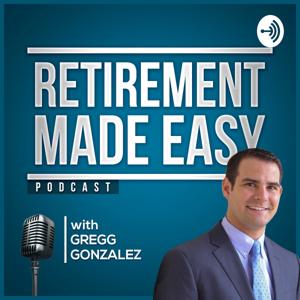


When is a retirement date fund appropriate? Who might need one? What are the downfalls of retirement date funds? Many people use these in their 401k or 403B. So in this episode of Retirement Made Easy, I talk about the pros and cons—and why I'm personally not a fan. Don't miss it!
You will want to hear this episode if you are interested in...Retirement date funds are allocated or managed based on your age and your date of expected retirement. They're typically done in five-year increments and based on when you turn 65. The idea is that the investment strategy gets more conservative as you get closer to retirement.
What does that mean? The fund will decrease the amount you have invested in risky investments (i.e. stocks) and increase conservative investments (bonds). It assumes that as you get closer to 65 you'll want to be more conservative.
The thought process isn't terrible—but it's a cookie-cutter approach. It's saying that every 50-year-old should invest exactly the same way. I think it's a huge mistake. It doesn't take your unique and personal needs into account.
Maybe you have a lower risk tolerance than a colleague the same age. Maybe your colleague got a late start investing for retirement. If they're in catchup mode, their portfolio needs to be positioned for growth. Yours may not.
Who do retirement date funds work well for? Listen to hear my thoughts.
The downsides of retirement date fundsThese funds tend to overweight international stocks. Using a Fidelity retirement date fund as an example, I see that over 28% of the fund is invested in international stocks. It may not be right for you, but they don't make any special exceptions for anyone.
Another downfall is that 5% of this fund is in a money market that is earning 0.09%. If you're invested in a retirement date fund, you'll want to understand how your money is invested. How might that change over time as you get older?
Dig a little deeper into your investment planThe premise that every person should invest the same way just doesn't make sense. It's ludicrous. Many people invest in these in their employer-sponsored retirement plans. They know it's diversified and there is some management—but I don't believe it should be your sole investment.
If you love supreme pizzas but hate green peppers, wouldn't you want to eat somewhere that allows you to customize your pizza to you? It may even cost you less to remove things you don't want and select what you do want. Build your own pizza.
Your investment portfolio should be crafted based on your goals, your risk tolerance, and what you want your investments to do for you. Don't settle for the cookie-cutter approach. You can do better at or below the cost of a retirement date fund.
Resources & People MentionedSubscribe to Retirement Made EasyOn Apple Podcasts, Spotify, Google Podcasts
Davis Love III—a pro-golfer and PGA Champion—was interviewed years ago and asked, "How do you prepare for these tournaments?" He said, "When you see me play, everything looks natural….Day after day, Monday through Friday, preparing for a tournament, 95% of the time I work on the basics—the fundamentals of golf." Every morning he'd practice the basics until he couldn't get it wrong. You need to prepare for a successful retirement the same way: master the basics. Listen to this episode of Retirement Made Easy as I share the four basic strategies you need to master.
>>>>>>>>>>>>>>>
You will want to hear this episode if you are interested in...If you're saving for retirement, you need to live on less than you make. Most people haven't mastered this basic concept. According to the Federal Reserve, the average household credit card balance in America in 2020 was $6,270. While there were some extenuating circumstances in 2020, that's certainly not living below your means (and the research including all household income levels).
Living below your means is the basic fundamental of personal finance and is worth carrying over into retirement. You need to get your spending under control with a rigid budget. Living on a disciplined and fixed income in retirement is based on the lifestyle you want to have. This is extremely important to nail down and stick to. You have to be careful and committed to stick to your allotted spending.
Basic #2: Stay diversifiedHaving a checking account, a savings account, and a money market account doesn't mean you're diversified. They are low-risk and low-return.
Let's say you have an IRA or Roth IRA with mutual funds A, B, and C. But when you look at those mutual funds, they're essentially the same. If you have a Granny Smith apple, a Fuji, and a Jonathan apple in a plastic bag—what happens when one apple rots? The other two will rot as well. It's the same thing when you're invested in the same mutual funds.
Why do women own so many pairs of shoes? They have heels, flats, tennis shoes, sandals, rain boots, etc. for all different situations. Women are masters of diversification. Your portfolio should have different investment pieces with different jobs—just like a woman's shoe closet. You need to spread out your risk.
Basic #3: Create a retirement planJust like you shouldn't go to a grocery store without a grocery list, you can't retire without a plan. Your grocery list makes sure you get everything you're looking for.
If you ask a pilot if they have a flight plan, they all say "Yes." They base it on when takeoff and landing are, on the conditions, the wind, the weather, etc. They plan for contingencies. They will also tell you that very few flights go exactly as planned. They must be adjusted and tweaked as they go—but they still need that original plan to judge where they're going.
A retirement plan gives you the most efficient route from point A to point B. It keeps you on course. According to Rich Habits - The Daily Success Habits of Wealthy Individuals, 81% of millionaires created daily to-do lists but only 19% of non-millionaires had daily to-do lists. Where do you want to land?
Basic #4: Prepare for the unexpectedLife never goes as we expect or plan. I recommend that you be prepared for those what-ifs. If you can't work as long as planned, a loved one dies, or your pension dollars get cut—what will you do? What if you retire in the middle of a recession or a dip in the market?
What if your cost of living doubles or triples? It will likely happen. A $4 box of cheerios in your first year of retirement could cost you over $9 in your 3rd year of retirement—just from a 2.9% annual inflation rate. Life always gives us changes and we must be ready to pivot.
My 89-year-old grandmother retired 25 years ago. If I had told her then that in 25 years her monthly cost for long-term care would be over $8,500, she'd think I'd lost my mind. But the costs 25 years ago weren't anywhere near this amount. What is the cost of that same care 25+ years from now? It'll cost far more than now. These are the types of things you can't let take you by surprise.
Resources & People MentionedSubscribe to Retirement Made EasyOn Apple Podcasts, Spotify, Google Podcasts
Are you close to retirement? Are you ready to close up any loose ends you may need to deal with? In this episode of Retirement Made Easy, I share a few simple tips to help you get on track for the retirement you've been working for. I also answer a couple of listener questions that came in over the last few weeks. Check it out!
You will want to hear this episode if you are interested in...Imagine you're selling your house. Your real estate agent suggests a small change that would greatly enhance the value of your house. You'd make the changes and improvements, right? A simple change like updating lighting, redesigning landscaping, or redoing a bathroom can make a huge difference. It will likely drastically impact the outcome of your sale. Just like you want a successful outcome with your home sale, you want a successful retirement. So what can you do in the months leading up to retirement to improve your odds of a smooth transition? Here are a few ideas:
I have people that call me all the time where—if they had called me two years sooner—we could've done a lot of things to improve their situation. There's only so much that can be done in the weeks leading up to retirement. Go get our retirement checklist to help you walk through your preparations for a secure retirement.
WHY we don't give specific holding adviceOne listener asked why we don't give specific investment or portfolio advice. We don't give specific investment and portfolio advice for one simple reason: I need to know your specific situation and what you're trying to accomplish. I don't know if you need income from your portfolio, what its value is, or even where you're holding it. Your age, goals, and risk tolerance will all be different. Just like a mechanic can't fix your car without looking under the hood and a doctor can't give you medication without a full workup, I can't give you advice on investments without a full analysis.
Pension: lump-sum or annual annuityOne of our listeners, Jeff, can get close to $1 million in a lump-sum payout, or have an annual annuity option of $52,000. What might be the best option for Jeff? He's 68, divorced, and has two adult children who are financially responsible. First I'd like to point out that because Jeff is divorced, there is no survivor benefit to pay out for a spouse. If Jeff took the $52,000 annuity, it would only pay for his lifetime. The different routes Jeff can take depends on information that I don't have, such as:
If you do decide to take the lump-sum and roll it over into a self-directed IRA or 401k, you want to be investing that money wisely—once the money's gone it's gone. Hopefully, that helps give you an idea of the options you have!
Resources & People MentionedSubscribe to Retirement Made EasyOn Apple Podcasts, Spotify, Google Podcasts
What can Warren Buffett teach us about the volatility of the stock market? Where do you get started with retirement planning? Should you bring in a professional to help you? In this episode of Retirement Made Easy, I answer some listener questions and share a story that drives home the point of long-term investing. Don't miss it!
You will want to hear this episode if you are interested in...When asked about volatility and fluctuation in the stock market, Warren Buffett said that whenever you price stocks so frequently (and it is liquid) they may be way overpriced or way underpriced at any given moment.
He said to imagine you and your spouse picked out the perfect 80-acre farm. It has a beautiful house, income from crops, a beautiful view, etc. You paid $3,000 an acre for your farm. Your next-door neighbor owns an identical 80 acres. Every day, your neighbor comes over and offers to buy your farm. Some days he offers $2,600 an acre. Other days he offers $2,700 or $3,300 an acre.
It's the same thing with the stock market. The price you see is the price that someone is willing to pay that particular day at that particular moment. But it doesn't matter what is being offered if your stock isn't for sale. Warren Buffett is one of the richest people in the US and is well-known as a long-term investor. When you're holding something long-term, it doesn't always matter what the price fluctuation is from one day to the next.
Answering Julie's Question: Should you hire a professional?Julie said she and her spouse are planning their retirement and are overwhelmed with the transition. She feels stuck and lacks confidence. She feels she needs professional help. My recommendation? Find a financial planner that specializes in retirement planning. I work with people 50 and older because their needs are different from a younger couple. There are so many things someone with a different specialty might not know versus someone who has helped dozens of people retire.
There's a ton of information available online but it's just that—information. You can't read a book about how to become a better golfer and go out and beat Tiger Woods. There is both skill and wisdom that you're lacking.
There's no shame in hiring professional help, whether it's a tax advisor or financial advisor. A financial advisor, tax planner, or estate planner is someone who will work with you to get you where you want to go.
Do you have to hire professional help? No. Do I have to hire someone to put up my own gutters? No. Do I want to learn how to do it? Not at all. I wouldn't enjoy it, it would be stressful, and I'm not confident that the outcome would be better. It'll cost more to hire someone to do the work, but it's well worth it.
Where do you start with retirement planning?Ed, one of my listeners, is 62 and wondering where to start with retirement planning. Thomas Watson—the man who created IBM—was asked how he built IBM. He replied, "I just thought about what I wanted and I worked backward." If people did that with their retirement planning, they'd have a lot better outcome.
I met with a couple a few years out from retirement. They were looking for help in putting the pieces of the puzzle together. I asked them about the outcome they were looking for and helped them determine what success looks like for them. Together, we worked backward and uncovered the 5 key elements that were important to them.
You have to start with the end in mind. Figure out what your goals are, then plan from there. What pieces of the puzzle can make your dreams come true? You have to know what's important to you before you can start planning. Figure out what you want and work backward.
Resources & People MentionedSubscribe to Retirement Made EasyOn Apple Podcasts, Spotify, Google Podcasts
What are health savings accounts (HSAs)? How can an HSA be beneficial to you and your retirement? One of my listeners asked me to cover HSAs, so this episode of Retirement Made Easy is dedicated to them. But if you're wondering what the big deal about an HSA is, don't miss this episode!
You will want to hear this episode if you are interested in...A health savings account is a way for you to put tax-deductible funds into an account earmarked for health expenses. Many employers offer it which makes it easy to contribute through your paycheck. A family can contribute up to $7,100 per year and if you're over 55, you can "catch up" by contributing an additional $1,000 per year. If you know you will have medical bills or co-pays in the future, it's a great way to set money aside.
But what qualifies as medical expenses? Office visit copayments, health insurance deductibles, dental expenses, vision care, prescription drugs + insulin, medicare premiums, hospital bills, x-rays, and much more. An HSA can be used for all of these things. Overall, medical costs are on the rise. It's important to save and plan for those expenses because they will only go up.
HSA funds can be investedDid you know that the money you have in an HSA can be invested? Many HSA providers allow you to invest in mutual funds. You can stay conservative and risk very little. Or, you can invest it so that it will grow for years. If you see yourself using the funds within 5 years, I'd be more conservative with those dollars. If you see the funds being used beyond 5 years, shoot for growth with mutual funds.
The money that grows is tax-deferred and can be withdrawn tax-free if used for medical care. When you're in your 80s and you need nursing care, those HSA dollars can be used to pay for those expenses. Just like an IRA, you'll want to have a beneficiary on your HSA in case something happens to you. The money can be transferred to someone else.
IRAs—once you hit age 72—have a required minimum distribution. HSAs are not the same. If you don't have medical expenses, you don't have to make a withdrawal. They can continue to grow. Even better, an HSA is money that's yours forever. It is NOT the same as an FSA (a Flexible Spending Account).
Why is an HSA important?A survey done by Fidelity found that in 2019, the lifetime cost of healthcare for a retired couple was $285,000. In 2020, the same couple's average costs for the rest of their lives was $295,000. A lot of things can't be controlled. You don't know what taxes will be in the future or how much healthcare will cost.
But you can control how much you fund in an HSA between now and retirement. You can contribute to an HSA until you're required to start Medicare. You can fund an HSA and get a tax deduction for doing so. An HSA can be a win-win—and you will use it.
How can an HSA be used? How long can you contribute? How else can it benefit you? Learn more by listening to the whole episode of Retirement Made Easy!
Resources & People Mentioned
Subscribe to Retirement Made EasyOn Apple Podcasts, Spotify, Google Podcasts
Is a certain stock tip or investment the "holy grail?" Is there a magic bullet that will make you millions? The money you invest in your retirement needs to be there for the next 30–40 years—so how do you make smart decisions with your future? In this episode of Retirement Made Easy, I share the best way to invest your hard-earned money. Don't miss it!
You will want to hear this episode if you are interested in...You can't put all of your eggs into one basket like an annuity or single stock. I have clients that have a family member, coworker, or friend that told them to invest in something. From bitcoin to real estate, annuities to marijuana stock—I hear it all. The vast majority of these ideas are speculative at best. But I will do my due diligence and report back with my honest opinion.
You need to invest wisely with the money that is earmarked for your retirement. If you make a mistake, you might run out of money in the middle of retirement. Do you really want to bet your money on a speculative investment where you could lose everything?
The #1 wealth-building vehicleIn 2017, Ramsey Solutions completed a study on over 10,000 millionaires. How did they make their money? 80% of the millionaires in the study built their wealth through their 401k or retirement plan (457, 403B, 401k, Roth IRA). 74% invested outside of work into IRAs, mutual funds, ETFs, and stocks. Gold, silver, and real estate were far down on the list.
I have reviewed the investment choices for hundreds of 401ks. Each plan will have different investment options, typically from 20-40 choices. What do most 401k plans allow individuals to invest in? Mutual funds.
Mutual funds are the name of the game95% of 401ks only allow you to invest in a small menu of mutual funds. That is the recipe. Some allow investing in money market funds and short-term bond funds. Others allow more aggressive investing in stock mutual funds. Anytime a client I meet with $1 million in retirement savings, 9.9 times out of 10 it's from investing in mutual funds in their 401k or IRA.
I've never had a client that had a magic bullet that they've attributed to being the biggest factor of their wealth-building. This study proves that the greatest investment vehicle is investing in mutual funds in your 401k. It's simple—but it's not easy. Investment success is dictated by your behavior.
The biggest contributing factor to successThe #1 contributing factor that millionaires reported was the key to their success was financial discipline. The second contributing factor was investment consistency. They had the discipline to stick with their investments and the consistency to keep contributing paycheck to paycheck, month in and month out.
Whenever we plant an apple tree, it doesn't produce apples the first year. It doesn't produce apples the second year. Sometimes we don't even get apples the third year. It can take 5–6 years to see apples. If I had chopped down the tree after three years, I would never see the benefit of a harvest. It takes patience and commitment to let the apple tree grow into something that's fruitful.
Investing is a marathon—not a sprint. If you don't give up, you'll be rewarded. Don't be fooled by a magic bullet. You can't have all of the upside and none of the downside. If it sounds too good to be true, it normally is.
Resources & People MentionedSubscribe to Retirement Made EasyOn Apple Podcasts, Spotify, Google Podcasts
In this special Throwback Thursday edition of the Retirement Made Easy podcast, we take a look back at episode #4: Are Women BETTER Investors Than Men? In this episode I dissect THREE studies that all come to the same conclusion. To find out what the research says—and learn how you can leverage it—check out this special replay!
You can't control health insurance premiums going up. You can't control rising prescription costs. But you can control your tax planning. As the old saying goes, "You have to make hay while the sun is shining." We are still under the 2017 Tax Cuts and Jobs Act. Until that changes, the sun is shining and you should consider taking advantage of a Roth conversion. What is it? How does it help you? Listen to this episode of Retirement Made Easy to learn more!
You will want to hear this episode if you are interested in...A Roth conversion is biting the bullet and paying taxes now while the US is in a low tax environment. A simple IRA is a pre-tax, tax-deferred retirement account. If you want to convert $10,000 of your IRA or 401k, you're choosing to pay the taxes now instead of in retirement. You can then take the money you converted and add it to an existing Roth IRA or open a new one.
The beauty of the ROTH IRA is that it grows tax free for the rest of your life. You don't have to convert your entire account. If your IRA is holding $100,000, you don't have to convert it all in one year. You can convert it in bite-sized chunks. Maybe you convert $10,000 this year and $20,000 next year. The idea is to pay taxes now while they're low.
The 2017 Tax Cuts and Jobs ActIn 2017, the Trump Tax Bill was passed. It lowered tax rates for individuals and corporations. The majority of Americans saw a reduction in their yearly taxes and the standard deduction increased significantly. Bill Bischoff wrote an article entitled "Two years after the Tax Cuts and Jobs Act — who are the winners and the losers?"
Bill quoted a study done by the tax policy center that found that 65% of households got a tax cut in 2018. For households with incomes $100,000 or more, 89.5% saw a reduction in their income taxes. Oddly enough, only 46% of the households making $100,000 thought they were getting a reduction in their taxes.
Comparing taxes from 2010 to 2020If you were in a household that was making $250,000 in 2010, the federal income tax would've been $60,281. In 2020, the federal tax bill would only be $48,159. That's a $12,000 tax savings 10 years later.
This current tax environment is set to sunset at the end of 2025. If no changes are made, it will revert back to the previous plan at the end of 2025. However, with a new presidential administration, taxes will likely increase. It would have to be approved by congress. Many are speculating that we won't see higher taxes until 2022 or 2023.
How much money should you convert?What is your earned income from a W-2 or 1099? What about dividends or social security? Are you close to topping out your current tax bracket? If you're in the middle of the 12% tax bracket, we can help you determine how much you can convert. Let's say $18,500 maxes you out of the bracket. So we'd convert that amount and not a dollar more. Why? If you do more, you'll get pushed into the next tax bracket—22%.
It's forward thinking tax-planning. You are paying your financial advisor to help you make the most of the tax policies you're currently under. It's making smart choices. Many people who are now retired are finding themselves paying higher taxes than they did their entire life. We don't know what the tax-rate environment will be like in the future—but we know where it is now. Dive deeper and work with your financial advisor to see if Roth conversions make sense for you.
When should you do a Roth conversion? I share the best way to make that decision, so listen to the whole episode!
Resources & People MentionedSubscribe to Retirement Made EasyOn Apple Podcasts, Spotify, Google Podcasts
When Should You Claim Your Social Security Benefits? Ep #31
Did you know that you can be eligible to collect social security benefits as young as 62? While the prospect may be exciting, the bigger question is: Should you? The answer is different for everyone and based on many factors. Are you married? What's your health like? Do you plan on working in retirement? Do you have assets or other savings to draw from? In this episode of Retirement Made Easy, I walk through some common questions to help you determine when you should claim your social security benefits.
>>>>>>>>>>>>>>>
You will want to hear this episode if you are interested in...You pay into social security your entire working life. It's a 6.2% Payroll/FICA tax. Your employer also pays another 6.2% on your behalf. Medicare is another 1.45% that is included in the FICA tax. The benefit you get is based on your 35 best working years. If you're still working, as long as your earnings fall into your top 35, your benefits should accrue.
You can claim your social security benefits as early as age 62 and as late as age 70. There is a full retirement age which is between 66 and 67. If you're born after 1960, your full retirement age is 67. If you're turning 62 in 2021, you are eligible to claim your benefits. But should you? Or should you wait and let it grow?
Are you working right now?Social security limits the amount you can make while collecting your social security. If you're 62 and you make $40,000 a year, I'd tell you to wait. Why? The earnings limit is $18,960 in 2021. If you're under that, you can collect your benefit and it wouldn't be reduced. If you're over the limit, for every $2 you earn over the limit, your benefits will be reduced by $1. You're better off waiting. What about your spouse? If they're making $50,000, their income does not reduce your benefit. A pension, rental income, dividends, etc, don't count.
Do you need the income to sustain your lifestyle? Do you have other sources of income to draw from? Do you have the means to delay social security? For many people, it's not an option. Some people go into debt when they could turn their benefits on. It doesn't make sense.
What is your spouse's social security benefit?If you're married, some people like starting the lower benefit first and delaying the higher benefit. Why? Because of something called the survivor benefit. If the wife's benefit is $1,000 a month and the husband's is $2,000, the wife can collect the $2,000 if her husband passes away. Her $1,000 would drop off. By delaying the higher, you're ensuring that your spouse is taken care of.
To decide this, you'll need to know what your social security benefits are. You can go to SSA.gov and set up an account to find out what your benefits will be at 62 and 70.
Will your spouse continue to work? What does their benefit look like? Are you divorced? How long? What is your ex-spouse's social security benefit? What does your health look like? Listen to hear how these things can impact your benefit.
Another important factor to consider: inheritancesWhat if you decide to retire but hold off on your social security benefits? Instead, you decide to take distributions from your 401k/IRA. The problem is that what you've accrued begins dropping. If your goal was to leave an inheritance—but you're spending it down just to have a higher social security benefit—it doesn't make sense. You'd be better off to start your social security benefit and continue to allow your assets to grow as long as possible.
Why? Because your social security benefits cannot be passed down to your adult children. If someone happens to you, your benefits stop. It's for you and your spouse, so do what makes the most sense for your situation. To hear the full conversation and other factors to consider, listen to the whole episode of Retirement Made Easy!
Resources & People MentionedSubscribe to Retirement Made EasyOn Apple Podcasts, Spotify, Google Podcasts
A Roth IRA is THE best thing since sliced bread. Why? Why do I think it needs to be a part of your investment portfolio? How does it positively impact your retirement income? In this episode of Retirement Made Easy, I share why you need to make tax-free investing a bigger piece of the pie. Don't miss it!
You will want to hear this episode if you are interested in...Roth IRAs are the best thing since sliced bread. Why? With a Roth IRA, you pay the taxes on the money you contribute now. That allows it to grow tax-free forever. A Roth IRA is like a birdcage. You can put anything in it (mutual funds, stocks, etc.). The cat—the IRS—can't get to the bird in your birdcage. That money is protected.
Let's say a 35-year-old contributes $6,000 to their Roth IRA, don't touch it for 30 years, and they get a 7% annual average rate of return. At age 65—when they retire—their Roth IRA would be valued at $45,673! Then, they can make withdrawals tax-free for as long as they live. Nothing is better than tax-free growth of your money.
The importance of tax-free income in retirementWhy is it so important? Maybe you have a pension, social security, and rental income. They'll all be taxed when you withdraw from them in retirement. With all of these resources that you rely on being taxed, a tax-free option for interest and income is beneficial to you in retirement.
We can't control the cost of living in 20–30 years. We don't know what future taxes will be. We don't know how long we will live. But you can plan based on the knowns and the rules of today.
The biggest regret many retirees face is that they all wish that their Roth IRAs were bigger. Some clients have started encouraging their young-adult children to start with a Roth IRA. You can't go back, but you can help your children make better choices.
Consider doing a Roth IRA conversionIf you're under 50 you can only contribute $6,000 per person per year. If you're over 50, you can contribute $7,000 a year. There are earnings limits and restrictions. If you make $1 million you can't contribute to a Roth IRA—but you can look at a backdoor Roth IRA. You can do Roth conversions when you're retired as well. You're never too old for a Roth IRA. How nice would it be to leave your kids a Roth IRA that has been growing tax-free? They would inherit it completely tax-free.
Make tax-free investments a bigger piece of the pieLook at your entire retirement nest egg (401k, IRA, mutual funds, etc.). Draw a circle. How much of that pie chart is pre-tax (401k, Rollover IRA, IRAs)? How much of your retirement is invested in a Roth IRA? Many people have 90% of retirement in pre-tax and only 10% in Roth IRAs. When you retire, you're going to be paying a lot of taxes. If that Roth IRA were a bigger piece of the pie, you may pay less in taxes.
Want to take the guesswork out of retirement planning? Use this free tool from Dave Ramsey to find out if you're on track.
Resources & People MentionedSubscribe to Retirement Made EasyOn Apple Podcasts, Spotify, Google Podcasts
From the publisher's feed

1,964 Listeners

447 Listeners

800 Listeners
1,303 Listeners

459 Listeners
542 Listeners
753 Listeners

553 Listeners

700 Listeners
189 Listeners

832 Listeners

199 Listeners

593 Listeners

1,072 Listeners

103 Listeners