
Sign up to save your podcasts
Or

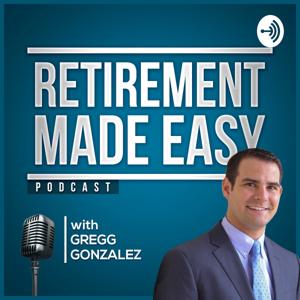


I received a phone call this week from a listener that I thought was absolutely crucial to share with my listeners. She had gone to a retirement seminar that I gave over 10 years ago. She didn't take my advice then and regrets it now. Why? Almost 11 years later, she's almost 76 and is looking for a part-time job to cover her expenses. What did I share in that seminar? Listen to this episode of the Retirement Made Easy podcast to find out!
You will want to hear this episode if you are interested in...This wonderful lady I spoke with had been retired for a year when she attended my workshop about retirement planning. The big thing that people don't realize is that the average age of the American retiree is 62. Imagine a 62-year-old non-smoking couple. How long will they live once they retire? Research shows that their joint life expectancy is 30 years. I pointed out in my seminar that you have to look at the past. What were prices like 30 years ago in1991? You need to understand that you're not going to be retired for only 5–10 years but more like three decades.
You need to be aware that the cost of living will always increase, even in retirement. While you're still working, income increases, promotions, etc. allow you to keep up with the cost of living. You may not even notice that the cost of auto insurance, cell phone bills, groceries, stamps, etc. is rising. When you retire, it's a whole different ball game. You are on a fixed income that will likely never increase. Your expenses will never be fixed for the rest of your life.
Why you have to prepare for cost of living increasesThis Gal didn't realize she was setting herself up for failure. Her husband had a fixed $1,800 a month pension that didn't have a cost of living adjustment. The cost of living and inflation wasn't being factored in—and she wasn't prepared for it. Her property taxes are 80% higher than they were 10 years ago. Every item on her entire budget is far higher than they were. Now that he's passed, she only has her social security and his pension.
Even worse, she had invested her 401k very conservatively and it's grown very little (2% a year). Inflation has eaten away her fixed income. To offset inflation, she's drawn more and more from the 401k, which is now only growing at 0.1% of interest. She's having to draw 9% to supplement her lifestyle. Her account is shrinking by 8.75% per year. In 11.5 years, it will be completely depleted. She's applied for a job as a Walmart greeter to help cover her living expenses.
Cost of living increases = the silent killer of retirementIf you don't pay attention to where your money is going, how much you're spending, and the increasing costs of living you will be in trouble down the road. Nothing is scarier than being in your mid-70s and realizing you'll run out of money. What if you have to go back to work? How long will you have to go back to work? Can you cut expenses in your monthly spending? This listener has cut everything possible, short of groceries.
Where did she make her fatal mistake? She should have invested her money so that it could exceed the cost of living. If the cost of living increases 3–4% a year on average, she would need to invest her savings so it's growing at a return of at least 3–4% to keep up. It would be even better if it was growing by 5–7%.
If you want to make sure that you don't run out of money in retirement, you need to have a plan. I recommend that you start by listening to The Retirement Bucket Strategy, outlined in episode #24. Then you need to build a plan that keeps up with the cost of living. 30 years from now your expenses will be much higher. We will likely never see prices decline or flatline.
Resources & People MentionedSubscribe to Retirement Made EasyOn Apple Podcasts, Spotify, Google Podcasts
In this special two-part episode of Retirement Made Easy, I answer a listener's question about Medicare enrollment. I also talk about the tax proposals that legislators snuck into The American Families Plan and how they could impact you. If you're nearing retirement this is a can't-miss episode full of important details.
You will want to hear this episode if you are interested in...Subscribe to Retirement Made EasyOn Apple Podcasts, Spotify, Google Podcasts
The last big crash where the year ended down was 2008, with the market ending down 38%. Before 2008, 2000–2002 were three years where the market was down in the double-digits. If you retire at age 62 like the average person, you're expected to live another 30 years! That is 30 years where you will likely experience a market crash.
So what should you do when you experience a market crash during retirement? Do you jump out of the market and make your portfolio conservative until the coast is clear? Or do you wait out the storm? I answer this listener's question in this episode of Retirement Made Easy.
You will want to hear this episode if you are interested in...If your goal is to retire at age 62 or 65, we must assume that you'll live 30+ years. You will experience a setback in the market. It's like taking a road trip from New York to LA. If you're traveling that far, the odds of hitting road construction are pretty high. So you must plan ahead and ask yourself, "What will I do if…?"
Tom Hanks plays Captain Sully in the movie, "Sully." He was flying a plane when two birds hit the engines. Both engines went out. The first thing he did was ask the co-pilot, "Give me the QR." It's a manual that they reference in case of emergencies. Together, they determined they had to land the aircraft in the Hudson River. All 155 passengers survived because they had a plan in case of emergencies.
That's why we make a retirement plan for our clients. If the market crashes, you have a plan in place that will direct your steps through the crisis. How we set up someone's portfolio is based on the assumption that there will be a large market downturn at any time.
Step #2: Use the bucket strategy for retirement planningIf you've listened to previous episodes, you know I'm an advocate for the bucket strategy. To give you a quick recap, your portfolio should consist of three different buckets:
Each bucket has a different job. During a market crash, you could reduce some of the income in bucket #2 temporarily. You can do Roth conversions while the market is down.
Step #3: Stress-test your retirement planYou should stress-test your retirement plan to determine how a 30% or 40% drop in the market would impact your portfolio. Would your plan crumble? If you plan for these scenarios ahead of time, you are prepared for a market crash. The only thing you don't know is how long it will last. But we can look at historical crashes to gauge how long we need to plan for.
You can't retire thinking you'll never experience a market downturn—or that you can keep doing the same thing. A lot of people retired in 1999. Let's say they had $1 million invested in the S&P 500 and were taking out $50,000 a year. The market was down the following three years. Then they experienced a large crash in 2008. This person would've run out of money by 2016 with 14+ years of retirement left. You can't let this happen to you.
What is the biggest mistake that people make in a downturn? What is the worst thing you can do? Listen to the whole episode to learn THE best ways to handle a market downturn.
Resources & People MentionedSubscribe to Retirement Made EasyOn Apple Podcasts, Spotify, Google Podcasts
As you're nearing retirement—or thinking about retiring early—you must think about your options for health insurance. If you're retiring early, you have three options for healthcare. If you're planning on waiting until age 65 to retire, you'll qualify for Medicare. I cover the basics of all of these options in this episode of Retirement Made Easy!
You will want to hear this episode if you are interested in...Why do so many people wait to retire until 65, when they could retire early? Because the cost of healthcare is so high. But if you retire at 65, you automatically qualify for Medicare. But some people still decide to retire at 63 ½. How do they do it? They jump on COBRA for 18 months to bridge the gap. If your spouse is on your health insurance and you retire, your spouse is entitled to 36 months of COBRA. There's no denying that COBRA is very expensive, but it's the same care that you've been used to. The only change is the price of the premium (because their employer is no longer covering part of it).
Two other health insurance optionsThere are two other options if you want to retire before 65: private health insurance or Obamacare. Private insurance would be a plan offered outside of the healthcare exchange through BCBS, for example. The premium will be very expensive for someone in their 60s. People are always surprised at the cost of the premium for good health insurance. You're likely looking at $800+ a month. It's like having another mortgage payment until Medicare kicks in.
The second option is through the healthcare exchange, i.e. Obamacare through the Affordable Care Act. The problem is that what's "affordable" is very subjective. Obamacare is income-based, so a married couple with a household income under $68,960 annually qualifies for a subsidy on their premiums. If you get under certain income bands, you can qualify for a higher subsidy and lower health insurance premium. But you may likely have a huge deductible.
Some people work to keep their taxable income lower to game the system until they qualify for Medicare. Let's say a couple has $2.5 million in their 401k and they have CDs, Roth IRAs, etc. They might leave the 401k alone and try to live off the CDs and Roth IRA withdrawals. So they make it look like they have very little reportable income and qualify for a larger subsidy on Obamacare. The system is obviously broken. Why do I think Obamacare is a trainwreck? Listen to hear my opinion.
The basics of MedicareYou may remember seeing something called a FICA tax on your paystubs. A FICA tax is 7.65% of your pay. Of that, 6.2% goes to Social Security and 1.45% pays into Medicare. Once you hit 65, you're eligible for Medicare—healthcare for retired people.
Medicare consists of Part A, B, and D. Part A is hospital coverage, Part B covers most things like preventative care or other medically necessary services, and Part D covers prescription drugs. If your social security is $2,000 a month, a percentage comes out of that to pay for the premiums. It's usually around $148.50 a month. So you are actually getting something like $1,851.50 a month from Social Security.
Medicare Part B covers 80% of your medical costs—and you're on the hook for the other 20%. Many people pay out of pocket for that 20%. Others look at a supplement or advantage plan to cover the 20%. A supplement can cost somewhere between $200–$300 a month. An advantage plan can cost $0 a month but may have a large deductible (they also tend to be more complex).
What do you need to be aware of when you're choosing a supplement? Listen to the whole episode to hear my tips!
Resources & People MentionedSubscribe to Retirement Made EasyOn Apple Podcasts, Spotify, Google Podcasts
Is now a good time to retire—or a bad time? If you're a Baby Boomer, you may be questioning what you should do. Many people are quite fearful of retiring given the state of the country and stock markets. So in this episode of Retirement Made Easy, let's talk about it. I'll share how you can improve your odds of a successful retirement (and the things you need to be aware of). I understand this turbulent time can be overwhelming. Hopefully, this episode can help prepare you and calm your nerves.
You will want to hear this episode if you are interested in...What do those about to retire find concerning? Well, right now we've got all-time stock market highs. We haven't had a large crash where at the end of the year the market was down over 20%. The market was only temporarily down because of COVID. We haven't had a year where the stock market ended down 20% or more since 2008. Many people are thinking that a market like this can't continue. They're expecting a pullback.
We also have a supply chain shortage. Interest rates are at record lows. Government or corporate bonds will pay very little interest. Inflation seems to be rising higher and higher. On top of this all, a Baby Boomer is the sandwich generation. People in their 60s are still caring for elderly parents whose health is declining. My mother is a Baby Boomer who spent the first few years of her retirement caring for her parents.
Many people—because of COVID—had their adult children moving back in with them. According to Experian, outstanding student loan debt has grown to $1.57 trillion as of 2020. Are you helping your adult children pay off student loan debt? Do you have PLUS loans that you're paying on? The Baby Boomer generation is the first to have to deal with these loans.
Many Baby Boomers believe that their social security is in jeopardy—and it's true. If no changes are made to Social Security between now and 2035, there will only be enough money coming in to pay 75% of the benefits. There need to be significant changes so Baby Boomers can count on that income.
Another concern? Pension funds may dry up or be reduced. More and more pensions are defaulting or are under-funded. If you're not yet 65 and eligible for Medicare, what will health insurance cost you? What will coverage be like? The economy is scaring some people. Gas prices are at a seven-year high (according to AAA). We haven't seen gas prices this high since 2014.
How to improve your odds of a successful retirementWhat can you do to move the needle in your favor? How can you increase the probability of success in your retirement?
We are still in a low tax environment based on the current Tax Cuts and Jobs Act of 2017. Until Congress votes to change that, there are many strategies you should take advantage of. Perhaps you can do Roth conversions, contribute more to an HSA, or even open up a 529 plan to take advantage of a state income-tax deduction. With the Secure Act, you can now use up to $10,000 in a 529 plan to pay off student loans.
I'm in St. Louis, MO. Let's say I have clients contributing to a 529 plan. A couple wants to contribute $10,000 for their son. He has $10,000 of student loan debt. That $10,000 contribution can be deducted on state income taxes and he can use the money to pay off an old student loan.
Now is a good time to reevaluate your portfolio and see how much risk you're taking. When people get closer to retirement, they want to protect what they have. They're happy with singles and doubles—not swinging for the fences. Take a good look and see if your portfolio still suits you.
With interest rates so low it may be a great time to refinance your debt like your home mortgage. I enjoy seeing clients get that mortgage paid off by the time they retire. This can allow you to live on less money in retirement. If you have real estate that you don't plan to keep for the long-term, now may be a good time to sell as the market is at all-time highs.
For big purchases such as vehicles, boats, or recreational vehicles, a lot of people like to purchase those leading to retirement—but now is NOT the time. Prices for used vehicles (because of the chip shortage) mean cars aren't going to dealerships. Supply and demand dictates that you'll find very few bargains until production numbers are up (which will take 6–18 months).
What else do you need to consider when preparing for retirement? Listen to the whole episode to learn more!
Resources & People MentionedSubscribe to Retirement Made EasyOn Apple Podcasts, Spotify, Google Podcasts
A client asked me, "In what scenario would it make sense to claim your social security benefit early (before full retirement age)?" Full retirement is somewhere between age 66 and 67, depending on when you were born. So in this episode of Retirement Made Easy, I'll share a few scenarios in which it might make sense to take your benefits early. Listen to learn more!
You will want to hear this episode if you are interested in...If you were born in the year 1960 or later, your full retirement age is 67. If you claim your benefit early, it will be a permanent reduction in the lifetime income of your social security. What does that mean? Social security can be thought of as a pension, where you get monthly income for the rest of your life. It's based on the best 35 working years of your life when you make the highest income. If you have a spousal benefit, you get up to 50% of your spouse's benefit. The longer you wait, the bigger it will be. But the amount you can receive will max out at 70.
If your spouse was a stay-at-home Mom, her spousal benefit may max out at her full retirement age, so it wouldn't make sense to wait past that. The majority of people claim their benefit prior to hitting full retirement. Why? Sometimes it's quite simple—they need the income. Or they don't see the value in waiting and letting the benefit build. But when do I think you have reason to claim your benefit early?
Reason #1: You're single and in poor healthBefore your full retirement age, there are income limitations on social security benefits. Let's say you're 62 and you're working but you want to claim your benefit. The SSA has a rule where if you make $18,960 a year, you can still collect your full social security benefit. For every $2 that you earn over $18,960, they reduce your benefit by $1. If you really need that money and you don't have retirement accounts to supplement your lifestyle, it may make sense to claim your benefit early. What if your health is declining and you can't work a 40-hour workweek? If I see a single person below their full retirement age and they have income below $18,960 and their health is poor, it makes sense to claim their benefit.
Reason #2: Your spouse is significantly olderLet's say there's a married couple where the wife is 62 and the husband is 74. I'm also assuming that the wife's benefit is low and the husband's is higher because he delayed his benefit. It may make sense for her to claim her benefit early. If he predeceases her, she'll get his survivor benefit—the larger of the two benefits. If he lives until 85, that's only 11 more years.
The survivor benefit will provide a lot of income. How does the survivor benefit work? The rule of thumb is that when the spouse with the higher income passes away, the remaining spouse continues with the higher benefit. So you want to delay the retirement of whichever spouse has the higher social security benefit.
What falls under earned income?If you claim your benefit early, the $18,960 income limit is earned income (W2 or 1099 income). It does NOT include income from a pension, IRA, 401k, rental income, stock options, dividends, etc. You would not believe how many people delay their social security benefits because they think they're over that limit.
Have questions? Head on over to RetirementMadeEasyPodcast.com and send me a message!
Resources & People MentionedSubscribe to Retirement Made EasyOn Apple Podcasts, Spotify, Google Podcasts
Money is subjective, right? $1 million saved for retirement may not seem like much to one person. To someone else, it seems like a fortune. Whatever it is that you do have saved for retirement, you likely saved and invested for years. The decisions you make with what you have are crucial for your future success. You have to make the most with what you have. In some cases, that may mean retiring in a different state. What are the best states to retire to? What are the worst states to retire to? Find out in this episode of Retirement Made Easy!
You will want to hear this episode if you are interested in...A lot of studies have been done on the best states to retire to. Kiplinger, Bankrate, AARP, and Retirement Living have all done studies on this topic. When you're looking at these studies, it can seem somewhat subjective. What factors were considered?
Kiplinger's study looked at the populations of people 65 and older in each state. Their study showed that 14.5% of the US population is 65+. So they look for higher or lower national averages in each state. For example, 19.% of the population of Florida is older than 65.
The 4 worst states to retire toThree or four states stick out as the worst in multiple studies: New Mexico, Illinois, New York, and California. Here's why:
Oregon and Alaska don't fall far behind these four states.
The 5 best states to retire toEach study ranks the states differently—some even rank them by the percentage of the population that was 65+.
Other honorable mentions include Wyoming, Utah, Colorado, Virginia, and West Virginia (safe, reasonable cost of living, low poverty rates, and tax-friendly). My last mention is Arizona. A lot of people retire there. But the cost of living, housing, and taxes are all above the national average.
If you're interested in retiring to one of these states, spend some time there during the winters—and consult a financial planner to make sure it's the right move for you!
Resources & People MentionedSubscribe to Retirement Made EasyOn Apple Podcasts, Spotify, Google Podcasts
I love when people ask questions! So in this special episode of Retirement Made Easy—and celebrating one year of the podcast—I'm answering five listener questions. If you don't have a background in financial or retirement planning, I'll happily answer any question you may have. Just head on over to RetirementMadeEasyPodcast.com and send me a message!
You will want to hear this episode if you are interested in...The gentleman that asked this question was told that the IRA he had inherited from his father had to be kept with the current custodian for 10 years. He was told after 10 years he could withdraw the money. That's NOT how inherited IRAs work!
You can move the inherited IRA to any custodian that you'd like (i.e. from Fidelity to Charles Schwab). You can also control how it's invested. You can move from a conservative strategy to a moderate or aggressive portfolio that fits your risk tolerance. You call the shots.
For someone whose parents passed away after January 1st, 2020, you have 10 years to take distributions out and pay the taxes on the IRA. So if you inherited $100,000, you could take distributions of $10,000 per year. You can't wait until the end of 10 years.
Question #2: Should you invest all of your accounts the same way?Should you invest all of your accounts the same way? This particular listener, Jenny, has a trust account, Roth IRA, regular IRA, and a 401k (4 different accounts). Without knowing much about Jenny, my advice is that a non-retirement account needs to be invested tax-efficiently. That account could cause you to pay capital gains taxes, dividends, taxes on interest, etc.
Most 401ks have limited investment options. Because of this, I don't recommend investing in a Roth IRA/IRA like a 401k. Another thing to consider is your goals for each account. If you want to leave an account for a child, a long-term aggressive approach may be best. You might consider the other accounts as resources for your own retirement. Perhaps you need them to produce an income to supplement your pension and social security. You'd take a moderate approach with those accounts. How you invest the money must match your goals.
Question #3: How do you roll over a 401k?How do you roll over a 401k to a new company? This listener was given the impression that they'd get a 6% match at their new company (dollar-for-dollar). They thought the $1 million 401k they were rolling over would be matched with $60,000. That is not how that works. A company 401k doesn't match rollover dollars. However, they would match contributions up to 6% of your pay. If you make $100,000 and contribute $6,000 they will match the $6,000. They won't match anything over and above that—including a rollover.
Question #4: How do you help your kids start Roth IRAs?To get a Roth IRA, you need earned income. So your child would need to have a job in order to contribute. They could contribute up to $6,000 to a Roth IRA. So a 16-year-old with $2,000 of earned income is eligible to contribute $2,000. It's a great way to show your children the value of saving and investing their money (and what it means for them years down the road). The money in that Roth IRA will grow tax-free all those years!
To hear my answer to the last question (about purchasing whole life insurance) listen to the whole episode of Retirement Made Easy!
Connect With Gregg GonzalezSubscribe to Retirement Made EasyOn Apple Podcasts, Spotify, Google Podcasts
This mistake is dangerous when it comes to the investment selections that you make. To avoid this mistake, you have to focus on why you're investing in the first place. What is it actually for? You can't make poor decisions with your "serious" money that's devoted to providing for your retirement.
You will want to hear this episode if you are interested in...I see this all the time, especially if there's a fad in play. What does that mean? Most recently, AMC, bitcoin, and GameStop are trending in the trading world. What about gold? The media hype and headlines confuse people. It can stir greed or the "fear of missing out" in people. Perhaps it stirs feelings of jealousy when you hear that other people are getting rich quickly.
Taking investment advice from people who aren't qualified is the biggest mistake I see. Whether it's your brother-in-law or neighbor giving you investment advice, it is dangerous. The elevator to success is broken—you have to use the stairs. If I can give any advice to the people investing their life savings for retirement it is this: don't get suckered into the headlines.
These should be the determining factors of how you investWhat factors do I look at to determine how your retirement dollars should be invested?
Knowing these five things can help you put blinders on when someone is talking about the next investment fad or stock tip of the week. That's for the person trying to make a quick buck—not you.
Your investment strategy should be based on youYour money that is earmarked to fund your retirement needs to be invested prudently based on you. Not your brother, sister, or colleagues. Their goals, risk tolerance, philosophies, and values are different from yours. Their portfolio will be different from yours and holds no bearing on your decision-making. If you need help designing your portfolio, that's what a certified financial planner can help you with.
Go to my website and download my couple's guide to a dream retirement. I guarantee that will improve your path to retirement!
Resources & People Mentioned
Subscribe to Retirement Made EasyOn Apple Podcasts, Spotify, Google Podcasts
What is your simple ticket to finding unclaimed wealth? How can you find unclaimed money for yourself or the people that you're close with? In this episode of Retirement Made Easy, I diverge from my normal podcast structure to share a tool that can be a game-changer for your retirement. Don't miss it!
You will want to hear this episode if you are interested in...A client's Mom passed away years ago. She knew her Mom had a life insurance policy but she didn't know how to find it. We dug as deep as we could and ended up finding out the name of the insurance policy carrier. Together, the client and I called and were able to locate the policy number and learn how to claim the death benefit.
But what about old life insurance policies where the death benefit never got claimed? What about dividends or paychecks? What happens to all of the unclaimed money? What if the children never knew about the policy—what happens to it? It ends up at the State Treasurer's Office (wherever that person lived).
So what do you do? Go to unclaimed.org, the website associated with the National Association of Unclaimed Property Administrators. You can click on the state where you're looking for unclaimed property. It brings you to that state's treasurer's website. You can type in last name, first name, and hit search and it brings you a list of unclaimed funds close to that person's name.
Don't be afraid to make a phone callI have found hundreds of thousands of dollars for people, if not millions of dollars. It could be unclaimed life insurance or an unclaimed paycheck. Some people even had tax refunds that we found. I've uncovered old 401k plans that have compounded over the years. The average claim is around $300—but it can be far more. You simply have to fill out minimal paperwork to claim the money. Sometimes it makes sense to call that 800 number if you have any doubt. The worst thing they can tell you is that "We don't see a balance for you."
How we found an unclaimed pensionEight years ago, I was working with a client (who's still a current client) on the doorstep of retirement. We were doing some planning together when mentioned he worked with a company—that I'm familiar with—that has a pension plan. He didn't have any paperwork showing that he was eligible for the pension. He'd never received any statements or notifications. However, I knew he had worked there long enough to be eligible.
So I did some digging. We called the 800 number and hopped on a conference call with the company. We found out that they had the wrong address on file for him. He hadn't lived at that address for over 20 years. Every piece of mail they ever sent him was returned. We found he had almost $90,000 of a lump-sum pension. He was almost in tears that we had found money that he had written off. A simple phone call changed the entire trajectory of his retirement.
Finding a lost 401k—and something unexpectedYears ago, I had a client that worked with a publicly-traded company. She knew she had an old 401k with that company but didn't believe there was much money in it. So we called them and found that it had changed hands 6+ times over the years. We found that she also had some company stock she was unaware of that had been accumulating over the years. It had grown to over $50,000. We were able to cash the stock out and pay zero capital gains taxes. The old 401k was rolled over to her current 401k. That $50,000 was the tipping point in her retirement plan.
Have any questions? Head on over to RetirementMadeEasy.com and send me a message!
Resources & People Mentioned
Subscribe to Retirement Made EasyOn Apple Podcasts, Spotify, Google Podcasts
From the publisher's feed

1,964 Listeners

447 Listeners

800 Listeners

1,303 Listeners

459 Listeners
542 Listeners
753 Listeners

553 Listeners

700 Listeners
189 Listeners
832 Listeners

199 Listeners

593 Listeners

1,072 Listeners

103 Listeners