
Sign up to save your podcasts
Or

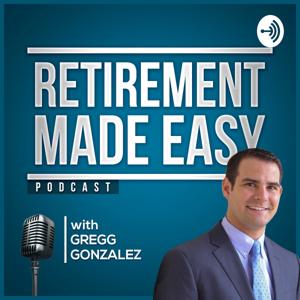


The cost of living for 2022 will be the highest it's been in 40 years. What does that say about inflation? What is the increase of social security payments? How will it impact Medicare Part B premiums? I'll cover what these changes mean for you in this episode of the Retirement Made Easy podcast!
You will want to hear this episode if you are interested in...Every year around mid-October, the Social Security Administration announces whether or not there will be a cost of living increase for the next year. In three of the last 12 years, there was no increase. But starting January 2022, social security payments will increase 5.9%. That's the largest increase in over 40 years.
The greatest risk retirees face is that the cost of living is constantly increasing. Anyone who doesn't account for that—such as those with a fixed pension—may struggle to pay for basic necessities. It's given that if you're planning for a 30-year retirement, you'll run into higher costs of living. Social security will give you a "raise" some years and others they won't.
The Medicare Part B premium is taken from your social security benefitIf you weren't already aware, the Medicare Part B premium comes out of your social security benefit. In 2021, the Part B premium—depending on your tax bracket—is $148.50. If you're expecting $2,000 a month from social security, you have to reduce it by the amount of your Medicare Part B premium. Don't let it surprise you!
In November, Medicare will officially announce what the premium will rise to in 2022. It's expected to be about a $10 per month increase from $148.50 to $158.50. Why does this matter? It will offset the raise you get from social security.
If you get $1,000 a month from social security and the cost of living will increase 5.9%, you'll get $1,059 a month. If you reduce it by the cost of medicare, your benefit will be $1,049 a month. It will be closer to a 4.9% increase in your social security benefit. In the years you don't get a social security increase, your benefit will go down because your Part B premium will likely increase.
Why the social security system is brokenBefore the cost of living adjustment in 2021, the average social security recipient receives about $1,565. A 5.9% increase will bump that to $1,657, an increase of $92 a month. Once you adjust for the Medicare part B premium increase, that bumps your increase down to $82.
More than 70 million Americans receive social security income. We don't have enough people paying into social security to compensate for these yearly increases. By 2035, 2.3 people will pay in for every one recipient. Something needs to change in the system to make sure the system remains solvent.
Bonus listener question: How to protect your retirement moneyA long-time listener, Joyce, is on the verge of retiring. She's worried taxes will increase. She has a 401k and her husband has a 403B. How do they protect what they've accumulated when the market is volatile?
Generally speaking, you need to make sure your portfolio matches your retirement goals and your risk tolerance. Are you conservative? It won't earn you much interest. If your cost of living is increasing 3% or more per year and your money is in a CD at the bank earning next to nothing, you'll be behind. If the cost of living will continue to increase—and we know it will—it's prudent to make sure your investments are keeping up (without being too aggressive).
But there's more to the story—listen to the whole episode to hear my entire answer for Joyce!
Connect With Gregg GonzalezSubscribe to Retirement Made EasyOn Apple Podcasts, Spotify, Google Podcasts
There are two crucial mistakes I see people make with their retirement. The sad part is that these mistakes are completely avoidable with proper retirement planning. What are the two retirement mistakes? How can you avoid making them? Learn more in this episode of the Retirement Made Easy podcast!
You will want to hear this episode if you are interested in...A lot of people in St. Louis work for Boeing and may own shares of their company stock. Many also feel a sense of loyalty to their employer/company and invest far more than they should in company stock. I have nothing against being a shareholder. However, when you bet the farm on one single stock, you may not have a good outcome. You need to weigh how much you invest in one company very carefully.
I've known people who had thousands of shares of company stock in Worldcom, which went bankrupt. What happened to those shares? They're worthless. Boeing started 2020 at $332 a share. It went to $95 a share during the COVID crisis. Many people owned company stock and had their retirement portfolios invested in Boeing. They didn't know what to do. The moral of the story? Diversify. If you're passionate about the company, it's perfectly fine to own some shares. But limit it to 5–10% of your portfolio.
Safeguard your money with diversificationJohn Wooden was the UCLA Men's Basketball Coach for 12 years. During 10 of those years, he won 10 championships. That will never be accomplished again. He and his then-fiance were saving for their wedding during the great depression. They finally reached the "magic" number where they could pay cash for their wedding.
So they walked hand-in-hand to the bank to withdraw the money. But the bank had closed overnight and all of their money was gone. The great depression had hit full force. Sadly, FDIC insurance didn't exist back then and their funds weren't insured. They lost it all.
Nowadays, the FDIC will insure up to $250,000 in a single bank account from financial loss. Anyone with more than $250,000 in a single bank account is taking an unnecessary risk. Split your money between multiple banks/bank accounts to protect it.
Mistake #2: Financially relying on your pensionDo you have a corporate or municipal pension? Most if not all of these pensions are under-funded, which means at some point the money will probably run out. I've had clients bring me the paperwork for their pensions only to find out that they're 70% funded. It's like getting on a plane and being told that you have a 70% chance of making it to your destination. What if the odds were 85%? I wouldn't get on either airplane.
Many people with pensions get letters from their former employers saying they're under-funded and that the retiree will unexpectedly start receiving less money. If a pension doesn't offer a lump-sum option, it's out of your control. If you do have a lump-sum option, you can be bought out and have more of a worry-free retirement.
If a pension is being paid out over 30 years, how much confidence do you have in it? If I was in this position, I'm not risking the success of my retirement on the positive outcome of a pension. There is far too much risk.
Resources & People MentionedSubscribe to Retirement Made EasyOn Apple Podcasts, Spotify, Google Podcasts
Listener questions have been pouring in these last few weeks! So in this episode of Retirement Made Easy, I'll dive into a few more questions that have rolled in. How do advisors get paid? What can you do to help your parents with estate planning to avoid probate court after their deaths? Do no-risk no-fee investments exist—and are they worth it? I answer these questions and more in this episode. Check it out!
You will want to hear this episode if you are interested in...Some advisors only make money by offering investment products where they make a commission. I feel like this is a conflict of interest—these advisors may push you to invest in something that's not in your best interest.
Other advisors charge hourly. For example, I charge $200 an hour for financial planning services. Some advisors use different methods than others. Another way—and how I'm primarily compensated—is a flat annual fee that comes out of the investment accounts and is broken up quarterly. A common percentage can be 1–1.5%.
How to help your parents with estate planningHow do you help your parents get their ducks in a row so you and other family members don't end up in probate court? You may be heading into retirement yourself and are helping care for your aging parents. So what can you do to get your parents set up properly? Here are some things to make sure your parents have:
Probate court can be a mess, so how can you avoid it? It depends on the asset. If it's a vehicle, it's passed by title. Make sure the vehicle is assigned to be given to the beneficiary using a Transfer on Death (TOD) form. Brokerage accounts can be transferred similarly. IRAs, 401ks, Roth IRAs, etc. have beneficiary designations to bypass probate. Listen to hear some other strategies for transferring assets.
Do no risk no-fee investments exist?A listener heard an ad on the radio for a "No-risk no-fee investment opportunity with market-like returns." The ad is likely about a fixed-risk annuity. What they don't tell you is that it can be a commitment of 5–15 years where your money is completely locked up. If it sounds too good to be true, it likely is.
Plus, how are the companies making money? You may get a percentage of the return but nowhere near what you would if you'd just invest in the index itself. The people that own these don't often realize what they're buying into. Someone only needs an insurance license to offer these index annuities.
Why I love Roth 401ks/IRAsOne of my listeners doesn't have the option of a Roth IRA for their 401k and wants to know what the big deal is. A Roth option is becoming more common and hopefully, every 401k will offer it someday. Imagine investing in whatever you want—mutual funds, stocks, ETFs, CDs, etc. If it's in a Roth IRA/401k, it will grow tax-free forever. There is nothing better than tax-free growth.
Connect With Gregg GonzalezSubscribe to Retirement Made EasyOn Apple Podcasts, Spotify, Google Podcasts
If you roll over your old 401k from a former employer, does your match apply? Can you get around the 10% early withdrawal penalty? If you retire early, should you defer your social security benefits? I answer these questions—and more—in this Q&A edition of the Retirement Made Easy podcast!
You will want to hear this episode if you are interested in...If you roll over your old 401k from a former employer, does your match apply? Let's say Jennifer has $1 million in a former 401k and rolls it over to her new 401k that offers a 5% match. She was told she'd get the $50,000 match on the amount rolled over. Unfortunately, the match does not apply to rollover money, only current contributions from your paycheck while working for the new company. When Jennifer earns $100,000 at the new company, they'd match $5,000.
The most common vesting schedule is 20% per year over five years. A typical matching schedule will be 20% the first year, 40% the second year, 60% the third year, until they match 100% in the 5th year. So if you leave the job in year two, you'd only be able to keep 20% of what was matched. This is in place to incentivize people to stay with their company long-term.
Can you get around the 10% early withdrawal penalty?If you withdraw money from an IRA or 401k before you turn 59 ½, you can get hit with a 10% penalty. If you're 58 and want to retire early, the only way to do it without the penalty is if you have a special exception such as a disability or medical expenses. The other exception is called a 72-T. It forces you to draw out equal amounts over 5 years or until you turn 59 1/2.
However, there is more flexibility with a 401k. If you retire between 55 and 59 ½, your 401k—if left with the company you retire from—can be accessed without the 10% penalty. You'll just pay state and federal taxes. This can't apply to an old 401k with a different company that you didn't retire from after the age of 55.
Does the 10% early withdrawal penalty apply to beneficiary IRAs? Listen to find out!
When to claim social security if you're retiring earlyThis listener's husband is retiring at age 64 and wants to collect his social security benefit immediately. The wife's benefit is greater than ½ of his benefit at full retirement age. She plans to wait until full retirement age to collect her benefit. Is this what they should do? With the minimal information I have, I'd start with some questions. If you delay your benefits, where is income going to come from? A pension? A 401k, Roth IRA, or traditional IRA?
If one of you predeceases the other, the higher benefit continues. If your husband has the higher of the two benefits, it makes sense to collect the lower benefit first so the larger benefit defers and increases every year.
Secondly, men are typically older in a marriage and often pass away sooner. If women live 3–5 years longer than men, the husband should think about leaving resources for their spouse. So it makes sense to delay your husband's benefit. But again, with more information, I can give a more accurate answer.
Resources MentionedSubscribe to Retirement Made EasyOn Apple Podcasts, Spotify, Google Podcasts
Every generation comes up with reasons not to invest. So in this episode of the Retirement Made Easy podcast, I share a historical perspective from the eyes of Baby Boomers, people born between 1946 and 1964 (approximately 70–80 million). The oldest Baby Boomer, born in 1946, is turning 75 this year. What's happened in the economy since 1950? What has shaken the world and created fear in the minds of Americans?
You will want to hear this episode if you are interested in...Here are some of the events that happened in the last 70 years and how the Dow Jones reacted during those decades (The Dow Jones—30 of the largest US companies—was established in 1896).
All of these situations and political upheavals were valid reasons to worry about your investments. Yet in almost every decade the Dow Jones flourished.
Why you should still investToday, as I'm recording, the Dow Jones is around $35,000—it has done phenomenally well. But there will always be a headline out there, always reasons not to invest. The Dow Jones grew from $198 to $35,000 in one Baby Boomer's lifetime. People lose sight of the resiliency of this country and the stock market.
Oak trees don't grow overnight. Many don't produce acorns until they're 20+ years old. They go through storm after storm. But after enough time, they produce acorns and provide shade as large, beautiful trees.
There will always be something that can cause the market to turn down. Think about your 75-year-old friend. They've seen a lot. There were numerous reasons not to invest. But the Dow Jones flourished over time. My advice? Keep your focus on your long-term vision and goals. Keep your mind off the headlines. Don't sacrifice your long-term goals because of short-term fears.
Connect With Gregg GonzalezSubscribe to Retirement Made EasyOn Apple Podcasts, Spotify, Google Podcasts
Do you have enough saved to fund your retirement lifestyle and only work if you want to? A lot of people are a few years away from retiring and don't know if they're on track to retire. What can you do to expedite your journey toward retirement? According to Napoleon Hill, "What the mind can conceive and believe it can achieve." I want you to start dreaming. Learn more in this episode of Retirement Made Easy!
You will want to hear this episode if you are interested in...In 1976, Arnold Schwarzenegger had just won Mr. Universe after winning Mr. Olympia—the younger man ever to do so. He came to America because his goal was to become the best actor in the world. His first role was as Hercules in the terrible movie, Stay Hungry. After the huge flop of a movie debuted, he was interviewed and asked what was next for him. He said, "I want to be the biggest box-office draw ever." The Sports Illustrated journalist started laughing and then realized Arnold was serious.
So the journalist asked, "How are you going to do that?" Arnold replied, "The same way I won Mr. Universe. All I have to do is picture myself being the most famous actor and work towards that vision and it will come true." Guess what? Arnold Schwarzenegger became a huge movie star, the governor of California, and married a Kenedy. There is nothing he can't do.
Thomas Watson built IBM from the ground up. How did he do it? He imagined what he wanted and worked backward. When it comes to your retirement planning, that's what I recommend. Start with your dream.
What is your retirement dream?When do you want to retire? How do you want your life to be? How much do you want to live on? Do you want to travel in retirement? What hobbies will you pick up? You can work to achieve it. But if you don't think about what you want, you won't know how to plan for it. You certainly won't know when you can retire. Everything starts with a vision.
Henry Ford was renting a garage with cinder blocks on both sides. When he had built his automobile, he realized it was too big to move out of the garage. So the owner of the garage knocked down the cinder block walls because he knew Henry's dream—the invention of the automobile—would revolutionize the world.
Why it's crucial to work with a financial advisorA financial advisor should be able to work with you to build a plan based on your vision of retirement. They'll advise you what it will take to get from where you are to where you want to go. Maybe you only need to do something small, like extra savings to Roth IRAs outside of a 401k. Or you can use an HSA through work.
What else can a financial advisor do? They will help prevent you from blowing up your plan. 80% of what we do is prevent behavioral mistakes. People naturally fall away from plans. Think about the last diet you embraced. How long did that last? An advisor keeps you focused on your vision.
The only way to get from A–Z is to follow through with your plan. If you don't, you'll have to delay retirement or change the vision you had. You have to have a dream to make it come true, right?
People don't plan to fail, people fail to plan. If you're still working, saving, and investing for retirement, think about your vision for your retirement. Then begin to work backward from there. You have to plan, you can't just hope you have enough when you reach the finish line. Nothing is worse than telling someone they can't afford the lifestyle they want in retirement because they waited too long to plan.
Resources & People MentionedSubscribe to Retirement Made EasyOn Apple Podcasts, Spotify, Google Podcasts
In this episode of the Retirement Made Easy podcast, I share two conversations I had with listeners. Both were given advice that I would consider a recipe for failure. One was given a strategy to time the market and the other was advised to chase short-term performance. Why are those two things dangerous? Listen to this episode to find out!
You will want to hear this episode if you are interested in...I had a nice conversation with a listener who followed another podcast that promised a strategy for timing the market that worked. They claimed they knew when to get out and when to get back in. It sounds like a rosy story but very few people have been able to do this successfully. Why is it so difficult to do? No one knows when the market is hitting the top or bottom. You'll drive yourself mad trying to predict it.
At the start of 2020, the S&P 500 index—within 33 days—dropped 34%. People were panicking and sold out of the market. The market bottomed on 3/23/2021 and 59 days later the market recovered. No one could have predicted that it would recover that fast.
Stop trying to time the stock marketWe don't know when the market will correct, but it's inevitable and natural for it to happen. So what do we do? We set up your portfolio to account for it. If you live in Louisiana, the hurricanes are disastrous. But if you live there, you know hurricanes happen and know that you need an emergency plan in place. People who live in tornado alley have tornado shelters to shield themselves.
Jumping out of the market to avoid the storm is not a wise decision. A well-positioned portfolio will help you accomplish your goals in retirement. An all-weather portfolio will get you through both the sunny and rainy days. You need to have patience and let time work for you and can adjust your sails as your course changes.
Don't chase short-term performanceOne of my listeners, Jill, and her husband have been saving with their 401ks and had a sizable 529 plan they had invested for their daughter. They're certain they'll be able to afford the nice retirement they'd always dreamed of. But they had a know-it-all sibling who urged them to embrace what I would label a poor strategy. He would look at the #1 mutual fund in the world for the previous year and put all of his money in it hoping it would repeat the next year. This is a recipe for failure. Why?
The #1 funds are typically sector funds and are very high-risk. They aren't typically well-diversified and are often very concentrated—which is why they can see high returns in a single year. In 2020, there was a technology fund up well over 100%. The sibling told Jill and her husband to invest their daughter's college education in this fund.
Don't bet your retirement on red or blackI told Jill and her husband that I would not bet their daughter's education. When you have a #1 mutual fund there's a reason why it did well that year and it likely won't happen again. There's never a repeat winner.
You have to follow the rules of diversification and not put all your eggs in one basket. You can't chase short-term performance. That fund may just have an average performance. People that chase performance end up with mediocre returns. It's better to have a portfolio of well-diversified funds that don't overlap that complement each other.
A gentleman bought his dream house on a golf course that backed up to the 8th hole. He came home one day to find that his large picture window was shattered by a golf ball. It was going to cost $2,000 to replace it. Two weeks later, the same thing happened. What did he do? He got a window with multiple frames so if a golfer hits the window he'd have to replace only a small pane of glass instead of the whole thing. That's diversification.
Connect With Gregg GonzalezSubscribe to Retirement Made EasyOn Apple Podcasts, Spotify, Google Podcasts
How do I feel about Roth IRAs and 401ks/403Bs? What about the Backdoor Roth IRA? They can be an important tool in your retirement planning. But how do they work? What is the best way to optimize them? Learn more in this episode of Retirement Made Easy!
You will want to hear this episode if you are interested in...I strongly encourage people to use a Roth IRA whenever they can. A Roth IRA allows you to contribute money after taxes. This allows that money to grow tax-free, which means when you take a withdrawal taxes will not be removed.
Some people also have access to a Roth 401k or 403B through an employer. Not all 401ks/403Bs have this feature—I wish they would. It's certainly not the standard (but it should be). The benefit of a Roth 401k is that there is no income limit compared to a Roth IRA.
I recommend with a Roth 401k or 403B, roll it into a Roth IRA by the age of 72. Why? They have a required minimum distribution. The Federal government makes you take money out of it every year for the rest of your life. You'll be hit with a 50% penalty if you don't make a withdrawal. But that is NOT required with a Roth IRA.
Should the government cap Roth IRA contributions?If you fall under the income limits, you can contribute $6,000 each per year as long as your earned income is at least $6,000. If one spouse doesn't have earned income, you can still contribute $6,000 per person (if under 50). If you're over 50, you're allowed to contribute up to $7,000 per person.
In his article, "Lord of the Roths," Justin Elliott shared that in 2018, the average Roth IRA was worth $39,108. In the article, Peter Thiel—the co-founder of PayPal—was highlighted. He has amassed $5 billion inside his Roth IRA. In comparison, at the end of 2018, Warren Buffet only had $20 million in his Roth IRA.
This is not the intended use of the Roth IRA. That $5 billion is growing, earning interest, and protected 100% tax-free. The government has talked about putting a cap on the dollar amount in Roth IRAs. So far nothing has passed but this story may ruin it for everyone.
Details on the Backdoor Roth IRAIf you're a high-income earner and your household income is well about the $198,000 threshold, you can't contribute through the "front door" of a Roth IRA. If you're 50 years old and you want to contribute $7,000 to a Roth IRA, you can use a Backdoor Roth IRA. To do this, you open an IRA and make a non-deductible IRA contribution. What does that mean?
If you contribute to an IRA, you can deduct the $7,000 on your taxes. Don't do that. Instead, file form 8606. This form lets the IRA know you're contributing without taking the deduction. You can then immediately convert the $7,000 into a Roth IRA to grow tax-free.
Why I'm passionate about Roth IRAsA Roth IRA can provide tax-free income in retirement. Why is that important? Social security is taxable. If you have a pension, it's taxable. A stream of income that is tax-free helps reduce overall taxes in retirement. Your social security and pension wouldn't be taxed as high as they might be if you're making withdrawals out of a traditional IRA or 401k. What are other benefits to having a Roth account? Listen to the whole episode to learn more!
Resources & People MentionedSubscribe to Retirement Made EasyOn Apple Podcasts, Spotify, Google Podcasts
In this special Retirement Made Easy Replay, we take a look back at a popular episode. I'll cover the five questions you need to ask a financial advisor to make sure they're THE right fit for you:
Don't miss it!
What is a fiduciary? How are financial advisors compensated? What is a fatal mistake I see people make with investing? In this episode of retirement made easy, I answer these listener questions so that you can be well-educated about your advisor—and your investments.
You will want to hear this episode if you are interested in...What is a fiduciary? Why would you need one? Do I recommend working with a fiduciary? A fiduciary is someone that acts on the behalf of another person/people and puts their best interests ahead of his or her own. A fiduciary is both ethically AND legally responsible for their actions. Because of this, a fiduciary can be sued if they're found to be negligent in their duties. The legal aspect holds them accountable.
A simple example of a fiduciary is the legal guardian of a child. They make financial decisions on the child's behalf and they're responsible for their well-being. Fiduciaries can be financial advisors as well. I wouldn't work with a financial advisor that wasn't a fiduciary. I am a fiduciary and make sure prospective clients know that I have their best interests in mind. If I won't put my money in something, I wouldn't put yours in it either.
Three ways financial advisors get compensatedThere are three ways financial advisors can charge for their services:
We meet with clients annually or semi-annually to show them their progress, update their retirement plan, etc. The clients that I get who were under a compensation-based agreement with their advisor never spoke with them. There was very little service after the sale (in my personal experience).
Keep portion control in mindIn 2008, someone called me who said they were the brother of a client. They wanted to cash out their 401k and put it all into GM stock (because it was at an all-time low). They were certain that GM would be bailed out. But I don't believe in all-or-nothing thinking. I told them if they were dead-set on doing it to only use a small portion of their 401k. He didn't follow my advice.
Remember what happened? GM went to zero. They filed for bankruptcy. This guy put his life savings into GM stock and he lost everything. Never ever dump your entire nest egg into one thing. You need to abandon the all-or-nothing way of thinking. You can always sell a portion of something—it doesn't have to be it all. Rethink the "go big or go home" mentality. Exercise portion control into your investment strategy.
Connect With Gregg GonzalezSubscribe to Retirement Made EasyOn Apple Podcasts, Spotify, Google Podcasts
From the publisher's feed

1,964 Listeners
447 Listeners

800 Listeners
1,303 Listeners

459 Listeners
542 Listeners
753 Listeners

553 Listeners
700 Listeners
189 Listeners
832 Listeners

199 Listeners
593 Listeners
1,072 Listeners
103 Listeners