
Sign up to save your podcasts
Or

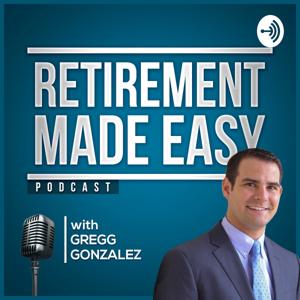


What is long-term care insurance? Do you need long-term care insurance? How much does it cost? When should you buy it? Is it a good deal—or is it a ripoff? Long-term care insurance is a necessity for some and completely unnecessary for others. You want to make informed decisions about your future. That's why I'm going to share how it works and what it covers in this episode of The Retirement Made Easy Podcast.
You will want to hear this episode if you are interested in...Whenever you need long-term care, a physician must sign-off that you're unable to complete two of the six activities of daily living:
My late grandfather was diagnosed with Parkinson's disease. At some point, he was unable to dress without assistance and he was unstable when transferring. He qualified for long-term care insurance. Once you qualify, you don't have to pay your premiums and you start receiving the benefit. It's tax-free and will kick in after an elimination period, usually around 90 days later.
Long-term care policies will pay for home health care or assisted living. My grandfather had an in-home nurse that helped throughout the week and eventually he moved into assisted living. You want to purchase a policy that can pay for both.
Choosing the benefit period of your policyYou also get to pick the benefit period, usually a number between 2–5 years. The premium will be far higher for a longer policy. How long do you need the policy to pay out? The average woman needs long-term care for 3.7 years versus only 2.2 years for men. The premium is also a lot lower to insure a male versus female. Why? Women have a higher likelihood of using the policy versus men. If you can only afford care for one spouse, choose the wife. When my grandmother was in assisted living, there were 95 women to every 5 men.
How much of a benefit do you buy?Some states have higher long-term care expenses (which tend to increase as you get older). Let's say that it's around $7,000 a month in Missouri. You don't want to purchase a policy that covers the entire $7,000. Why? Because social security, pensions, and retirement accounts can be used toward the cost as well. Instead, you could purchase a $4,000 policy. Don't pay more than you need to in premiums.
A made-up 60-year-old couple Michael and Mary are non-smokers of average health in the state of Missouri. How much would it cost them for a $5,000 a month benefit with a 3% compounding inflation as long as they own the policy? For Michael, it's $209 a month. For his wife, it's $356 a month. For both of them, it's $566 a month—even with a discount that they give you if both spouses apply and purchase long-term care insurance.
Is there an alternative to long-term care insurance?The other way to purchase long-term care insurance is as a life insurance policy with a long-term care rider. If you don't use the long-term care benefits, it's a life insurance policy that will pay out to your spouse or loved ones tax-free. It's called a hybrid life insurance long-term care. The premiums are far higher because the insurance company is on the hook either way. These premiums are NOT fixed. Insurance companies can raise them whenever they want.
Resources & People MentionedSubscribe to Retirement Made EasyOn Apple Podcasts, Spotify, Google Podcasts
A listener recently messaged me and said that investing in the stock market—when it's this volatile—feels like gambling at a casino. Intrigued by her observation, I dove into some research. In this episode of Retirement Made Easy, I share the results of my research and answer the question: Is investing in a volatile market the same as gambling? Don't miss it!
You will want to hear this episode if you are interested in...I can't argue this fact: The stock market has been extremely volatile in 2022 (which we covered in episode #87). But you should not base your investments on short-term volatility. Instead, a wise investor invests long-term based on meeting long-term goals. If you're talking about day-trading, it does feel more like gambling to me. I've known multiple people who've lost their shirts trying to day-trade. That's not investing.
But how does long-term investing compare to gambling? Bloomberg wrote an article published on 12/31/2020 that compared investing to gambling. According to the article, these are the odds at winning at various casino games:
Note that they are ALL under 50%. The casino knows that the longer you play, the lower your odds become, and the more money goes back to the house. That's why they offer free "refreshments"—to keep you hooked longer.
This study then looked at the Dow Jones Industrial Average from 1901 to 2020. If you were invested for an entire year in one-year rolling periods (120 different timeframes), your odds of making money was 74.2%. The longer you let time work for you, the higher your odds of success.
The longer you stay invested, the higher your odds of success.
DISCLAIMER: Obviously, I wouldn't advise you to invest all of your money in one basket. This is for illustrational purposes only.
When are you actually gambling?People who are diving in and out of the market and trying to time it are the one's gambling. Why? Because they're short-term focused. They've lost sight of their long-term goals. It's similar to the people who buy a new car every year or two. They're always "investing" in the newest shiniest toy. But it's hard to build wealth if you're buying a brand new car every year. They take the depreciation and eat it upfront. Dave Ramsey would tell you—unless your net worth is $1 million—you should never buy a brand new vehicle. Buy an older vehicle and pay cash for it. Let the initial owner eat the depreciation.
Company earnings drive performanceAnother Bloomberg study on the S&P 500 looked at performance and earnings. The long-term trend was upward over time. The study also looked at the S&P 500 Stock Market Index and found that there was a 97% correlation. It was driven by the earnings of the companies—which makes sense. So what drives performance? The company earnings behind them. Successful investing over the long haul gives you an optimistic outcome for the future.
Why do I believe it's getting better all the time? Listen to the whole episode to hear a study done by Stephen Moore and Julian Simon comparing the 1950s to current day America.
Resources & People MentionedSubscribe to Retirement Made EasyOn Apple Podcasts, Spotify, Google Podcasts
Does the volatile stock market make you uneasy? It's easy to lose sight of the purpose of your investments when you're reading the latest headlines or watching the news—especially with what's happening with Russia and Ukraine. The market seems to be plunging in response. I understand why this makes you uneasy. That's why in this episode of Retirement Made Easy I help you decide what to do with your retirement portfolio.
You will want to hear this episode if you are interested in...2022 is starting off very volatile. We're seeing headlines like, "The Market Plunges 800 Points" or "The Market Soars 300 Points." We're seeing high inflation. We're seeing "Now hiring" signs everywhere we look. Millions of jobs are going unfilled. During COVID, 3 million women across the US decided to exit the workforce to be stay-at-home moms because finding consistent childcare was difficult if not impossible.
The supply chain is a mess. People are ordering furniture that they won't see for nine months to a year. Trucking and shipping companies are offering large sign-on bonuses and still can't get enough people to work. Gas prices are soaring. Even worse, the crisis between Ukraine and Russia is also creating volatility. The Fed is going to raise interest rates four times in 2022 (after an expectation of 2–3 times) to decrease inflation. These are the many factors leading to the volatility in the market.
It's time to reevaluate your risk profileSince we don't know when the market volatility will end, this is a good time to look at your investment portfolio. If the volatility is keeping you up at night, maybe you need to reevaluate how your portfolio is invested. The market had been on a steep incline. Perhaps your portfolio is risky-heavy because of this. Maybe you haven't rebalanced your portfolio and now is the right time to scale back. Look at the risk score of your portfolio and see if it still matches your tolerance.
Let's say you're a moderate investor with a risk score of 50. But your portfolio risk score is currently at an 80–85. That doesn't match. Your portfolio is out of balance. It's like checking the air pressure in your tires. You often don't pay attention to the tire pressure until something is wrong. It's time to make sure your portfolio is in line with your risk score.
Should you change your investment strategy?With everything happening across the globe, how do you approach the decision-making process? If your portfolio is too risky and out of balance, you can scale it back. But have your goals changed? If they have, then it makes sense to revisit your retirement strategy. The goals you have for retirement absolutely dictate how your portfolio should be allocated. If at ANY time your long-term goals change, you need to make modifications to your strategy.
I worked with a nice couple who had been retired for a couple of years. They had two granddaughters. After a serious medical issue incapacitated their daughter, they stepped in and adopted their granddaughters. It wasn't on their radar when they retired. They had to make drastic changes to their retirement goals. So we made amendments to their portfolio because their needs had changed.
Sometimes patience is the answerYour investments will always go up and down in value. Some portfolios will go up and down more often than others, depending on their risk profile. It's generally not a good idea to let short-term interruptions in the market impact your long-term goals. If you're a long-time listener, you know I often state that no one can consistently time the market. Ever. If you agree with this premise, you have to let time work for you. You do this by designing a retirement strategy that gets you through retirement.
What do you do if your portfolio is balanced? What if your goals haven't changed? I share how you should respond to the market in this episode of the Retirement Made Easy podcast.
Resources & People MentionedSubscribe to Retirement Made EasyOn Apple Podcasts, Spotify, Google Podcasts
The average non-smoking 62-year-old couple has a life expectancy of 30 years (living until age 92). That means the average couple needs to plan for a 30-year retirement. So how do you calculate the Rate of Return (RoR) that you need to make on your investments to fully fund your retirement?
Calculating the RoR you need is one of the most crucial elements of retirement planning. You don't want to find yourself out of money and living solely on social security in your late 80s. So in today's episode of the Retirement Made Easy podcast, we cover why calculating your RoR is so important and a few simple ways to look at it.
You will want to hear this episode if you are interested in...So what do we mean by RoR? Imagine you're driving from New York to LA. What is your average speed over the trip? A 40 mph average for the trip gives you time to pull over, do some sightseeing, eat lunch, get gas, etc. But if we figure out that you need to make an average speed of 75 mph to get to LA on time—is that manageable at all? I don't think so. I would tell someone they'd need to leave earlier so they can enjoy the journey.
Your retirement plan might say that you only need an average RoR of 3–5% per year. Are those numbers achievable? It all depends on how you invest your portfolio. What if you completed the assessment and it said you needed an average RoR of 9% per year? Based on my opinion, you'd have to wait to retire. You need to save more for retirement.
What is your RoR tipping point?There is always a tipping point in these assessments. Your plan may look great at 5–6% and look horrible at 3–4%. Finding that minimum average rate of return that you need is absolutely crucial. If you find you just need to get a 6% return for the next 30 years—and your current savings will get you there—you'll be golden.
It's always best to do this analysis before you retire. What's it gonna take to make your retirement the happy ending you deserve? Knowing the RoR you need to retire comfortably without worry is the most important piece of information you could ever discover. Remember, the goal of retirement is to stay retired—not return to work when you're 85.
Knowing the RoR you need directs your stepsLet's say that we've calculated that you need a 3.5% RoR for the next 30 years for your plan to succeed. Let's say we did the same analysis at a 3% RoR and found that you ran out of money on your 85th birthday—and have to rely on social security. But if you hit that 3.5% RoR, you'd still have $1 million left at age 92. Wouldn't that suggest that you need to invest with a goal of a 3.5% RoR?
If you knew CDs were paying 1–1.5%, you wouldn't even consider CDs to be part of your portfolio to begin with. If money markets are paying 0.25—0.5% annually, that won't help you achieve the 3.5% return that you need. A good financial planner can help you determine how to allocate your investments to get the RoR you need (and tell you whether or not you have enough saved to retire).
The bottom line is that you need to figure out how much gas you need to have in your tank to arrive at your destination so you're never worried about running out. You want to get to your destination with ⅓ of a tank of fuel left over. If you still have money left over at the end of 30 years, you've won. You still have a cushion at the end that can be given to children, charities, or people or causes you care about.
Connect With Gregg GonzalezSubscribe to Retirement Made EasyOn Apple Podcasts, Spotify, Google Podcasts
How do you factor social security into a retirement plan? What is my process? What do people do wrong with social security because they don't understand how it works? In this episode of the Retirement Made Easy podcast, my goal is to simplify social security benefits to help you make an informed decision.
You will want to hear this episode if you are interested in...Most people know that you need to have worked 10 years or 40 quarters and paid in taxes to qualify for social security retirement benefits. Social Security is clear that it was never intended to make up 100% of your retirement income. They claim it should only account for 30%. Where does the other 70% have to come from? A pension or your personal savings (401k or Roth IRA).
The next thing you need to know is that you can claim your social security benefit as early as age 62 or as late as age 70. Your full retirement age is between 66 and 67 based on your year of birth. If you claim your benefit before your full retirement age you'll be hit with income restrictions. For every $2 you earn over $19,560, social security will withhold $1 of your benefits.
As a financial planner, my goal is to help you determine the optimal age to claim benefits. Social security won't advise you on this (nor should you expect them to). It's their job to provide you with the information.
Understanding the cost of living adjustmentSocial security announces a cost-of-living increase in October of every year for the following calendar year. In 2022, social security benefits increased 5.9% because inflation in 2021 was through the roof. Inflation was up 7% in 2021 but you can never expect social security to be in lockstep with inflation. From 1985 through 2021 the average cost of living adjustment per year was 2.5%.
Some years the benefit decreased because of Medicare Part B (which comes out of your social security benefit). If the cost of Medicare Part B increases and there is no cost of living adjustment, what you get will decrease. Since we don't know how much Medicare Part B will increase yearly, we have to plan accordingly. We factor in a conservative 1.5% cost-of-living adjustment from social security in our retirement plans.
The social security survivor benefitStatistically speaking, women outlive men. If you're looking at things logically, you want to make sure the wife is provided for if the husband passes away. If both spouses are collecting social security—and the husband's benefit is higher—his benefit becomes hers when he passes away (for the rest of her life). We usually advise people to delay the higher of the two benefits when possible so the survivor benefit is maximized. Then, we claim the wife's benefits earlier. If something happened to her, the husband would still have the higher benefits available.
There is no one-size-fits-all retirement plan. We pay thousands of dollars for software to analyze different options for our clients. Obviously, the decision is difficult because we don't know when anyone will die. We can only make educated assumptions based on average life expectancies.
Should you claim your benefit early and reinvest the money? Listen to hear my thoughts on this listener question!
Resources & People Mentioned
Subscribe to Retirement Made EasyOn Apple Podcasts, Spotify, Google Podcasts
How can you increase your productivity and effectiveness to reach your goals? There are two things I implement in my personal and professional life that have transformed my productivity. Even better, one of the strategies is backed by solid Harvard research. Tune in to this episode of the Retirement Made Easy podcast to learn more!
You will want to hear this episode if you are interested in...75 years ago, a wealthy man by the name of Charles Schwab hired a man named Ivy Lee (later recognized as the founder of modern public relations). He asked him to create a recipe to help him become more productive and efficient. Ivy Lee gave him a strategy but insisted—to find success—that he had to do it consistently for 30 days.
He asked Charles to pay him whatever he thought the results were worth after the 30 days were up. So Charles did what he was told consistently and was blown away. He wrote Ivy Lee a check for $25,000 (which was the equivalent of $229,000 based on inflation). How was this 'recipe' worth $229,000? What was the recipe for success?
Write out the 6 things you want to accomplish in your next day by order of priority. The next morning, start on one and work your way through the list. At the end of the day, write your goals for the next day. I do this in my personal and professional life. Even if it's as simple as mowing the grass or mailing a card, I'm more productive and succeed at reaching my goals.
Do this for 30 days and let me know how it works for you!
The groundbreaking Harvard studyIn 1979, some research conducted at a Harvard MBA program looked at the graduating class. The class was asked one simple question: Have you set written goals and created a plan for their attainment?
10 years later, they followed up with these students. Their results were astounding:
Brian Tracy says that "The act of writing your goals increases your odds of achieving them by 10 times." It's time to start writing out your goals!
Increase the odds of accomplishing your goalsWe recommend that our listeners write down their retirement goals. Do you want to retire at 62? Pay off your house? Buy a condo in Florida? Live on a certain amount of money? Be financially independent? Take meaningful vacations every year? Write it down and be specific.
When you write down your retirement goals, we will help you determine a plan of action—a roadmap—to reach those goals. We find that many people save for retirement haphazardly. They aren't following a plan. But the more you plan, the better the results will be.
Resources & People MentionedSubscribe to Retirement Made EasyOn Apple Podcasts, Spotify, Google Podcasts
Should you consider a part-time job when you retire? What about utilizing passive income streams? How does a passive or part-time income in retirement impact your social security benefits? I share some facts about social security benefits in retirement—and how they might be impacted by an income—in this episode of Retirement Made Easy. Don't miss this one!
You will want to hear this episode if you are interested in...What are your fixed expenses (utilities, health insurance, etc.)? How much do you want to spend in retirement on discretionary expenses (golf, travel, eating out)? Let's say your fixed and discretionary expenses total $5,000 a month. Let's also hypothesize that your home is paid off and you're debt-free. Your net joint social security income is $2,000 per month. That means $3,000 of retirement income needs to come from a retirement portfolio.
But what if you aren't ready to draw from your retirement income? What if you'd rather work a part-time job while you still can? Or do you feel you need to work? You need to make sure that the income that you make won't reduce or impact your social security income.
The social security income ruleIf you're receiving social security income prior to your full retirement age, there's an earnings limit that you can make which is $19,560 as of 2022. What does this mean? If you're 62-years-old, working, and collecting social security, you can earn up to $19,560 and it will not impact your social security benefit. If you're collecting social security and you've hit full retirement age, there is no earnings limit. You can make as much earned income as you want. Make sure you're familiar with this rule.
Does rental income impact your social security benefits?The earnings rule does NOT apply to passive income, such as rental properties. So should you get into the rental property space? I've had many clients that have seen great success with this—and many others who've dealt with complete disasters. I've heard some horror stories, especially with the rental forgiveness because of COVID. It all depends on your tenants. They need to pay on time and be respectful of your properties.
If you're going to have a rental property, you need a plan. Will you have a management company take care of the day-to-day? What are their costs? There are many factors to consider about rental properties before diving in.
Turn what you enjoy into an income opportunityIs there something you enjoy doing that you could draw an income from? I have a client that enjoys mowing grass, so he mows grass for some of his neighbors and makes around $500 a month doing so. I have another client that loves to golf, so he got a part-time job working the pro shop at a country club. He gets to golf for free the entire year.
I have yet another client that loves cleaning. She goes into bank foreclosures and properly cleans them for resale. Contractually, she's allowed to keep anything she wants from the home(s). There are some things she's able to keep and resell in a pawn shop or put up for auction.
The moral of the story? If you want to take on a part-time job in retirement, don't jump at the first opportunity that comes your way. Take the time to find something that you enjoy.
Connect With Gregg Gonzalez
Subscribe to Retirement Made EasyOn Apple Podcasts, Spotify, Google Podcasts
One of my listeners completely disagreed with what I said in episode #41, "Thinking of Investing in Gold? Think Again." He was risk-averse and viewed gold to be a good hedge against inflation. He brought up the declining value of the dollar and how gold would react to that. In this episode of Retirement Made Easy, I'll share the research I provided to this gentleman and why I STILL don't believe gold belongs in your retirement portfolio.
>>>>>>>>>>>>>>>
You will want to hear this episode if you are interested in...The average age an American retires is 62. How long are people usually retired? Life expectancy tables of 62-year-old non-smoking couples show a joint life expectancy of age 92. That's just the average. With that data in mind, you have to plan for a 30-year retirement.
The average returns on goldOf all the possible 30-year rolling periods, how has gold performed against bonds and stocks? The article, "Rolling Returns: Gold Vs. Stocks And Bonds," found that since 1973 there wasn't a single 30-year period where gold outperformed stocks or bonds. But what about a 40-year period?
Kiplinger's article, "Investing in Gold: 10 Facts You Need to Know," found that from March 1980 through March of 2021, the S&P 500 returned 12.1% annualized. A 10-year treasury note delivered a 6.6% annual rate of return, and gold returned a measly 2.8%. The cost of living goes up about 3% annually. During the past 40 years, gold didn't even keep up with the cost of living.
These articles share all of the evidence you need to know. Gold is NOT a better investment than stocks or bonds.
Gold is excluded from most 401ksI recently reviewed retirement portfolio options for a major hospital in St.Louis, MO (they had 20–25 choices for investments). They didn't have a single option for gold. A Vanguard target-date retirement fund doesn't invest a penny in gold, silver, or any precious metal. According to The National Study of Millionaires done by Dave Ramsey, 80% of millionaires invest in an employer-sponsored 401k. So most millionaires don't invest in gold.
Secondly, Gold doesn't pay interest or dividends. The only way you make money is if the price per ounce rises. You have to buy it low and sell it high. If you're looking for an income from your investments, gold isn't the right tool for the job.
All this being said, there is no evidence that gold is a better investment option than stocks and bonds. Will things be different moving forward? I don't believe so. If history is any guide, then you should leave gold out of a 30-year retirement income portfolio. It's an inferior choice.
Listener question: Annuity or lump sum pension?If your pension was offered as a $1,000 per month payment or a lump sum of $240,000, which would be the better choice? This listener's pension fund is 73% funded—and he's hoping to avoid paying the enormous taxes on the $240,000.
Without knowing the entire situation, 73% funded isn't a high enough percentage for me to feel comfortable. If an airplane pilot said there was a 73% chance of making it to your destination, would you get on the plane? I wouldn't. Funding status may change—but you don't know if it will be better or worse.
What do I believe he should do with his pension? Listen to this episode of the Retirement Made Easy podcast to find out!
Resources & People MentionedSubscribe to Retirement Made EasyOn Apple Podcasts, Spotify, Google Podcasts
Your retirement nest egg has to last the rest of your life. There's a lot at stake. So what happens when you face an emergency like a market crash? Because crashes are inevitable and a natural part of the cycle, you must plan for them. That's why you need to get a retirement parachute in place. Learn more about why a retirement plan is so important in this episode of the Retirement Made Easy podcast.
You will want to hear this episode if you are interested in...If you're going on a cruise, you have to expect that there are lifeboats onboard to safely evacuate passengers if the need arises. They'll likely have life jackets, fire extinguishers, floating devices, etc. The cruise ship plans for any emergency that may arise. It's the same for fighter pilots. They'll have a parachute to evacuate in case of an emergency. If you live in Oklahoma—known for tornadoes—you'll have a storm shelter. The common theme? They all have an emergency plan.
Why you need a retirement planThe market will crash—it's not a matter of if, but when. What will you do if the S&P 500 or Dow Jones drops 30–40%? What if your corporate pension gets cut? So what do you do? Create your retirement parachute—i.e. your emergency plan.
Historically, when there's a large market crash, like the 2008 crash or COVID, you can see the mutual funds and investments being sold off. It happens every single time. People sell because fear is a bigger emotion than greed. The fear of the unknown paired with temporary volatility makes people panic. If you don't have a plan in place, you're going to panic and make poor decisions that aren't in your best interest. Don't be a retiree caught without an emergency plan.
Need help creating a retirement plan that prepares you for market fluctuations? Connect with me at RetirementMadeEastPodcast.com!
Answering a listener question on life insuranceDo you need life insurance in retirement? I've met many people 60 and older who have life insurance but can't tell me why.
I know a broker whose father worked for GM and his mother was a stay-at-home mom with 4 kids. His dad was injured at work and passed away from his injuries. At the time, his mom got a check from GM for a measly $5,000 life insurance policy. It wasn't enough to do anything. So his mother married for financial support and was stuck in an abusive relationship until she died. She was never happy again. That's why you need life insurance.
But fast-forward to retirement, when your house is paid off, your kids have grown up, and you have ample retirement savings. You have no liabilities. The truth is, you likely no longer need life insurance. When would you still want a life insurance policy? Listen to the episode to hear the reason(s)!
Resources & People MentionedSubscribe to Retirement Made EasyOn Apple Podcasts, Spotify, Google Podcasts
There are many ways you can do your retirement investing, from do-it-yourself platforms like Vanguard to the exclusive advice of Financial Advisors. If you want to go the route of working with a Financial Advisor, you need to understand how they are paid and how that impacts the service you will receive. Most importantly, it's important to know how you can quantify the value a financial advisor brings to the table. Vanguard did a study on this issue a while back that revealed a number of benefits the average Financial Advisor client gains from working with them, including a 3.3% overall increased return. Listen to hear the details.
You will want to hear this episode if you are interested in...If you're going to be paying someone to work on your kitchen, you want to know how they are going to charge you. Will you pay a set price for the entire project? Will you pay them per man-hour worked? Will you pay no a sliding scale depending on the cost of materials? The same is true in the Financial Advising world. You need to know how your Advisor is being paid. There are three basic models you'll hear…
Each of these models has it's reasons and you'll need to make your own decision about which model you feel comfortable with. My philosophy is that the client's interests are the only interests that matter, so I work on an Advisory Fee structure.
Can you do just as well on your own as you would if you worked with a Financial Advisor?Financial Advisors exist because the average person doesn't understand finances, investments, investment vehicles, taxes, etc. well enough to manage their own portfolio knowledgeably in all those areas. They may do alright in one, but not all. Vanguard's "Advisor's Alpha" whitepaper examined how much benefit the average Financial Advisor brings to the table and what ways that individual benefits his/her clients.
Some of the things discovered…
The average Financial Advisor charges around 1% for their services. Conventional wisdom tells you that if your portfolio profitability increased by only 1%, then you'd be paying nothing for the services of a professional advisor. That's true, but this is only one consideration to factor in.
The average Financial Advisor should be helping clients with portfolio rebalancing, behavioral coaching, how to make tax efficient withdrawals during retirement, and more. These are things the typical do-it-yourself investor won't know how to do.
When an Advisor is diligently doing all the things mentioned above for his/her clients, the average portfolio gains by 3.3%. That's a great benefit for any investor.
All Financial Advisors should have the heart of a teacherIt's amazing how many professional athletes, singers, business people, and more have coaches. Even those who are already successful continue to be coached and to learn how to hone their craft to greater effectiveness. I believe that's the role Financial Advisors should be playing in the lives of their clients. Coaching is a huge part of what enables investors and those planning for retirement to learn how to think about their money, understand how the various tools work, and how to leverage what they have in the most growth-savvy ways. When looking for an advisor, make sure you're asking the right questions so you can understand if the Advisor is willing to teach you as you go.
Resources & People MentionedSubscribe to Retirement Made EasyOn Apple Podcasts, Spotify, Google Podcasts
From the publisher's feed

1,964 Listeners
447 Listeners

800 Listeners
1,303 Listeners

459 Listeners
542 Listeners
753 Listeners

553 Listeners
700 Listeners
189 Listeners
832 Listeners

199 Listeners
593 Listeners
1,072 Listeners
103 Listeners