
Sign up to save your podcasts
Or

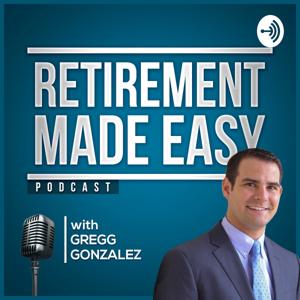


In this special listener question edition of the Retirement Made Easy podcast, I'll cover three amazing listener questions plus a bonus question that I've never been asked before: Should you sue your financial advisor? Tough question! Listen to this episode to hear my answers!
Remember, you can submit your questions at RetirementMadeEasyPodcast.com!
You will want to hear this episode if you are interested in...Sue recently inherited her dad's IRA and stocks. What are taxes going to be like this year? Will she have to make mandatory withdrawals from the IRA? Sue plans on working five more years and doesn't want to get killed with taxes.
The rules for inherited IRAs changed after January 1st of 2020. Once you inherit an IRA, the rules say that you have 10 years to empty the inherited IRA. At the end of the 10 years, the money has to be completely removed and taxes must be paid. However, there is NO mandatory annual distribution.
If you have a 401k through an employer and you're contributing $10,000, you could still contribute $17,000 to the 401k. You could take a distribution from the IRA and increase your 401k contribution by the same amount. The tax situation would be a wash.
What do I recommend? What should Sue do with the inherited stocks? Listen to learn more.
Pay off your house OR increase 401k contributions?Should you increase the money you put in your 401k or put more toward your mortgage? This particular couple I spoke with stated that they were 8 years away from retirement. I was looking at their 401k statement and their mortgage statement and asked them this question: What other debt do you have?
Turns out they had three other loans: One for their SUV, one for their solar panels, and a 401k loan (at an interest rate of 5.5%). I'm a Dave Ramsey Smartvestor Pro. My answer? They need to pay off the 401k, SUV, and solar panel loans first.
Then I did an analysis to find out if they were on track for retirement. Sadly, they weren't on track to retire in 8 years. I found that it would be closer to 12–14 years down the road before they could afford to retire.
Should you ever sue your financial advisor?This particular person's financial advisor had recommended a speculative investment that was very high-risk. This couple wasn't at the stage in their lives when they should be taking risks. So when this investment failed, a sizable portion of their portfolio went belly up. This man could lose everything depending on how his bankruptcy proceedings play out.
You can go to BrokerCheck and see the history of your advisor and find out if they've ever been sued. If they have been, you can read through the suit and find out what they settled for. If they've been sued multiple times, find another advisor. I would NEVER have recommended this illiquid investment choice to this man. So what should he do? Listen to hear my full thoughts!
Resources & People Mentioned
Subscribe to Retirement Made EasyOn Apple Podcasts, Spotify, Google Podcasts
I recently had a conversation with someone who retired a year ago. Sadly, his financial advisor gave him the worst advice I've heard in a long, long time. So in this episode of Retirement Made Easy, I'll share why it was such poor advice and the two things you should never do. I'll also answer a couple of listener questions at the end. Don't miss it!
You will want to hear this episode if you are interested in...I was talking with this prospective client about the bucket approach to retirement planning. The first bucket is your emergency fund (3 months to two years of liquid assets). The second bucket is dedicated to producing an income that will supplement your social security income. Bucket number three is your "growth" bucket. The cost of living and healthcare expenses will continue to grow. Bucket #3 helps you keep up with those costs.
His financial advisor advised him—while the stock market is down—to get a home equity loan to draw the income he needed to live on for the next 2+ years. The goal was to spend the equity in the home and avoid dipping into bucket #2 to let it recover. This is terrible advice. I never recommend getting a home equity loan to live on. Why? Because bucket #2 is designed to provide you income.
Never get cash value life insurance to borrow moneyIt's just as bad as using cash value life insurance to borrow the cash value. When you take a withdrawal, you're taking a loan from your policy and paying the insurance company an interest rate to borrow from your policy.
If I recommended either of those options to my clients I could lose my license and be barred from the industry. If you're looking for retirement income when the market is down, stick to your buckets. You have a nest egg earmarked and invested properly. Use it. And remember—it's natural for your portfolio to go up and down in value.
Listener question #1: Why can't I roll over my 401k?One of my listeners, Beth, said her brother turned 65 and is not yet retired. But he rolled his 401k into a rollover IRA to make more investment choices. Beith—who is 63—contacted her 401k company and was told she can't roll hers over until she retires.
When you work for an employer with a 401k, some allow you to roll over your 401k into an IRA while you're still working for that employer (after you turn 59 ½). But depending on your employer and how the plan document is written, some 401ks don't allow you to roll over your plan. Every 401k plan is different.
Why won't I work with Wells Fargo? What unethical business practices do they employ that show they aren't operating in your best interest? Listen to find out!
Resources & People Mentioned
Subscribe to Retirement Made EasyOn Apple Podcasts, Spotify, Google Podcasts
A lot has happened in 2022. A bear market and rising inflation have people who are about to retire scared. They're worried about their retirement, and rightly so. In this episode of Retirement Made Easy, I'll talk about some important statistics from the Schroders 2022 US Retirement Survey and what they mean. I'll share the easiest thing you can do to make sure you're prepared to retire. Lastly, I answer a couple of listener questions. Listen to this episode to give yourself some peace of mind!
You will want to hear this episode if you are interested in...Schroders surveyed working Americans 45 and older and retired US citizens. They asked: "What's the perception of the amount of money someone needs to retire comfortably?" The survey results found that the average person believes you need $1.1 million to retire.
But are most people on track to have $1.1 million saved to retire? The short answer? Not at all.
Of the people surveyed who were between 60–67, 69% had less than $500,000 saved for retirement. 54% of those pre-retirees had less than $250,000 saved.
If people think they need $1.1 million to retire comfortably, how many actually had it saved? Sadly, only 16%. In 2021, 26% of people surveyed aged 60–67 thought they had enough money to retire. In 2022, the number dropped to 22%. That's not good.
How are currently retired people describing their retirement?Schroders took it one step further and asked retirees how they'd describe their retirement:
Thankfully, only 5% said their retirement was a living nightmare. 18% were struggling, and only 3% said they were living the dream. 37% said they were comfortable and about the same felt it wasn't great, but wasn't bad. I'd like to see at least 50–60% living a comfortable retirement. Isn't that where you want to be?
The top 6 reasons why people are concerned about retirement in 2022What concerns have people fearing retirement?
They asked retirees if their expenses in retirement were more than they anticipated, less than they anticipated, or about the same.
Only 23% of retirees said they had a written retirement plan. That's a HUGE mistake. You need a retirement action plan that covers taxes, investments, estate planning, and more to afford the lifestyle you want in retirement. Of those that had a retirement plan, 91% said the plan was useful to them. 33% said it was critical to the success of their retirement. The people that make retirement planning a priority are the ones that will succeed.
If you need help planning your retirement, reach out to me at RetirementMadeEasyPodcast.com!
Listen to the whole episode to hear the answer to two great listener questions!
Resources & People MentionedSubscribe to Retirement Made EasyOn Apple Podcasts, Spotify, Google Podcasts
Why are some bond investors running for the exits? Is it risky to have bonds in your portfolio? Most people associate bonds with being a "safe" play in their portfolio to balance out the "riskier" stocks. But the truth is that investing in bonds can be just as risky. So in the first part of this special episode, I'll dive into the reason WHY investing in bonds can be a risky play.
In the second half of this episode, I'll share a case study of a current client. It'll include some tips and strategies that everyone can learn from and apply to their own retirement planning. (HINT: It's all about identifying and eliminating gaps in your retirement planning). Don't miss it!
You will want to hear this episode if you are interested in...What is a bond? If you buy a McDonald's corporate bond for $10,000, you're essentially loaning $10,000 to McDonald's and they pay you interest for 10 years. Let's say the interest rate is 2%. So they're paying you $200 in interest every year. At the end of the 10 years, they give you back your $10,000. That's the idea behind a bond. You're getting a payment.
But let's say interest rates dramatically rise. Now, you can buy a bond that pays a 4% interest rate. No one is going to buy your McDonald's bond that's paying 2% interest when they can buy a new one paying 4% interest. The bond lost value because people aren't willing to pay more for it.
You can buy bonds individually, as well as in index or mutual funds. As of June 30th, 2022, the Fidelity® U.S. Bond Index Fund was down 10.25%. It goes to show that a fixed-income fund can lose value. As interest rates continue to rise, the values will continue to go down. Bonds can be risky in an environment where interest rates are rising.
So what should you do? Listen to hear my thoughts!
A Case Study: Eliminate gaps in YOUR retirementI've been consulting for a couple who were concerned about their portfolio losses in 2022 and thought they may need to push their retirement. So where did we start? With a budget.
(Check out my FREE budgeting tool to help you nail down your retirement budget.)
Step #1: Look at your take-home pay. If you have credit card debt, your spending is exceeding your pay. If you don't have debt, do you have an emergency fund? After crunching the numbers, we determined this couple would need 1.6 million dollars with a $40,000 emergency fund to support the retirement of their dreams. They're just on the edge of being able to retire.
Step #2: Identify and eliminate gaps: 30% of the husband's 401k was in company stock (and it didn't pay a dividend). If you want to retire before 59 ½ and are concerned about the early withdrawal penalty, you can take withdrawals from a 401k without the penalty. But you can't roll the 401k to an IRA without paying the 10% early withdrawal penalty. But, they will want to roll their 401ks into a Roth IRA before they turn 72 or they'll have to withdraw the required minimum distributions from the 401k.
Step #3: Factor in health insurance. This couple didn't realize that COBRA would be around $800 a month EACH and would only last up to 18 months. After that, you need a game plan to get to 65 (when you are enrolled in Medicare). So we talked about what their options were.
Step #4: What rate of return do you need from your investments? This couple needed a 4.5% rate of return to get through a 30-year retirement. That piece of information was the #1 thing they felt they needed to know.
I also helped this couple determine how to withdraw money from their 401k and where to allocate it in their budget. Listen to the whole episode to learn more!
Resources & People MentionedSubscribe to Retirement Made EasyOn Apple Podcasts, Spotify, Google Podcasts
What does the stock market look like right now? As I'm recording this episode, the S&P 500 is down around 20% for the year. In general, it's a good gauge of the US stock market. The S&P 500 is broken down into different sectors such as healthcare, utilities, energy, consumer staples, financials, and more. The only sector that is positive—or has made money—in 2022 is the energy sector. So far, energy is up 27% YTD.
Should we be concerned with how the market is performing? While I usually don't answer this type of question, it's coming up again and again from current clients. So in this episode of the Retirement Made Easy podcast, I'll share a midyear market update AND answer some listener questions. If you're worried about the state of the market—don't miss this one!
NOTE: This episode contains my opinions and observations. Any facts and figures are based on research from LPL Financial and JP Morgan's Guide to the Markets.
You will want to hear this episode if you are interested in...I have reviewed many portfolios over the last two years. I keep seeing the same problem: they are too heavily weighted in one sector. Technology and healthcare have had a great run, but diversification helps you over the long run. My first piece of advice would be to make sure you aren't too heavily weighted in one sector or stock.
Secondly, when the market is down, make sure your portfolio still matches your risk tolerance. When the market is going down, many people find they have taken on more risk than they have the appetite for.
What you need to know about market performance78% of companies in the S&P 500 exceeded their earnings expectations after the first quarter. We were still looking pretty good. However, I'd expect that second-quarter earnings won't look as good. Why? The stock market is driven by corporate earnings. But short-term earnings aren't always reflected in how certain stocks are performing. They tend to move hand-in-hand long term.
What factors slow corporate earnings? Companies are dealing with labor shortages, which decrease their growth potential. Secondly, their sales won't be as high if they can't get the materials they need to build their products. And if they are able to sell, everything is on backorder. Lastly, inflation is out of control. The Fed is raising interest rates to combat inflation. But whenever the Fed does this, it slows the economy—which isn't good when we're heading into a recession.
But to speed the economy up, you need to decrease interest rates and lower taxes. The Fed is trying to combat inflation but if we end up in a recession, they have to drop them to improve the economy. It's a double-edged sword.
How midterm election years impact the stock marketWe are in a midterm election year. Historically speaking, this creates market volatility. LPL Financial's research looked at every midterm election year dating back to 1950. It looked at volatility and the drop in the S&P 500 and when the market bottomed.
The S&P 500 usually bottomed between August and September in midterm election years. LPL Financial found that there were significant drops (16–17%) during a midterm election year. But on average, 12 months after the bottom, the S&P 500 was up 32%. If history is our guide, we can expect a rebound in the market over the next 12 months.
I answer two great listener questions about social security benefits and hybrid long-term care in this episode. Listen to hear my answers!
Resources & People MentionedSubscribe to Retirement Made EasyOn Apple Podcasts, Spotify, Google Podcasts
In October of every year, the Social Security Administration announces the cost of living adjustment for recipients starting that will go into effect in January the following year. So when they announce it in 2022, it will go into effect in January of 2023.
Last October, they announced that the cost-of-living adjustment was 5.9%. The number they land on depends on their calculation of inflation at that time. I imagine that the adjustment they land on will be higher than last year. I'm estimating it to be somewhere between 7–9%.
While this means that Social Security recipients will see an increase in their benefits, it will negatively impact what they will receive in the future. How? Learn more in this episode of the Retirement Made Easy podcast.
You will want to hear this episode if you are interested in...Medicare Part B will be announced in November. In 2021, it went from $145 a month to $170 a month—a 14.5% increase—for the lowest earners. When you're looking at your Social Security statement and it says your benefit is $1,200—don't forget that Medicare Part B is deducted from your benefits. It's automatically withdrawn once you turn 65. So if you started with $1,200 a month you'd end up with $1,030 remaining. Your Social Security benefit estimates are NOT the number you'll actually receive.
How inflation impacts the average person's benefitsAs of April 2022, according to the Social Security Administration, the average retirement benefit is about $1,620 a month. If the average person is 65 and Medicare deducts $170, that leaves $1,450 a month. If the average person has a Medicare supplement plan—which costs an average of $150 a month—they're down to $1,300 a month.
If this person doesn't have a pension, doesn't have part-time income, and doesn't have retirement savings to supplement their social security income, $1,300 a month is tight. That's why retirees are getting squeezed by high inflation. By 2035, if we make no changes to the social security trust fund, it will only be able to pay out 75 cents on the dollar.
The higher the cost-of-living adjustment, the more social security recipients will be getting, which will further shrink the trust fund—sooner than expected. Benefits will likely be cut by 25% sooner. Congress needs to fix this. 70 million Baby Boomers are counting on this money. We can't reduce their income by 25%.
How the income cap on FICA taxes will impact the trust fundYou pay 6.2% of your earnings—up to $147,000—to Social Security (the FICA tax). Your employer is paying another 6.2% on that $147,000. What does this mean for you? If you make $400,000, you're only paying taxes on the first $147,000. You don't pay into social security for any dollar above that.
I'm concerned about the social security trust remaining solvent. When people get a Social Security raise because of inflation, it puts more stress on the Social security trust fund. More money is going out than coming in, and it's only expected to increase.
If the cost of living is increasing 8–10%, more people need to be paying into Social Security. The easy solution? I share my thoughts in this episode. Give it a listen!
Resources & People MentionedSubscribe to Retirement Made EasyOn Apple Podcasts, Spotify, Google Podcasts
There's an old Indian proverb that goes, "Tell me a fact, and I'll learn. Tell me a truth, and I'll believe. But tell me a story and it will live in my heart forever." Story enables us to connect with concepts and make the unfamiliar, familiar. So in this episode of Retirement Made Easy, I'm going to share someone's story to illustrate huge retirement mistakes her husband made that could've been avoided. She allowed me to share her story so that others could learn from it. Don't miss this episode.
You will want to hear this episode if you are interested in...This lady I spoke with lost her husband a few months prior to our conversation. He had made a series of bad mistakes with their retirement. She was 57 when he passed away at the age of 64.
A year before his death, he was in an accident and became disabled. Bills started piling up, so to cut costs, he canceled all of their life insurance. That was a mistake. Why? There's a disability clause in most life insurance policies that allows the disabled person to stop paying premiums. He would have been able to keep the life insurance without paying the premiums.
At the time of his death, he was collecting disability from social security. Social security gives a spousal benefit, so if one spouse passes away the other gets a monthly survivor benefit—but that only happens if your spouse is 60. Because she was 57 when he passed away, she has to wait three more years to receive that benefit.
The moral of the story? Keep your life insurance in place until your spouse is at least 60 so if you pass away they have some benefits coming their way.
Question for thought: If something happens to me, will my spouse be okay?
Mistake #2: Leaving your spouse in the darkWe had to dig up all of their financial statements—retirement savings and accounts, mortgage accounts, CDs, etc. He had left his wife completely in the dark about everything. She didn't even know how to pay any of the bills. She certainly didn't know where anything was invested. It's important that you keep your spouse informed about what's going on and where everything is.
Question for thought: If something happens to me, will my spouse be able to maintain the household?
Mistake #3: Not diversifying your retirement investmentsFortunately, she was the beneficiary of her husband's retirement accounts (with their children as backups). So what was the problem?
Her husband liked to do his own stock trading and investing. He invested over 90% of their life savings in ARKK. It's a volatile fund invested in the technology sector. In 2020, this fund was up 152% and caught the eye of many investors. He shifted more than 90% of their portfolio to this one ETF. What happened?
In 2021, the fund was down over 23%. Sadly, in 2022, this fund is down more than 50% for the year. Even worse, prior to his death, the husband sold off shares of this fund to supplement his social security to pay their monthly expenses.
When you retire, your investments need to produce an income you can live on. This fund doesn't produce a dividend. The fund isn't diversified and is far too risky to invest all of your money in it. The biggest mistake he made is that he was chasing past performance. This almost always ends in disaster.
What is this woman supposed to do next? How can you learn from her story? Listen to the whole episode to learn more from her heartbreaking circumstances so you can avoid them.
Resources & People MentionedSubscribe to Retirement Made EasyOn Apple Podcasts, Spotify, Google Podcasts
What should you expect from your financial advisor? Based on the questions I'm getting—and the conversations I'm having—many of you don't know the answer to this question. And some of you have been working with the same financial advisor for 10–20 years! In this episode of the Retirement Made Easy podcast, I want to encourage you to expect more from your financial advisor: more planning, more advice, and more service. Listen to learn what you are paying for and SHOULD be getting from your financial advisor.
You will want to hear this episode if you are interested in...Many listeners are saying they're working with a financial advisor—but they're still asking me questions about social security. They're still asking me questions about pensions, estate planning, tax planning, and so much more. I'm shocked how many people work with advisors who don't know their stuff. Your financial advisor SHOULD be able to answer this for you!
You are paying your financial advisor a lot of money to help you with financial decisions. Get your money's worth! I answer dozens and dozens of questions and am happy to do so but I'm shocked by how many people reach out to me because their advisor isn't answering their questions. So where should you start?
Set up a meeting with your financial advisorWhen I get a phone call, it usually goes something like this: "I'm thinking about retiring. I don't know if I'm on track. I've got IRAs, Roth IRAs, and a 401k." What's the first thing I ask? Do you have a retirement plan?
If you want to retire at 65 and you're 60, you have 5 years to make it work. Your plan will tell you exactly what you need to do to retire on time and what you'll have to live on. The person calling me often says, "Well…we don't have a retirement plan. We're just now starting to get serious about retirement."
If you already have a financial advisor, call them and say, "I want a retirement plan (or need to update my plan)." Make sure you cover these important questions:
With the market being down, it's a great opportunity to update your retirement plan to see if you're still on course. You're not there to talk about investments, President Biden, or gas prices. You need to have productive meetings with your financial advisor.
How does your plan need to be revised or updated? If you're just getting started, maybe it needs to be built. Talk about building a retirement action plan that will map the journey from where you are to where you want to be: comfortably retired.
Ask for more from your financial advisorMany financial advisors specialize in different areas. Some just specialize in 401k plans. Others, like myself, specialize in retirement planning (for myself, I work with people 50+). I'm not the person you call about investing in gold & silver or real estate. Others specialize in life insurance and annuities.
Just like you see specialist doctors for various ailments, you want to make sure you're meeting with the right kind of financial advisor. If your financial advisor doesn't offer retirement plans, find one who specializes in retirement planning.
Get your money's worth because you're paying them—whether you realize it or not. You deserve professional advice. They're there to plan for you. They're there to build a bulletproof retirement action plan.
If you need help getting started, you can find my three steps to retirement at RetirementMadeEasyPodcast.com in the Resources:
Subscribe to Retirement Made EasyOn Apple Podcasts, Spotify, Google Podcasts
Too many people spend their time worrying about what they can't control. But you have to focus on what you can control and disregard the rest. We are where we are today because of the decisions and choices we've made in the past. As you look ahead at your future retirement, you'll be where you are because of the decisions you make now.
There are things you can't control like the economy, who's in the white house, the war in Ukraine, and more. You're wasting your time if you spend it thinking, "If only things were different." So in this episode of Retirement Made Easy, let's step back and focus on what we can control: What decisions can you make that will have an impact on your retirement?
>>>>>>>>>>>>>>>
You will want to hear this episode if you are interested in...Journalists use inflammatory language like, "The Market Plunges" or "The Market Soars." These tactics are meant to scare you and get clicks. The market goes up and the market goes down. You can't control the nature of the market and what it does. But you can control your emotions and how you react. You can also control the risk that you're taking in your portfolio. What else can you control?
I want to encourage you to focus on what you can control. If you believe taxes are going up in 2026 when the Tax Cuts and Jobs Act expires, you can start doing Roth conversions. That's strategic decision-making. If Congress doesn't act, you'll pay 15% Federal taxes instead of 12%. There's also a possibility that they might extend the low tax environment—but we have no control over that.
You get to control your pension optionsAnother thing you can control is how you claim a pension (If you're lucky enough to have one). Do you choose the lump sum option? As long as the lump sum is managed properly, it can be a good choice. But if you don't invest it properly so it lasts, you're better off selecting the lifetime annuity option. Do you take the single-life option? The spousal 100% survivor option? What about the 75% survivor or 50% survivor option?
If I'm looking at a private pension, I'm looking at how well-funded it is. I've seen pensions that are 97% funded and I've seen some that are 60% funded. If I had a pension and the report said it was only 60% funded, and I can take a lump sum, I'd take it in a heartbeat.
Some people say, "Well my company is strong." Guess what? 25 years ago Blockbuster was a strong company. JCPenney and Sears were strong companies. If you retire at 62, you're projected to live until 92. What will your company look like 30 years from now? No one knows—and you can't control it.
You get to control when you retireWhen someone retires, they want to draw income from their Roth IRAs, 401ks, IRAs, etc. You have a strategic decision to make. Do you want to partner with an advisor who can come up with a strategy that produces income—such as dividends and interest—that you can live off of? You can control who you work with to manage your money—and when you retire.
I have some clients who want to wait to retire until their house is paid off. Or they want to wait until they get their annual bonus. Or they want to wait until they pay off their kid's student loans. Or they want to wait until they're 65 and qualify for Medicare and their pension is maximized. Maybe they want to wait to take social security until their full retirement age. You get the picture. There are many things that are in your control. Why not focus on those and let go of the rest?
Connect With Gregg GonzalezSubscribe to Retirement Made EasyOn Apple Podcasts, Spotify, Google Podcasts
We've made it to 100 episodes! So in this special edition of the Retirement Made Easy podcast, I'll answer five questions from the first quarter of 2022. These questions cover a wide variety of topics that are all important to know, from paying off your mortgage to following the "4% rule." Make sure you give it a listen!
You will want to hear this episode if you are interested in...Bill wants to retire in two years. He owes $82,000 on his home but recently inherited $100,000. Other than the mortgage, he is debt-free. Should he pay off his house when his mortgage rate is only 3%?
Do you want a mortgage when you retire? I wouldn't. You won't be taxed on the $100,000 you inherited, so you can easily take $80,000 and pay off your mortgage. Then you can take the money you'll be saving and beef up your emergency fund or save more for retirement.
Then you have to figure out what to do with the remaining $20,000. Who knows, maybe the inheritance will allow you to retire earlier. I recommend updating your written retirement plan to see what options are available.
Listener Question #2: What do you need to know about annuities?This listener met with someone who offered them two "guaranteed" annuities. The slick salesperson said they were "free" and didn't have fees. Is that true?
Yes, some annuities don't have fees. If they don't have fees, they have "surrender charges." For example, if you try to cash out within a certain timeframe (5 or 10 years, typically) you'll have to pay a surrender charge.
Here are some questions you need to ask if you're considering an annuity:
Some people will buy an annuity for tax deferrals. Some want a fixed interest rate. Some offer lifetime income or death benefit riders. The bottom line is that I don't like to see someone put more than 50% of their liquid net worth—i.e. retirement accounts—into annuities.
Lastly, I wouldn't really trust someone you'd describe as "slick." When it comes to your retirement, you want to work with someone you trust.
Listener Question #3: Social security and 401k distributionsCan Roger claim half of his wife's benefit and wait to claim his until he's 70? The only way you could do this is if you were born on or before January 1st, 1954. It was done through a loophole called "filing a restricted application" that can't be done anymore.
Let's say Roger's benefit is $3000 a month. His wife's is $1,000 at her full retirement age. She would claim the $1,000 and Roger would claim 50%—$500. So his benefit would grow by 8% and he could claim the full $3,000 a month at 70. You can't do this anymore.
What about survivor benefits? If Roger passes away—and his wife is over 60—she would get a survivor benefit—the higher of the two benefits if both were collecting social security. She'd also get a $255 lump-sum payment.
Lastly, I would have a discussion with your wife about listing your boys as partial beneficiaries of your 401k. If you want to gift them money from your 401k, the other option is to make a withdrawal, pay taxes on the withdrawal, and then give the money to your sons.
I answer TWO more listener questions in this episode—don't miss it!
Resources & People MentionedSubscribe to Retirement Made EasyOn Apple Podcasts, Spotify, Google Podcasts
From the publisher's feed

1,964 Listeners

447 Listeners

800 Listeners

1,303 Listeners

459 Listeners
542 Listeners
753 Listeners

553 Listeners

700 Listeners

189 Listeners

832 Listeners

199 Listeners

593 Listeners

1,072 Listeners

103 Listeners