
Sign up to save your podcasts
Or

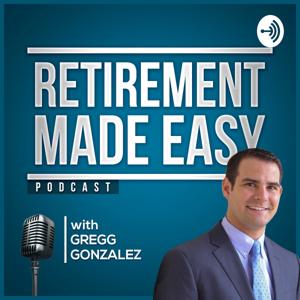


I recently had a call with a listener who had great questions—but the call didn't go as he had planned. Why? One of his main questions was point blank, "Can I retire by the end of the year?" His house was paid off. He had an emergency fund, a brokerage account, and a 401k. He felt like he was in good shape to retire so he was shocked when I told him that he wasn't ready. Find out why I told him "no" in this episode of Retirement Made Easy!
You will want to hear this episode if you are interested in...I recently spoke with a listener I'll call "Tom." I asked Tom a series of questions during our call to help him determine if he could retire at the end of 2022. I asked him, "What are you going to do? How will you spend your time? Do you want to travel? Do you want to work part-time? What are your goals?" He was quiet for a moment and then said, "I don't know."
I asked about his wife's vision for retirement. He thought she'd want to spend more time with their grandkids, but he didn't know. He also mentioned that they had two daughters, so my next question was, "Do you plan on assisting your adult daughters financially in any way? Or grandchildren?" His answer was, "We haven't talked about that yet."
I asked if they believed in charitable giving. He said "Yes," but he was under the impression that giving would decrease in retirement. But if giving to charities is something that's a goal of yours, we can plan for it.
How will you know what success looks like if you don't have goals that are well thought out? That's why I've developed a process that is based on your goals. It's also why I ask my clients to nail down specific goals for their retirement.
Why it's important to start with a visionEvery Fortune 500 has a vision statement, many of which are available online—like Costco. Costco's vision statement is to be "A place where efficient buying and operating practices give members access to unmatched savings." All of the decisions and goals that are made by a company are based on its vision statement. Is every choice you're making getting you closer to your goals? Or moving you further away?
A famous surgeon was being honored at a dinner with an orchestra playing. During the break, he went and spoke with a trumpet player. The musician said it was an honor to meet him and shared that he was happy to be part of the event. The surgeon had practiced for 40 years and won numerous awards. But what did he say? There's nothing like playing the trumpet.
What are you passionate about? How do you see yourself living that passion in retirement?
Tom and his wife can retire when they set goalsI told Tom that I didn't think he was ready to retire because he and his wife had not set goals for their retirement. They needed to sit down and decide what they wanted to accomplish together based on what was important to them. Come up with a vision for your future with your spouse and make sure you're on the same page. What's important to each of you might be different.
I can't advise anyone whether their retirement plan will be a success if they haven't dreamed about their retirement goals. Everyone wants a retirement that's fulfilling and meaningful. You can't have that without goals. Spell out your goals and vision first. Only then can you make the financial pieces fit together. Learn more in this episode of Retirement Made Easy.
Check out the FREE resources on my website to help you plan your dream retirement!
Resources & People MentionedSubscribe to Retirement Made EasyOn Apple Podcasts, Spotify, Google Podcasts
There are three types of accounts—that are not the same as my bucket strategy—that I believe everyone needs to use to save for their retirement. These accounts will benefit you in retirement. They are Roth accounts, traditional accounts, and brokerage accounts. Listen to this episode of the Retirement Made Easy podcast to learn more about each and how they can benefit you!
You will want to hear this episode if you are interested in...With a Roth account, you pay the taxes now. You can invest the money however you want and it will grow tax-free until your death. When you retire and take withdrawals from the Roth IRA, you will not have to pay taxes on those withdrawals. Biting the bullet and paying taxes now, in a favorable tax environment, can make a positive impact on your retirement.
If you're younger and just starting out with your first job, you're likely in a lower tax bracket. It's far easier to pay 12% taxes now than when you make more money and land in a higher tax bracket down the road. Another bonus? You're never required to take withdrawals from a Roth IRA.
Account Type #2: The traditional IRA, 401k, 403B, or TSP (tax-deferred)With a traditional tax-deferred account, you get a tax deduction when you contribute. Any money matched by your employer is pre-tax as well. So taxes have not been paid on what you've contributed or on the growth. So when you retire and want to make withdrawals, you pay taxes. And once you hit age 72, you have to take a required minimum distribution and pay the taxes on them.
What's the problem with this? The more withdrawals you take, the more taxes you pay. If you take out too much money, it can throw you into the next tax bracket. If you withdraw too much it can also impact the taxes you pay on social security, the price you pay for Medicare Part B, and even capital gains taxes. So what's the benefit? You get the tax deduction now.
Account Type #3: A brokerage account/non-qualified retirement accountA brokerage account doesn't have a rule that enforces a 10% withdrawal penalty if you make a withdrawal before age 59 ½. You can put money in and take it out at any time, an unlimited amount of times, with no restrictions. You can invest it in index funds, mutual funds, stocks, bonds, golds, ETFs—whatever you want. Is there a downfall? Any capital gains, dividends, or interest earned are reported on a 1099 that must be reported with your taxes (i.e. you pay taxes on them).
Why is a brokerage account so beneficial? Brokerage accounts can save you a lot of money in taxes. If you're in the 12% bracket, you can harvest capital gains and pay zero taxes. However, if you're in the 22% bracket and harvest capital gains, you'll pay 15% long-term capital gains.
Why do you want all three types of accounts for your retirement? Listen to hear why I think it's important for you to have all of the accounts working hand-in-hand.
Resources & People MentionedSubscribe to Retirement Made EasyOn Apple Podcasts, Spotify, Google Podcasts
I've been offering free 30-minute retirement coaching sessions this year and recently, three themes have emerged in these conversations:
So in this episode of Retirement Made Easy, I'll cover each of these topics and how you can decide what to do.
>>>>>>>>>>>>>>>
You will want to hear this episode if you are interested in...When you don't have income, does it make sense to keep life insurance in place? The truth is that there's no one-size-fits-all answer. I recommend that some people keep their life insurance intact for the first few years of retirement. For others, I recommend they keep life insurance for the rest of their life.
You need to determine if a need is still present. Is there still the risk of the premature death of a spouse? When someone is working, we're trying to ensure their income. If the husband makes $100,000 a year, you want life insurance in place so that if he passes, his wife can continue to pay bills. It would be a tax-free death benefit.
When else would you still want life insurance when you retire? Listen to learn more!
Theme #2: Are you sick of losing money in your portfolio?It's been a brutal year with investments in the stock market and fixed-income investments (due to rising interest rates). It can be scary to see your portfolio decline 10–20%. People are looking for safety, especially those closer to retirement.
My advice? Check your appetite for risk. Many people have been taking more risks than they are comfortable with. If you're one of those people, you might want to consider making some adjustments to your portfolio. You can put more money into more conservative investments.
But if you're going to be an investor, you should be in it for the long haul. The average woman is projected to live until age 92. You're planning for 30 years of retirement, which is how long your money should be invested. It needs to work for you.
Theme #3: Do you have beneficiary/legacy planning sorted out?I've had two conversations about beneficiary planning recently. The first conversation was with a couple, both in their second marriages. The wife had a son from a previous marriage and a daughter with her current husband. Her current husband didn't have other children.
This couple wanted to leave their daughter more money because she only had two parents, whereas the son had a biological dad and a stepdad. They thought he'd inherit double the money.
But how do they know the biological father has his estate planning in order? How do they know how much his net worth is? He could name anyone as his beneficiary, including the stepmom.
The heart of the matter? Their son was bad with money. The truth was they wanted to leave the daughter more because she was responsible and would make wise decisions with the money. Asking deep questions allowed us to get to the root of the matter and what they really wanted.
Listen to the whole episode to learn more about legacy planning and how to make wise decisions about your retirement!
Resources & People MentionedSubscribe to Retirement Made EasyOn Apple Podcasts, Spotify, Google Podcasts
Emergency funds. Cash reserve funds. Safe money. They're all the same name for money that you need to set aside for—you guessed it—emergencies. As interest rates continue to climb to combat inflation, what should conservative investors do? What opportunities should you take advantage of with rising interest rates? Should you look at bonds or fixed-interest investments? Higher interest rates make it easier for conservative investors to earn interest on their emergency funds. Learn what I mean by that in this episode of Retirement Made Easy!
You will want to hear this episode if you are interested in...An emergency fund is whatever you keep in your checking account, savings account, or money market account that is liquid. It simply means that you have immediate access to money that's set aside for emergencies. Sadly, many people don't have emergency funds. They live paycheck to paycheck and when they have an emergency, it goes on their credit card. Then they pay off the credit card when they get a bonus or have more money coming in.
Your cash flow situation in retirement is much different. Putting emergency expenses on a credit card won't cut it. So what should you have saved for emergencies? At least 3–6 months of living expenses (and some people even prefer 12 months). If you live on $5,000 a month, 3 months is $15,000. 12 months would be $60,000. I've met people with $500 in their emergency fund and I've met some with $500,000 in it.
The point is to be able to cover large unexpected expenses such as medical bills, new tires, a new water heater, etc. You don't want to dip into your retirement accounts to deal with an emergency. You want to have at least 3 months of living expenses saved.
The difference between an emergency fund and a sinking fundIf you have a large balance in your emergency fund, I usually ask if any money is earmarked for a future purpose, like a new vehicle, a wedding, etc. People often save to pay cash for a large expense in the near term. You can't use your emergency fund for that. This would be a sinking fund. It's set aside for a specific purpose.
A higher interest rate is great for emergency funds because you'll earn more interest. It won't be a lot, but your cash reserves will be making between 1–2%. With how high interest rates are right now, some money market funds are paying much closer to 2%.
What's interesting about the rising interest rate environment?You'll be able to find yield, i.e. higher interest rates for more conservative fixed-rate investments (CDs, bonds, or bond-like investments). A year ago, these same interests in CDs were paying 0.5% to 1.5%. Now, they're paying as high as 4.75%. As I'm recording this episode, the 10-year treasury bond is 3.05%.
Now, I believe the Fed will raise interest rates a couple more times this year to get ahead of inflation. That means there's a high probability that bond-like investments may go as high as 5%. If you have bond-like investments that were paying 1.5% at the beginning of this year, now those same investments are paying 4–4.5%. You got a big raise in your retirement income.
Why not earn more than the long-term average of inflation? It can help you stay ahead of the cost of living. It's an incredible opportunity. Learn more about taking advantage of high interest rates in this episode of Retirement Made Easy!
Resources & People MentionedSubscribe to Retirement Made EasyOn Apple Podcasts, Spotify, Google Podcasts
Do you have a plan for charitable giving in retirement? What about saving for a grandchild's college education? Retirement planning goes far deeper than covering your basic bills in retirement—it's about all of the goals you have. In this episode of the Retirement Made Easy podcast, I'll cover two things I'm often asked about: charitable giving and college savings plans. Check it out!
You will want to hear this episode if you are interested in...Are you familiar with 529 plans? I have clients with young grandkids who have set a goal to help pay for their college education. 529 plans are the most popular way to save money. Depending on the state you live in, there may even be a state income tax deduction on your contributions. In Missouri, the maximum deduction is up to $16,000 for a couple married filing jointly. Someone filing singly can contribute up to $8,000 in a 529 plan per year.
The real beauty of a 529 plan is that the money grows tax-free as long as it's used for qualified education expenses. Plus, you get to determine how and when the money is distributed for education expenses (K-12, trade school, or bachelor's program). Qualified expenses can include books, tuition, and even laptops.
What happens if the money isn't used for college? What are the alternatives to a 529 plan? Listen to hear the different options.
Charitable giving in retirementOnce you turn 72, you have to take a required minimum distribution (RMD) from your retirement savings. As you get older, you have to take a little bit more. For example, when you're 80, you have to take 4.95% of your IRA or 401k balance. So if you have $1 million in your IRA, you'll have to take an annual RMD of $49,500 and pay income taxes on that amount.
But you can take part of or all of an RMD and send it directly to a church or charity that you're passionate about—and you won't be taxed on that money. If you wanted to contribute the entire $49,500, you can do a qualified charitable distribution. On your tax return, you report the distribution and you will not be taxed on it. Neither will the church or charity.
Learn about donor-advised fundsDonor-advised funds are becoming popular because of the 2017 Tax Cuts and Jobs Act, where the standard deduction increased to $29,500. If you want to give sizable charitable contributions, you can take that money and place it in a fund. You can itemize that as a charitable gift in that year.
The money sits in the fund and you get to determine how and when the money is distributed—but it must be given to a 501C3. You can also invest the money in the fund in mutual funds, ETFs, stocks, etc., and watch it grow tax-free.
How do you properly make a church or charity the beneficiary of an account? Listen to find out!
Resources & People MentionedSubscribe to Retirement Made EasyOn Apple Podcasts, Spotify, Google Podcasts
How should you invest your money once you're retired? I get asked this question frequently because people are hoping for a quick recipe for success. But that's not how it works. When I help you build a retirement portfolio, I start by looking at three factors. These three factors will dictate how we invest your money for a successful outcome:
Tune in to this episode of the Retirement Made Easy Podcast to learn more about each of these factors that influence how we invest in your retirement portfolio.
>>>>>>>>>>>>>>>
You will want to hear this episode if you are interested in...Many people are invested in a retirement date fund in their 401ks. The "date" is the year closest to your 65th birthday. For every year you get older, the fund becomes more conservative (toward bonds). If you look at the T. Rowe Price 2025 Target Date Fund, you'll see that 46% of the fund is invested in stocks and the rest is in bonds or cash.
I don't like retirement date funds. Why? Everyone is invested in the exact same way. It doesn't take into account risk tolerance, the necessary returns for a successful outcome, and more. It basically just says that everyone that's nearing retirement invests their money exactly the same.
But here's a hard truth: You can't take a cookie-cutter approach to investing.
How much income will you need every month?When you retire, you're no longer saving in a 401k or Roth IRA. So the first question I usually ask is how much income you'll need to live on every month. Let's say you need $2,000 a month on top of social security. Some people live just fine on a pension and social security. Some people don't need a monthly income but want to take lump-sum chunks out for travel, purchasing a new vehicle, etc. So their withdrawals are irregular. Whatever it is, we need to determine what you'll need as we start planning.
What is the minimum rate of return you need for a successful retirement?Your retirement action plan tells us what rate of return you need from your entire retirement portfolio during retirement for it to be a success. If you're investing your money in CDs but you're only getting 1–2% returns, it's like getting on a bicycle and driving from New York to LA. It won't cut it. If you need an average rate of return of 5%, you need a portfolio with an average annual rate of return of 5% or better, right?
If we know you need a 4% average annualized return but we invest conservatively and only get a 2% return? You run the risk of running out of money in retirement. You might be left living on your pension and social security.
Does your portfolio match your risk tolerance?Imagine your portfolio dropped 20% in a single year. So a $1 million portfolio is now worth $800,000. How would you react? Some people would add more to their portfolio because the "market is on sale." Others would wait it out because they're long-term investors and the market will recover. Others can't stomach a 20% loss in a single year and might panic and cash out. How much risk can you handle?
I dive into each of these questions further in this episode, so be sure to listen. And don't be afraid to send me any questions you have about retirement—you might just have your question featured on an episode!
Resources & People MentionedSubscribe to Retirement Made EasyOn Apple Podcasts, Spotify, Google Podcasts
I've spoken with multiple women making the same mistake with their TSP plans (a Thrift Savings Plan (TSP) is the government's version of a 401k). Why? Because people are scared about the economy and inflation. People make their decisions based on emotion in times of uncertainty. So in this episode of the Retirement Made Easy Podcast, I'll share what this mistake is and why I think it's a mistake. I'll let you decide what to do with the information. Don't miss it!
>>>>>>>>>>>>>>>
You will want to hear this episode if you are interested in...One of the top three risks to everyone's retirement is the rising cost of living. The cost of living rises on average by 2.9% per year (calculated over the last 30 years). If you lived on $50,000 30 years ago, you're being squeezed today. A fixed pension without a cost of living adjustment is like working at a job for 30 years and never getting a raise.
If you have a fixed income in a world where costs rise every year, your purchasing power declines every year. Sadly, most corporate and private pensions do not have cost of living adjustments. But the beauty of government pensions is that there is a cost of living adjustment associated with them.
Investment options in a TSPI spoke with three women that are going to retire with a government pension (TSP plan). They're concerned about the economy and their TSP shrinking. So all three had their money invested in the Government Securities Fund (a mutual fund within the TSP plan, abbreviated as G Fund).
Now, TSP plans have 15 available investment options. The G fund is the most conservative of the options and is invested in short-term government securities. It's also the second most popular fund, with 210 billion dollars in it. There's only $800 billion in the entire TSP program. $210 billion is 26% of the entire TSP plan assets. The worst part is that the 10-year average return is 1.98%. In the last three years, the fund has averaged 1.51% per year.
What's the big deal? The rising cost of living. If your money is only growing by 1.5% per year, it will not keep up with the cost of living. Inflation was at 9.1% in June. Long-term, inflation averages to be between 3–4% per year. A 1.98% return is not keeping up with inflation.
If you put $100 in the G fund in 1987, it would be $503 today. You made a $403 profit. Not bad, right? But the Common Stock Fund—or C fund—came out in 1988. $100 in the C fund would be worth $3,370 today. That's a profit of $3,270. Which one would you rather have your money in?
Walking through the different pension optionsAll three of the women I spoke with have a government pension with a cost-of-living adjustment. They can choose between a single-life option, a 10-year certain, or a survivorship benefit for the husband.
With each of these women, the husband is older and in poorer health. Because American women outlive men by 5–6 years, the survivorship benefit doesn't make sense in this case. Let's say the single-life option is $2,000 a month. If the women take the 100% survivor option—which would pay out to the surviving spouse if they died—the spouse would get $1,600 a month. But the extra $400 a month can amount to a wide margin of retirement lifetime income.
What could they do? A 15-year life insurance option may make sense. If one of the women dies, the pension may stop, but the spouse would have a tax-free benefit from the life insurance. The premium for the life insurance would still allow them to net $1,900 a month—far better than $1,600 a month.
The bottom line? You have to maximize the lifetime income potential of the pension. I discuss all of this in detail in this episode of Retirement Made Easy. Don't miss it!
Resources & People MentionedSubscribe to Retirement Made EasyOn Apple Podcasts, Spotify, Google Podcasts
We've had so many great questions from listeners that I couldn't resist another episode where we take a look back at some of the best. From 401k matching to how advisors get paid, this episode of the Retirement Made Easy podcast will recap some important things you want to remember. Check it out!
You will want to hear this episode if you are interested in...If you roll over your old 401k from a previous employer to a new one, does the match still apply?
Let's say Jennifer had $1 million in an old 401k. She rolls it into a new 401k that offers a 5% match. She was told that she would get a $50,000 match on that $1 million. Sadly, matching doesn't apply to rollover money from a former 401k. Matching only applies to current contributions from your paycheck while you're working for your new employer.
But if you earn $100,000 at the new company, and contribute $5,000 to your 401k, your company will match it dollar-for-dollar. How does the vesting schedule work? Listen to learn about the common options.
How should you claim your pension?Betsy is afraid that her husband's pension will default down the road. She thinks he should take the lump sum amount whereas he prefers a monthly check (because it's what his dad did). Her uncle's pension went bankrupt and his benefits got cut. Betsy points out that they won't rely on the monthly income because they're debt-free.
I have many follow-up questions. How well funded is the pension? Does it offer a partial lump sum? You could get a smaller monthly payment and a small lump sum, which would be a way for Besty and her husband to meet in the middle.
What other retirement resources do you have aside from social security? If your nest egg consists of this lump sum pension, then it may make more sense to take the lump sum. Without more information, this is the best answer I can give!
How do advisors get paid?Advisors typically get paid in three different ways:
The final option is typically how I'm compensated for my work. I answer another question in this episode. Give it a listen!
Resources & People MentionedSubscribe to Retirement Made EasyOn Apple Podcasts, Spotify, Google Podcasts
Can you stop or suspend social security? How do inheritances impact your taxes? How do you pay for Medicare Part B if you're not on social security? In this episode of the Retirement Made Easy podcast, I revisit some of the best questions from 2022 that are still 100% relevant and timely for today. If you want answers to these questions, don't miss it!
You will want to hear this episode if you are interested in...J retired at 62 and started his social security benefit. However, he's now considering stopping the benefit. Why? Because he has a part-time employment opportunity where he'd make $30,000 annually. He's concerned that will reduce his social security benefit. Can he stop his social security?
Once you start your social security benefit, you can only stop it within 12 months. Have 12 months passed? If so, you can't stop it. If you're within the 12-month timeframe, you have to contact social security, fill out a form, and pay back the benefits you had already received.
If you're collecting social security under full retirement age, you can only make up to $19,560. So J would be penalized for making an income of $30,000 per year, $1 per every $2 over the $19,560.
Listener Question #2: Can you do a Roth conversion with an RMD?Can you do a Roth conversion for $15,000 when you take a required minimum distribution? You can pay the taxes on the $15,000 and put it in a Roth IRA where it can grow tax-free. However, you still need to take another $15,000 as a distribution because Roth conversions do not count toward RMDs.
Listener Question #3: How do inheritances impact taxes?Tammy inherited accounts from her Mom that totaled $700,000. How will that impact her retirement? Does she have to pay an inheritance tax? Will it change her tax bracket?
The $400,000 IRA that Tammy inherited follows different rules (that changed with the Secure Act). Starting 1/1/2020, you have 10 years to withdraw everything from the IRA. These withdrawals are taxable at the Federal level (some states will tax the withdrawals and others will not). You won't pay an early withdrawal penalty.
Listener Question #4: How do you pay for Medicare part B?How do you pay for Medicare part B premiums if you're not collecting social security yet? For those of you that don't know, Medicare Part B premiums are income based and usually deducted from your social security. In 2022, it will be $170.10 (14.5% higher). How should John pay it?
If you have an HSA, build that up before retiring and use it to pay for Medicare Part B premiums, dental expenses, vision expenses, deductibles, etc. If you have access to an HSA, take advantage of it.
How do you cover the 20% that Medicare doesn't cover? Should you buy savings bonds to fund your emergency fund? Listen to hear my thoughts!
Resources & People MentionedSubscribe to Retirement Made EasyOn Apple Podcasts, Spotify, Google Podcasts
I see people making the same IRA mistakes over and over again because they just don't know enough about IRAs. That's why I advise anyone to work with a Certified Financial Planner (CFP)—even if it's not me. Until you can do that, do everything you can to avoid these 8 great IRA mistakes with your retirement portfolio. If you own an IRA—traditional or Roth—this is a can't-miss episode of the Retirement Made Easy Podcast.
You will want to hear this episode if you are interested in...Did you know that if you are a non-working spouse, there is a spousal IRA? If you're over 50 and the working spouse makes over $14,000 per year, he or she can contribute $7,000 to an IRA—and you can too. You can set up a Roth or Traditional IRA and contribute up to $7,000 per year. Many couples aren't aware of this possibility.
Mistake #2: Required Minimum Distributions (RMD)Once you turn 72, you have to start taking required minimum distributions from your 401k, Roth 401k, or traditional IRA. If you have three old 401ks from previous employers, you have to take a RMD from each 401k.
The rules are different for IRAs. If the RMD is $1,000 a piece from each IRA, you can take a $3,000 RMD from one and not touch the other two. Or you could take $1,500 from one, $1,500 from another, etc. You want to plan for each of these scenarios so you're not paying unnecessary taxes!
Mistake #3: Forgetting about Net Unrealized AppreciationIf you have an IRA or 401k with company stock in it, don't roll it into an IRA. Why? Net unrealized appreciation. You'll pay capital gains on part of the company stock that's rolled over. You'll end up paying a lot of money in taxes that you don't need to. Talk to a financial planner who understands net unrealized appreciation before you do anything.
Mistake #5: Forgetting to designate a beneficiary31% of IRAs aren't listed with a beneficiary. What happens if you don't list a beneficiary? Your "estate" is your beneficiary, which means it goes through probate court. It leads to unnecessary costs, estate taxes, Medicare surtax, etc. It will cost your family time and money. It's a nightmare that can be avoided.
NOTE: Many IRAs end up in the hands of an ex-spouse because they still have the former spouse listed. Whoever is listed as the beneficiary is who gets the money.
Mistake #5: Listing a trust as the beneficiary of an IRAIf you inherit an IRA, you've got 10 years to take distributions from it. It has to be drained by the end of the 10th year. If you have an outdated trust as the beneficiary, it will be taxed at a trust tax rate (anything above $13,450 is taxed at 37%). If the trust isn't written properly, the money has to come out within five years. This isn't the best way to pass on money from your IRA.
Mistake #6: Improperly executing a Roth conversionIf you're under 59 and a ½, convert $50,000 of your IRA and withhold taxes, you'll pay a 10% penalty. If you don't withhold taxes on the $50,000, there is no 10% early withdrawal penalty. Many people give Uncle Sam a tip because they do Roth conversions improperly.
Mistake #7: Contributing to a Roth IRA when you're not eligibleDid you know that you might make too much money to contribute to a Roth IRA? There are income caps for Roth IRAs and traditional IRAs. Make sure you're eligible before you set these up. There is a steep penalty of 6% for each year the excess amount remains in your IRA or Roth IRA.
Mistake #8: Doing an indirect rollover with your IRAInstead of indirectly transferring money from one IRA to another, you should do a direct transfer or direct rollover. It goes from one Custodian to another and the money remains in the same registration type (i.e. pre-tax). An indirect rollover happens when money is sent from an IRA or 401k to you. You're responsible to get the money into the appropriate IRA within 60 days. If you fail to do so, you pay taxes on that money and get hit with a 10% penalty.
Resources & People Mentioned
Subscribe to Retirement Made EasyOn Apple Podcasts, Spotify, Google Podcasts
From the publisher's feed

1,964 Listeners
447 Listeners

800 Listeners
1,303 Listeners

459 Listeners
542 Listeners
753 Listeners
553 Listeners
700 Listeners
189 Listeners
832 Listeners
199 Listeners
593 Listeners
1,072 Listeners
103 Listeners