
Sign up to save your podcasts
Or

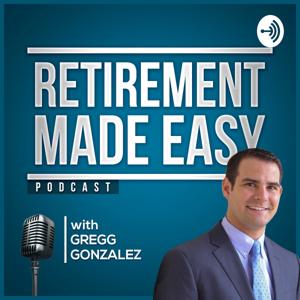


How do you gift money to individuals without getting hit with having to pay taxes on the gift? How do you make withdrawals if you're gifted a beneficiary IRA? What is the most tax-efficient way to carry out charitable giving? These are just a few of the questions that I'll answer in this special end-of-the-year episode of the Retirement Made Easy podcast!
You will want to hear this episode if you are interested in...I've heard many people say they don't want to gift someone money because they'll have to pay taxes on it (or because the gift receiver will have to). That doesn't have to be the case! If you wanted to give a friend or family member money, the annual individual limit is $16,000 for 2022.
So a married couple can each give $16,000 to one individual, totaling $32,000. You can certainly gift more, but $16,000 is the annual limit you can give one individual without filling out a gift tax form that gets filed with your taxes. Many people gift up to that amount so they can avoid paying taxes.
There's also something called a lifetime gift exemption. That means you can gift someone a maximum lifetime amount of $12,060,000 to another person. The gift form helps you keep an account of what you've gifted someone over your lifetime. What can't you gift? What happens if you loan someone money they don't pay back? Listen to find out!
Withdrawing from a beneficiary IRAI worked with a couple where the wife inherited her mother's IRA. Because it's an inherited IRA, she has 10 years to take withdrawals from that IRA and pay the taxes on them. She thought that she'd just do Roth conversions and move the money into her own IRA. Unfortunately, we can't do that. So what can we do?
We can put more of her earned income into her traditional and Roth 401k. The tax deduction she gets for contributing to her Roth IRA offsets the taxes she has to pay on the withdrawals from her inherited IRA. We wanted her to stay in the 12% tax bracket, so we very carefully balanced her income levels.
Giving with donor-advised funds (DAF)A charitable couple had inherited a lot of cash, stocks, real estate, etc. They wanted to find a way to continue their charitable giving without having to pay excess taxes. We recommended that this couple look at their appreciated stock. If they cashed out the stock that was up in value, they'd pay long-term capital gains, taxed at 20%. Instead of giving cash to charities, we recommended they take that money and use it to fund a donor-advised fund. How would that help them?
They'd see a tax deduction for charitable giving as well as call the shots on how that money was given over the next chunk of years. In that way, they'd also avoid paying the capital gains on the appreciated stock. If you're already planning on charitable giving, I'm a huge fan of donor-advised funds. The money continues to grow and all of the tax-free growth can be gifted.
Resources & People MentionedSubscribe to Retirement Made EasyOn Apple Podcasts, Spotify, Google Podcasts
When I help a client craft a retirement plan, we want to make sure it lasts at least 30 years, (based on average life expectancy). A lot can change over a 30-year time period, right? So in this episode of the Retirement Made Easy podcast, I share why you can't embrace the "set it and forget it" mentality and tell you why your retirement portfolio must change and adapt with your changing needs and goals.
You will want to hear this episode if you are interested in...Years ago, my mom bought a rotisserie cooker. The brand's catchphrase was "Just set it and forget it." That's not how it works for retirement planning. You can't "set it and forget it" with your investment portfolio. Why?
Because it needs to last 30+ years of retirement. In 30 years, there will be tax law changes. Interest raises will rise. Your income needs may change. You may need to withdraw more (or less). As you get older, your risk tolerance may be lower.
How you design your portfolio largely depends on your goals for retirement. Those will likely change as you get older. So how you invest your portfolio will need to adjust based on your changing needs.
Don't forget the purpose of investment account(s)The purpose of a retirement account is to leave behind a legacy for children or loved ones or, it's to help fund your retirement years. Usually, it's a combination of both.
If you want to travel in the first 10 years of retirement, you'll need more income in those years. Your portfolio will need to focus on producing an income. When you're 82, you might not plan on traveling as much. Your travel budget may be next to nothing. Your needs and desires constantly change over your lifetime. So you will need to make changes to how your retirement portfolio is invested.
You can't buy a car and never change the oil, rotate the tires, or replace the brakes. Maintenance must be done to care for your car. Once you retire, the work is not done. Changes will need to be made as your lifestyle changes. You must adapt and pivot.
You must adapt because change is inevitableIf you inherited an IRA before 1/1/2020, you were required to take distributions out on an annual basis for the rest of your life. The law changed with The Secure Act. Now, when you inherit an IRA, you have 10 years to withdraw all of the money from the IRA and pay the taxes on that money. This was a monumental change. There will always be new laws and changes to social security thrown our way.
Have you ever walked into a completely outdated home? Maybe the carpet is dank, the appliances are outdated, and the bathrooms need to be gutted. If you feel like you're walking back 30–40 years in time, you might lose interest in buying that home. You'll have to spend thousands of dollars to make the updates.
If improvements haven't been made to the home, it becomes less valuable. Secondly, it makes you question if the home is being maintained properly. What else is outdated that isn't visible to the naked eye?
It's the same with your investment portfolio. You need to adapt and make changes as your needs change. And every adjustment that is made solely depends on you and your goals. Remember, there is no cookie-cutter approach to investing for retirement.
Resources & People MentionedSubscribe to Retirement Made EasyOn Apple Podcasts, Spotify, Google Podcasts
What happens when you sell your primary home? What are the tax implications? What's the deal with long-term care insurance? Do you need it? What are Roth 401ks and IRAs and why do you need one? I've been getting numerous questions about these three topics, so in today's episode of the Retirement Made Easy podcast I'll break them down. Don't miss it!
You will want to hear this episode if you are interested in...What happens when you sell your home? Will you owe taxes on the gain? Let's say a hypothetical married couple bought their home for $300,000 20 years ago and it's worth $600,000 today. That's a $300,000 gain. Will they realize a $300,000 capital gain on the sale of their home?
According to the IRS, if you sell your primary residence, a couple filing jointly has a $500,000 capital gain exclusion on the sale of that residence. This couple would not have to pay capital gains taxes on the first $500,000 of profit. If you're single, the exclusion is $250,000.
However, to qualify for the exemption, you have to have lived in the home full-time for two of the last five years. What if you make improvements to the home? Listen to learn a bit more!
Popular Topic #2: Long-term care insuranceSome states (like Washington) require you to buy long-term care insurance through an employer. Most of the questions I've received are geared toward the basics of long-term care, so here they are:
The more competitors you have in any environment, the more choices there are, and the lower premiums will be. There isn't a lot of competition right now, so this insurance is costly. So if you're going to pay for long-term care insurance, we need to account for these premiums in your retirement plan. Listen to hear some positives and negatives of each of these types of policies to decide if it's right for you.
Popular Topic #3: Roth IRAs and 401ksI was recently at a conference for financial advisors. The speaker asked us if taxes would be higher in the future. Thousands of advisors raised their hands. The Biden administration wants to raise taxes, yet we add more and more debt. I believe it's inevitable that taxes will only go up. To combat rising taxes, you could consider a Roth IRA or 401k.
Roth IRAs are the one way you can pay taxes on the money now in a lower tax environment and watch it grow tax-free. And when you make a withdrawal, you will not be taxed. If a loved one inherits your IRA, they won't have to pay taxes on it. See the theme?
But to contribute to a Roth IRA, you must have earned income or do a Roth conversion. So if you have a traditional IRA, you can take a portion, pay the taxes on it, and move it to a Roth IRA.
When does it make sense to do this? How much should you convert? Why wouldn't you want to put everything in a Roth IRA? Listen to the whole episode to learn more!
Resources & People Mentioned
Subscribe to Retirement Made EasyOn Apple Podcasts, Spotify, Google Podcasts
Are you ready to retire? Or does the thought of retiring leave you questioning what you'll spend your time doing? Guess what? Retirement doesn't have to be all or nothing. In some circumstances, you may want to consider only partially retiring. Why? I share some viable reasons in this episode of the Retirement Made Easy podcast. Don't miss it!
You will want to hear this episode if you are interested in...Many people push off retirement until 65 because of the cost of health insurance. When you turn 65, you can get health insurance through Medicare. But getting health insurance prior to age 65 (such as COBRA or insurance off of the marketplace) is costly. But some employers offer health insurance to part-time employees. You can also earmark some of that income for health insurance.
Reason #2: An easier transition into retirementWhen someone retires from a full-time 40-hour work week, the transition can be difficult. Some people find it easier to ease into retirement. You can move from working five days a week to three, from 40–50 hours to 20–25. Semi-retirement allows you to stay busy enough working on a limited basis. It also gives you more time to take an extended vacation, help with the grandkids, or just go grocery shopping on a Tuesday morning. It gives you more flexibility.
Reason #3: Put more money into your retirement portfolioYou can use the extra income to pay for health insurance, pay off a mortgage, fund a Roth IRA, and much more. If you're over 50, you can contribute up to $7,000 a year to a Roth IRA. In 2023, the contribution limit will be $7,500 per person. A part-time income can allow your retirement nest egg to continue to grow.
Reason #4: Delay your social security benefitsIf you delay social security, you can get deferral credits. This leads to a bigger social security check down the road when you do claim it. Continuing to work and paying into social security, will also lead to a bigger benefit.
Reason #5: You're nervous about retirementAre you nervous about retiring? It's a huge change in your life. Your career may be a huge part of your identity. That can be difficult to give up. Semi-retirement can make the transition easier for you with the added benefit of lowering your stress level.
Reason #6: Retire at the same time as your spouseIdeally, we want couples to retire at the same time. You will enjoy retirement far more if both of you retire close to the same time. I've worked with many couples where one spouse retires early and the other continues to work. Nine times out of ten, the second spouse pushes up their retirement because no one wants to be retired alone. You can work part-time until your spouse can fully retire.
Resources & People MentionedSubscribe to Retirement Made EasyOn Apple Podcasts, Spotify, Google Podcasts
The St. Louis Cardinals broadcaster, Dan McLaughlin, was asked what makes the best professional baseball manager. He believes that the vision of a manager is one of their greatest attributes. They're not just focused on the present, but looking forward and putting a strategy together based on what's coming next.
When we are talking about end-of-year tax planning, we are looking at the years ahead, too. Why? Because it might change what we do today. So in this episode of the Retirement Made Easy podcast, I'll share some end-of-year tax planning strategies that you should be mindful of.
>>>>>>>>>>>>>>>
You will want to hear this episode if you are interested in...What have you given this year? Do you want to give more to a favorite charity or nonprofit before the end of the year? If you're 72, giving counts as qualified charitable distributions (QCDs), which can help with taxes. Donor Advised Funds allow you to bunch multiple years of charitable giving to get a deduction in one year.
Strategy #2: Harvesting unrealized capital lossesIf you have unrealized capital losses, you might look at harvesting some of those before the end of the year. You can deduct up to $3,000 of capital losses in any one tax year. If you have capital losses exceeding $3,000, you can roll them over to the next year.
Strategy #3: Roth conversions when the stock market is downThis is one of the most popular planning strategies, partly because of the low tax rates implemented by the 2017 Tax Cuts and Jobs Act. The market is also down for 2022. So with investments decreasing in value, it's an opportune time to do Roth conversions. Why?
Let's say you have a $10 investment and it falls 20% to $8. You pay taxes on the $8 and move it into the Roth IRA (a Roth conversion). If the $8 in the Roth IRA rebounds and grows to $12, you don't have to pay taxes on the growth. If you wait to do the Roth conversion until your investments rebound, you'll have to pay taxes on the growth (so you'll pay taxes on $12 instead of $8).
But why shouldn't you convert too much to a Roth IRA? Listen to learn more!
Strategy #4: Rebalance your portfolio at the end of the yearIf you have a Roth account, rebalancing won't have any tax implications. But if your retirement portfolio is in a non-qualified account (brokerage, trust, etc.), you want to keep in mind any capital gains that might result from rebalancing. The market has been volatile, so rebalancing is a good strategy right now.
There's one more strategy that I cover in this episode—listen to find out what it is!
Resources & People MentionedSubscribe to Retirement Made EasyOn Apple Podcasts, Spotify, Google Podcasts
Do you feel like you're late to the game? Are you in your 50s and just now seriously looking at what you have saved for retirement? If you feel like you don't have any hope of reaching the retirement of your dreams, I'm here to tell you that you still can. But it will take some sacrifice. So how do you get caught up saving for retirement? I share some ideas in this episode of the Retirement Made Easy podcast.
You will want to hear this episode if you are interested in...I spoke with someone who was 55 and wanted to retire at age 65—but only had $100,000 saved. He thought he could save some money by looking for lower-cost mutual funds. Instead of focusing on the cost of the funds (that usually make very little impact), he needed to focus on the amount he was contributing to his 401k.
Based on what he wanted out of retirement, he needed to have $1.4 million saved by the time he turned 65. At the time we spoke, he was only saving 4% of his annual income, with his company matching 50% of that (for a grand total of 6% of his annual salary).
He was never going to hit his goal by contributing 6% per year. He'd need a 16% annualized compounded return to reach his goals. That's a steep—nearly impossible—return.
He knew where he needed to be in 10 years. So the bottom line? He needed to adjust his behavior to meet that goal.
What do I need to do differently?You must always ask: "What do I need to do differently?" The answer isn't lower-cost investments. It's changing your priorities. You should be saving 15% of your annual household income for retirement. If you're 55 and you haven't been doing this, you may need to save closer to 20% or 25% to get back on track. Once you're back on track, you can bump the number back down to 15%.
Strategies to save more for retirementAn even better recommendation? You could work for another company with a better 401k match. This particular man decided to make a career change. He ended up working for a utility company that matched 9% of his salary being contributed to his 401k. A better 401k match can make all the difference. I had one client that retired from Microsoft. They matched—dollar-for-dollar—up to the annual 401k contribution limit ($27,000 if you're over 50).
What else could you do? The average car payment in the US is $667 per month. If you're behind on saving for retirement, why not pay off your car, take the car payment, and put that toward your retirement?
Work backward from your goals (and crunch some numbers)If you feel like you're behind, decide when you want to retire, what your goals are, and what it's going to take to get there. Then, we can run different scenarios based on a 4% return, 6% return, 8% return, etc. Unless you're investing your money in a CD or annuity with a guaranteed interest rate, you don't know what your return will be. We have to use assumptions.
You've worked your entire life to live a dream retirement. You need to make it count. If you need help getting on track, don't hesitate to reach out. I'd love to help you reach the retirement of your dreams.
Resources & People MentionedSubscribe to Retirement Made EasyOn Apple Podcasts, Spotify, Google Podcasts
The listener questions have been rolling in so I decided it was time to do another listener Q&A edition of the Retirement Made Easy podcast! In this episode, I cover everything from investing your 401k to health insurance, and capital gains tax to social security spousal benefits for divorcees. Don't miss this informative episode—I just might answer questions that have been circling in your mind!
You will want to hear this episode if you are interested in...If you have $1 million in your 401k and follow the 4% rule (withdrawing 4% every year) the money will last approximately 25 years with no growth. One particular listener asked why he should invest the money if it will last him 25 years. My first thought? What happens if you live more than 25 years?
In episode #6 of the Retirement Made Easy podcast, I share that the average age of the American retiree is 62 years old. The average woman lives 30 more years once they retire. If you don't invest that $1 million, you'll be out of money for the last five years of your retirement!
Secondly, every year, everything you buy will cost more. Inflation averages 3% per year. As your expenses rise and you're only withdrawing 4%, you'll have to continue to cut your budget—or take out more money. The goal of a successful retirement is to live out your days comfortably. I don't think you can if you're not investing your $1 million.
What are the options for health insurance if you retire early?Health insurance is the #1 reason people delay retirement. If you want to retire early, you can jump on COBRA until full retirement age—but it's expensive. The plus side is that COBRA can cover dependents for up to 36 months. The second option is private insurance, but this will also be expensive—anywhere from $800 to $1,500 per person. The final option is Obamacare, or the healthcare exchange, but it is income-based. You have to weigh your options until you become eligible for Medicare at age 65.
How does the spousal benefit work for divorcees?I spoke with a listener who asked how the spousal benefit works for divorcees. This listener had been married to her ex-husband for 8 years and never remarried after they divorced. She had asked for a copy of his social security statement since she believed she was eligible to receive a portion of his social security benefits. She was frustrated with his lack of response.
What she didn't realize is that she would have had to have been married for 10 years or longer to be eligible for this benefit. Secondly, her benefits based on her own work history would have to be less than the spousal benefit.
Mickey Rooney was married 8 times but only married to one of his wives for more than 10 years. Seven of the eight wives were not eligible for the survivor benefit. Johnny Carson was married four times, and all four were for longer than 10 years—so all of his exes would be eligible.
Don't fear if you can't get a hold of your ex. With some basic information, the social security administration can help determine the spousal benefit. Your ex-spouse isn't even informed that you're using the benefit.
Resources & People MentionedSubscribe to Retirement Made EasyOn Apple Podcasts, Spotify, Google Podcasts
In episode #106 of the Retirement Made Easy podcast, I talked about the risks associated with investing in bonds. I also mentioned a Fidelity® U.S. Bond Index Fund, right? In this episode, I'm going to share an update about this index fund to help you understand how bonds can be risky. I'll also talk about the #1 contributing factor that can help you retire wealthy. Don't miss it!
You will want to hear this episode if you are interested in...As I'm recording this podcast, the index is down 16.13% year-to-date. Bonds are supposed to be a safe and conservative investment, right? So how can this happen? It's because interest rates have risen so dramatically. As interest rates go up, bond prices go down.
Let's say you buy a McDonald's bond for $10,000, it pays 2% interest, and it matures in 10 years. It's like you're lending money to McDonald's. In return for your loan, you're paid interest twice a year. You'll get paid $200 of interest per year. The price you can sell the bond for—after 10 years—will fluctuate daily.
When interest rates double, let's say McDonald's starts to offer bonds that pay 4%. But when you try to sell your bond, it's not worth $10,000. Maybe it's only worth $8,000. Why? Because if someone can buy a brand new bond paying 4% and yours is only paying 2%, they aren't going to overpay for yours.
If you hold the bond for 10 years, you'll get your money back (as long as the company doesn't default).
Why bonds aren't always safe investmentsThe longer it takes for your bond to mature, the more it will be impacted by interest rates. Long-term bonds have been dropping dramatically in price due to rising interest rates in 2022. The S&P 500 is down 21% as of recording. Bonds are down 16%—almost as much as the stock market. Even worse, the Federal Reserve plans to raise interest rates two more times in 2022. Because of this, the price of bonds will continue to drop.
The #1 indicator of people who retire wealthyThe #1 indicator of people who retire wealthy is their savings rate. Dave Ramsey recommends that people save 15% of their household income for retirement (after paying off debt and having an emergency fund). If you're saving 15% for retirement, you'll be in fantastic shape for a well-funded retirement plan.
How much are you saving for retirement? One gentleman I recently spoke with was contributing 3% to his 401, not a penny more. Why? Because his company only matched 3%. He was shocked when I told him he couldn't afford to retire because he hadn't saved enough. Many people only contribute up to the match in their 401k. That's a huge mistake.
Listen to the whole episode to learn more about what you should be doing to retire wealthy.
Resources & People Mentioned
Subscribe to Retirement Made EasyOn Apple Podcasts, Spotify, Google Podcasts
What is forcing people to retire by the end of 2022? What's happening to corporate pensions? What's changing with social security because of inflation? Rising interest rates are making an impact on the economy—and your retirement. Find out how in this episode of Retirement Made Easy!
You will want to hear this episode if you are interested in...Every October, the social security administration announces what the cost of living increase will be for the next calendar year. In 2021, they announced a 5.9% increase for 2022 (to match inflation). Social security just announced that the cost of living adjustment will be 8.7% in 2023!
The last time we saw inflation higher than 8.7% was 1982 when they raised the cost of living adjustment to 11.2%. In 1981, it went up 14.3%. In 1980, it was 9.9%. It's been 40 years since cost of living adjustments have been this high.
Higher interest rates slow down the economy. That's why there's a concern for a long recession. A 30-year mortgage is over 7% right now. If you got a 30-year mortgage in 2021 with an interest rate of 2.5%, a payment on a $500,000 home would be around $2,000 a month.
In 2022, the monthly payment is $3,300—an increase of $1,300 a month—just because interest rates went from 2.5% to 7%. It's more expensive to borrow money, so people will borrow less and it will slow down the economy.
How pensions are impacted by high interest ratesThere is a huge danger when you're living on a fixed income and your pension does NOT have a cost of living adjustment). When costs go up 8.7%, you're still only getting $2,000 a month. Let's assume you worked 30 years for Ford and you are entitled to a pension. You're offered $55,000 a year for the rest of your life OR a lump-sum check option. So instead of the fixed pension, you get a lump-sum buyout in the form of $1 million. You can roll it into a 401k or IRA to control how the money is invested.
How is it impacted by interest rates? Most lump-sum buyouts are based on interest rates. The higher the interest rate, the lower the lump-sum buyout. So lump sums being offered by pension plans are lower.
Because of this, three senior executives at KFC are retiring early before higher interest rates go into effect in December, decreasing the lump sum of their pensions. They can get a higher buyout check versus working longer into 2023 and losing thousands of dollars. Makes sense to retire early, right?
Don't leave money on the table by waiting to retireTiming your exit into retirement is tough with rising interest rates. The transition isn't easy, no matter what, but especially when it's unplanned. Because the transition can be depressing, many people are moving into semi-retirement and working part-time or taking on a consulting job. It won't be the same amount of pay, but in most instances, your stress levels will decrease.
Resources & People MentionedSubscribe to Retirement Made EasyOn Apple Podcasts, Spotify, Google Podcasts
In this episode of the Retirement Made Easy podcast, I focus on some listener questions that I've received that have to do with investing. I'll share what the questions are and address why I don't give out advice on specific investments. However, I will share some best practices and talk about why retirement planners get into the nitty-gritty details. Don't miss it!
>>>>>>>>>>>>>>>
You will want to hear this episode if you are interested in...One of my listeners, Ann, asked how to invest the three buckets and what accounts should go in each (if you're not familiar with my bucket strategy, listen to the episode here). Here is a breakdown of the buckets and what types of investments might make sense in each:
Why won't I give specific investment advice? The investments in each bucket won't be the same for everyone. For example, if a couple both have pensions and social security, then they don't need to draw much out of bucket #2 for income. Let's say their gap is only $1,000 a month. In that scenario, we know the majority of their retirement portfolio is going to be in the growth bucket (because cost of living increasing is their biggest danger in retirement).
Secondly, I need to know much more about someone to give specific investment advice. The financial industry is heavily regulated. What I say on the podcast is regulated. Everyone has different goals and retirement income needs. It's counter-productive to give specific advice to a blanket of the population—it may be more hurtful than helpful.
Question #2: Does our retirement plan work?Rob and his wife are both 62. They intend to claim social security at age 70. They have about $1 million saved in their 401ks. They want to live on $80,000 per year and it's estimated that their social security will be $78,000 yearly. Based on Rob's calculations, they'll have $360,000 left in our 401k upon age 70. Rob wants to know if his plan will work.
Rob, here are some things you should consider:
These are just a few of the things you need to factor in when determining the success of your retirement plan.
Question #3: Why do retirement planners make retirement complicated?"S. Smith" asked, "Why do retirement planners make retirement complicated? If the S&P 500 averages 9% per year and I only withdraw 5%, it seems like my money will last forever. Why does this have to be so hard?"
Most people don't have the risk appetite to invest the vast majority of their retirement savings in an S&P 500 index. It's a highly risky investment. Why? In 2008, the S&P 500 was down 37%. If you were taking a 5% withdrawal, you'd be down 42%. Your $1 million fell to $580,000 in one year.
Listen to the episode to learn more about the sequence of return risk and why investing in an S&P 500 index isn't the easy solution you think it is!
Resources & People MentionedSubscribe to Retirement Made EasyOn Apple Podcasts, Spotify, Google Podcasts
From the publisher's feed

1,964 Listeners

447 Listeners

800 Listeners

1,303 Listeners

459 Listeners
542 Listeners
753 Listeners

553 Listeners

700 Listeners
189 Listeners
832 Listeners

199 Listeners
593 Listeners

1,072 Listeners

103 Listeners