
Sign up to save your podcasts
Or

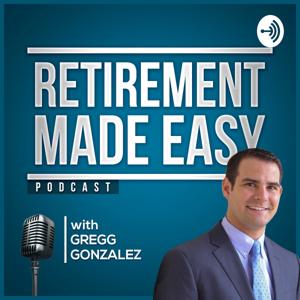


One of the most common questions asked of financial advisors who specialize in helping people plan for retirement is the main question that makes our services necessary: How much money is needed for an adequate retirement fund? There are a handful of ways to answer the question and I try to walk through them in short order on this replay episode of the podcast.
You will want to hear this episode if you are interested in...Subscribe to Retirement Made EasyOn Apple Podcasts, Spotify, Google Podcasts
I love making podcast episodes as practical as possible and nothing is more practical than the real-life questions and scenarios that listeners pass my way. I decided to end up the year with a handful of episodes that focus exclusively on the questions my listeners have submitted. In this episode, you're going to hear practical advice, in language you can understand. You can submit your questions (see the resources linked below). I'd love to answer your question in the future.
This episode covers a number of questions across a wide spectrum of topics. Should you move your portfolio to gold and silver to hedge against inflation? An elder-law attorney advises placing investments into an annuity and irrevocable trust to quality for medicare — is that a good idea? How do you work your way into retirement instead of going immediately into it? Should you hire an advisor if your spouse feels they can handle it?
>>>>>>>>>>>>>>>
You will want to hear this episode if you are interested in...A listener says that their advisor has counseled them to move their entire retirement portfolio into gold and silver to protect against inflation. This may sound wise, but is it? First off, you need to keep in mind that retirement planning should be done with clear goals in mind. Those goals are the target you're aiming to hit. If you want to hit it, changing your aim anytime the economy changes a bit is not going to be a good idea. Pulling all your investments in favor of gold and silver removes the potential of earnings or dividends. It also puts all your eggs in one basket, which I personally don't care to do. Gold and silver may temporarily hedge your funds from inflation but remember, inflation doesn't last forever. It's possible that in a relatively short amount of time it won't be an issue.
How do I learn to depend on my savings instead of my paycheck?Every one of my clients has spent a lifetime earning money, saving, and preparing for retirement. They are in the habit of leaving their savings alone. Once retirement comes, they have to reverse that lifelong habit, spending what's in their savings and not earning anything month to month. I have a great deal of empathy for how difficult that can be. If you're struggling with that transition, perhaps you should consider a "graded" retirement or semi-retirement, so you have at least a little income each month to wade into the waters of retirement gradually. If that's not possible, you may want to find a part-time role that you enjoy to keep some income flowing into your savings while you're learning to spend your savings for living expenses little by little.
Elder law attorney: Create annuity & irrevocable trust to qualify for MedicaidA listener writes to ask if the counsel received by an Elder-law attorney is something she and her siblings should consider to pay for her elderly father's long-term care expenses. She says her father has over $1 million in savings/investments and the attorney is advising they transfer those funds into an annuity and irrevocable trust so Medicaid can pick up the bill for his long-term care. Scenarios like this get my blood boiling. What this attorney is recommending is wrong because it's hiding her father's money so the Medicaid system won't know he could actually afford to pay for his care, himself. In situations like this, I think family members should be honest and honor their aging loved one by allowing him/her to care for himself/herself through the funds they've earned through the course of their lifetime. It was their plan and their intention, so allow them that dignity.
Connect With Gregg GonzalezSubscribe to Retirement Made EasyOn Apple Podcasts, Spotify, Google Podcasts
It's always fun to hear from listeners and to field questions about retirement and retirement-related financial issues. I publish my podcast to help people deal with those issues with wisdom and insight, so they can live a better life in retirement.
This episode is not just another listener question episode — it's the BEST questions I've received over the past week. There are so many decisions to be made and the questions are relevant not only to the person who asked the question, but also to others who never ask a question but have questions all the same.
You will want to hear this episode if you are interested in...For most people, age 72 is when they are required to start taking those infamous "Required Minimum Distributions" from their 401Ks. Susan is concerned about the tax implications because the bulk of her retirement savings, almost $2M, is in her 401K. That would be a concern if she's retired or retiring in 2021 (as Susan says she is - this December), but if she's not retired, then she doesn't have to take the RMD even though she is 72 years old. The rule only applies to those individuals who are not working.
My recommendation to Susan is that she pushes off her official retirement to January of 2022. That way her RMD can be done in the new tax year and as a retiree, her income that year should be far less than in 2021, which means she'll be in a lower tax bracket and pay less tax on the RMD.
How do 529 funds relate to retirement planning?A listener wants to start a 529 Fund for each of her grandchildren (it's an educational savings account) but she's concerned about what will happen to the funds should her grandchildren decide they don't want to attend college. Does she lose the money she's put in should that happen? 529 plans are a great way to save for college and many States allow tax deductions for money put into the plan. Should your kids not use the funds, you can change the beneficiary and give the funds to another grandchild, a niece or nephew, etc. As well, the qualified educational expenses the funds can be used for are more liberal than ever. Technical school, trade school, nursing certifications, licensing, computers, and more can be purchased with those funds. And if you can't use the funds in any of those ways, then the gains will incur a 10% penalty and you will pay taxes on the funds.
What's all the talk about 2026 being a huge tax year?As things stand at the moment, if congress does not agree on new tax legislation and if the 2017 Tax Cuts and Jobs Act is not extended, it will expire at the end of 2025. That means the tax code will reset to what it was prior to the 2017 legislation, which is a higher tax rate among other things. Reasonably, those planning for retirement should keep this issue in mind to mitigate the tax implications in their situation.
Resources & People MentionedSubscribe to Retirement Made EasyOn Apple Podcasts, Spotify, Google Podcasts
I love answering questions from you, my listeners. Each of you has unique situations and goals for your retirement and I understand that sometimes you need to hear someone speak directly to the specifics you're facing. That's why I've decided to answer listener questions. If you'd like to ask a question of your own, you can submit a question at the website (listed below). This episode I'll cover as many topics as I can, rapid fire style.
You will want to hear this episode if you are interested in...You get a benefit after an "elimination" period (90 days). If you never use that care all the premiums you've paid into it have accrued no value, you're paying for a "just in case" situation. Typically the premium you pay each year/quarter/month increases from year to year. But Juan's experience has not been that, his policy premiums have not increased in the three years he's owned the policy. That's good news, but I wouldn't advise that he count on that remaining true. Companies are known to increase their premiums over time, so you'd be better off to plan on it.
If your home increased in value and you're selling, how much tax should you expect to pay on the sale?Linda and her husband are downsizing and have plans to sell their home. The value of the home has appreciated over the years and they look to make a $400,000 profit. Good for them! She is curious how much tax they will have to pay on the profit they experience from the sale. For a home you have lived in for at least 2 of the last 5 years, there is a $500,000 capital gains tax exemption, meaning that you will not pay any tax on that amount (this figure is for married couples). So in Linda's case they will pay no taxes at all.
Do I provide free 2nd opinions to potential clients?Jim writes to ask if I offer a second opinion to someone who's looking for someone to advise them about their retirement strategy. The answer is, "yes," sort of. I will be offering 2 free second opinions per month to two listeners, and then I will make recommendations to fill those gaps. Advisors usually charge through commissions, hourly, or through advisory fees. I do the later of those three and my average client pays about 1% per year (my best guess). In order to get started with me, I have no criteria for the amount of assets you must have. My main criteria has to do with whether I feel I can provide valuable, life-changing advice to you and will enjoy working with you.
Resources & People MentionedSubscribe to Retirement Made EasyOn Apple Podcasts, Spotify, Google Podcasts
As we head into a new year, the typical changes the government makes regarding retirement accounts and government healthcare are being announced. It looks like we're going to see changes to 401K accounts and changes to Medicare premiums. Some of these changes are pretty significant, especially in light of the high rate of inflation and increased cost of living we're experiencing at the moment. This episode is going to break it down for you.
Also, we have a number of very interesting listener questions and one in particular that I found very insightful, so I'll be answering that question about how conservative bond fund investments can actually lose money over the short term. I invite you to listen!
You will want to hear this episode if you are interested in...As you know, the government restricts how much money investors can put into tax-free or tax-deferred retirement accounts like 401Ks and IRAs. But now and then, typically at the beginning of the year, changes are made to those rules. This is one of those times. The announcement came recently that you can now contribute an additional $1000 a year to your 401K plan. That means in total, you can contribute $20,500 into your plan… and here is still that $6500 for people over 50. You might be wondering, does that amount limit include the company match? No, it doesn't. Those figures are only related to your personal contributions.
The 2022 Medicare Part B Premium is going up 14.5% - a planning lessonAnother significant thing that's happened for 2022 is that the biggest Medicare premium increase in history is going to be implemented with the new year. Medicare announced a 14.5% increase to Medicare Part B premiums. That's a monthly cost of $170.10 (at the lower-income level). There is a sense in which this doesn't make sense. Why? The government recently increased the amount of Social security benefits by 5.9% because of inflation and the increased cost of living. That's great and it makes sense. But given that, you'd expect the Medicare Part B increase to be something similar, but it wasn't. It was far more.
There's a lesson about retirement planning to be learned here. Take a moment to consider what the premium was in 2012: $99.90. That means Medicare premiums have increased 70% in the last ten years. That's a huge data point to consider when you're planning for retirement in the next 10 years. Do you think those types of increases will flatten out or increase? The reality is that past increases can help us forecast what could happen in the future. This enables us to plan for a more accurate increased cost of living in your retirement.
Q: Why am I losing money when I'm investing in conservative bond funds?Many people equate the term "conservative" with "loss prevention" when it comes to investing. But that's not the case. This week a listener asked specifically about the losses they are experiencing in a conservative bond fund and the truth of the matter is that bonds are tied to inflation in an indirect way. That means they won't be as good of an investment when inflation is high. You've got to recognize the things that affect each type of investment and diversify your investments into different buckets to avoid having too much risk in your portfolio. I cover this on the episode, so be sure you listen.
Resources & People MentionedSubscribe to Retirement Made EasyOn Apple Podcasts, Spotify, Google Podcasts
Is it possible that you could be FORCED to buy Long-Term Care Insurance? Well, it's happened in the State of Washington. Could your State be next? I can't predict which States will follow suit or in what time frame, but I do believe this is only the beginning of this kind of legislation… and I think it's a BAD idea, at least the way Washington has implemented it. This episode will address what's wrong with the Washington plan, and I'll also answer three listener questions about retirement date funds, Long-Term Care Insurance in general, and gifting money from your IRA.
You will want to hear this episode if you are interested in...The State of Washington leads the way in new Long-Term Care legislation
The State of Washington is the first state ever to create a State-sponsored, mandatory Long-Term care program. That means if you work in the State of Washington, you're going to be forced to purchase the State's Long-Term Insurance. It's called the Washington Cares fund (WA Cares Fund). And it has some significant problems.
First off, the money you put into the WA Cares fund can only be utilized for care in the State of Washington. So think about that… if you participate in this fund and decide to retire to Florida (for example), you'll only be able to use the funds in the WA Cares fund if you have your medical services performed in the State of Washington. That's not very practical at all, is it?
What you need to know about "retirement date funds" in 401KsRetirement date funds are typically used to pigeon-hole investors into easier-to-manage categories offered through 401K plans and other retirement vehicles. These are age-based buckets that they toss all investors into, implying there is a "one size fits all" approach to retirement planning, which in my book, is an imaginary thing. Every investor has different goals and dreams for their retirement. They need the flexibility to choose the strategies that match their goals. These kinds of funds don't allow freedom like that. In my opinion, that's a disservice to the people I'm trying to serve. These funds often put more money into international stocks than I prefer as well.
Do I recommend Long-Term Care Insurance?This is another issue where I don't think there's a "one size fits all." Not everyone needs Long-Term Care Insurance because they can afford to self-pay for the care they need in their older years. But there are many people who can't afford the increased medical care and care facility costs that are required in their older years. So you need to consult your advisor to determine if you have the resources to self-pay or if Long-Term Care Insurance makes sense for you. One thing to consider is that the premiums for Long-Term Care as well as the costs at retirement facilities can go up and up over the years. Make sure you consider that when you're making your decisions about this.
Resources & People MentionedSubscribe to Retirement Made EasyOn Apple Podcasts, Spotify, Google Podcasts
This episode is based on a book by Dr. Frank Luntz, "What Americans Really Want...Really: The Truth About Our Hopes, Dreams, and Fears." Dr. Luntz has led focus groups and conducted numerous surveys on Americans to gather research about what Americans want. So in this episode of Retirement Made Easy, I cover the 7 most common worries of retirees as well as answer some listener questions!
You will want to hear this episode if you are interested in...I was reading a book by retired financial planner Nick Murray, "Simple Wealth, Inevitable Wealth" where he encouraged an experiment. As you're nearing retirement, find an 80+ year old that you trust and ask them a hypothetical question.
Let's say you have two choices:
Most—if not all—80–90-year-olds would rather be gone from the earth than have to rely on their kids for financial support. They don't want to be a burden. Dr. Frank Luntz's surveys have come to the same conclusion.
As a financial planner, what do I tell someone who lives until 98 and we had only planned until age 92? We make sure there's a cushion that can take them through their 90s and 100s.
Why I think life insurance is NOT an investmentThere are investments you can put inside a retirement account. You can own stocks, bonds, mutual funds, ETFs, etc. in a 401k or IRA. Guess what you can't have in an IRA? Life insurance. The vast majority of people have their nest egg in IRAs, Roth IRAs, 401Ks, and 403Bs. It's money you're investing for the future to draw an income from. You're prevented by law from placing life insurance in these accounts. Because of this, you can't classify them as an investment. Sure, it can be a way to leave a legacy, fund a trust, etc. but that's a separate argument.
Keep listening to hear me answer some questions about financial advisors and some sketchy investment schemes!
How to invest an inherited IRAIf you inherit a $500,000 IRA, what is the best way to invest it? This is a broad question. If you inherit money after January 1st, 2020, you have to take distributions from the IRA. You will pay Federal and State income taxes on those withdrawals over 10 years. It would then be depleted. But you want growth, right? So here are some things to think about:
What will the tax burden be? If you are retiring in 5 years, it might make sense to wait five years to take withdrawals. You can defer the tax burden to years 6–10 when you don't also have earned income.
What do you want to accomplish with the money? Does your risk score match your desired outcome? If you want to use the withdrawals to pay off your house, you must plan your investments so each withdrawal can pay off your home before you retire.
I might take distributions to increase my retirement savings in my retirement plan. I'd get a tax deduction to offset the taxes I'm charged from the withdrawal. You could max out your 401k at work and it would be a wash.
Resources & People MentionedSubscribe to Retirement Made EasyOn Apple Podcasts, Spotify, Google Podcasts
This is one of THE most popular episodes I've aired—and for good reason. The bucket strategy is an easily understandable approach to retirement savings that actually works. This simple strategy can help you reach your retirement goals. In this throwback of the Retirement Made Easy podcast, we'll cover the purpose of a rainy-day bucket, how to create a bucket that will sustain your retirement, and a bucket designed just for growth. Don't miss it!
You will want to hear this episode if you are interested in...Subscribe to Retirement Made EasyOn Apple Podcasts, Spotify, Google Podcasts
Are you in your 50s or 60s and wondering what you need to get figured out before you retire? In this episode of the Retirement Made Easy podcast, I share 6 questions you need to ask—and answer—before considering retirement. If you can answer these 6 questions by the time you retire, you should be in great shape. Retirement should be a blessing–not a curse. So let's get your ducks in a row.
You will want to hear this episode if you are interested in...Do you plan on working part-time or seasonally in retirement? What about your spouse? Some of my clients semi-retire or go back to work in part-time capacity. It might be as a contract employee without benefits. Other clients find a new part-time job to keep busy or with a business or organization that they're passionate about.
As a retirement planner, I want to help you plan how much income you'll expect in the first couple years of your retirement. Do we plan on any income? Or none at all? It may also impact when you claim social security. If you're under full retirement age and you claim your social security benefit, you're limited on how much money you can earn. Once you reach it, they withhold funds from your social security check.
Question #2: When will you claim social security?Knowing what your income might be will help us determine if you should wait to claim social security. Are you going to wait and let your benefit defer and grow? Or start receiving benefits at your retirement age? What is the right time for you to start claiming benefits so you don't leave money on the table? Does it make sense for your spouse to claim earlier?
Question #3: What will your retirement budget be?You have to know:
Determining a budget is crucial so you can decide if you can afford to retire with the resources you have available (Social security, 401k, Roth IRA, etc.). Will they provide enough income for your living expenses?
I'm also a proponent of paying off your debt before retirement because your monthly expenses will be far less without car and mortgage payments.
Check out the FREE retirement budgeting tool we offer at RetirementMadeEasyPodcast.com!
Question #4: What will you do for health insurance?The cost of health insurance is the #1 reason people push off retirement. It's expensive—and only seems to be getting more expensive. If you have coverage through an employer and are 65 or older, you can jump on Medicare and are immediately eligible. But what if you retire early? You'll have to decide if you'll go with COBRA, something on the healthcare exchange, or private health insurance. You need to figure this out months before you retire so you have an idea of what it will cost you and your family. We'll also include the cost in your monthly budget.
Question #5: What debt do you plan to pay off?What debt do you plan to pay off before you retire? Do you have a mortgage or car payment that you don't want to worry about in retirement? Many people set the goal to be debt-free before they retire because their mortgage is their biggest expense. To have that expense gone means monthly living expenses can be far lower. If you can pay off your debt, seriously consider it.
Question #6: How long will your money last?Based on the resources you have available and what the retirement of your dreams looks like, how long will your money last? Will it last until you're 80 or 90? 100? What rate of return do you need from your retirement nest egg (all of your retirement investments) for your retirement plan to be successful? The lower, the better.
If we build a retirement plan for someone, we want to give them a high probability of success. We'd love nothing more than to tell a retiring couple that they only need a return of 2% a year for the rest of their life to reach their retirement dreams and goals.
I never want to report to someone that their portfolio needs a 10% return every year. The probability of success would be about 5–10%. It would make more sense to delay their retirement so they have more resources available. Or they'll have to change their expectations of retirement.
For more details on each of these 6 questions, listen to the whole episode of Retirement Made Easy!
Connect With Gregg GonzalezSubscribe to Retirement Made EasyOn Apple Podcasts, Spotify, Google Podcasts
There were many articles published in August/September that were predicting a big stock marketing crash to come in October. In October 1929 and 1987, there were huge stock market crashes. 1987 was 34 years ago—what does it have to do with this stock market?
Supposed "experts" predicted that we were supposed to get the biggest crash we've ever seen in October 2021. So where is it? More importantly, what happened to the people who listened to that prediction and pulled money from their retirement accounts? I share why you have to be wary of where you get your professional advice in this episode of Retirement Made Easy.
You will want to hear this episode if you are interested in...Robert Kiyosaki (the author of "Rich Dad, Poor Dad") was interviewed in September and stated that he believed that we'd see the biggest crash in history this October. Why? Because of how the real estate market was doing in China. He thought it would spill over into the US and crash our stock market. A lot of people panicked.
Other "experts" predicted a similar market crash. As I'm recording this episode, we are more than halfway through October. The S&P 500 is up 4.75% so far. I'm not seeing a stock market crash plastered across the news—are you?
Be wary whose advice you listen toAs a word of caution, be wary of people trying to predict the next market crash. Robert Kiyosaki isn't even qualified to make predictions. He only served to make people panic, doing more harm than good. Even worse, people likely sold out of their long-term investments and abandoned their retirement plans because this big market crash was on the horizon. Sadly, just like the weatherman isn't held responsible for his or her predictions, these people aren't held responsible for the damage they cause.
Why the stock market is so volatileThe nature of the stock market is to go up and go down. Volatility is normal. When you have to price something, you have to question what someone is willing to pay you for a stock at the current moment. Some days, it may be underpriced. Someone isn't willing to pay as much.
Your home is an illiquid asset, right? What if you asked cash buyers to line up and you'd only accept the top bid you can get for your home? Some days cash buyers won't be willing to give you what you think it's worth. Some days people might line up to overpay for your house. But most people don't look at the price they can get for their home daily, right? So why are we doing it with the stock market?
The markets open every day and stocks are priced every second. If we didn't have to put such a liquid price on it, you'd see that over time the stock market seems to increase—just like the value of your home. Too many people focus on what the stock market does daily and that is simply out of your control.
On the way to reaching your goals, your investments will go up and down in value. That's why you have to remain focused on your long-term plan. When sharp declines and short-term volatility happens, you can't panic. Your portfolio was designed to accomplish your long-term goals for the next 30+ years.
Listen to the whole episode to learn why you shouldn't loan money you can't live without. If you loan a family member or friend money, I'll share the right way to do it.
Resources & People MentionedSubscribe to Retirement Made EasyOn Apple Podcasts, Spotify, Google Podcasts
From the publisher's feed

1,964 Listeners

447 Listeners

800 Listeners
1,303 Listeners

459 Listeners
542 Listeners
753 Listeners

553 Listeners

700 Listeners
189 Listeners

832 Listeners

199 Listeners

593 Listeners

1,072 Listeners
103 Listeners