
Sign up to save your podcasts
Or

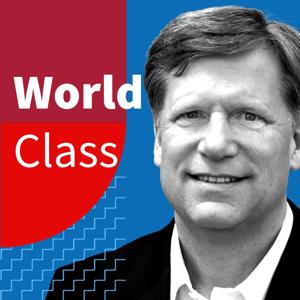

As income inequality soars, we expect democracies to correct it with higher taxes on the rich. But time and again, the average voter rejects this idea at the ballot box. Why does this happen? In a country founded on the ideal that we are all equal, who gets to decide what’s fair? We talk with Professor Kenneth Scheve, an FSI senior fellow and professor of political science, about our ideas of fairness and how they impact the way our societies work.
If you like what you hear, you can get additional content from scholars at the Freeman Spogli Institute for International Studies by following us on X, Facebook, LinkedIn, Instagram, and YouTube, and by subscribing to our newsletters and updates.
 View all episodes
 By Freeman Spogli Institute for International Studies, Stanford University

4.8
5555 ratings
As income inequality soars, we expect democracies to correct it with higher taxes on the rich. But time and again, the average voter rejects this idea at the ballot box. Why does this happen? In a country founded on the ideal that we are all equal, who gets to decide what’s fair? We talk with Professor Kenneth Scheve, an FSI senior fellow and professor of political science, about our ideas of fairness and how they impact the way our societies work.
If you like what you hear, you can get additional content from scholars at the Freeman Spogli Institute for International Studies by following us on X, Facebook, LinkedIn, Instagram, and YouTube, and by subscribing to our newsletters and updates.

6,881 Listeners

9,238 Listeners
4,113 Listeners

1,380 Listeners

617 Listeners

1,947 Listeners

6,304 Listeners
724 Listeners

2,380 Listeners

32,354 Listeners
837 Listeners
14 Listeners

152 Listeners

16,525 Listeners

496 Listeners