
Sign up to save your podcasts
Or

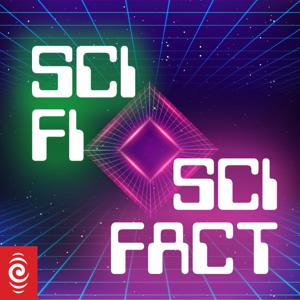


Jan Eldridge, Associate Professor of Physics at the University of Auckland on the facts behind the fiction of the Star Trek mind-swap episode - Turnabout Intruder.
Turnabout Intruder is the twenty-fourth and final episode of Star Trek. In the episode, a woman switches bodies with Captain Kirk and then tries to take over command of the Enterprise.
Jan Eldridge, Associate Professor of Physics at the University of Auckland on the facts behind the fiction of the Star Trek mind-swap episode - Turnabout Intruder.
I work in astronomy where we go and look at the Universe and we study these explosions, and how the Universe evolves, and stars evolve and it's so wonderfully complex. And then you suddenly realise, oh hang on... us individually, and our society, and the way we interact are wonderfully, beautifully complex as well.
Go to this episode on rnz.co.nz for more details
Professor Nicola Gaston, MacDiarmid Institute Co-Director and Professor of Physics at the University of Auckland talks about the Dragonriders of Pern science fantasy series written by American author Anne McCaffrey.
In the a science fantasy series by author Anne McCaffrey, the planet of Pern has been colonised by humans who have lost much of their technology and history due to periodic deluge of a destructive spore called Thread
The Pernese use intelligent fire-breathing dragons to fight Thread with the human rider developing a telepathic bond with their dragon.
Professor Nicola Gaston, MacDiarmid Institute Co-Director and Professor of Physics at the University of Auckland talks about Dragonriders of Pern science fantasy series written by American author Anne McCaffrey.
Things like Lithium, potassium, sodium - they're not uncommon metals, but they're very rare in metallic form on this planet simply because we have an oxygen atmosphere so the idea that in rock form they could be chewed and produce a gas that is flammable... potentially.
Go to this episode on rnz.co.nz for more details
In this whimsical episode, MacDiarmid Institute Principal Investigator and Professor of Chemistry at the University of Auckland, Duncan McGillivray tries to work out how Rumpelstiltskin made straw into gold.
Rumpelstiltskin is the story of an imp who spins straw into gold in exchange for a girl's firstborn.
In this whimsical episode, MacDiarmid Institute Principal Investigator and Professor of Chemistry at the University of Auckland, Duncan McGillivray tries to work out how Rumpelstiltskin made straw into gold.
Go to this episode on rnz.co.nz for more details
Associate Professor Geoff Willmott, MacDiarmid Institute Deputy Director for Commercialisation and Industry Engagement and Associate Professor of Physics at the University of Auckland speaks to Bryan Crump on the stillsuits from Dune; the water-saving suit that recycles sweat and other fluids for survival in the Deep Deserts of Arrakis.
A stillsuit is a full body suit designed to preserveand recycle the body's moisture.
Its various layers would absorb the body's moisture through sweating and urination, filtering the impurities to make drinkable water enabling the wearer to survive for weeks in the open desert of the planet Arrakis.
Associate Professor Geoff Willmott, MacDiarmid Institute Deputy Director for Commercialisation and Industry Engagement and Associate Professor of Physics at the University of Auckland speaks to Bryan Crump on the stillsuits from Dune; the water-saving suit that recycles sweat and other fluids for survival in the Deep Deserts of Arrakis.
Go to this episode on rnz.co.nz for more details
In this episode, our heroes dig deep into the Mines of Moria. Dr Chris Bumby, MacDiarmid Institute Associate Investigator and Senior Scientist at the Robinson Research Institute of Victoria University of Wellington regales Bryan with scientific tales of Mithril from Lord of the Rings.
Mithril is a fictional metal found in the writings of J. R. R. Tolkien. A very rare and expensive metal in Middle-earth, it is described as resembling silver, being stronger than steel but as light as wool.
Gandalf: "Bilbo had a shirt of Mithril rings that Thorin gave him."
Gimli: "Oh, that was a kingly gift."
Gandalf: "Yes! I never told him, but its worth was greater than the value of the Shire."
Dr Chris Bumby, MacDiarmid Institute Associate Investigator and Senior Scientist at the Robinson Research Institute of Victoria University of Wellington regales Bryan with scientific tales of Mithril from Lord of the Rings.
We're in the mines of Mordor here. We're right down in the deep depths of the earth. Who knows what's going on down there?
Go to this episode on rnz.co.nz for more details
In this episode, we welcome Dr Catherine Whitby, Senior Chemistry Lecturer at Massey University, and MacDiarmid Institute Associate Investigator, to talk about Mandalorian, the super light and super strong material in Star Wars, and its equivalent in this galaxy, Kevlar.
Mandalorian iron, also known by its Mando'a name of beskar, was an extremely durable iron ore whose only known source was the planet of Mandalore and its moon, Concordia. Mandalore was inhabited by warriors who mined their planet for this rare and valuable metal, using it in the creation of weapons, armor, and starships.
Dr Catherine Whitby, Senior Chemistry Lecturer at Massey University, and MacDiarmid Institute Associate Investigator, to talk about Mandalorian, the super light and super strong material in Star Wars, and its equivalent in this galaxy, Kevlar.
You could wear concrete, and that might protect you from a blaster shot, but you're not going to get very far wearing a suit of concrete. So the beauty of this (Mandalorian) armour is it is so strong and protective but at the same time it's light so you can run and jump and make your next move in the fight.
Go to this episode on rnz.co.nz for more details
In this episode, Professor Justin Hodgkiss, Co-Director of the MacDiarmid Institute talks to Bryan Crump about the scientific feasability of Star Wars' lightsabers. The ubiquitous, Jedi weapon from a galaxy far, far away...
The lightsaber in the Star Wars franchise is the weapon of the Jedi. It can be used to cut through blast doors or enemies alike. It requires skill and training to use, and is greatly enhanced when used in conjunction with the Force.
Professor Justin Hodgkiss, Co-Director of the MacDiarmid Institute talks to Bryan Crump about the scientific feasability of Star Wars' lightsabers.
It would be dangerous; it would cut things. It would Basically electrocute you and if you were going to carry this thing that is a really high voltage power supply around, then you're probably better off just electrocuting your opponent.
Go to this episode on rnz.co.nz for more details
Good news, everyone! Dr Nate Davis, Associate Investigator and Senior Lecturer in Physical Chemistry at Victoria University of Wellington brings us the science - or lack of it - behind Jumbonium from Futurama.
Jumbonium from Futurama is a very rare, valuable and fictional element with atoms large enough to be seen with the naked eye. The Jumbonium atom was used for the Miss Universe competition, where it hovered above the prized tiara.
So what is it, already? It's a single atom of jumbonium, an element so rare the nucleus alone is worth more than $50,000.
Dr Nate Davis, MacDiarmid Institute Associate Investigator and Senior Lecturer in Physical Chemistry at Victoria University of Wellington explains jumbonium as:
"It's about a tennis-ball-sized atom, and then around that you see the electrons orbiting, as you would sort of imagine what an atom looks like... if you haven't got a chemistry degree, because that orbit is actually unstable."
Go to this episode on rnz.co.nz for more details
Tony Starks's Iron Man suit enables him to fly, it has weapons and it's basically indestructible. What on earth (or space) is it made of?
Tony Stark first put on the Iron Man suit in 1968 and it's changed a lot over the years.
While it has always enabled Stark to fly and wear an arsenal, more recently the suit has been able to repair itself.
Dr Catherine Whitby, a Senior Lecturer in Chemistry at Massey University and Principal Investigator at the MacDiarmid Institute, said self-repairing materials are kind of the "holy grail" for scientists.
And she said nature is a key inspiration.
"It's kind of like a shell that's got this incredible strength and an ability to protect Tony from all sorts of situations," said Dr Whitby, "And we're actually starting to try and imitate these kinds of shells that already form in nature."
"In some cases, some animals can repair their shells. In other cases, an animal sometimes has to shed it and grow a new one."
Scientists are now working making materials that might start to approach self-repairing.
"It's pretty early days on the self-repairing but we're already having a lot of success on mimicking bio-mineralisation in the lab," Dr Whitby said.
Go to this episode on rnz.co.nz for more details
Tonight's the night the magic happens. Old St Nick sets off from the North Pole and delivers presents to children all around the world. How does he do it?
On December 24, every year, Santa Claus piles his sleigh up with presents, he hitches Rudolph and his other reindeer up and heads off to deliver those gifts to every child in the world.
How?
JJ Eldridge, Associate Professor in Physics at the Faculty of Science, University of Auckland said if she was Santa, she would start with cloaking technology, which would explain why no one ever sees Santa dropping off the presents, and there is already a bit of this tech in development.
The ability to cover the whole world in one night gets trickier, but JJ said it is not outside the realms of possibility.
"One of the most difficult things about physics is you have to kind of throw out everything you understand from your own eyes and ears about how the world works," she said, "Because when we go down to the very small level, the quantum mechanics level, things get a bit strange."
Go to this episode on rnz.co.nz for more details
From the publisher's feed
5,652 Listeners

724 Listeners

604 Listeners
120 Listeners

562 Listeners

956 Listeners

330 Listeners

359 Listeners

67 Listeners

54 Listeners

1 Listeners

478 Listeners

1 Listeners

1 Listeners

648 Listeners

1 Listeners
42 Listeners

102 Listeners
1 Listeners

7 Listeners

52 Listeners

4 Listeners
3 Listeners

0 Listeners

31 Listeners

388 Listeners
0 Listeners

4 Listeners
45 Listeners

4 Listeners

2 Listeners

0 Listeners

2 Listeners

1 Listeners