
Sign up to save your podcasts
Or

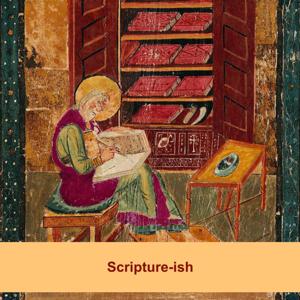


Some people think the apostle Paul might have been married at one point in his life. In fact, there was an early Christian tradition about it.
Eusebius the church historian in the early fourth century quoted Clement of Alexandria, who wrote at the turn of the third century.
Thanks for reading Gallagher! Subscribe for free to receive new posts and support my work.
Clement, whose words we cited recently in the context of the previous quotation, enumerates, on account of those who reject marriage, those of the Apostles who were married, saying, “Or will they disapprove even of the Apostles? For Peter and Philip begat children, and Philip even gave his daughters to husbands, while Paul himself does not hesitate in one of his letters to address his wife whom he did not take about with him in order to facilitate his mission.” (Eusebius, Church History 3.30.1 [Loeb], quoting Clement, Stromata 3.52–53; see here, p. 289)
What is Clement talking about? Paul addressed his wife in one of his letters? He is referring to the “true yokefellow” of Philippians 4:3. For some reason, Clement thinks this is Paul’s wife.
Origen knows this same tradition about Paul’s marriage.
Paul, then, if certain traditions are true, was called while in possession of a wife, concerning whom he speaks when writing to the Philippians, “I ask you also, my loyal mate, help these women.” Since he had become free by mutual consent with her, he calls himself a slave of Christ. But if, as others think, he had no wife, nonetheless he who was free when he was called is yet a slave of Christ. (Commentary on Romans 1:1(3), trans. Scheck, p. 62)
If Paul had a wife at one time, what happened to her? Well, we can think of the options: death and divorce. Maybe the apostle was a widower, as some people think based on the Greek of 1 Corinthians 7:8, as we will discuss in a moment. Or maybe there was a divorce. We could imagine a couple scenarios. The Pharisee Saul of Tarsus might have divorced his wife for any number of reasons, assuming he adhered to the views of R. Hillel, who was pretty lenient on such matters. Or, maybe after the up-and-coming Jewish leader became an adherent to the way of Jesus, his wife left him.
What sort of evidence might suggest that Paul was at one time married?
It may also be that Paul was married prior to the time that he wrote 1 Corinthians in the mid-50s. In that letter, he indicates he was not married (7:7, 9, 38, 40; 9:4). Some scholars have noted, however, that Paul employs the term agamoi, which may be rendered “widowers,” in 1 Cor 7:8 and suggest that the apostle included himself among that group. If Paul were at one time married, this would coincide with Jewish traditions that praised and even stipulated marriage. Such an expectation was probably present among Pharisaic Jews in the first century. As a result, Paul might well have thought it both appropriate and prudent to marry. (Longenecker and Still, 2014, p. 27)
So, possibly Paul called himself a “widower” in 1 Corinthians 7:8. Here’s the verse in the ESV: “To the unmarried (agamos) and the widows I say that it is good for them to remain single, as I am.” Some interpreters think Paul included himself in the categories of “agamos and widows,” and since he cannot be calling himself a widow, he must be calling himself an agamos—but what does this word mean? According to Danker, it means “an unmarried man/woman,” but some people think that in the context of 1 Corinthians it must mean widower, since it is contrasted with the widow.
So, if the word suggests “widower” and if Paul is including himself in the categories mentioned at 1 Corinthians 7:8, then Paul would be self-identifying as a widower.
I think this argument fairly weak.
But maybe there’s another rout to a married Paul. What if it was expected of Jews in the first century? Here’s F. F. Bruce:
It may be pointed out that marriage was normal and, indeed, expected in pious Jews when they came of age. [He cites Avot 5.21.] True, Jesus had spoken of certain exceptions – those who, as he said, had “made themselves eunuchs for the sake of the kingdom of heaven” (Matthew 19:12) – among whom he may have included John the Baptist himself. But Paul was not presumably influenced by considerations of this kind in his pre-Christian days. What then? Was he a widower? Perhaps he was: the question has received a positive answer from Joachim Jeremias, for example. Rather more probable is the view that his wife left him when he became a Christian: that when he “suffered the loss of all things” [Philippians 3:8] for the sake of Christ he lost his wife too. This cannot be proved, of course, but if something like this did happen it might explain Paul’s specially sympathetic understanding of the domestic situation in which the unconverted partner walks out on the husband or wife who has become a Christian: “in such a case the brother or sister is not bound” (1 Corinthians 7:15). Paul, for his part, was not “bound” either way: he knew that he could fulfil his commission more wholeheartedly if he remained free from the marriage bond. (Bruce, 1977, pp. 269–70)
(For another argument for a married Paul, see Jerome Murphy-O’Connor (1996). I don’t see that E. P. Sanders (2015) mentions it.)
The idea that Jews in the first-century—pious, Torah-observant Jews—were generally expected to marry was argued a century ago by Joachim Jeremias in two very brief articles in the journal Zeitschrift für die neutestamentliche Wissenschaft. Here are the references.
Jeremias, “War Paulus Witwer,” ZNW 25 (1926): 310–12; “Nochmals: War Paulus Witwer?” ZNW 28 (1929): 321–22.
Jeremias is pretty confident in his interpretation. He says that a unanimous rabbinic teaching regarded marriage as a religious obligation. Here’s the evidence as he cites it.
The Mishnah (Yevamot 6.6) states that Jewish men—and, maybe, Jewish women—are under obligation to fulfill the commandment of Genesis 1:28 to “be fruitful and multiply” (on the history of interpretation of this verse, see Jeremy Cohen’s 1989 monograph), and the sages suggest that a person can consider himself to have performed the mitzvah if he has produced two children, at least one of whom is male. Indeed, so important is the mitzvah that after ten years of marriage with no children, a man needs to seek a different wife. This mishnah is quoted in the Babylonian Talmud at Yevamot 61b §15, which then leads to a long discussion, but at the very beginning of the discussion it becomes clear that some Rabbis thought that a Jewish man was obligated to have a wife irrespective of children—in other words, even if he already had children, he still needed a wife. Being married was a separate obligation.
In another part of the Talmud, at Pesachim 113b §14, there is a list of seven categories of people who are “ostracized by Heaven,” and first on the list is a Jew without a wife.
This all seems pretty clear, but there are two problems with the argument of Jeremias that I want to mention. First, we’re using the Talmud for evidence for a first century Jew (Paul). The Talmud is not first century, it’s from some centuries later, maybe around AD 600. It definitely contains traditions from the first century, but the trick is knowing how to identify them, and I cannot do it. Scholars these days are much more reticent than in the days of Jeremias to use the Talmud to establish something in the first century. The same basic issue applies also to the Mishnah, though to a smaller degree, since the Mishnah is much closer to the New Testament (around AD 200).
Second, there is another lifestyle that some faithful Jews pursued: they avoided marriage to devote themselves to God. Philo (Hypothetica 11.14) and Josephus (War 2.120; Antiquities 18.21) both mention celibacy in regard to the Essenes. (The extracts of Philo’s Hypothetica are preserved in the Preparation of the Gospel by Eusebius, book 8, but also printed in the Loeb edition of Philo, …
“There were two subjects we never heard about in church,” Joy Winn told me one evening. She was referring to her childhood and young adulthood, decades earlier (roughly, the 1960s), in a church of Christ in Alabama. I’m pretty sure this conversation took place on a Wednesday evening because we were at church, which narrows down the possibilities. For my entire life, I have gone to church every Sunday and Wednesday and no other day of the week (except for special events). I think I spoke to Joy on a Wednesday evening because what prompted her comment to me was the talk I had just delivered on the Holy Spirit, and I seem to recall making that presentation in the middle of the week in about the year 2017. I asked her which two subjects the church of her youth failed to cover, and she replied: “The Holy Spirit and grace.”
Readers with a deep association with conservative churches in America (or, maybe, elsewhere) will understand Joy’s comment. I don’t think its application is limited to churches of Christ, but it definitely includes them, as she intended. I myself am a lifelong member of churches of Christ in the (mostly southern) United States—Kentucky, Tennessee, Ohio, and Alabama. My experience in churches confirms the truth of Joy’s comment: many churches have had little to say about the Holy Spirit or grace.
Thanks for reading Gallagher! Subscribe for free to receive new posts and support my work.
Ignoring the Holy Spirit
Why these two topics? I think the Holy Spirit is perceived by some conservative Christians as too mysterious—maybe too nebulous—to provide anything firm or concrete to say, so they mostly avoid the subject. I understand this concern; I feel the same pressure. My experience of churches is among those who emphasize the Christian Bible over Christian tradition—or, rather, who emphasize the Bible against tradition. The idea is that Christian tradition largely went off the rails in the centuries after the New Testament, adding all kinds of extraneous doctrines and practices to the simple message of the gospel as attested in the Scriptures. And it is true, I think, that whereas there are well developed doctrines regarding the Holy Spirit among some Christian groups, these are in many ways add-ons, later developments, not clearly articulated in the New Testament. If we’re going to stick with the Bible rather than later traditions developing from it, that’s going to limit what we can say with confidence about the Holy Spirit.
You may have noticed some problems with this explanation for Christian reticence regarding the Holy Spirit. Surely there are all kinds of ways in which even very conservative, sola-Scriptura-kinds of Christians accept as true things that are not directly said in Scripture—not to mention denying or downplaying things that are directly said in Scripture.
Yes, guilty.
Just think about the doctrine of the Trinity for a moment. Or whatever other doctrine you want to know. There’s what the Bible says, and then there’s your way of explaining those biblical statements, putting them together into a coherent system.
With regard to the Holy Spirit, what I can say is that church leaders I have known have tended to take a rather high view of the status or person of the Holy Spirit, and they will even occasionally address their worship toward the Holy Spirit (“Spirit, we love you, we worship and adore you…”), but they get cagey when you ask them what the Holy Spirit actually does now. They do think he—and they often insist on the “he,” not “it”—dwells in Christians, but they’re not sure how he does this, or what he does in us or for us. And that is because they want their thoughts on divine matters to be based on a biblical prooftext, and while the Bible (especially the New Testament) is very interested in talking about the Holy Spirit, many non-charismatic conservative Christians are dubious that the things the Holy Spirit does in the New Testament (prophecy, speaking in tongues, healings, etc.) are still happening. If he’s not doing those things, what is he doing? The Bible says some things, but not much, so some churches prefer to talk about other things.
I know, the Holy Spirit seems like an awfully important element of Christianity to be ignored by Christians. I’m just trying to explain the thought process.
Ignoring Grace
And grace? That one is a little different. The New Testament (and especially Paul) talks a lot about grace in such a way that it’s obvious that it’s supposed to apply to all believers for all time. Grace is the basis of human salvation from sin. Humans could not achieve that salvation through any of their own activity or brilliance, so God simply gave it to them. That gift is grace. “For by grace are ye saved through faith, and that not of yourselves, it is the gift of God; not of works, lest any man should boast” (Ephesians 2:8–9). How could a Christian ignore grace? Grace is everything; it is the entirety of Christianity!
I’ll try to explain. Even in that verse I just quoted from Ephesians, written in the name of the apostle Paul, the gift of salvation comes not to everyone in the world but to certain people based on a condition—the condition of faith. It’s believers who receive grace. What does it mean to believe? Let’s bring in the testimony from another well-known passage in the New Testament, this one attributed to a certain James, who may be (and traditionally has been taken to be) the brother of Jesus mentioned in the Gospels (e.g., Mark 6:3) and by Paul (e.g., 1 Corinthians 15:7). “You believe that God is one; you do well. Even the demons believe—and shudder” (James 2:19). Okay, wait: the demons believe? But they are obviously not recipients of God’s grace. Is mere “belief” enough to enjoy salvation from God? Uh, big issues. For now I offer this suggestion: though the demons know about God and Jesus and they are perfectly confident in the basic facts of the gospel, they refuse to submit to the authority of God. When Paul in Ephesians says that grace comes to believers, he means by “believers” people who accept Jesus as their Lord, who love God and submit to him.
That means that “believing” is not just about something happening in a person’s head, like whether they believe in evolution or whatever, or in UFOs, or Bigfoot. It’s more like whether you believe in spending time with your kids; if you do, then prove it—spend time with your kids. There’s a behavioral element here. If you believe that Jesus is Lord, then do what he says. “If you love me,” Jesus says in the Gospel of John, “then you will keep my commandments” (14:15). If you’ve got to prove your faith or love through your actions, then what does that entail? It turns out that there is a significant tension between faith and works—or between grace and works—in the New Testament, which has led to longstanding debates within Christian history among and within various churches. While all churches would affirm Paul’s statement of the situation in Ephesians 2:8, all would say humans are saved only by grace, not works, most churches would also want to set alongside that verse other New Testament statements affirming the value of works, or, rather, the necessity of ethics.
What Joy meant on that Wednesday evening a decade ago was that the churches of her youth had spent more time talking about human responsibility and less time rejoicing in God’s mercy. I understand that impulse, though I think it has often gone too far and most certainly needs balance.
The Churches of Christ
What are the churches that I’ve been talking about, the churches of Christ? Let’s start with terminology. Some people in these churches self-identify as members of “the churches of Christ,” others of “the Churches of Christ,” and others of “the Church of Christ.” In that sense, there is no official name (“denomination”) for a collection of congregations sharing the peculiar set of beliefs and practices that I’ll describe later…
Is Artificial Intelligence going to kill us all in just a few years? That is a question making the news now, because some bigwigs in the AI world have claimed that the apocalypse is coming and it’s almost here. These are people working at the companies making AI, not the mom-and-pop AI companies, but companies like Anthropic and OpenAI. And these are bigwigs at these companies, like, the biggest of wigs, like the CEOs of the company, saying that what they are doing is going to end humanity, kill us all. Of course, we shouldn’t worry about this because our politicians are going to do something about it.
What should a Christian think about such news? The end of humanity by the end of the decade? Let’s talk about it.
Thanks for reading Gallagher! Subscribe for free to receive new posts and support my work.
First, we need to understand something about AI. Let me explain the technology to you. It has something to do with computers, I think. I believe the internet might come into play somehow. There are microchips, maybe in the computers, or in the internet, or something. You mix them all together and you get robot armies. I think that’s how it works.
What if these companies make some sort of superintelligence that we cannot control, which is, I think, their explicit aim? There are a few ways that might play out. I’ve heard some people say that if AI takes over the world, humans will be free, liberated from the tyranny of work, and able to pursue our passions and hobbies. In that scenario, I think that some people will probably be on a space ship, and they’ll have a mission to explore strange new worlds, and to seek out new life and new civilizations, and to boldly split infinitives. Of course, another possibility, less positive, is that the AI will try to turn us into robots or some sort of cyborgs, that is, they’ll try to assimilate us, and it may be that resistance is futile. Maybe the AI will try to harvest our bodies’ energy while we live in a dreamlike state in some sort of pod, or maybe humans and machines will fight an apocalyptic war. I think that covers the main possibilities.
Let’s assume it’s the Terminator scenario: robots versus humans, and robots win. I figure that it’s not actually going to be a shooting war, but that the robots will get us in some other way: affecting the food supply, or tampering with medicine, but whatever—death comes; maybe very painful death, maybe quick death, but definitely death.
My first thought is: what’s the problem? Robots or not, death is coming; we can’t stop that. Of course, I wouldn’t want to be someone who is designing technology that would result in massive death or perhaps human extinction, but I’m not that person. I am someone who is potentially facing death as a part of human extinction, and it just doesn’t strike me as all that big of a deal. I guess I find it implausible that it’s going to happen, but not that troublesome if it does happen. I would find it much more problematic if the technology were being designed to annihilate a selection of humans, like poor people, or disabled people, or Asians, or something. In that case, we should definitely work to stop it, and we should probably put some people in prison. But the annihilation of all humans? Ok. There are worse things.
How plausible is this doomsday scenario? I don’t know. I have described to you the technology as I understand it, which should alert you to my complete ignorance in this realm. Some people very much involved in the AI world consider it plausible that machines will destroy humans during our lifetimes.
Is that plausible from a Christian point of view? I don’t see why not. Now I know some Christians would push back on that statement; they would insist that it cannot happen, that machines cannot destroy humanity. I have not heard people say this, but I’m guessing from analogous situations. I recall some years ago hearing Christians talk about global warming and the doomsday scenarios associated with it. As an aside, I note that we have been under a heat advisory all week as temperatures in the third week of September hover close to triple digits. But anyway I would hear Christians declare that global warming cannot result in human extinction because the Bible says so, and they would make this comment: “I’ve read the end and that’s not how it goes.” This is silliness.
We do not know how the world will come to an end. There is a description in 2 Peter 3 of a coming conflagration that will dissolve heaven and earth, but I’m not sure why that would invalidate global warming—it would seem to confirm it, in fact, since Peter says that the globe will warm—or the destruction of humanity through a robot army. There’s also a description of the return of Jesus in 1 Thessalonians 4, where we read about a trumpet and a shout and such like—but, again, I myself have enough imagination to conceive of how Paul’s description could be fulfilled literally, word for word, after humans make the planet uninhabitable, at least for human life, whether through carbon emissions or designing deadly AI. There are other biblical passages that could be considered, such as at the end of the book of Revelation, but it is difficult to know how far to press the details of passages that might well be symbolic.
And there’s the problem for any biblical interpretation addressing events or ideas about which we have no knowledge outside Scripture: how literally do we take the descriptions? Because the Bible likes to speak in symbolic language. That should be clear enough from the Gospels, where Jesus enjoyed teaching in parables, and we should remember that these parables gave his listeners fits, including his disciples, and that was entirely the point. Jesus adopted Isaiah’s mission as his own, when he explained to his disciples: “The reason I speak to them in parables is that seeing they do not perceive, and hearing they do not listen, nor do they understand” (Matt 13:13). We should also remember how common it was for very religious Jews who encountered Jesus to insist that he, Jesus, could not be the fulfillment of the prophecies because they interpreted those prophecies in a way that excluded someone like Jesus. Obviously the Messiah would not die on a Roman cross because the Messiah was a warrior. How do we know the Messiah is a warrior? Because the prophecies say it. Psalm 2: “You shall break [the nations] with a rod of iron, and dash them in pieces like a potter’s vessel.” Isaiah 11: “he shall strike the earth with the rod of his mouth, and with the breath of his lips he shall kill the wicked.” Daniel 2: “And in the days of those kings the God of heaven will set up a kingdom that shall never be destroyed, nor shall the kingdom be left to another people. It shall crush all these kingdoms and bring them to an end.” And then think about all the times in the Jewish Scriptures that the Messiah, the coming king, is said to be the son of David or even the new David, and if we know anything about David it’s that he was a warrior.
Now you’re going to tell me that I’m misinterpreting these passages, but that is exactly the point. Everyone misinterpreted them until they saw their fulfillment. They were unable to interpret them correctly until they saw Jesus. And he completely blew a hole through the way they thought it was going to go. Too often we are like Amelia Bedelia insisting on a literal interpretation of things that we cannot possibly know about—things like heaven and hell. What will these realities be like? Who knows?! But I am pretty sure that God has little interest in making sure we, right now, understand the details of heaven and hell. And so also for the end of the world. If every religious leader completely whiffed on their interpretation of the first advent of the Messiah, what would make us confident in our interpretation of the second advent of the Messiah? Should we not take the lesson and be more open and …
Some Christians are Bible people, and others are prayer people. This classification is my invention. I am not completely sure that it’s original with me, but I did not read about it in Scripture and I have not encountered anyone else who makes the same distinction. Let me tell you what I mean by it. My impression is that some Christians gravitate more toward Bible study and others gravitate more toward prayer. There might be some Christians who enjoy both disciplines, but it seems to me that the overlap is small. There is probably a much bigger overlap for those Christians who enjoy neither prayer nor Bible study.
So, which are you? If you could choose one or the other, prayer or Bible study, which would you choose? Or if you have time to do only one of these before you’ve got to take the kids to school, which one? Or, which of these comes more naturally to you, or gives you more comfort? Or, which one excites you more, or intimidates you less? They are both essential Christian acts, and we can grow in either one, but chances are one of them is going to appeal to us more. I’m a Bible person. In my experience, most Christians are prayer people. I am jealous of the prayer people.
Thanks for reading Gallagher! Subscribe for free to receive new posts and support my work.
Let me circle back to the absence of this classification in Scripture. It would not be true to say that Jesus was a prayer person more than a Bible person. It is true that we catch him praying several times in the Gospels and hardly ever reading Scripture (cf. Luke 4:16–21), but the Evangelists depict Jesus as having a great deal of Scripture stuck in his head. Maybe he didn’t read Scripture often, but it does seem that he meditated on it routinely. His accusation that the Sadducees knew not the Scriptures (Mark 12:24) could not have been lobbed at him. So also the apostle Paul cannot be categorized as one or the other—a prayer person or a Bible person—but both.
The New Testament does not present this distinction as an inevitability, certainly not as desirable. It seems to me to articulate an obvious characteristic of both myself and many of the Christians I have known most intimately, but I wonder if the distinction would make less sense in an ecclesial context different from mine. At any rate, if we find one of these practices (prayer or study/meditation) more difficult than the other, we are in good company and, as always, practice makes perfect.
I want to be a prayer person because I want to be a person who gives myself wholly over to God. I want to be the kind of person who directs everything in my life to God. It seems like that’s what prayer represents. I want to be the kind of person who prays without ceasing. I want to say the words of Psalm 143:6 with full sincerity: “I stretch forth my hands unto thee: my soul thirsteth after thee, as a thirsty land.”
After all, this is how my Christian life began when I was baptized. Whether I realized it at the time or not, my baptism marked the death of one lifestyle and the beginning of a new one, so that I am not a slave of sin, and certainly not a slave to myself, but, as Paul says in Romans 6:18, a slave to righteousness. I buried in those waters my selfishness, my pride, my anger, my impatience, and every other work of the flesh, and I rose up to walk in newness of life. Just as Paul was crucified with Christ (Gal 2:20), so also he says that I have been (Rom 6:6), so that I am now “alive unto God through Jesus Christ our Lord” (6:11). Which means—if we can skip forward to Romans 8—that I am not led by the flesh but by the Spirit. Since I have received the Spirit of adoption, I cry out Abba, Father (8:15). When I reflect on the significance of my baptism, I want to be a prayer person, someone in constant communication with God, someone who recognizes with Augustine, and even earlier with David, that my soul is restless until it finds rest in God. As Evagrius said in the fourth century, a theologian is one who prays, and I would like to be such a theologian.
But, I’m not a prayer person, I’m a Bible person. Or does that distinction even make any sense? Like I said, I think the distinction does make sense of my experience, and the experience of other Christians I have known, Christians I’ve gone to church with. And, I will say, since I’m a Bible person, I can testify that there are a lot of prayers in the Bible—I mean, a lot. And in some religious contexts, prayer and Bible go together more intimately than I am accustomed to.
I was thinking about these issues at the end of 2024 when I heard about a new podcast that would start at the beginning of the year, The Rosary in a Year. Obviously this is a Catholic podcast. I had heard about the Rosary, but I didn’t know much about it. A string of beads popped into my head. I decided to investigate. The point of the beads is to aid in counting the prayers, because there’s a lot of repetition in the Rosary, and so keeping your fingers on the appropriate bead helps you to remember, “am I on prayer #6 or #7?” I watched a video showing people praying the Rosary, and you can get the basic idea from the Wikipedia article. The whole prayer usually takes about 15 minutes. Here’s how it goes, or at least how it begins: you start by making the sign of the cross, and then you recite the Apostles’ Creed, and then you say the Lord’s Prayer, and then you say three Hail Marys, and then the Glory Be. And then you say a whole bunch more Hail Marys. (Here’s especially where you need the beads.)
Anyway, I’m not going to be praying the Rosary. And I ended up not subscribing to that podcast, the Rosary in a Year. But I’m glad to see that a lot of the prayer is taken directly from Scripture. Maybe I shouldn’t make a distinction between prayer people and Bible people. Maybe a Catholic would say it’s all just one and the same. (For instance, familiarize yourself with lectio divina or the Liturgy of the Hours.) In fact, Catholics basically do say that: according to The Catechism of the Catholic Church, “The catechesis of children, young people, and adults aims at teaching them to meditate on The Word of God in personal prayer, practicing it in liturgical prayer, and internalizing it at all times in order to bear fruit in a new life” (CCC 2688). Did you hear that? “Meditate on the Word of God in personal prayer.” Prayer and Scripture go hand in hand.
Jews might say that, too. I guess the most famous Jewish prayer is called the Shema, which observant Jews have been saying twice every day, morning and evening, for thousands of years by now. Do you know where that prayer comes from? It’s Scripture. Deuteronomy 6:4 (and other passages). The prayer is essentially a recitation of Scripture.
The same sort of thing, Scripture and prayer combined, describes some form of prayers in monasteries. Did you know there are monks who pray through the entire Psalter—all 150 Psalms—every single week. The Rule of Saint Benedict from the sixth century says that any monk that doesn’t recite the entire Psalter every week is slothful. Think about the benefits here. Not only do you fill your mind with Scripture, and specifically with the book of Scripture that is almost entirely addressed to God, but also you fill your time with meditation on God. It doesn’t give you much time for sin. If the idle mind is the devil’s playground, a mind committed to going through the Psalter weekly, in addition to other reading and praying, gives the devil little opportunity to play. Jesus tells a story about an unclean spirit (Matt 12:43–45). A common way of getting an application out of that parable is to say that you should not just clean up your life, but you need to fill it with good things. Don’t just sweep your house and put it in order. If you’re praying through the Psalter weekly, the amount of time that you can dedicate to porn is very limited. Or to go out drinking with your friends.
So if prayer is the …
In my lifetime, I have done only one good thing. Maybe two. Definitely not three. When I stand before God and he asks for an account of my life—interrogating me on what I have done with the tremendous resources I have enjoyed, the peace and comfort that have characterized my life—how shall I reply? I wouldn’t dream of saying that I had fun with the money and leisure that have characterized my life. I want to say that I have done something useful with these blessings. Something good. When the Lord asks me, “have you been good,” I want to be able to say yes, but I suspect he’ll ask, “how have you been good,” and then what should I respond?
Let me pause right here to clarify that I am not worried about going to heaven, or—to put it another way—whether God will save me. Christian Scripture assures readers in no uncertain terms that God saves sinners, and I believe it. Christian Scripture tells me that everyone is a sinner, that no one is good, and I believe it. Christian Scripture tells me that those who accept the offer of grace through the name of Jesus need fear no condemnation, and I believe it. And Christian Scripture tells me that once I have committed to living for Jesus, I should walk in newness of life, I should become more like Christ, I should put into practice the teachings of Jesus contained in the New Testament—not for the purpose of gaining salvation, which has already been gained, but because it is the path of truth and joy, and I believe it. I don’t mean in this paragraph to solve all the problems about the relationship between faith and works in Christian theology; I just mean to say that I feel perfectly assured of my eternal salvation while at the same time recognizing that I’m not a very good person, or I haven’t done very many good deeds in my life.
Thanks for reading Gallagher! Subscribe for free to receive new posts and support my work.
What do I mean by “good”? I don’t know, but it entails something special. Not the normal life, I think. I’m thinking about Romans 5:7, “For scarcely for a righteous man will one die: yet peradventure for a good man some would even dare to die.” Goodness is something beyond righteousness. At first blush, I’d say that a righteous person is a normal person who doesn’t cause trouble, doesn’t break the law, pays his taxes and minds his own business. The good person is a step beyond that. Hardly anyone would ever die for a normal person who doesn’t cause trouble, but we wouldn’t be too surprised, thinks Paul, if we hear about someone who gave up his life for a good man. The word “good” doesn’t appear at the end of Matthew 5, but I sorta think that Jesus encourages his listeners toward goodness when he says, “For if ye love them which love you, what reward have ye? do not even the publicans the same? And if ye salute your brethren only, what do ye more than others? do not even the publicans so?”
The good person is the person who goes beyond what is normally expected. How much further beyond? Well, Jesus is our example. We’ll come back to the definition, how to think about goodness.
Earlier I imagined a judgment scene, with the divine interrogator questioning me about my goodness. We have a whole parable from Jesus about this moment, this Judgment Day scene. More than one parable, in fact, but I’m thinking now of the Parable of the Talents in Mathew 25. The Parable of the Pounds in Luke 19 is similar. I know there’s no need to remind you how this goes; you’ve meditated on it many times. This is one of the parables that Jesus designed to scare people, or to light a fire under them, to give them a kick in the pants. A master, about to depart on a long journey, distributes money to his slaves so that they may direct his affairs during his absence. This slave-master is a Jeff Bezos type, or a Bill Gates type. He’s not hurting for money. A talent is a measurement, something like 50-75 pounds. Let’s be conservative and say a talent is 50 lbs. Now, I used to assume that the talent was gold, the price per ounce of which is hovering between $4500 and $5000, and so the a single talent would be about $3.8M. But I have found that the word “silver” is actually in the text at Matthew 25:18, often translated “money,” but let’s go with it. The price of silver is much lower than gold, about $70/ounce now, so a talent of silver (50 lbs) would be $56,000—not a bad gift, but not the millions that I had been imagining.
The master entrusts a significant amount of money to these slaves to run his affairs. One slave gets 5 talents, so something like $300K, and he doubles his money. Another slave gets 2 talents, so about $112K, and he also doubles his money. The third slave is entrusted with a single talent, a measly $56K. “He that had received one went and digged in the earth, and hid his lord’s money” (Matt 25:18).
Why would he do this? Why bury the money? He’s afraid to lose it, obviously. When the master returns and settles accounts, this one-talent slave offers the following report.
Lord, I knew thee that thou art an hard man, reaping where thou hast not sown, and gathering where thou hast not strawed: And I was afraid, and went and hid thy talent in the earth: lo, there thou hast that is thine. (Matt 25:24–25)
I understand this impulse, this caution, this aversion to risk. “Look before you leap” is my kind of proverb. Before I leap I tend to look, and then look again, and then I just mull over the possibility of leaping for sometime, maybe years, and then after I’ve let it percolate for a while, I look again and imagine myself leaping. It’s usually at that point that I decide to sit down.
The master of this one-talent slave received from his slave the entire amount of money that had been entrusted to him. And he replied thusly: “Thou wicked and slothful servant” (Matt 25:26). The master didn’t want back what he had given. He wanted more. He wanted that talent to be used. Caution has its place. Looking before you leap has its place, but leaping is a necessary part of the equation. The master expected his slave to use that $56K he had given him; that’s why he gave it to him. The master could have buried that money himself, and some rich people do that, they stuff cash under their mattress; they hoard. Not this master. This master wanted his slave to take risks, to be courageous. But the third slave was risk-averse, a coward, or “wicked and slothful,” in the words of the master.
Can you imagine being handed fifty thousand dollars by someone with instructions to make good use of it? It’s not so far-fetched, is it? If you live in America, then you’re in the most prosperous society that has ever existed on planet earth. Many of us will earn a few million dollars in annual pay over the course of our working lives. Most of us won’t ever have that much money all at one time, but there will be times when we have the equivalent of a talent of silver. And what will we do with it? We will offer a report to our master about what we did with his money, and we know that he doesn’t want merely what he gave us. He wants more.
Not just money, of course. The significant blessings we enjoy, the historically unusual blessings we enjoy, that previous societies in history have not even conceived, are not limited to money, but other things like technology, air conditioning, automobiles, media, medicine, education.
If only we weren’t so blessed, there wouldn’t be so much pressure to deliver. I have long considered the scariest verse in the Bible the one where Jesus says this: “unto whomsoever much is given, of him shall be much required: and to whom men have committed much, of him they will ask the more” (Luke 12:48).
God blessed other people with different opportunities. Not time and money and technology and health—like we enjoy—but different blessings that we can only imagine. In many times and places, God has given people the blessing of martyrdom. They have been persecuted for …
Near the end of Mere Christianity, C. S. Lewis includes a chapter called “Two Notes,” a very brief chapter which essentially offers two long footnotes to the previous chapter, which is called “The Obstinate Toy Soldiers.” The first note explores why God created humans as toy soldiers and not as sons; Lewis answers that it had to be this way, but I’ll let you read how he presents his case. The second note concerns how humans are connected to one another and yet different. “Christianity thinks of human individuals not as mere members of a group or items in a list, but as organs in a body—different from one another and each contributing what no other could.” As members of a body, we should recognize our connection to one another and respect our differences. Lewis explains: “If you forget that he belongs to the same organism as yourself you will become an Individualist. If you forget that he is a different organ from you, if you want to suppress differences and make people all alike, you will become a Totalitarian. But a Christian must not be either a Totalitarian or an Individualist.”
I love that for Lewis these are not political choices. Well, of course they are political choices, but beyond that, they are moral choices, religious choices. “A Christian must not be either a Totalitarian or an Individualist.” Of course, this phrase “must not be” does not indicate that one’s salvation is at stake. Is it a salvation issue? Can a Totalitarian or an Individualist gain admittance through the pearly gates? I don’t know, but that’s not the point. It puts distance between you and Jesus. That’s the point. Being a Totalitarian or an Individualist means that you are less like Jesus. A Christian must be like Jesus. Must be, but will never be, not in this life.
Thanks for reading Gallagher! Subscribe for free to receive new posts and support my work.
And now we get to the part of the chapter that I really want to talk to you about, the final paragraph. Jumping off from the notion that Totalitarianism is no good, and neither is Individualism, Lewis now says:
I feel a strong desire to tell you—and I expect you feel a strong desire to tell me—which of these two errors is worse. That is the devil getting at us. He always sends errors into the world in pairs—pairs of opposites. And he always encourages us to spend a lot of time thinking which is the worse. You see why, of course? He relies on your extra dislike of the one error to draw you gradually into the opposite one. But do not let us be fooled. We have to keep our eyes on the goal and go straight through between both errors. We have no other concern than that with either of them.
Note well what Lewis said here. The devil “relies on your extra dislike of the one error to draw you gradually into the opposite one.”
It’s not that I think individualism is good, but people are so crazy—I just want to let them do whatever they want. I wash my hands of the whole thing!
It’s not that I like totalitarianism, but do you see what those people over there are trying to do? Somebody needs to stop them!
As Lewis says, the choice itself is diabolic, because it is a choice between two godless errors, and our supposed piety steers us away from the godlessness of the one into the godlessness of the other. Or, to put it another way, the choice is driven not by love but by hate. It’s not that I love the thing I choose; it’s that I hate the other thing more.
I was reminded of this point from Lewis by an online article published in the Spring at The Dispatch, which is, by the way, the best news and commentary outfit in the English language. You should, at the very least, make a habit of listening to The Dispatch Podcast. But, anyway, The Dispatch website published an article back in March called “The Philosophers and Churchmen who Fell for Fascism,” written by Nathan Beacom. The article treated the Frenchmen during the 1930s and 1940s who ended up supporting the pro-Nazi government of France based in Vichy, and those who resisted this collaborationist French regime.
Times of intense stress, such as WWII, present many opportunities, almost universal opportunities, it seems, for people to choose something important. It therefore presents many opportunities for moral compromise.
Eight and half decades of hindsight makes it obvious to all of us that it was the resisters of Vichy France who were right, while the collaborators compromised their morality in all kinds of amazing, depressing ways. But without that hindsight—if we had been there, at that time—what would we have done, resist or collaborate? What is so clear to us in the 21st century was perfectly clear to a lot of people in the early 1940s; I mean, the film Casablanca was released in 1942, for goodness sake. But, of course, the Nazis had their intellectual apologists, and what is so distressing about the article by Nathan Beacom is his profile of, primarily, two apologists from within Christianity: the French bishop François-Louis Auvity and the theologian and friar Réginald Garrigou-Lagrange. For our consideration of how Christianity does—or does not—make people good, we could simply read the entire article by Beacom, but here I’ll just present some excerpts. Beacom sets up the struggle in 1940s France this way:
In that frothy age in France, there were many forks in the road. A person did not wake up one day and decide to collaborate with the Third Reich. There was a slow, almost imperceptible process of decision whereby someone was led one way or another. Of those who counted themselves faithful Christians, many adapted to Vichy, but many others stood against it in favor of a different idea of France—and a different idea of faith.
It is instructive, however, to consider how individuals who began from similar starting points went two separate ways. Some, like the philosophers Jacques Maritain and Étienne Gilson, saw the wickedness of Vichy for what it was, while others, like Bishop Auvity, compromised themselves morally step by step. How to maintain moral clarity and avoid a blind wandering into wickedness is a question of perennial importance.
Who is this Bishop Auvity? Well, you know where to go to get quick answers to such questions, and let me now read to you the opening paragraph of Wikipedia’s entry on the bishop.
François-Louis Auvity (9 January 1874 – 15 February 1964), bishop of Mende (1937–1944), was one of seven French Roman Catholic bishops who were obliged to submit their resignations to Pope Pius XII … because of their enthusiastic collaboration with the occupation of France by Germany.
That’s the opening sentence. This guy was a bishop who lived to be 90 years old. Who knows how many people he helped during his long life, how much good he did in this world? But, according to Wikipedia, the first thing you need to know about Bishop Auvity is that he collaborated with the Nazis. My goodness, talk about beclowning yourself, covering your legacy with shame! Whatever good you did in the world is overshadowed, because in the moment of decision, when the stakes were the highest, when you had the opportunity to be a hero or a villain, you chose poorly, and that’s what people need to remember about you. Yikes!
Back to Beacom’s article.
To the end, Auvity operated out of a fear of the liberal Republicans, and at each decision point he decided to go whatever direction would most clearly work against them.
I pause here to explain that Republicans in this context does not mean conservatives or the GOP or MAGA, as it does in America now, but it means almost the opposite in Auvity’s context. Republicanism in France is most clearly associated with the French Revolution at the turn of the nineteenth century. Being a conservative, and being a fan of the Catholic Church, means that Bishop Auvity disliked French Republicanism. He longed for the old days; he wanted to make France great again. Note, as Beacom tells it, that the bishop operated out of fear; he chose the Nazis because h…
Every plant, which my heavenly Father hath not planted, shall be rooted up. (Matthew 15:13)
People are sinners. Not some people; all people. Every single person who has ever lived is a sinner; no one has ever escaped it, except for one person—the very one we worship as God. Those who are not the embodiment of the eternal Deity sin, and they sin a lot.
There is a longstanding teaching in some Christian traditions about something called “original sin,” which is basically an attempt to explain why people are so terrible, such hopeless sinners. It’s an infection, a flaw in our nature, something we can’t help but inherit from time immemorial. I myself do not accept a doctrine of original sin—certainly not a strong version of it. But since I’ve introduced the term I can now quote the famous comment from G. K. Chesterton, an Anglican turned Catholic, who said more than a hundred years ago that “original sin … is the only part of Christian theology which can really be proved” (Orthodoxy, ch. 2). He meant that if you start with the hypothesis that people gravitate toward wickedness, you will not lack for evidence. In the mid-twentieth century, Reinhold Niebuhr said something similar, asserting that original sin is “the only empirically verifiable doctrine of the Christian faith” (see the title of ch. 3 of this book on Niebuhr). The century intervening between Chesterton and us has not proven him wrong. In his 2012 book on Christianity, the Anglican layman Francis Spufford took the fact of sin—or, in his terminology, not sin but HPtFtU—as a universally recognized datum.
Thanks for reading Gallagher! Subscribe for free to receive new posts and support my work.
People can and often do display remarkable goodness. I gave some examples last time; this goodness seems most clear when it requires bravery, as in the case of Casper ten Boom, who told a Christian pastor in about the year 1943 that to die on behalf of a Jewish infant would be a great honor for his family. The divine Spirit, which inhabits each one of us who have been immersed in the name of the Father, Son, and Spirit, works to produce goodness in us, because goodness is one of the fruit of the Spirit.
But the relationship between adherence to Christianity and the display of goodness is complex. For it is not only Christians who might overcome their natural wickedness and display goodness; non-Christians often do this, whether people of other faiths or no faith. And Christians often fail miserably to display goodness. For this latter category, I gave several examples last time, particularly the slaveholder of the young Frederick Douglass, who, as Douglass later recalled, got religion and immediately became more cruel. We can also look back at the more recent Civil Rights struggle, especially in the 1960s, and find many examples of Christians beclowning themselves, directly opposing first principles of the gospel, as if law and order were opposed to loving thy neighbor, and—even if it were—as if it took precedence over the second greatest commandment. A century earlier, to return to Douglass, this former slave sprinkled throughout his 1845 autobiography bitter complaints about Christians refusing to live Christianly. He did this so much, in fact, that upon re-reading his memoir before its publication, Douglass realized that he might give readers the wrong impression about his true feelings toward Christianity, so he added an appendix to clarify things, and the main function of that appendix for us today is that it clarifies for us how susceptible Christianity is to perversion.
I’m going to steal some valor here by excerpting a long section from Douglass, one of the greatest orators this nation has produced. Well, since I’ve never actually heard him deliver a speech, maybe I should change that description—not orator but speech-writer. That man could write a speech. I hesitate to identify Frederick Douglass as the absolute greatest speech-writer in American history, because I am thinking of his older contemporary who served as our sixteenth president. In my mind, it’s hard to beat out Abraham Lincoln as a speech-writer. And if you’re looking for a great American speech, it’s hard to surpass the two speeches that are carved into the walls of the Lincoln Memorial on the National Mall. (See my previous essay.) Part of the reason that the Gettysburg Address and Lincoln’s Second Inaugural are so great—a big part of the reason—is because they’re short, short enough to chisel the entire text into those walls. They’re compact; they pack a punch.
I am not aware of Douglass giving such brief speeches. But I imagine he was usually called upon to fill an hour or more, because people enjoyed the experience of listening to Frederick Douglass, so he wasn’t in a position to give brief speeches. But let me tell you, when he writes a speech, he brings it. Lincoln wrote speeches that were thoughtful, calm, considering great thoughts, applying the current moment to the great themes in history. The outcome of reading Lincoln is solemn contemplation on the serious issues just discussed. Frederick Douglass is different. I don’t mean that he’s not thoughtful; of course, he’s brilliant, but his speeches do not lull the reader into solemn contemplation. Rather, the reader of Douglass’ speeches has the sensation of having been hit over the head by a 2x4, or walloped in the gut. I mean, good grief, read his most famous speech, “What to the Slave is the Fourth of July?” and it is clear that to this meeting of the Rochester Ladies’ Anti-Slavery Society in 1852, Douglass has brought a sledgehammer. I imagine the assembled crowd, abolitionists everyone, listening to that speech leaning further and further back in their chairs the more he talked, or maybe hiding under their seats to protect them from the thunder coming from the rostrum, but then afterwards mobbing their invited speaker to tell him, “Thank you, we needed that.” Because sometimes you need to be hit by a 2x4. Jesus knew that well enough.
So here comes the 2x4 from Douglass. It’s not one of his famous speeches, or any of his speeches, but rather a section of the appendix to his first autobiography.
I find, since reading over the foregoing Narrative, that I have, in several instances, spoken in such a tone and manner, respecting religion, as may possibly lead those unacquainted with my religious views to suppose me an opponent of all religion. To remove the liability of such misapprehension, I deem it proper to append the following brief explanation. What I have said respecting and against religion, I mean strictly to apply to the slaveholding religion of this land, and with no possible reference to Christianity proper; for, between the Christianity of this land, and the Christianity of Christ, I recognize the widest possible difference—so wide, that to receive the one as good, pure, and holy, is of necessity to reject the other as bad, corrupt, and wicked. To be the friend of the one, is of necessity to be the enemy of the other. I love the pure, peaceable, and impartial Christianity of Christ: I therefore hate the corrupt, slaveholding, women-whipping, cradle-plundering, partial and hypocritical Christianity of this land. Indeed, I can see no reason, but the most deceitful one, for calling the religion of this land Christianity. I look upon it as the climax of all misnomers, the boldest of all frauds, and the grossest of all libels. Never was there a clearer case of “stealing the livery of the court of heaven to serve the devil in.” I am filled with unutterable loathing when I contemplate the religious pomp and show, together with the horrible inconsistencies, which every where surround me. We have men-stealers for ministers, women-whippers for missionaries, and cradle-plunderers for church members. The man who wields the blood-clotted cowskin duri…
In chapter 7 of The Hiding Place, Corrie ten Boom described the trouble she had finding a placement for a Jewish infant. Of course, this is during the Nazi occupation of the Netherlands, perhaps in 1943, and the ten Boom family was involved in the underground resistance to the Nazis, especially by hiding Jews. (Their house in Haarlem was 15 miles or so west of where Anne Frank was hiding in Amsterdam, though their stories do not intersect, as far as I know.) Hiding an infant presents a special challenge, because you can’t tell them to be quiet. Corrie ten Boom says she had a good prospect, a family friend who she thought would be receptive to the idea of hiding this baby. When the man entered her watch shop, she went to get the baby to show to the man. She describes the scene that transpired.
Back in the dining room, I pulled back the coverlet from the baby’s face.
There was a long silence. The man bent forward, his hand in spite of himself reaching for the tiny fist curled around the blanket. For a moment I saw compassion and fear struggle in his face. Then he straightened. “No. Definitely not. We could lose our lives for that Jewish child!”
Unseen by either of us, Father had appeared in the doorway. “Give the child to me, Corrie,” he said.
Father held the baby close, his white beard brushed its cheek, looking into the little face with eyes as blue and innocent as the baby’s own. At last he looked up at the [man]. “You say we could lose our lives for this child. I would consider that the greatest honor that could come to my family.”
It’s an amazing scene, an amazing comment from this 82-year-old man, Casper ten Boom, about whom there is a wikipedia page. He cultivated a deep Christian faith as a lifelong member of the Dutch Reformed Church, which was basically the state church of Holland. He lived a simple, pious life. He read the Bible to his family morning and night, and during the day in between, he worked in the watch shop that he inherited from his father. He was a man of prayer, a characteristic powerfully illustrated in ch. 5 of The Hiding Place, at the time that the Nazis first attacked the Netherlands. Corrie ten Boom describes the situation.
Thanks for reading Gallagher! Subscribe for free to receive new posts and support my work.
For five days Holland held out against the invader. We kept the shop open, not because anyone was interested in watches, but because people wanted to see Father. Some wanted him to pray for husbands and sons stationed at the borders of the country. Others, it seemed to me, came just to see him sitting there behind his workbench as he had for sixty years and to hear in the ticking clocks a world of order and reason.
They wanted to hear him pray. They wanted to see him work. In a world turned upside down, they wanted to witness stability, faithfulness, and they found it in an old man behind the counter of a watch shop.
And later, when the ten Boom family, along with a group of about 35 resistance leaders and workers, were arrested by the Nazis, Corrie ten Boom witnessed this scene.
When I got back the last time, a group had gathered around Father for evening prayers. Every day of my life had ended like this: that deep steady voice, that sure and eager confiding of us all to the care of God. The bible lay at home on its shelf, but much of it was stored in his heart. His blue eyes seemed to be seeing beyond the locked and crowded room, beyond Haarlem, beyond earth itself, as he quoted from memory: “Thou art my hiding place and my shield: I hope in thy word. … Hold thou me up, and I shall be safe….” (near the end of ch. 9 of The Hiding Place)
The topic I want to address is: does Christianity make people good? And Casper ten Boom and his family, especially his two spinster daughters, Corrie and Betsie, who never left home—this ten Boom family is Exhibit A for the positive answer to the question. Yes, Christianity makes people good. Just look at the ten Boom family. They prayed daily. They read their Bible, daily. They went to church. They had a genuine faith that came out in their actions. And when they saw people in need, it was their faith that told them they must act. They believed 1 John 3:17–18, where they read these words:
But whoso hath this world’s good, and seeth his brother have need, and shutteth up his bowels of compassion from him, how dwelleth the love of God in him? My little children, let us not love in word, neither in tongue; but in deed and in truth. (1 John 3:17–18)
So when the Jews in the Dutch city of Haarlem started wearing gold stars, the ten Boom family learned for the first time who among their acquaintances were Jewish.
Some of these Jews were, in fact, Christians, having been baptized years earlier, followers of the one perfect Jew, as some of them said. No matter; in something akin to the one-drop rule, the Nazis counted these Christians as Jews, and they wore the star. When the Jews started to be rounded up and shipped out, it quickly became obvious to the ten Booms what they must do. In 2008, the ten Boom family was named by the State of Israel as belonging to the Righteous among the Nations, for their heroism in saving Jews from extermination in the Holocaust.
Naturally, they put themselves in danger. But, again, they believed the words of 1 John 3:16, “Hereby perceive we the love of God, because he laid down his life for us: and we ought to lay down our lives for the brethren.” That man, that family friend, presented by Corrie ten Boom with a Jewish infant that needed shelter correctly perceived that, in his words, “We could lose our lives for that Jewish child.” Casper ten Boom correctly perceived that such an outcome would be a great honor—a chance to imitate Christ.
Does Christianity make you good? Yes! Behold, the love of God displayed in the ten Boom family. As the apostle Paul tells us, the fruit of the Spirit is goodness, and the divine Spirit has been at work in the ten Boom family. The Spirit has made good use of its tools, the spiritual disciplines, especially prayer and Scripture and communal life, frequent worship with other believers, and we can see the fruit. It’s obvious. You come to Christ a sinner, helpless, desperate, and Christ enters your life and changes everything. The evidence is overwhelming. Christianity makes you good.
If only it were so easy.
The man called into the ten Boom dining room, the family friend who ultimately refused to help a Jewish infant because of the real danger the child presented—that man was a Christian pastor, who worked for a congregation in a small town outside of Haarlem. It was a Christian pastor who refused to help that Jewish infant. This Christian pastor surely, like the ten Boom family, read the Bible regularly and prayed daily, and he certainly attended church services frequently. And when called upon to put his Christian ideas into action, he declined. He was fearful that helping others would put himself in danger. He had read and probably preached the verse that says “perfect love casts out fear,” and when the moment of decision came, he chose fear over love. He was willing to offer God only that which cost him nothing.
Does Christianity make you good? No, not always.
But let me say this about that Christian pastor—it was a struggle for him. He gave in to fear, but at least he wanted to help, however weakly. It’s not like he said that the infant deserved whatever it got. It’s not like he reported the infant to the Nazis. He clearly wanted to help the child and the ten Boom family. He was not sympathetic to the Nazi cause. That is something. In the face of evil, Christians might not stand for goodness in the way you would like, but at least they don’t root for the evil.
Christianity might not make you good, but at least it doesn’t make you evil. I mean, Christians aren’t Nazis.
Are they?
Okay, some Christians are Nazis. I use the present tense advisedly.
I am reminded of another situation, when in hindsigh…
For Part 1, see here.
Is the divine Spirit male, or female, or neither? People have thought of the Spirit in all these ways. Most churchgoers in America probably instinctively refer to the Spirit as an “it” and think of the Spirit as some sort of “force,” even though the more experienced Christians in their more thoughtful moments will insist that actually the Spirit is a “he” and is personal, not impersonal. Max Lucado has insisted on this view: “Can you join me in a pledge? I hereby resolve never to call the Holy Spirit an it. The Spirit is a person.” Indeed, Christian theologians have traditionally referred to the Spirit as a “person” of the Trinity. But a person is not necessarily male; would it be offensive somehow to refer to the Spirit as a she? Offensive toward whom?
Stepping outside of the Christian faith for a moment, we know that the concept “god” is not tied specifically to males, because there were plenty of goddesses in the ancient world: Asherah, Tiamat, Isis, Athena, Juno, to name a few. In Hinduism, Vishnu is a male deity and Lakshmi is his wife. Deities are often male or female; examples abound.
Thanks for reading Gallagher! Subscribe for free to receive new posts and support my work.
So, the Christian God: male or female? Most Christian theologians would say that the concept of gender does not actually apply to the Christian God.
Listen to the Catechism of the Catholic Church, published in the 1990s.
In no way is God in man’s image. He is neither man nor woman. God is pure spirit in which there is no place for the difference between the sexes. But the respective “perfections” of man and woman reflect something of the infinite perfection of God: those of a mother and those of a father and husband. (CCC 370)
This statement from the Catechism agrees with traditional Christian theology. In the fourth century, Gregory of Nazianzus asked some probing questions.
Do you take it, by the same token, that our God is a male, because of the masculine nouns “God” and “Father”? Is the Godhead a female, because in Greek the word is feminine? Is the word “Spirit” neuter in Greek, because the Spirit is sterile? (Oration 31.7; trans. Wickham, pp. 121–22)
Another fourth-century theologian, Gregory of Nyssa, says forthrightly, “For the Divine is neither male nor female” (οὔτε ἄρρεν οὔτε θῆλυ τὸ θεῖόν ἐστιν; Homily 7 on the Song of Songs, p. 225).
Zeus is definitely male, because he’s married to Hera, and he has sexual intercourse with human women and impregnates them. Zeus has specifically male body parts. Some ancient stories about Zeus also depict him impregnating women without sexual intercourse (see Talbert in this book). Without being too vulgar, I will say that one of the most important stories Christians tell about their God is how he did, indeed, cause a woman’s pregnancy. In fact, there are multiple such stories in the Christian Bible, but only one in which there is no human male partner, and this one is far and away the most important of these stories. In this instance, the woman’s name was Mary. As the story is told, especially in the Gospel of Luke, no sexual act contributed to the pregnancy, certainly not like those stories familiar to us about Zeus. By the way, I have found help with this concept from Amy Peeler’s recent study, Women and the Gender of God (2022).
While the Bible does sometimes speak about the arm of the Lord, or the eyes of the Lord, or talks about God walking, Christians have typically understood these expressions as anthropomorphisms not to be taken literally; God does not actually, in God’s essence, have body parts. (But, see, Charles Halton, who can, though, give off Amelia Bedelia vibes.) In the Bible, God can take on a body, as he sometimes does in the Hebrew Scriptures—for instance, when he eats with Abraham in Genesis 18—but, according to traditional Christian theology, God’s essential being does not have or need arms or eyes or legs. Such descriptions of God, anthropomorphisms, have usually been understood by believing Bible readers as accommodative language, essentially, describing God in the image of man. (Peeler, pp. 25–26, is helpful on this point, interacting with Ps-Dionysius, On the Divine Names 9.5, and modern scholars.) While scholars have increasingly given attention to the corporeal descriptions of God, both in the Hebrew Bible and in the New Testament—and most of this work is indebted to a seminal 2009 monograph by Benjamin Sommer—still, whatever body God inhabits in Jewish Scripture, and however the term “body” is defined (e.g., localized presence), it is not a body like the one humans inhabit.
At least, the denial that God has a body with sexual characteristics is faithful to one way of reading the biblical text—the most common way of reading it, in fact.
The Scriptures of Israel gender God as male only insofar as they use paternal titles for God rather than maternal ones, though at times, authors described God with maternal images (Hos 11:3–4; 13:8; Deut 32:11–12, 18; Isa 42:14; 49:15; 66:13; Ps 123:2–3), but the texts resist any portrayal of a sexualized male deity. (Peeler 2022: 22)
“When procreation is the focus, the Hebrew text explicitly depersonalizes God so as to avoid a sexualized association: God is the ‘Rock’ (צור [tsur]) who begot you (Deut 32:18)” (Peeler 2022: 20). Peeler then cites (n. 3) Janet Martin Soskice (p. 2) as saying that “Paternal and maternal imagery in quick succession effectively rules out literalism, as does the astonishing invocation of a parturient rock.”
Traditional Christian theology insists that God—not as he is described in Scripture, but in harmony with such descriptions—God in God’s very being or essence is incorporeal, bodiless (see discussion in Markschies, chs. 2 and 6). If that is the case, we would need to think very carefully about whether it makes any sense to attribute a particular gender to the Christian God.
If we are going to disagree with traditional Christian theology, especially on a matter that has usually been considered very important, we should do so with our eyes open, fully conscious of our departure from the likes of Origen and Athanasius and Augustine. I myself am very wary of disagreeing with the Great Tradition when it comes to the nature of our God. (See Leonard Allen.) The principle of Chesterton’s Fence comes to mind.
I know that I have been using gender-specific pronouns for God, but I have reasons for doing this, reasons that we will get to later, reasons that have nothing to do with God’s essence as male, which I deny.
I’m not even sure if we should talk about people having gender in their essence. I accept what has become the conservative position that sex is a biological category that applies to many creatures. Usually it’s pretty obvious which sex applies to creatures, just by looking. There are some instances in which it is not obvious, and this is true for humans. There are intersex people, and people with ambiguous genitalia. As the journalist Kevin Williamson wrote last year, the occasional difficulty in classifying a newborn into one sex or the other “is no more relevant to the fact of sexual dimorphism in H. sap. than the fact that people sometimes are born without a limb negates the bipedal nature of the species.” Does that sound right to you? It sounds right to me.
Let me take this opportunity to talk about the question “What is a woman?” This question sometimes comes up in political discussions, or at confirmation hearings for federal judges.
It is a great gotcha question because if you can’t answer it, you look like an idiot. Nevertheless, I can’t answer it, and I bet you can’t either. Wikipedia tells me that “A woman is an adult female human,” and I agree, but that just dodges the problem. Now we have to define female. I say it’s a great gotcha question, but if the question were ever turne…
Let me tell you what’s going to happen here. We’re going to talk about the gender of the Holy Spirit, and I’m going to use Guy N. Woods as a foil, and so I’m going to go on a long tangent about Brother Woods. But this essay—part 1 of 2—is basically about the Holy Spirit and gender. Here we go.
The Spirit himself bears witness with our spirit that we are children of God.
That important verse is Romans 8:16, and I have presented it from the ESV. Here we are not going to delve into the meaning of the verse; I just want to highlight one particular aspect of it. The apostle Paul refers to “the Spirit himself.” But it’s different in the KJV, where the same verse reads “The Spirit itself.” Which is it? Should it be “himself” with the ESV or “itself” in the KJV?
Thanks for reading Gallagher! Subscribe for free to receive new posts and support my work.
Where can we turn for an answer? How about Guy N. Woods!
It’s always exciting to look at a volume of Questions and Answers from Guy N. Woods, because you never know what you’re going to find. Guy N. Woods spent three or four decades as the Answer Man at the Freed-Hardeman Lectures in Henderson, Tennessee, and he also spent many decades as a writer—and, eventually, editor—of a magazine called Gospel Advocate, published in Nashville. In the mid-1970s, he published a collection of answers he had provided to the audience at the Freed-Hardeman lectures over the years, and a decade later, he published a second volume of answers, that come again from the Freed-Hardeman lectures and, maybe, also from the Gospel Advocate. My favorite question in these volumes is:
Can a Christian participate in body development contests such as Mr. Universe?” (2.196)
That’s a question Woods addresses in volume 2. I wonder who was struggling with whether or not to enter the Mr. Universe contest and decided to seek the guidance of Brother Woods.
Here are some more questions printed in these volumes that I found worthy of note.
* Is it okay to say Gee Whiz and Gosh (1.180–81)
* Do angels have wings? (2.179)
* What is the shortest prayer recorded in the Bible? (2.322)
* What are Hedge’s Rules of Controversy? Please list them. (1.271)
Remember, this is before google.
And then there are the double or triple questions, the ones that come up multiple times. “What is the Rapture?,” a question repeated in volume 2 (2.176, 216). Why would they print this twice in the same volume, with two different answers? There are three questions that basically say, “what do you think of the Hardeman-Bogard Debate,” once in volume 1 (1.287) and twice in volume two (one of them is at 2.348, the other is earlier in the same volume). There are two questions about how Woods knows that Judas was not present at the Last Supper (one at 2.352, the other earlier in the same volume). The question “What is death” (1.226, and some other place I’ve seen), comes up more than once.
A few of the questions deal with the history of the Bible, a topic of my own expertise. There’s a question about the Apocrypha (1.58), another on canon, and chapter and verses (1.183–88), one on the Dead Sea Scrolls (1.224), and one on the “masorites” (1.299). I have not read the response to these questions, but it might be worth perusing how an influential leader in the Churches of Christ dealt with such matters in a previous generation.
Another inquirer asked Brother Woods “Why do you believe the Bible?” and Woods begins his answer: “Because I want to believe it!” (1.174). I love that. That’s a great answer.
The second volume of these Questions and Answers is less organized than the first. The first volume, but not the second, has a table of contents, and the first volume has a much better index. Whereas volume 1 basically arranges its questions according to the order of the Bible, volume 2 has no discernible order, and quite a bit of repetition.
Before I continue, let me make sure everyone recognizes who I’m talking about. Do you know who Guy N. Woods is? When I was a student at Freed-Hardeman in the late 1990s, it was Guy N. Woods who was most frequently cited as the authority on Bible issues. As I mentioned, he had for decades been the moderator of the Open Forum at the FHU lectureship. The open forum, by the way, is when a Bible answer man is on stage and people get to pepper him with questions. As we have already seen, some of these questions can be very random. “What is the shortest prayer in the Bible?” “Can a Christian compete in the Mr. Universe contest?” Woods was the Bible answer man, during most of the second half of the twentieth century, and so when I was at Freed-Hardeman, people would still talk about what Brother Woods had said on an issue.
I recognize that Woods has been dead for more than thirty years now, and some people might not know the name. You’d be in the same boat as I was when I got to college and heard people talking about him. For a while I had no idea who he was, and I didn’t realize that “Guy” was his first name. I don’t think I had ever heard that word as a name before. And it made it worse that his middle initial happened to be the letter “n.” I remember, when I was a freshman, thinking about a man in a forest discussing Bible questions. I finally asked who these fellow students were talking about, and they explained who he was. I have recently learned that that the middle initial stands for the name “Napoleon”: Guy Napoleon Woods. I think if I had been him, I would have gone by my middle name.
I tell you all this to establish the idea that among conservative Churches of Christ in the twentieth century, and still today for some churches and preachers, Guy N. Woods was a major authority figure, and therefore it is worthwhile for us to see what he said on an issue. And so, when I disagree with him in a moment, he is someone worth disagreeing with. He’s not a random schmuck; he’s a respected, even revered, Bible answer man from the not-too-distant past, and he helped shape the theology of many people in Churches of Christ.
Now, back to the Questions and Answers. From volume 2 (1986):
“In Romans 8:16 the Holy Spirit is referred to as ‘itself.’”
Let me just pause there to say that the question is based on the KJV. In case you’re curious, the ASV from 1901 says “the Spirit himself,” like the ESV and most modern English versions. Back to the question.
“In Romans 8:16 the Holy Spirit is referred to as ‘itself.’ Does this lend support to the view that the Holy Spirit is simply and solely an influence and not a distinct Person?” (p. 134)
First of all, the correct answer to this question is “no,” and the reason that is the correct answer is because the word spirit in Greek is grammatically neuter—the Greek word is pneuma—and the grammatical gender of the word has very little to do with the actual gender of the thing named by the word. Just because we in English refer to a ship as “she” does not mean that a ship is female—only grammatically. So also for the Spirit in the New Testament.
As a further example, note that the Greek word meaning “male” as opposed to female is arsen (ἄρσεν), and it can be grammatically masculine, or feminine, or neuter. Seriously. The Greek word in the Septuagint at Exodus 1:16, 22, translated “female” (thēlus, θῆλυς), is grammtically neuter. Grammtical gender can have little or no connection to actual gender.
Back to the Holy Spirit. Let’s explore the gender of the Holy Spirit a bit more, and that will help us understand the answer that Woods provides.
What are the Holy Spirit’s pronouns? (If you want help thinking about pronouns in a modern context: McWhorter.) That’s a modern-sounding way of asking the question, what gender is the Holy Spirit? Should we refer to the Holy Spirit as he or as it, or perhaps as she? Does it matter? Should we—or can we—alternate pronouns, choosing the one that feels appropriate in the moment? Or maybe we should just eschew pronouns altogether when it comes to the Holy Sp…