
Sign up to save your podcasts
Or

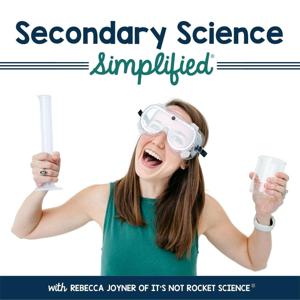


As science teachers, or teachers in general, we tend to have the mindset of doing things in our classroom the way we were taught, the way our department runs things, or what our colleague down the hall does. But if you really think about the reason behind what you’re doing, what you normally do might change. That’s exactly what happened with formal lab reports in my classroom. In this episode, I’m sharing why I ditched formal lab reports and how that decision impacted me and my students.
When I started to examine why I was assigning formal lab reports, I realized I was doing them for all the wrong reasons. So, when I finally made the decision to ditch them altogether, it greatly benefited my students and me. The pressure was off, and labs started to become enjoyable again, along with many other positive benefits. And since students weren’t getting critical thinking and scientific writing skills from the formal lab reports, I incorporated supplemental activities that provided students opportunities to practice those skills.
I’m aware that some science teachers feel very strongly about doing formal lab reports, and this might be a controversial episode, but for me, they didn’t serve a purpose in my classroom anymore. By ditching formal lab reports, it transformed the culture on lab days while still finding ways for students to practice skills that will help and support them later in their educational career. So whether you continue to do formal lab reports in your science classes or not, I hope this episode encourages you to make appropriate changes that are best for you and your students!
Resources Mentioned:
Show Notes: https://itsnotrocketscienceclassroom.com/episode105
If you are looking for a FUN and FREE way to engage your students this October, leading up to Halloween, you NEED to grab my 4 FREE Halloween science resources - one for biology, one for chemistry, one for physics, and one for anatomy - that you can do with your students now through the end of the month. Grab them at https://itsnotrocketscienceclassroom.com/halloween/
After we teach a unit, what typically comes immediately after are summative assessments, and there are a lot of different types. Last week, I talked about authentic assessments, which still assess student learning but in a non-traditional way. And even though I value that type of assessment, I still believe in taking traditional tests. In today’s episode, I’m sharing how to use your unit test to prepare your students for taking any future standardized test.
Giving traditional summative assessments does provide useful information for the teacher, such as personal benchmarks and self-reflection on teaching concepts. But it also benefits students as they learn valuable test-taking strategies for when they take standardized tests or other forms of assessments throughout their educational journey. The five tips I share will specifically help your students with standardized tests as they take your unit tests.
Taking summative assessments is completely valuable to both teachers and students, so it’s important to highlight the benefits and show that test-taking skills and strategies are valuable. By giving unit tests, you are supporting students and building those skills needed to take standardized tests in the future.
Resources Mentioned:
Show Notes: https://itsnotrocketscienceclassroom.com/episode104
If you are looking for a FUN and FREE way to engage your students this October, leading up to Halloween, you NEED to grab my 4 FREE Halloween science resources - one for biology, one for chemistry, one for physics, and one for anatomy - that you can do with your students now through the end of the month. Grab them at https://itsnotrocketscienceclassroom.com/halloween/
If you ask any student what they didn’t like about school, I bet assessments would be toward the top of their list. But what if you could create assessments that students actually enjoyed and liked? Okay, well, maybe that’s going too far, but you can definitely create assessments that are the best representation of their knowledge. I call those authentic assessments. In today’s episode, I’m going to share why I incorporate non-traditional assessments and four practical tips on how to implement them in your own classroom.
Authentic assessments might be a new term, so I help break down what I mean and how it directly impacts students in a positive way. Additionally, I give reasons why authentic assessments should be used, especially in relation to expressing what students know in a way that’s more than multiple choice and memorization. Likewise, when it comes to implementation, keeping the whole child in mind, along with their qualities, is why they’re at the forefront of my mind.
With midterm exams, semester exams on the horizon, and other exams in your class, now seemed like a good time to discuss assessments. And while traditional assessments are necessary at times, I encourage you to think outside the box and give your students the opportunity to demonstrate their knowledge through authentic assessments. Stay tuned to next week’s episode for more on this topic as we continue our mini-series on summative assessments!
Resources Mentioned:
Show Notes: https://itsnotrocketscienceclassroom.com/episode103
If you are looking for a FUN and FREE way to engage your students this October, leading up to Halloween, you NEED to grab my 4 FREE Halloween science resources - one for biology, one for chemistry, one for physics, and one for anatomy - that you can do with your students now through the end of the month. Grab them at https://itsnotrocketscienceclassroom.com/halloween/
All month long, I’ve been diving into the most difficult topics to teach in each of the science disciplines, and we have finally made it to the last discipline - physics. I love all things science, but physics is not a discipline I have a lot of experience in. So instead, I decided to bring on a listener of the podcast who is knowledgeable and has experience teaching physics. Laura Preiser is my guest on this episode and is sharing the two topics that are difficult for teachers and students and tips and advice for teaching each.
As Laura identifies waves and kinematics as the most difficult topics to teach in physics, she also shares various activities, labs, and general tips that make these two topics engaging, fun, and enjoyable for her students and herself. By making small changes to the way topics are taught and the timing of when they’re taught, it can make a huge difference in how a student feels about the topic.
With the help of Laura, we have concluded our series that tackles the most difficult topics to teach in each discipline while also sharing advice and tips that make the topics in those disciplines engaging for teachers and students. Make sure to listen or revisit any of the other episodes on biology, chemistry, and anatomy!
Resources Mentioned:
Show Notes: https://itsnotrocketscienceclassroom.com/episode102
If you are looking for a FUN and FREE way to engage your students this October, leading up to Halloween, you NEED to grab my 4 FREE Halloween science resources - one for biology, one for chemistry, one for physics, and one for anatomy - that you can do with your students now through the end of the month. Grab them at https://itsnotrocketscienceclassroom.com/halloween/
When I decided to do this series, I knew exactly what I was going to discuss when it came to the difficulties of teaching chemistry. Students get overwhelmed by all the math and more intense content that comes with this science discipline, particularly teaching stoichiometry. However, there are several things you can do to ease their stress and make this unit fun for your students. So, in today’s episode, I’m sharing 6 tips for teaching stoichiometry in your chemistry class.
There are a lot of concepts in chemistry that are difficult for students to grasp and understand, which is why it’s important to bring these up early or before you teach the content. Not only does this provide multiple opportunities to practice, but when it’s mentioned in the content, they already have seen it before. Additionally, teaching chemistry is more than just content. It’s teaching students problem-solving and critical thinking skills. And one of the best ways to achieve this is by incorporating real-world scenarios, labs, and activities in order for them to see the connection.
Even though your students may be apprehensive about the chemistry content, there are still things you can do to help alleviate and diminish their stress. By implementing these 6 tips and other pieces of advice, I hope to encourage you that teaching stoichiometry to your students will be fun and academic at the same time. Tune in next week for the last episode in the series about the difficult topics teaching physics.
Resources Mentioned:
Show Notes: https://itsnotrocketscienceclassroom.com/episode101
If you are looking for a FUN and FREE way to engage your students this October, leading up to Halloween, you NEED to grab my 4 FREE Halloween science resources - one for biology, one for chemistry, one for physics, and one for anatomy - that you can do with your students now through the end of the month. Grab them at https://itsnotrocketscienceclassroom.com/halloween/
I’m doing a happy dance because it’s my 100th episode! Y’all, I can’t believe I’ve been supporting and sharing my thoughts, ideas, and resources with you for almost two years. Just like when I celebrated 50 episodes, I’m doing another special “Ask me anything” episode.
I constantly get questions ranging from work, personal, curriculum, management, and more. And since I love connecting and supporting teachers, I knew answering all your questions was how I wanted to celebrate! I answer all your questions about maternity leave prep, group work, supporting ELs, absences, curriculum writing, and more. So take a listen to a fun episode that celebrates 100 episodes!
Want to continue the celebration? I’m incredibly thankful to you, my listeners of Secondary Science Simplified, and would love to have you leave a rating or review of this podcast! Your review and support means so much to me.
Resources Mentioned:
Show Notes: https://itsnotrocketscienceclassroom.com/episode100
If you are looking for a FUN and FREE way to engage your students this October, leading up to Halloween, you NEED to grab my 4 FREE Halloween science resources - one for biology, one for chemistry, one for physics, and one for anatomy - that you can do with your students now through the end of the month. Grab them at https://itsnotrocketscienceclassroom.com/halloween/
We are starting week two of our difficult topics to teach with the different science disciplines. Last week’s episode, Episode 98, focused on biology and biochemical reactions. But this week, I’m focusing on anatomy! Since there’s a lot of content to cover in this subject and each teacher differs in what they choose to teach, that makes it difficult to decide what the most difficult topic to teach is. With the help of my listeners, I’m focusing on five tips on how to teach the nervous and endocrine systems in your anatomy class.
As I mentioned, there’s a lot of diversity in how a teacher approaches teaching anatomy in their classroom, but just like with teaching biology, I encourage you to focus on the big picture. Each of the five tips that I share assists in that overarching idea and showcases how both the nervous and endocrine systems work together.
Both of these systems also spark curiosity among students, which leads to them asking a lot of questions. Although this is a great thing and piques their interest, it can be overwhelming for you. Therefore, some of my tips focus on providing students with the opportunity to be responsible for their own research. This idea creates a space where they can answer their own questions while you highlight the main topics.
The nervous and endocrine systems can be overwhelming to teach, but I hope that my tips and ideas help motivate and excite you about approaching these topics in your anatomy class. In two weeks, I’ll come back to this series with the last two science disciplines, but next week will be a special episode. It’s my 100th episode, so be sure to tune in for an episode where you get to ask me anything!
Resources Mentioned:
Show Notes: https://itsnotrocketscienceclassroom.com/episode99
If you are looking for a FUN and FREE way to engage your students this October, leading up to Halloween, you NEED to grab my 4 FREE Halloween science resources - one for biology, one for chemistry, one for physics, and one for anatomy - that you can do with your students now through the end of the month. Grab them at https://itsnotrocketscienceclassroom.com/halloween/
Welcome to fall, y’all! We just wrapped up our Summer of Podcast PD, where we tackled curriculum design, classroom management, grading strategies, and so much more. But with a new season comes a new series. With so many of our recent topics involving general classroom tips, I decided it was time to focus on more content-specific topics for each science discipline. So, biology teachers, this one’s for you! I’m sharing biology’s most difficult topic and tips for teaching it in your classroom.
With the help of my own personal experience and the responses I get from reacting with my audience on various social platforms, I determined some controversial aspects of teaching biochemical reactions. Therefore, each of my five tips highlights ways to keep the focus on the big picture and bring in ways to make the information stick with your students. I love creating resources and activities that are memorable for students, all of which I share and discuss in the episode.
In every content area, there’s a topic that reigns difficult for either you or your students. However, it’s all about finding ways to make connections, engagement opportunities, and creating meaningful activities. By implementing my five tips for teaching biochemical reactions, it’ll make this challenging topic more manageable!
Resources Mentioned:
Show Notes: https://itsnotrocketscienceclassroom.com/episode98
If you are looking for a FUN and FREE way to engage your students this October, leading up to Halloween, you NEED to grab my 4 FREE Halloween science resources - one for biology, one for chemistry, one for physics, and one for anatomy - that you can do with your students now through the end of the month. Grab them at https://itsnotrocketscienceclassroom.com/halloween/
Over this past month, I’ve been sharing my thoughts, practices, and strategies surrounding the topic of grading. You’ve probably realized how passionate I am about this topic because it’s something that I believe will give you more balance in your life between school and your personal life. And who doesn’t want that?! To wrap up this series, I’m sharing my own personal grading strategy and tips to help accomplish my grading goals.
Many teachers talk about the amount of time they spend grading student work but fail to have a strategy for minimizing that time. Spending time thinking about your personal grading strategy helps you be more intentional about decreasing the time you spend grading. In order to do that, it’s important to identify two key principles on which all your grading decisions are based.
So, how do you accomplish those grading principles? That’s where my 6 grading tips come into play. Each tip keeps students’ learning at the forefront while making sure your classroom remains equitable. Not only do these tips help minimize time spent grading, but also provide more freedom for differentiation, feedback, and immediate adjustments to your lessons.
Having a ton of assignments to grade can be overwhelming to teachers. However, if you create a personal grading strategy that aligns with your key principles, you won’t feel stressed from grading, and you’ll have a better work-life balance.
Resources Mentioned:
Show Notes: https://itsnotrocketscienceclassroom.com/episode97
If you are looking for a FUN and FREE way to engage your students this October, leading up to Halloween, you NEED to grab my 4 FREE Halloween science resources - one for biology, one for chemistry, one for physics, and one for anatomy - that you can do with your students now through the end of the month. Grab them at https://itsnotrocketscienceclassroom.com/halloween/
Remember the days when you were in school and thought, When I’m a teacher, I’m NEVER going to do this! But then you become a teacher and do exactly what you said you weren’t going to do. Don’t worry, I’m guilty of this too. As soon as I became a teacher, I followed suit with the cycle of assigning homework in my class. However, I had a mindset shift to where now I’m a huge advocate for not assigning homework.
I know for some, this sounds crazy! Most of you probably have a list of questions that include how do you do this, what are the benefits, and how will I know if my students are understanding the concept? And while those are all valid questions, I’ve got answers for you! In today’s episode, I’m sharing why I chose not to assign homework, my strategy in doing so, and the 6 results I learned that may surprise you.
Since not assigning homework is hard for us to grasp, I ask one simple question that asks you to reflect on the meaning of the homework you assign. Once I was truly honest with myself, the decision to not assign homework became easy. With a few tweaks to my lesson plans, pacing, and instructional time, the need for homework became nonexistent. Plus, this new change had a positive impact on my students’ motivation, focus, and academic success in my class.
I acknowledge that making this type of change in your classroom can be scary and, honestly, not for everyone. However, my goal is to provide you with a new perspective and approach to how you view and implement grading in your class. When I stopped making homework a habit in my class, it was transformative for both me and my students, and I know it will be for you and yours, too!
Resources Mentioned:
Show Notes: https://itsnotrocketscienceclassroom.com/episode96
If you are looking for a FUN and FREE way to engage your students this October, leading up to Halloween, you NEED to grab my 4 FREE Halloween science resources - one for biology, one for chemistry, one for physics, and one for anatomy - that you can do with your students now through the end of the month. Grab them at https://itsnotrocketscienceclassroom.com/halloween/
From the publisher's feed

43,827 Listeners
26,829 Listeners

2,479 Listeners
2,417 Listeners

4,913 Listeners
2,087 Listeners
12,180 Listeners

6,696 Listeners

56,449 Listeners
8,098 Listeners

6,375 Listeners

814 Listeners
7,516 Listeners
39,377 Listeners

7,200 Listeners