
Sign up to save your podcasts
Or



As we face the crises of our time, don’t walk away from the sacred vision of America or the ones whose sacrifices have consecrated the creeds of our nation.
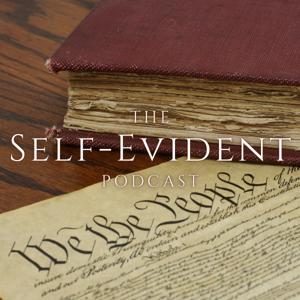
Welcome to the second episode of the Self-Evident, a podcast about first principles, hosted on Substack along with the From the Hawk’s Nest newsletter.
Self-Evident is currently available on Stitcher, Apple Podcasts, and Spotify.
Episode Transcript
Hello folks, my name is Justin Stapley, and welcome to the second episode of Self-Evident, a podcast about first principles. Today, I’d like to discuss what is probably the most disturbing image I’ve seen in recent weeks. As many of you know, our country has been rocked by ethnic tensions in the wake of the terrible murder of George Floyd last month. The video of the sickening, unlawful use of force that took his life has erupted into a sea of discontent. While many have protested peacefully and in good faith, there are others who have engaged in unlawful acts of violence, vandalism, and occupation.
While the videos and images of flames, blood, and vulgar messages have been deeply disturbing, the most disturbing thing I’ve yet seen is a little sign placed on a concrete barrier in the streets of Seattle, “You are now leaving the USA.”
Given that this podcast is where I try and discuss the first principles of the American republic, it goes without saying that when any of my fellow Americans have reached a point where they want to create a place where they can leave the United States of America, it leaves me more than a little disheartened.
Taking a Knee
I think, too often, we approach politics based on what we see as wrong in society and then angrily demand change at the expense of everything else. Rare are the moments when we take a step back from what we see as the bad that history has handed down to us and take stock of the good we have been blessed with.
Every now and then, we face those poignant moments when we are forced to reconcile how we thought the world was with how it actually is. Injustice and cruelty survive and thrive despite our best efforts because the world remains inhabited by the fallen creatures we call humanity.
In these moments, it is right and proper to mourn for our country. But in our mourning, let us never turn towards disparagement. If we must take a knee, so be it. But let it truly be out of mourning and not out of spite. Let us rise from our grieving posture and rejoice to live in a land whose foundation allows us to work out our disagreements as fellow citizens and not as warring combatants.
Let us find ways to workout whatever crises we face by building upon what came before and joining together to become yet another generation of Americans who answer the call to carry the torch of liberty a little farther, and more fully recognize the “promissory note” of America’s founding.
But most important of all, let’s make sure that in facing the difficulties of today, we don’t tear down the gains made by those who came before us, nor belittle their legacy.
The Promissory Note of America’s Founding
In many ways, those occupying the city blocks in Seattle who, apparently, no longer wish to be Americans have exiled themselves from their own land when those who came before them fought so hard to take their rightful place in it.
A moment ago, I mentioned the “promissory note” of America’s founding. That term is from Dr. King’s historic “I Have a Dream” speech, given on the steps of the Lincoln Memorial in 1963. It is a speech that has always moved me greatly. And, in light of the present crisis and, especially in reflection of that sign in the streets of Seattle, it seems to be a speech we should revisit.
For, while some seem to signal they want to leave the USA, Dr. King refused “to believe that the bank of justice is bankrupt.” He “refused to believe there are insufficient funds in the great vaults of opportunity of this nation.”
He said that “even though we face the difficulties of today and tomorrow, I still have a dream. It is a dream deeply rooted in the American dream.”
Dr. King’s dream is rooted in the American dream because, as he said, “When the architects of our republic wrote the magnificent words of the Constitution and the Declaration of Independence, they were signing a promissory note to which every American was to fall heir.”
Rather than reject America or America’s creeds, Dr. King had a dream that “one day this nation will rise up and live out the true meaning of its creed.”
And so, Dr. King stood in our nation’s capital and declared,
“I have a dream that one day on the red hills of Georgia, the sons of former slaves and the sons of former slave owners will be able to sit down together at the table of brotherhood.
“I have a dream that my four little children will one day live in a nation where they will not be judged by the color of their skin but by the content of their character.
“I have a dream that one day... little black boys and black girls will be able to join hands with little white boys and white girls as sisters and brothers.
“This is our hope, and this is the faith...With this faith, we will be able to hew out of the mountain of despair a stone of hope. With this faith, we will be able to transform the jangling discords of our nation into a beautiful symphony of brotherhood. With this faith, we will be able to work together, to pray together, to struggle together...to stand up for freedom together.”
“And this will be the day -- this will be the day when all of God's children will be able to sing with new meaning:
“My country 'tis of thee, sweet land of liberty, of thee I sing. Land where my fathers died, land of the Pilgrim's pride, From every mountainside, let freedom ring!”
A New Birth of Freedom
Both Dr. King and the President whose memorial he chose to stand before as he delivered his sacred words, were martyrs for liberty whose blood calls out from the ground not for vengeance or for the abandonment of our nation’s legacy, but for a new birth of freedom.
Memorial Day was not so long ago. And while we specifically remember those who have served in uniform for our country, I have often chosen to remember all those who have sacrificed and fought for our freedom.
Each year I set aside a few minutes to read the powerful but surprisingly brief words of the Gettysburg Address. I am always impressed by Lincoln’s ability to, in so few words, deliver something so profound and so timeless.
And I think that while Lincoln’s words were spoken at the dedication of a specific battlefield, they applied to so many believers in freedom across our nation’s history.
America is not just a place. America is definitely not the cauldron of sin so many today think it is, the place some people want to leave, or tear down, or whose history should be forgotten or rewritten. America is not defined by those who failed to live up to its creeds but by the brave men of Lincoln’s address and the brave souls of men and women across the history of our nation who have not only hallowed the places where they labored in sweat, blood, and tears but who have hallowed the idea that is America until it has become much more than just an idea.
In many ways, America is a creed, a faith, and a gospel. Not in a religious sense, but in the sense that we are a nation founded, not on the arbitrary notions of border, language, or race, but on ideals, principles, and values that have been consecrated by millions of sung and unsung patriots who have not shied away from the struggle of preserving and realizing the founding vision.
From the soldiers who stepped into the hellfire of German bullets at Normandy to the Americans who marched on Selma and into a hell storm of their own, the sacrifices made in the name of this vision we call America are beyond our capacity to comprehend.
There are many Americans who, today, want to walk away from a nation they see as steeped in the stain of slavery, of Jim Crow, of segregation, of lynchings and beatings and hatred and cruelty.
But they would also be walking away from a nation whose first martyr was an African American killed in the Boston Massacre. They would be walking away from a nation whose abolitionist movement defied unjust laws and helped thousands escape slavery. They would be walking away from the 54th Massachusetts who proudly wore the uniform of their country and charged fearlessly into the jaws of death to show they were no longer slaves but Americans. And, they would be walking away from Dr. King and his generation, who fought so hard to take their rightful place in a country conceived in liberty so that their posterity, so that this generation, could live the American dream.
It’s true that there are many things that aren’t as they should be. We find ourselves once more in one of those times where our creeds feel hollow and the dream feels out of reach.
Today, we are engaged in a struggle. Armies are not clashing in a field far away in storms of gunfire and showers of lead. We wage war upon each other with the crack of words and the sharpness of our tongues. We stand in open conflict with each other in a war of rhetoric, whose fields of battle are our homes, our streets, and our halls of government. In the callous and bitter treatment of fellow Americans, we have each become casualties.
But is the test put to our generation any different? Are we not today faced with the very real question of whether a nation conceived in liberty and dedicated to the proposition that all men are created equal can endure in this modern world? Shall we answer the challenges of our time any differently than those who came before?
As Lincoln suggests, the cause of liberty is an unfinished work. As Dr. King tells us, we have a “promissory note” that needs fulfilling. It falls to each generation to ensure liberty’s flame does not go out while carrying the torch a little farther.
We neither honor the memory of those whose sacrifices laid a foundation upon which we stand nor create a better world for those who have yet to come into it, by throwing liberty’s torch upon the ground and writing off our country or its institutions as beyond saving.
No matter our race or our creed, let those who are yet touched by the words of Dr. King and Abraham Lincoln answer their challenge.
Let us highly resolve that those who have struggled in life and in death to preserve and realize the promissory note of the founding vision did not do so in vain. Together, let us seek a new birth of freedom. Let us answer the call to struggle with the full measure of devotion to keep the ideals, principles, and values of our nation’s story from perishing in the hearts of our own people.
Thank you for listening to another brief yet poignant episode of Self-Evident. I have to admit, it took more than a few recordings to get this own out. This episode was quite emotional for me.
If you liked what you heard today, be sure to subscribe and offer a review of the podcast. I encourage you to also check out my writing and the writing of other liberty-minded Americans, or to submit your own thoughts, at TheLibertyHawk.com, that’s TheLibertyHawk.com and to consider subscribing to my bi-weekly newsletter From the Hawk’s Nest. You can find me on both Facebook and Twitter and can also email me anytime at [email protected].
Stay free my friends.
Explaining the zero-sum game that American politics has devolved into using a little bit of ‘80s pop culture.
Welcome to the first episode of the Self-Evident, a podcast about first principles, hosted on Substack along with the From the Hawk’s Nest newsletter.
Self-Evident is currently available on Stitcher, Apple Podcasts, and Spotify.
Episode Transcript
Hello folks, my name is Justin Stapley, and welcome to the first episode of Self-Evident, a podcast about first principles. Some of you may have been reading my work as a writer for quite some time and others may have listened to my previous podcast endeavors. Others, I assume, well I hope, are new listeners who are open to the perspective I’m going to try and present in this podcast.
This podcast isn’t going to be about electoral politics, partisan bickering, or the hysterics of the culture war. It is my sincere hope that I can find a way to rise above all of that and do what little I can to bring a discussion on the first principles of the American republic into the conversation.
But before I get knee-deep in the primordial soup of America’s great experiment in self-governance, I had better discuss why I’ve chosen not to continue my previous podcast project, the New Centrist.
The Untimely End of the New Centrist Podcast
I have, unfortunately, discovered that the premise upon which the New Centrist podcast was founded on was overly optimistic. The perspective I had was that America’s two mainstream political parties had migrated to the margins and left a traditionally-minded political center without a voice. While this perspective remains true in many ways, I came to also discover general political dysfunction across the board, even in the purported center of American politics.
If there is a constituency for founding principles, or a "new center" as I had envisioned, it’s shockingly small in the face of the anxieties and agitations presented by presidential electoral politics in what has clearly become a Progressive Democracy.
The Imperial Presidency has become the most consequential of political footballs, and the passions of the general electorate seem too hotly stoked by the contest for its control for principles, ideals, or values to be a present consideration.
The self-evident truths of classically liberal governance have become all but forgotten.
Specifically, anxieties have become so centralized in the specific person of Donald Trump, few have demonstrated the broader vision necessary to understand that nationalism and populism, the embryos of totalitarianism and fascism, are the inevitable results of central planning.
Our present dysfunction is the inevitable state of dystopia and decay that represents the final result of a century-long doomed attempt to create a progressive utopia.
It has been my woeful observation that there is simply no constituency for a "return to normal" in terms of the health of our Constitutional Republic because there are relatively few who understand what normal actually looks like.
We are fallen from the founding ideals of the republic in heart, mind, and soul.
With this new understanding of our present situation, I was forced to retire the short-lived “New Centrist” podcast.
This new podcast, Self-Evident, is my attempt to embark on a new project to reassert and reaffirm the first principles of our republic that we have forgotten and communicate to a lost generation the values, ideals, and principles of the republic they have inherited.
I fully understand and am painfully aware of how difficult this journey is going to be. Our nation is currently engaged in all the rancor, excitement, and hysteria of an election year. Since I have chosen to reject the choice between nationalism and progressivism, as represented by Trump and Biden, and since there is currently no viable, principled option able to slice through the hyper-partisan fog, I will probably be accused often of muddying the waters without offering an alternative. So be it. If attempting to illuminate the self-evident truths of our republic’s foundation “muddies the water” then it only speaks to how very lost we all are.
Shall We Play a Game?
So, if I’m not going to throw my weight behind some politician and wave their banner in yet another “consequential” election year, what exactly am I trying to accomplish?
I am going to play tic-tac-toe.
You heard me right. Tic-tac-toe.
Pop-culture and 80s nerds who saw the name of this episode might have an idea of what I’m getting at. For those who have no clue, let’s talk Matthew Broderick.
Now, I wasn’t born until 1987. I have no memory of the cold war or even the Berlin Wall coming down. I have faint memories of my dad getting orders to ship to Desert Storm before he got stood down, but by then the world was already a very different place. Without growing up facing the very real possibility of thermonuclear war, it’s hard for me to appreciate the terror my parents’ generation lived with for decades.
But I caught a glimpse of what the world went through when, as a kid, I watched WarGames for the first time.
For those who are unfamiliar with WarGames, it’s a 1983 movie about a young hacker who unwittingly hacks into a government computer system and starts playing a game with an artificial intelligence. He doesn’t know that the AI is actually in charge of America’s nuclear arsenal.
The hacker, played by Matthew Broderick, plays what he thinks is a computer game as the Soviet Union in a Global Thermonuclear War scenario. The AI reacts in real-time, not understanding the difference between reality and simulation.
Long story short, spoilers to follow, the situation escalates towards Armageddon as the AI is determined to instigate a nuclear war and “win the game.”
It isn’t until Broderick’s character has the AI play a game of tic-tac-toe with itself that the world is saved from the brink of disaster.
For those who don’t know, tic-tac-toe is impossible to win if every move is followed by a perfect response. By having the AI play tic-tac-toe, Broderick’s character taught it the concept of futility. After applying this new logic to its ongoing game of Thermonuclear War, the AI concludes there can be no winner in a scenario of mutually assured destruction.
The AI concludes that nuclear war is “a strange game” in which “the only winning move is not to play.”
Zero-Sum Games
What does any of this have to do with politics? Simple. Tic-tac-toe and nuclear war are both zero-sum games. The moves taken to win are always at the direct expense of the opponent, who responds in kind. The end game is always dysfunction and destruction.
The political contest in today’s America has devolved into a zero-sum game.
Over the last hundred years, we have created a presidency vastly more powerful than envisioned by America’s founding fathers. Congress has slowly ceded copious amounts of its own power to the executive branch, aiding in the creation of a vast bureaucracy that ultimately answers only to the President.
Through use of regulatory and emergency powers, the President can proceed almost with impunity in enacting national policy with or without the consent of Congress.
This reality has long been hidden by the fact that many Presidents have mostly chosen to keep their actions within established norms. But in the past 20 years, situations have arisen that have provided excuses to our current and recent presidents to break established norms and reveal just how powerful the presidency has become.
The American people have responded as should be expected. Recognizing just how consequential presidential elections have become, the various factions have engaged in a pitched battle for control of the presidency. And, from Obama’s “elections have consequences” and “bitter-clinger” comments to Trump’s constant ad-hominem attacks on anyone who doesn’t support him, it’s clear to see there is no respect for the rights or viewpoints of those who lose an election in our current climate.
In this zero-sum game of electoral politics, there’s never going to be a winner and each round is just going to bring us closer and closer to the brink of collapse.
The only way to win, the only way to save our republic, is to teach the American people the futility of the game they’re playing, to teach them not to play it anymore.
The only way I know to do that is to try and go back to the basics, to teach the tic-tac-toe reality of human behavior and why our nation’s government was established as a constitutionally limited republic with necessary checks and balances on power.
As the founders knew too well, men are not angels and never will be. Expecting a government to function justly when it must rely on the best men, and women, to always hold the reins of power is an exercise in futility.
Until balance in the system is restored, until the American people learn the futility of playing this partisan game of mutually assured destruction, the establishment of liberty and justice is never going come from simply removing whichever demagogue happens to have risen to the top of the ash heap.
And that’s going to do it for this brief but pointed episode. I hope you enjoyed this first foray into this new project. If you liked what you heard today, be sure to subscribe and offer a review of the podcast. I encourage you to also check out my writing and the writing of other liberty-minded Americans at TheLibertyHawk.com, that’s TheLibertyHawk.com and to consider subscribing to my bi-weekly newsletter From the Hawk’s Nest. You can find me on both Facebook and Twitter and can also email me anytime at [email protected].
Stay free my friends.
From the publisher's feed

5,098 Listeners

5,156 Listeners
4,876 Listeners

111,852 Listeners
6,598 Listeners

19 Listeners

3,341 Listeners
2,631 Listeners

1,927 Listeners

1,946 Listeners

3,186 Listeners