
Sign up to save your podcasts
Or

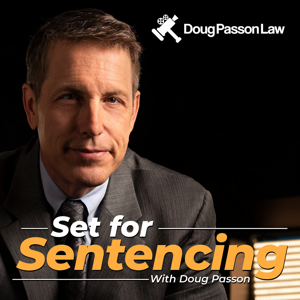


Two years ago I did a podcast on A/I with Patrick Barone and Randy Olson, telling them "hell no, I won't go." It made up facts and cases, it couldn't spell, and I was certain it could never touch the humanity at the heart of sentencing advocacy.
But the machines got smarter and the stakes got bigger.
Therefore, yours truly went from skeptic to true believer.
I am still trying to learn this mind-blowingly powerful tool, and to that end, I needed to have Patrick back to help us figure out how to use this thing ethically, effectively, and without getting banished from the garden.
Patrick Barone is a Michigan criminal defense attorney, a national speaker on DUI defense, psychodrama, and forensic science, and one of the sharpest voices in the defense bar on AI. We get into questions typical A/I discussions often miss:
⚖️ Is "check your work" really the whole ethics lesson? ⚖️ Are you risking your duty of competence if you refuse to learn AI? ⚖️ Is the paid version of your favorite chatbot confidential enough for client files? ⚖️ What happens when the body cam drafts the police report, and why your discovery demands need a rewrite today. ⚖️ Why your client's late-night chat with "the Law Offices of ChatGPT" can be catastrophic. ⚖️ Why nobody should ever use AI to write a sentencing letter.
Then things get weird. For the first time in Set for Sentencing history, AI itself joins as a guest to grill Patrick, and I ask it the big one: is AI going to kill us all? The answer will send a chill down your spine.
LINKS:
Patrick's Substack: https://substack.com/@patrickbarone Patrick's NACDL articles: DOWNLOAD LINK ON SHOWNOTES: www.setforsentencing.com/podcast/AIrevisited Ep. 88, The Artificial Lawyer: The Artificial Lawyer: A Debate About the Usefulness of A/I in the Legal Arena - Set for Sentencing by Doug Passon Law
Over a million Americans face sentencing every year, and no case has put the question of criminal responsibility on trial like the Lindsay Clancy case. The country watched a Massachusetts jury weigh whether a mother in the grip of severe postpartum psychosis could be held criminally responsible for the unthinkable, and after 85 witnesses and 36 hours of deliberation, eleven jurors voted not guilty by reason of insanity.
But one holdout refused to apply the law, forcing a mistrial and exposing everything the public gets wrong about the insanity defense: that it is easy, that it is common, that "not guilty" means walking free.
Therefore, Doug sits down with nationally recognized trial lawyer Nellie King, past president of NACDL and a defender with multiple NGRI verdicts in double homicide cases, to break down what really happens after an insanity verdict, why these defenses are raised in less than 1% of felony cases, and why this trial shines a hot pink spotlight on how America fails women's mental health.
In This Episode:
LINKS:
NELLIE KING WEBSITE: West Palm Beach, FL Criminal Defense Lawyers & Law Firm - Law Offices of Nellie L. King
NACDL - 2026 Fall Meeting & Seminar (MENTAL HEALTH - BEYOND TEH DIAGNOSIS -- OCT 7-10)
When someone pleads guilty to intentionally killing another person, with premeditation, in broad daylight, it's hard to imagine anything other than a life sentence.
But that's not the end of the story for Luigi Mangione, because his federal guilty plea is a "no agreements" plea. That means no sentencing stipulations, no mandatory minimums, and full rights to appeal. Perhaps most important, the mitigation story is not yet fully told. All of this means there's still a chance he avoids going to prison for life.
Doug Passon and Mark Allenbaugh break down the actual guideline math, the mitigation case nobody's seen yet, the disputed "insurance denied his claims" narrative, and — with a bottle of tequila on the line — their predictions for what Mangione's sentence and placement will actually look like.
In this episode:
Links:
Prison isn't meant to be easy and being inside is punishment. If every incarcerated human has a fair designation process, safe infrastructure, and meaningful programming, then safety and rehabilitation happens.
But in two stunning developments, two things are now unequivocally clear: the facilities are crumbling, and the designation process can now be weaponized by the DOJ.
A quietly updated BOP policy now gives DOJ explicit authority to override its own classification system and place any inmate anywhere — a power first exposed by the Ghislaine Maxwell transfer. At the same time, the Bureau announced a wave of facility closures so poorly managed it tried to shut down a prison that doesn't exist, all while sitting on a $4 billion maintenance backlog and shrinking access to the programs that actually reduce sentences.
In the one ray of hope, BOP announces that tablets are coming soon. This will increase programming, visitation and leisure opportunities for inmates.
In this episode, Doug Passon sits down with sentencing expert Mark Allenbaugh and BOP insider Walt Pavlo (prisonology.com, Forbes) to break down all three developments.
IN THIS EPISODE:
• 03:00: BOP designation policy 5100.08 and the DOJ putting its thumb on the scale for good and for evil;
• 05:06: The Ghislaine Maxwell transfer: from low-security sex offender unit to a camp;
• 18:38: Whose job is it to fix BOP capacity? Congress and the U.S. Sentencing Commission both take the blame;
• 22:04: Practice pointer: get prosecutors on record at sentencing about designation interference;
• 30:07: BOP tries to close a facility that doesn't exist — and one that's been closed for years
• 34:03: The $4 billion deferred maintenance backlog, explained
• 44:09: The tablet rollout: Walt Pavlo's Forbes take on "one of the most important reforms in years"
LINKS: prisonology.com
Federal Bureau Of Prisons Rolling Out E-Tablets
Ideally, every sentence serves to promote respect for the law. But in an age of the most lawless DOJ in American history – respect for the law is a dead letter. The sentencing of Judge Hannah Dugan is the most recent example of a how a weaponized DOJ is built for retribution, not justice.
Doug Passon and sentencing stats expert Mark Allenbaugh conduct one of their famous "sentencing post-mortems", dissecting every aspect of Judge Dugan's sentencing. She avoided a prison cell, but her life is forever changed.
The question that should be hanging over every judge in the country right now: who's next to get "Hannah Duganed"?
In This Episode:
LINK: Original Dugan Pod: For My Enemies, the Law - Set for Sentencing by Doug Passon Law
Ambassador John Bolton pled guilty last week to mishandling classified information, and the plea includes a stipulation that if he receives prison, the term is no more than five years. On paper, this agreement reads like a win.
But the plea isn't the paper that matters most, because the same week Bolton signed his plea, Acting U.S. Attorney Todd Blanche quietly issued a policy formalizing something no DOJ has ever done: proclaimed express authority to override the Bureau of Prisons and personally decide where an inmate will serve their sentence.
Therefore, the wall between prosecution and punishment is now officially obliterated. Trump doesn't just decide who gets charged. Now, through Todd Blanche, he decides where you rot.
Only the sentencing judge has the power to save him from this possible fate, by imposing a non-custodial sentence. The only question now is -- will he do it?
IN THIS EPISODE:
LINK:
RECENT CHANGE TO BOP PLACEMENT POLICY:
🎙️ NEW EPISODE: The Supreme Court just moved the goalposts on federal sentencing — and the next AG fight starts now.
If federal defendants could trust that pleading guilty meant a predictable outcome, then the system would actually function the way it's sold to them. ⚖️
But SCOTUS just complicated that bargain. In Hemani, the Court reined in prosecutions under the felon-drug-gun statute. In Hunter, it cracked open appeal waivers for the first time — ruling 8-1 that a waiver is unenforceable when it produces a "miscarriage of justice." Because for years, prosecutors have leaned on waivers as ironclad, and defense lawyers have had almost no recourse when judges get sentencing wrong after the deal is signed.
Therefore this matters for every plea negotiation going forward — and it lands right as the fight over who runs DOJ heats up. Todd Blanche, Trump's former personal lawyer and current Acting AG, has his Senate confirmation hearing set for July 15-16. If you care about who's setting charging and sentencing policy nationwide, now's the moment to make some noise. 🔊
#FederalSentencing #SCOTUS #CriminalJustice #PleaBargain #SecondAmendment #AppealWaiver #ToddBlanche #DOJ #SentencingReform #SetForSentencing
LINKS:
Liz Oyer's Substack on Todd Blanche: It's Time for We the People to Take on Todd Blanche
Set For Sentencing Podcasts on Hunter Biden:
Ep. 57: "Diversion Perversion" https://youtu.be/cSo6Y-PF78s?si=GjXg8U3PcX4ZmSlM
Ep. 64: Too Cute By Half: Why Hunter's Plea Went South: https://youtu.be/sWEzwKLQCoo?si=1Hl_oXIJoU9cgAh4
Ep. 92: (Livestream Bonus!) Hunter Biden Edition: https://www.youtube.com/live/B3VL-cJlXSo?si=Ga9WQ4N6h3clr3gb
With the First Step Act of 2018 came the great hope of expanded grounds and use of "Compassionate Release." Judges were offered the promise of wider discretion to give deserving clients a second look at sentencing.
But, the Supreme Court just made compassionate release a whole lot harder to get, because in two back-to-back decisions — Fernandez and Rutherford — the Court slammed the door on two of the most frequently used grounds for eligibility.
In this episode, Passon convenes two of the sharpest minds in federal sentencing — regular guest Mark Allenbaugh and returning star Prof. Doug Berman — for a deep-dive reaction. Together, we break down what each case actually holds, where the majority reasoning goes wrong, why the dissents matter, and — critically — what still works. Because even though it seems the door is shrinking--- it hasn't closed.
If you litigate compassionate release, this episode is required listening!
IN THIS EPISODE:
LINKS:
Sentencing Law and Policy – A new home for SL&P (Berman's Blog)
A great substack where Prof. Berman frequently contributes: Sentencing Matters Substack | DAB | Substack
On that note, here's a great SM Substack piece from today on this very issue: https://open.substack.com/pub/sentencing/p/textualism-in-name-policymaking-in?r=1f0z1k&utm_campaign=post&utm_medium=email
Link to Judge Block's Book, A Second Chance: A Federal Judge Decides Who Deserves It, on Amazon: https://a.co/d/07xJD1zs
Drugs on the Docket, Season 3: Excited for start to Season Three of "Drugs on the Docket" podcast | Sentencing Law and Policy
Set for Sentencing is heading to Substack! We have not officially launched, but by all means, subscribe for future awesomeness coming down the pike: https://substack.com/@dougpassonlaw
It's hard to understand how someone like James Comey could be indicted for posting a picture of seashells on a beach. But, just when it seems like we arrived at the full-on DOJ "low-tide", Todd Blanche and J.D. Vance roll out the new "weaponization fund". Will it ever be safe to go back in the water?
In this episode of set for sentencing, Mark Allenbaugh and I tackle a number of subjects, with the Comey case being the centerpiece. There's something for everyone in this one, including:
IN THIS EPISODE:
OTHER LINKS:
In a recent episode, I did a deep dive into the difference between intellectual functioning and other brain deficits with neuropsychologist, Dr. Ted Lidsky: Atkins & The IQ Fallacy: Why IQ is Not a Reliable Measure of Culpability (with Dr. Ted Lidsky) - Set for Sentencing by Doug Passon Law
My practice includes a sub-specialty in "autism informed criminal defense." If you haven't seen my other podcasts and resources on this important, often misunderstood topic, please give it a look: Autism-Informed Criminal Defense - Doug Passon Law
The decision whether to enter into a plea agreement with the government/state is the most important choice a client will make.
But too many clients enter into bad pleas - ones that promise little and give up a lot. A client shouldn't have to settle for a plea that lacks real bite.
Therefore, in Part II of our plea agreements bonanza, we go through, point by point, the elements of what makes a good plea.
IN THIS EPISODE:
Here is a link to the trailer for the documentary, "Predators". This film takes a fresh look at the "To Catch a Predator" series, and asks hard questions about Hansen's motivations and methods, and how he ruined lives ruined for ratings. It does what criminal defense lawyers have to do every day, take a hugely reviled class of alleged offenders, and demonstrate that there is another side to the story.
From the publisher's feed

8,421 Listeners

3,469 Listeners

87,110 Listeners

111,876 Listeners

2,394 Listeners

32,253 Listeners

7,119 Listeners

12,509 Listeners

8,091 Listeners

5,757 Listeners

15,899 Listeners

10,728 Listeners
431 Listeners

6,917 Listeners
1,086 Listeners