
Sign up to save your podcasts
Or



Based on Podcast App listening data
On the morning of Monday 12 December 1988, three trains collided on the approaches to London's Clapham Junction station, killing 35 people and injuring 484 others.
It was the height of the morning rush hour. Thousands of commuters were travelling towards London Waterloo, relying on one of Britain's busiest railway networks to carry them safely into the capital.
The 07:18 service from Basingstoke had been brought to a stand on the Up Main line after its driver witnessed a signal unexpectedly change from green to red.
Behind it, a twelve-car passenger train from Poole was approaching at speed. Its driver had received no warning that the line ahead was obstructed.
The resulting collision devastated the leading coaches of the Poole train and threw wreckage into the path of a third train travelling in the opposite direction.
In this first episode of our three-part series examining the Clapham Junction rail disaster, we reconstruct the events of that December morning.
We follow the journeys of the three trains, examine the circumstances surrounding the collisions, and explore the extraordinary emergency response that brought railway staff, emergency services, local residents and schoolchildren together in an enormous rescue operation.
But the collision also raised a deeply troubling question. How could a railway signalling system, specifically designed to keep trains safely separated, allow one train to proceed towards another occupying the same section of track?
The answer would reveal failures extending far beyond the railway cutting at Clapham Junction.
This is Part One of a three-part Signals to Danger series examining the Clapham Junction railway disaster of 1988.
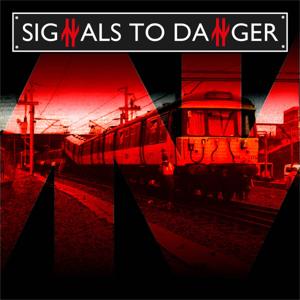
Signals to Danger is a UK railway history and safety podcast exploring rail accidents, incidents and the investigations that followed them. From historic railway disasters to modern rail safety and current events, each episode looks beyond what happened to understand why it happened, what was learned and how those lessons continue to shape the railway today.
Opening: Epic Motivation by Aylex — freetouse.com
Additional music and closing credits: The Long Dark by Scott Buckley — scottbuckley.com.au
The Long Dark by Scott Buckley is licensed under Creative Commons Attribution 4.0 International (CC BY 4.0).
Support the podcast and help make future episodes possible through Patreon.
Follow Signals to Danger on social media for railway history, safety explainers and updates on new episodes.
Hosted on Acast. See acast.com/privacy for more information.
On the night of 5 July 1978, passengers boarded the overnight sleeper service from Penzance to London Paddington, expecting to wake the following morning as their train approached the capital.
But in the early hours of 6 July, as the train approached Taunton in Somerset, a fire developed aboard one of its sleeping carriages.
By the time railway staff became aware of the danger, smoke and toxic gases had already spread through the sleeping accommodation, exposing passengers who were asleep in their individual compartments.
The train was brought to a stand short of Taunton station, where passengers, railway staff, local residents and emergency responders confronted a rapidly developing emergency.
Twelve people would ultimately lose their lives.
In this episode of Signals to Danger, we examine the events aboard the sleeper, the remarkable accounts of those who escaped, and the investigation undertaken by Major A. B. G. King of Her Majesty's Railway Inspectorate.
We explore how bags of bed linen stored against an electric heater caused the fire, how the carriage's ventilation arrangements contributed to the danger, and why the systems intended to protect sleeping passengers proved inadequate.
The investigation would reveal shortcomings in established working practices, fire detection, staff training and emergency arrangements.
But perhaps its most important lesson concerned something much broader: the risks which can emerge when equipment changes, but the practices surrounding it do not.
Research and sources
This episode draws principally upon Major A. B. G. King's official investigation, Report on the Fire that occurred in a Sleeping-Car Train on 6th July 1978 at Taunton in the Western Region, British Railways, together with historical railway material and contemporary accounts.
Find more episodes and information at https://signalstodanger.com
Follow Signals to Danger on Facebook, TikTok and X (@signalstodanger), or email [email protected].
To support the podcast and listen ad-free through Patreon, visit the support page at https://signalstodanger.com
OPENING CREDITS
Music track: Epic Motivation by Aylex
Source: https://freetouse.com/music
Free To Use Music for Video
END CREDITS
Music track: Saved by Brothers by Aylex
Source: https://freetouse.com/music
Free Background Music for Video
Signals to Danger is a UK railway history and safety podcast exploring rail accidents, incidents and the investigations that followed them. From historic railway disasters to modern rail safety and current events, each episode looks beyond what happened to understand why it happened, what was learned and how those lessons continue to shape the railway today.
Hosted on Acast. See acast.com/privacy for more information.
Moving freight by rail sounds straightforward: choose a wagon, load it up and send it on its way. But behind an uneventful arrival lies a system of engineering decisions, examinations, handling restrictions and communication.
Following our episodes on Linslade and Surbiton, this time we follow an imaginary track panel from loading to destination. How do we choose a suitable wagon? What keeps its load in place? Why can shunting compromise an otherwise secure arrangement, and how do we establish that it will fit along its route?
Drawing on those two accidents, alongside incidents at Basford Hall and Reading West, we explore loading patterns, freight train preparation, gauging and the detection of problems during a journey.
Above all, we examine the gap between having safety arrangements written down and making them work in practice. Because keeping freight safe involves much more than keeping the train on time.
Find more episodes and information at https://signalstodanger.com
Follow Signals to Danger on Facebook, TikTok and X (@signalstodanger), or email [email protected].
To support the podcast and listen ad-free through Patreon, visit the support page at https://signalstodanger.com
OPENING CREDITS
Music track: Epic Motivation by Aylex
Source: https://freetouse.com/music
Free To Use Music for Video
END CREDITS
Music track: Saved by Brothers by Aylex
Source: https://freetouse.com/music
Free Background Music for Video
COVER PHOTOGRAPH
Steve Knight: https://www.flickr.com/photos/58415659@N00/51254064425/
Licensed under CC BY 2.0: https://creativecommons.org/licenses/by/2.0/
Cropped to square and overlaid with episode title and branding.
Signals to Danger is a UK railway history and safety podcast exploring rail accidents, incidents and the investigations that followed them. From historic railway disasters to modern rail safety and current events, each episode looks beyond what happened to understand why it happened, what was learned and how those lessons continue to shape the railway today.
Hosted on Acast. See acast.com/privacy for more information.
On 4 July 1971, a ballast train passing through Surbiton derailed into the path of a Portsmouth Harbour passenger service approaching at 72 miles an hour.
The collision left the leading passenger carriage on its side, damaged both trains and tore up the railway. Remarkably, nobody lost their life.
But why had an empty wagon in the middle of the ballast train left the rails?
This time on Signals to Danger, we follow the investigation from the wreckage at Surbiton back to the sidings at Clapham Junction. Marks on rails and buffers revealed a dangerous condition which could travel with a train—and the checks which might have stopped it reaching the main line.
Investigation report: https://www.railwaysarchive.co.uk/docsummary.php?docID=1128
OPENING CREDITS
Music track: Epic Motivation by Aylex
Source: https://freetouse.com/music
Free To Use Music for Video
END CREDITS
Music track: Saved by Brothers by Aylex
Source: https://freetouse.com/music
Free Background Music for Video
Signals to Danger is a UK railway history and safety podcast exploring rail accidents, incidents and the investigations that followed them. From historic railway disasters to modern rail safety and current events, each episode looks beyond what happened to understand why it happened, what was learned and how those lessons continue to shape the railway today.
Hosted on Acast. See acast.com/privacy for more information.
Bedford: What We Know and What We Don’t
On 19 June 2026, two passenger trains collided near Elstow, south of Bedford. Driver Shaun Burton lost his life, and at least 160 people were injured.
RAIB has now published its interim report. In this Rail Safety Review, we examine the evidence released so far: an unexpected AWS warning at a green signal, a following train passing that same signal at red, and the collision and emergency response that followed.
We explain how AWS and TPWS work, the protection arrangements at signal WH154, and the difficulties staff faced when the collision left them unable to make railway emergency calls using GSM-R.
This is an ongoing investigation. The interim report provides a clearer account of what happened, but it does not establish the final explanation of why. Throughout the episode, we distinguish the recorded evidence from the questions RAIB is still investigating.
Official interim report:
https://assets.publishing.service.gov.uk/media/6abd271555bc01d752a7f17f/IR012026_261001_Elstow.pdf
OPENING CREDITS
Music track: Epic Motivation by Aylex
Source: https://freetouse.com/music
Free To Use Music for Video
END CREDITS
Music track: Saved by Brothers by Aylex
Source: https://freetouse.com/music
Free Background Music for Video
Signals to Danger is a UK railway history and safety podcast exploring rail accidents, incidents and the investigations that followed them. From historic railway disasters to modern rail safety and current events, each episode looks beyond what happened to understand why it happened, what was learned and how those lessons continue to shape the railway today.
Hosted on Acast. See acast.com/privacy for more information.
In the early hours of 9 December 1982, a late-running sleeper service departed London Euston for Glasgow.
Ahead of it, a freight train had passed through Linslade Tunnel carrying prefabricated railway components. One of those components had moved beyond the loading gauge, struck the tunnel portal and fallen onto an adjacent line.
A routine decision then placed the sleeper directly in its path.
This episode examines the derailment at Linslade Tunnel, the death of driver William Plummer and the investigation which traced the accident back through a displaced load, an undetected obstruction and a prohibited shunting practice which had become accepted at one of Britain’s largest marshalling yards.
OPENING CREDITS
Music track: Epic Motivation by Aylex
Source: https://freetouse.com/music
Free To Use Music for Video
END CREDITS
Music track: Saved by Brothers by Aylex
Source: https://freetouse.com/music
Free Background Music for Video
Signals to Danger is a UK railway history and safety podcast exploring rail accidents, incidents and the investigations that followed them. From historic railway disasters to modern rail safety and current events, each episode looks beyond what happened to understand why it happened, what was learned and how those lessons continue to shape the railway today.
Hosted on Acast. See acast.com/privacy for more information.
“The wrong kind of leaves” has become one of the railway’s most frequently mocked excuses—but leaves on the line create a genuine and potentially serious safety problem.
In this episode of Signals to Danger, we explore how fallen leaves are transformed into a stubborn layer of contamination on the railhead, why that can leave trains struggling to accelerate or stop, and how it can interfere with the systems used to detect where trains are.
We also look at the railway’s multilayered response, including autumn planning, vegetation management, railhead treatment trains, Sandite, traction-gel applicators, onboard sanding, defensive driving and seasonal timetables.
Finally, three incidents at Stonegate, Esher and Salisbury Tunnel Junction demonstrate how low adhesion can escalate from a missed station to signals passed at danger—and ultimately to a collision.
OPENING CREDITS
Music track: Epic Motivation by Aylex
Source: https://freetouse.com/music
Free To Use Music for Video
END CREDITS
Music track: Saved by Brothers by Aylex
Source: https://freetouse.com/music
Free Background Music for Video
Signals to Danger is a UK railway history and safety podcast exploring rail accidents, incidents and the investigations that followed them. From historic railway disasters to modern rail safety and current events, each episode looks beyond what happened to understand why it happened, what was learned and how those lessons continue to shape the railway today.
Hosted on Acast. See acast.com/privacy for more information.
On 21 October 2024, two Transport for Wales trains collided head-on near Talerddig on the Cambrian Line.
It was a route controlled using ETCS — one of the most advanced signalling systems in use on the British railway — yet the accident began with one of the oldest challenges the railway has ever faced: low wheel–rail adhesion.
In this episode of Signals to Danger, we reconstruct the events leading to the collision and examine how train 1J25 came to pass the end of its movement authority and enter the single-line section beyond Talerddig loop.
We look at how ETCS controls trains on the Cambrian Line, what happens when a train is unable to stop where the system expects it to, and how investigators approached the question of why the braking performance seen that evening was so far from normal.
The investigation takes us into wheel–rail adhesion, wheel slide protection, sanding systems, driver decision-making and communication between railway staff, as well as the limits of even highly sophisticated signalling technology when several layers of protection begin to weaken at the same time.
Finally, we examine the findings and recommendations made by the Rail Accident Investigation Branch, and what Talerddig tells us about the relationship between modern railway technology and the physical railway beneath it.
New technology. Old problems.
OPENING CREDITS
Music track: Epic Motivation by Aylex
Source: https://freetouse.com/music
Free To Use Music for Video
END CREDITS
Music track: Saved by Brothers by Aylex
Source: https://freetouse.com/music
Free Background Music for Video
Signals to Danger is a UK railway history and safety podcast exploring rail accidents, incidents and the investigations that followed them. From historic railway disasters to modern rail safety and current events, each episode looks beyond what happened to understand why it happened, what was learned and how those lessons continue to shape the railway today.
Hosted on Acast. See acast.com/privacy for more information.
How does the railway find a crack hidden inside a solid steel rail—and what happens when it does?
In this Rail Safety Review, we explore how rails become damaged, the development of metal fatigue and rolling-contact fatigue, and the overlapping safeguards used to prevent defects becoming broken rails.
From visual inspections and reports of rough riding to ultrasonic testing, Network Rail’s measurement trains and the Flying Banana, we follow a defect from detection and assessment through to monitoring, grinding or complete rail replacement.
There’s also a review of the latest rail safety news, including developments following the derailments at Lewes and Wickford, the fatal level-crossing collision near Burscough and the RAIB’s safety digest concerning equipment left on the railway at Queen’s Park.
OPENING CREDITS
Music track: Epic Motivation by Aylex
Source: https://freetouse.com/music
Free To Use Music for Video
Signals to Danger is a UK railway history and safety podcast exploring rail accidents, incidents and the investigations that followed them. From historic railway disasters to modern rail safety and current events, each episode looks beyond what happened to understand why it happened, what was learned and how those lessons continue to shape the railway today.
Hosted on Acast. See acast.com/privacy for more information.
On the evening of 5 November 1967, a packed passenger train was making an otherwise ordinary journey from Hastings towards London Charing Cross when, on the approach to Hither Green, its third coach suddenly derailed at around 70 mph.
What followed became one of Britain's deadliest post-war railway accidents. Coaches overturned, the train was scattered across more than half a kilometre of railway and 49 lost their lives.
In this episode of Signals to Danger, we reconstruct the Hither Green disaster and ask a deceptively simple question: why do trains derail?
From wheel and rail dynamics to suspension, track condition and obstructions, we explore the different ways a train can leave the rails before following investigators to the small fatigue crack which ultimately revealed what had gone wrong at Hither Green — and the changes to rail inspection and infrastructure which followed.
OPENING CREDITS
Music track: Epic Motivation by Aylex
Source: https://freetouse.com/music
Free To Use Music for Video
END CREDITS
Music track: Saved by Brothers by Aylex
Source: https://freetouse.com/music
Free Background Music for Video
Signals to Danger is a UK railway history and safety podcast exploring rail accidents, incidents and the investigations that followed them. From historic railway disasters to modern rail safety and current events, each episode looks beyond what happened to understand why it happened, what was learned and how those lessons continue to shape the railway today.
Hosted on Acast. See acast.com/privacy for more information.
From the publisher's feed
Hosted on Acast. See acast.com/privacy for more information.
Ranked by our users in the last 21 days

192 Listeners

375 Listeners

4,744 Listeners
466 Listeners
1,389 Listeners

10 Listeners

302 Listeners

15,525 Listeners
2,485 Listeners

3,142 Listeners
339 Listeners

1,152 Listeners
85 Listeners
7 Listeners

1,073 Listeners