
Sign up to save your podcasts
Or

By Daniel Fox


4.7
2020 ratings


The podcast currently has 78 episodes available.
The most played episodes among Podcast App listeners.
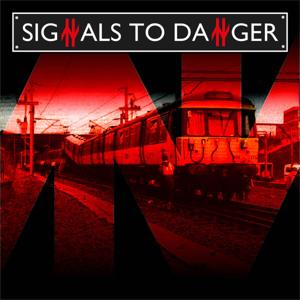
How does the railway find a crack hidden inside a solid steel rail—and what happens when it does? In this Rail Safety Review, we explore how rails become damaged, the development of metal fatigue and rolling-contact fatigue, and the overlapping safeguards used to prevent defects becoming broken rails. From visual inspections and reports of rough riding to ultrasonic testing, Network Rail’s measurement trains and the Flying Banana, we follow a defect from detection and assessment through to monitoring, grinding or complete rail replacement. There’s also a review of the latest rail safety news, including developments following the derailments at Lewes and Wickford, the fatal level-crossing collision near Burscough and the RAIB’s safety digest concerning equipment left on the railway at Queen’s Park. OPENING CREDITS Music track: Epic Motivation by Aylex Source: https://freetouse.com/music Free To Use Music for Video Signals to Danger is a UK railway history and safety podcast exploring rail accidents, incidents and the investigations that followed them. From historic railway disasters to modern rail safety and current events, each episode looks beyond what happened to understand why it happened, what was learned and how those lessons continue to shape the railway today. Hosted on Acast. See acast.com/privacy for more information.

On the evening of 5 November 1967, a packed passenger train was making an otherwise ordinary journey from Hastings towards London Charing Cross when, on the approach to Hither Green, its third coach suddenly derailed at around 70 mph. What followed became one of Britain's deadliest post-war railway accidents. Coaches overturned, the train was scattered across more than half a kilometre of railway and 49 lost their lives. In this episode of Signals to Danger, we reconstruct the Hither Green disaster and ask a deceptively simple question: why do trains derail? From wheel and rail dynamics to suspension, track condition and obstructions, we explore the different ways a train can leave the rails before following investigators to the small fatigue crack which ultimately revealed what had gone wrong at Hither Green — and the changes to rail inspection and infrastructure which followed. OPENING CREDITS Music track: Epic Motivation by Aylex Source: https://freetouse.com/music Free To Use Music for Video END CREDITS Music track: Saved by Brothers by Aylex Source: https://freetouse.com/music Free Background Music for Video Signals to Danger is a UK railway history and safety podcast exploring rail accidents, incidents and the investigations that followed them. From historic railway disasters to modern rail safety and current events, each episode looks beyond what happened to understand why it happened, what was learned and how those lessons continue to shape the railway today. Hosted on Acast. See acast.com/privacy for more information.
On 13 August 2026, Southern service 1F34 was approaching Lewes when the rear three vehicles of the eight-car train derailed and overturned on the railway embankment. A week on, the Rail Accident Investigation Branch has released an update providing our first detailed insight into what happened — and in this flash briefing, we take a look at what we know so far. We’ll examine the track geometry irregularity identified immediately before the derailment, reports of rough riding from other trains, the condition of the embankment, the exceptionally hot and dry weather, and the evidence RAIB is now analysing. Importantly, this isn't about deciding what caused the accident, this is a snapshot of what we know, what we don't yet know, and what the investigation will be looking at next. OPENING CREDITS Music track: Epic Motivation by Aylex Source: https://freetouse.com/music Free To Use Music for Video Hosted on Acast. See acast.com/privacy for more information.
“The wrong kind of leaves” has become one of the railway’s most frequently mocked excuses—but leaves on the line create a genuine and potentially serious safety problem. In this episode of Signals to Danger, we explore how fallen leaves are transformed into a stubborn layer of contamination on the railhead, why that can leave trains struggling to accelerate or stop, and how it can interfere with the systems used to detect where trains are. We also look at the railway’s multilayered response, including autumn planning, vegetation management, railhead treatment trains, Sandite, traction-gel applicators, onboard sanding, defensive driving and seasonal timetables. Finally, three incidents at Stonegate, Esher and Salisbury Tunnel Junction demonstrate how low adhesion can escalate from a missed station to signals passed at danger—and ultimately to a collision. OPENING CREDITS Music track: Epic Motivation by Aylex Source: https://freetouse.com/music Free To Use Music for Video END CREDITS Music track: Saved by Brothers by Aylex Source: https://freetouse.com/music Free Background Music for Video Signals to Danger is a UK railway history and safety podcast exploring rail accidents, incidents and the investigations that followed them. From historic railway disasters to modern rail safety and current events, each episode looks beyond what happened to understand why it happened, what was learned and how those lessons continue to shape the railway today. Hosted on Acast. See acast.com/privacy for more information.
On 21 October 2024, two Transport for Wales trains collided head-on near Talerddig on the Cambrian Line. It was a route controlled using ETCS — one of the most advanced signalling systems in use on the British railway — yet the accident began with one of the oldest challenges the railway has ever faced: low wheel–rail adhesion. In this episode of Signals to Danger, we reconstruct the events leading to the collision and examine how train 1J25 came to pass the end of its movement authority and enter the single-line section beyond Talerddig loop. We look at how ETCS controls trains on the Cambrian Line, what happens when a train is unable to stop where the system expects it to, and how investigators approached the question of why the braking performance seen that evening was so far from normal. The investigation takes us into wheel–rail adhesion, wheel slide protection, sanding systems, driver decision-making and communication between railway staff, as well as the limits of even highly sophisticated signalling technology when several layers of protection begin to weaken at the same time. Finally, we examine the findings and recommendations made by the Rail Accident Investigation Branch, and what Talerddig tells us about the relationship between modern railway technology and the physical railway beneath it. New technology. Old problems. OPENING CREDITS Music track: Epic Motivation by Aylex Source: https://freetouse.com/music Free To Use Music for Video END CREDITS Music track: Saved by Brothers by Aylex Source: https://freetouse.com/music Free Background Music for Video Signals to Danger is a UK railway history and safety podcast exploring rail accidents, incidents and the investigations that followed them. From historic railway disasters to modern rail safety and current events, each episode looks beyond what happened to understand why it happened, what was learned and how those lessons continue to shape the railway today. Hosted on Acast. See acast.com/privacy for more information.
The podcast currently has 78 episodes available.

222 Listeners
375 Listeners

4,748 Listeners

471 Listeners
1,445 Listeners

10 Listeners

304 Listeners

16,056 Listeners
2,548 Listeners

3,038 Listeners
347 Listeners

1,111 Listeners
86 Listeners
4 Listeners

1,118 Listeners