
Sign up to save your podcasts
Or




Based on Podcast App listening data
Tonight, we’ll read about the history of jewelry around the world, from “Jewels and the Woman” written by Marianne Ostier and published in 1958.
Ostier was the principal designer and artistic driving force behind Ostier Inc., the New York jewelry firm she founded in 1941 with her husband Oliver. Marianne was an accomplished artist of painting and sculpture when she married Oliver, a third-generation Austrian court jeweler. The couple emigrated to the United States following the Nazi annexation of Austria in 1938.
The majority of the firm’s output was bespoke jewelry for private clients with few pieces ever produced in quantity. As a result, Ostier’s work may be less well known today than some of their contemporaries, but at the time they were considered one of the finest jewelry houses in New York.
— read by N —
Sign up for Snoozecast+ to get expanded, ad-free access by going to snoozecast.com/plus!
Learn more about your ad choices. Visit megaphone.fm/adchoices
See Privacy Policy at https://art19.com/privacy and California Privacy Notice at https://art19.com/privacy#do-not-sell-my-info.
Tonight, we’ll read the next part to “Twenty Thousand Leagues Under the Sea,” a classic science fiction adventure novel by French writer Jules Verne.
In the last episode, Captain Nemo takes Aronnax on a tour of his private natural history museum. Nemo's cases are filled with rare specimens drawn from the seas of the world: corals, shells, starfish and lots of pearls. His collection is priceless.
As much as Aronnax enjoys all of this, he's keen to learn how the Nautilus itself is powered.
So Nemo sits him down to explain, seated from within his sparsely furnished captain’s quarters.
— read by N —
Sign up for Snoozecast+ to get expanded, ad-free access by going to snoozecast.com/plus!
Learn more about your ad choices. Visit megaphone.fm/adchoices
See Privacy Policy at https://art19.com/privacy and California Privacy Notice at https://art19.com/privacy#do-not-sell-my-info.
Tonight, we’ll rebroadcast the opening to “Washington Square”, written by Henry James and published in 1880. This episode originally aired on November 18, 2020.
The novel recounts the conflict between a dull but sweet daughter and her brilliant, unemotional father. The plot of the novel is based upon a true story told to James by his close friend, a British actress.
The book is often compared with Jane Austen's work (who of course, wrote “Pride and Prejudice”) for the clarity and grace of its prose and its intense focus on family relationships.
This is the second time Henry James is featured on Snoozecast. You can find “The Turn of the Screw” back in October 2019.
— read by V —
Sign up for Snoozecast+ to get expanded, ad-free access by going to snoozecast.com/plus!
Learn more about your ad choices. Visit megaphone.fm/adchoices
See Privacy Policy at https://art19.com/privacy and California Privacy Notice at https://art19.com/privacy#do-not-sell-my-info.
Tonight we’ll read another Australian fairy tale called “The Fairy City” written by Hume Cook and published in 1925.
You can certainly pick up straight away on this episode, however if you’d like to listen to the first chapter of “Australian Fairy Tales” please find “The Magic Well” which aired on October 19th, 2022.
James Newton Haxton Hume Cook, the author, was an Australian politician who served in Parliament for almost a decade.
This story features aspects of urban planning and civil engineering- a professional engineering discipline that deals with the design, construction, and maintenance of the physical and naturally built environment, including public works such as roads, bridges, canals, dams, airports and more. It is considered the second-oldest engineering discipline after military engineering,[3] and it is defined to distinguish non-military engineering from military engineering.
— read by V —
Sign up for Snoozecast+ to get expanded, ad-free access by going to snoozecast.com/plus!
Learn more about your ad choices. Visit megaphone.fm/adchoices
See Privacy Policy at https://art19.com/privacy and California Privacy Notice at https://art19.com/privacy#do-not-sell-my-info.
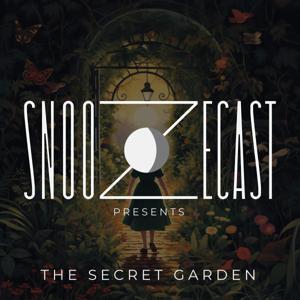
Tonight, we’ll read the next part to “The Secret Garden”, a novel by Frances Hodgson Burnett published in 1911.
In the last episode, Colin claims the secret garden as his own, and in doing so Colin chooses to follow in his mother's footsteps and dedicate himself to nature and happiness. He is inspired by Mary and Dickon, and decides to become a scientist who devotes his life to the study of Magic.
We will resume our story with a gathering of Ben, Dickon and Mary, lead by Colin. It is part lecture, part ministry, part mystical rite held in the secret garden.
— read by V —
Sign up for Snoozecast+ to get expanded, ad-free access by going to snoozecast.com/plus!
Learn more about your ad choices. Visit megaphone.fm/adchoices
See Privacy Policy at https://art19.com/privacy and California Privacy Notice at https://art19.com/privacy#do-not-sell-my-info.
Tonight, we’ll read about baking biscuits and gems from the “Civic League Cookbook” from North Dakota in 1913.
Gems are little muffin-like cakes that were popular in the nineteenth and early twentieth centuries. They were most often made using graham flour, and had very few other ingredients – some just required graham flour, water and salt.
Graham flour is named after Sylvester Graham , a minister who is considered one of America’s earliest and most vocal advocates of dietary reform. Foreshadowing the modern health food movement, he believed that natural foods in the purest form – whole grains, vegetables, fruits and nuts – were the pathway to a healthy life. Graham recommended using coarsely ground, whole-wheat flour to make bread, rather than white flour, which often contained chemical additives.
— read by N —
Sign up for Snoozecast+ to get expanded, ad-free access by going to snoozecast.com/plus!
Learn more about your ad choices. Visit megaphone.fm/adchoices
See Privacy Policy at https://art19.com/privacy and California Privacy Notice at https://art19.com/privacy#do-not-sell-my-info.
Tonight, for our final episode of this year’s spooky sleep story series, we’ll read “The Haunted Orchard” written by British author Richard Le Gallienne and published in 1912.
Born Richard Thomas Gallienne, the author changed his last name to “Le Gallienne” after college when he began working in an accountant’s office. Soon after he attended a lecture by Oscar Wilde, Le Gallienne abandoned his job to become a professional writer and poet. Five years later, he met Wilde, they had a brief affair and a longer friendship.
Le Gallienne married three times and had two children including famous and successful stage actress and director Eva Le Gallienne. After becoming a resident of the United States, he eventually settled in the French Riviera in the 1940s. During the war he refused to write propaganda for the local German and Italian authorities and, with no income, once collapsed in the street owing to hunger. He persevered, however, and continued to write into his 70s.
— read by V —
Sign up for Snoozecast+ to get expanded, ad-free access by going to snoozecast.com/plus!
Learn more about your ad choices. Visit megaphone.fm/adchoices
See Privacy Policy at https://art19.com/privacy and California Privacy Notice at https://art19.com/privacy#do-not-sell-my-info.
Tonight, we’ll read the next part to “Winnie-the-Pooh” a children’s story written by A.A. Milne and published in 1926. This collection of short stories features an anthropomorphic teddy bear, Winnie-the-Pooh, along with his friends Christopher Robin, Piglet, Eeyore, Owl, Rabbit, Kanga, and Roo.
In the previous episode, we read chapter four and the first half of chapter five, in which we are introduced to Eeyore, who has lost his tail, and Pooh finds one. Also, Piglet meets a Heffalump.
— read by V —
Sign up for Snoozecast+ to get expanded, ad-free access by going to snoozecast.com/plus!
Learn more about your ad choices. Visit megaphone.fm/adchoices
See Privacy Policy at https://art19.com/privacy and California Privacy Notice at https://art19.com/privacy#do-not-sell-my-info.
Tonight, we’ll read another excerpt from French writer Marcel Proust’s monumental “In Search of Lost Time” which is seven volumes long, and first published in 1913.
“In Search of Lost Time” follows the narrator's recollections and experiences in the late 19th-century and early 20th-century high-society France, while reflecting on the loss of time and lack of meaning in the world.
This series does not necessarily need to be followed in order. Rather than being plot driven, it is more of a meditation on memories, consciousness and ambiance. The first episode aired on May 9th, 2022, and is titled “Overture.” The second episode, “The Magic Lantern” aired on July 11, 2022. The third episode, “M. Swann” aired on September 12, 2022.
A madeleine de Proust is an expression used to describe smells, tastes, sounds or any sensations reminding you of your childhood or simply bringing back emotional memories from a long time ago.
— read by V —
Sign up for Snoozecast+ to get expanded, ad-free access by going to snoozecast.com/plus!
Learn more about your ad choices. Visit megaphone.fm/adchoices
See Privacy Policy at https://art19.com/privacy and California Privacy Notice at https://art19.com/privacy#do-not-sell-my-info.
Tonight, for our 600th episode, and the next in our October spooky sleep story series, we’ll read an excerpt from “The Castle of Otranto”, a novel by Horace Walpole. First published in 1764, it is generally regarded as the first gothic novel. Set in a haunted castle, the novel produced a new style that has endured ever since, and has shaped the modern-day aesthetic of the goth subculture.
Although in later editions of this novel’s publication the author acknowledged his authorship, in the first publication the story was purported to be a recently discovered ancient manuscript from the time of the Crusades.
Many years later it was discovered that the main character, Manfred, was inspired by the real medieval King of Sicily by that name. This historic Manfred is remembered for being noble, handsome and intellectual, along with being ex-communicated by three different popes.
This excerpt opens on a scene where Princess Isabella is fleeing through the castle from the wicked Manfred. He had recently asked her to marry him on the same evening her own fiance, Manfred’s own son, died by a giant helmet falling from the sky upon him.
— read by N —
Sign up for Snoozecast+ to get expanded, ad-free access by going to snoozecast.com/plus!
Learn more about your ad choices. Visit megaphone.fm/adchoices
See Privacy Policy at https://art19.com/privacy and California Privacy Notice at https://art19.com/privacy#do-not-sell-my-info.
From the publisher's feed
Snoozecast is the podcast designed to help you fall asleep.
Episodes air every Monday, Wednesday and Friday.
Learn about our premium listening options at
Ranked by our users in the last 21 days
1,261 Listeners

509 Listeners

913 Listeners

1,057 Listeners

1,456 Listeners

1,590 Listeners

349 Listeners

756 Listeners

3,357 Listeners

785 Listeners

611 Listeners

325 Listeners
71 Listeners

605 Listeners

20 Listeners

6 Listeners

3 Listeners

15 Listeners

2 Listeners
10 Listeners

18 Listeners

6 Listeners

1 Listeners
4 Listeners

3 Listeners

5 Listeners

8 Listeners
4 Listeners

0 Listeners

8 Listeners
0 Listeners