
Sign up to save your podcasts
Or




Based on Podcast App listening data
Tonight, we’ll read the next part to “The Secret Garden”, a novel by Frances Hodgson Burnett published in 1911.
If you’d like to listen to this story’s episodes in order, go to snoozecast.com/series.
In the last episode, Dickon comes to Misselthwaite Manor to meet Colin with Mary. The three children start devising their plan to covertly bring Colin into the secret garden. Mr. Roach, the head gardener, is ordered by Colin to be sure that all servants and groundskeepers are away at the times he decides to be pushed in his wheelchair outdoors with the children.
— read by V —
Sign up for Snoozecast+ to get expanded, ad-free access by going to snoozecast.com/plus!
Learn more about your ad choices. Visit megaphone.fm/adchoices
See Privacy Policy at https://art19.com/privacy and California Privacy Notice at https://art19.com/privacy#do-not-sell-my-info.
Tonight, we’ll read “The Cheap Flat”, a short story written by Agatha Christie and published in 1924 as part of her “Poirot Investigates” series.
In this story, Captain Hastings meets a couple at a party who have just rented a flat in a fashionable district for an implausibly cheap price. Poirot becomes intrigued and sets out to investigate.
If you enjoy this episode, be sure to listen to our first Poirot story, “The Western Star” which aired on June 8, 2022. We have also read from two of her novels as well- “The Mysterious Affair at Styles” in 2019 and “The Man in the Brown Suit” in 2021.
— read by N —
Sign up for Snoozecast+ to get expanded, ad-free access by going to snoozecast.com/plus!
Learn more about your ad choices. Visit megaphone.fm/adchoices
See Privacy Policy at https://art19.com/privacy and California Privacy Notice at https://art19.com/privacy#do-not-sell-my-info.
Tonight, we’ll read poems by John Keats starting with one titled “Sleep and Poetry.”
John Keats’ poems are a major part of English Romantic poetry. They portray settings loaded with symbolism and sensuality, and draw heavily on Greek and Roman myth along with romanticised tales of chivalry.
Keats died in 1821 at the young age of 25, having written the majority of his work in less than four years. In his lifetime, sales of Keats's three volumes of poetry probably amounted to only 200 copies. The compression of his poetic apprenticeship and maturity into so short a time is just one remarkable aspect of Keats's work.
Keats was convinced that he had made no mark in his lifetime. Aware that he was dying, he wrote "I have left no immortal work behind me – nothing to make my friends proud of my memory – but I have lov'd the principle of beauty in all things, and if I had had time I would have made myself remember'd."
Keats's ability and talent was acknowledged by several influential contemporary allies. His admirers praised him for having developed a style which was more heavily loaded with sensualities, more gorgeous in its effects, more voluptuously alive than any poet who had come before him. While not appreciated during his lifetime, he has gone on to become one of the most loved of the Romantic poets, and has provided inspiration to many authors after him.
— read by V —
Sign up for Snoozecast+ to get expanded, ad-free access by going to snoozecast.com/plus!
Learn more about your ad choices. Visit megaphone.fm/adchoices
See Privacy Policy at https://art19.com/privacy and California Privacy Notice at https://art19.com/privacy#do-not-sell-my-info.
Tonight, we’ll read the next part to “Winnie-the-Pooh” a children’s story written by A.A. Milne and published in 1926. This collection of short stories features an anthropomorphic teddy bear, Winnie-the-Pooh, along with his friends Christopher Robin, Piglet, Eeyore, Owl, Rabbit, Kanga, and Roo.
In the previous episode, we read chapter one, in which we were introduced to Winnie-the-Pooh and some bees, and the stories began. Pooh is all out of honey and thinks of the idea to steal some from the bees. To paraphrase Pooh: "That buzzing-noise means something…If there's a buzzing-noise, somebody's making a buzzing-noise, and the only reason for making a buzzing-noise that I know of is because you're a bee."
— read by V —
Sign up for Snoozecast+ to get expanded, ad-free access by going to snoozecast.com/plus!
Learn more about your ad choices. Visit megaphone.fm/adchoices
See Privacy Policy at https://art19.com/privacy and California Privacy Notice at https://art19.com/privacy#do-not-sell-my-info.
Tonight, we’ll read about the musical genius Franz Liszt as a child piano prodigy from the book “Life of Liszt” written by Ludwig Nohl.
Liszt was a Hungarian composer, pianist and teacher of the Romantic era. He gained renown during the early nineteenth century for his virtuoso skill as a pianist.
Since he often appeared three or four times a week in concert, it could be safe to assume that he appeared in public well over a thousand times during one eight year period.
During his virtuoso heyday, Liszt was described by the writer Hans Christian Andersen (who has written many fairy tales featured by Snoozecast) as a "slim young man...[with] dark hair hung around his pale face". He was seen as handsome by many, with a German poet writing concerning his showmanship during concerts: "How powerful, how shattering was his mere physical appearance".
— read by N —
Sign up for Snoozecast+ to get expanded, ad-free access by going to snoozecast.com/plus!
Learn more about your ad choices. Visit megaphone.fm/adchoices
See Privacy Policy at https://art19.com/privacy and California Privacy Notice at https://art19.com/privacy#do-not-sell-my-info.
Tonight, we’ll read the fairy tale “Felicia and the Pot of Pinks” written by Madame d’Aulnoy and found in the Blue Fairy Book edited by Andrew Lang.
The “pot of pinks” in this story refers to a type of dianthus flower know as “garden pinks.” Its name is not due to the color pink but rather to the serrated edges of the petals, which look like they were cut with pinking shears. In fact, the color pink may be derived from this particular flower.
If you enjoy this story, be sure to listen to our many other fairy tales written by Madame d’Aulnoy including The Yellow Dwarf, Princess Belle-Etoile, The White Cat and The White Doe.
— read by V —
Sign up for Snoozecast+ to get expanded, ad-free access by going to snoozecast.com/plus!
Learn more about your ad choices. Visit megaphone.fm/adchoices
See Privacy Policy at https://art19.com/privacy and California Privacy Notice at https://art19.com/privacy#do-not-sell-my-info.
Tonight, we shall read the next part of “Pride and Prejudice”, written by Jane Austen.
If you’d like to listen to this series in order, please go to snoozecast.com/series.
In the last episode, Darcy waits to find Elizabeth on a walk and gives her a letter of explanation. He answers Elizabeth's charges of misconduct toward both Jane and Wickham. He knew that Bingley was in love with Jane, but he detected no affection on her part and, given that, thought it unwise for Bingley to become attached to Elizabeth's family, with its improprieties and lack of wealth. In London, he joined with Caroline in convincing Bingley to give up the attachment. Darcy also confesses, with regret, to keeping Bingley from finding out that Jane was in London, too.
We will pick up in the letter where Darcy starts addressing Mr. Wickham to Elizabeth.
— read by V —
Sign up for Snoozecast+ to get expanded, ad-free access by going to snoozecast.com/plus!
Learn more about your ad choices. Visit megaphone.fm/adchoices
See Privacy Policy at https://art19.com/privacy and California Privacy Notice at https://art19.com/privacy#do-not-sell-my-info.
Tonight, we’ll read the opening to “The Moon Maid”, a fantasy novel written by Edgar Rice Burroughs and published in 1926.
This novel constitutes a future history, and in it Burroughs' vision of what the 20th century held in store for humanity, which could be considered a kind of retroactive alternate history. In Burroughs's vision, in 1967 the planetary rulers send a first manned spacecraft to the Moon—coinciding very near to the actual 1969 date of the Apollo 11 Moon landing. Of course, in Burrough’s version, the moon turns out to be teeming with life.
This is the second time Snoozecast has featured early science fiction from Burroughs. You can also listen to “A Princess of Mars” that aired on June 14, 2019.
— read by N —
Sign up for Snoozecast+ to get expanded, ad-free access by going to snoozecast.com/plus!
Learn more about your ad choices. Visit megaphone.fm/adchoices
See Privacy Policy at https://art19.com/privacy and California Privacy Notice at https://art19.com/privacy#do-not-sell-my-info.
Tonight, we’ll read another story from our King Arthur series. This one, “The Crowning of Arthur and the Sword Excalibur” comes from a book edited by Rupert S. Holland and published in 1919.
If you’d like to listen to this whole anthology easily in order, go to snoozecast.com/series.
Excalibur is the legendary sword of King Arthur, sometimes also attributed with magical powers or associated with the rightful sovereignty of Britain. Excalibur and the Sword in the Stone (the proof of Arthur's lineage) are in some versions said to be different, though in other incarnations they are either the same or at least share their name. Several similar swords and other weapons also appear in this and other legends.
Historically, a sword identified as Excalibur (or rather, Caliburn, at the time) was supposedly discovered during the purported exhumation of Arthur's grave at Glastonbury Abbey in the year 1191. That same year, either this or another sword claimed as Excalibur was given as a gift of goodwill by the English king Richard I of England to his ally the King of Sicily.
— read by V —
Sign up for Snoozecast+ to get expanded, ad-free access by going to snoozecast.com/plus!
Learn more about your ad choices. Visit megaphone.fm/adchoices
See Privacy Policy at https://art19.com/privacy and California Privacy Notice at https://art19.com/privacy#do-not-sell-my-info.
Tonight, we’ll read the next part to “Twenty Thousand Leagues Under the Sea,” a classic science fiction adventure novel by French writer Jules Verne.
In the last episode, the sailors on The Abraham Lincoln keep a keen eye on the water, searching for the sea monster. Every time someone thinks they might see something, a great rush of excitement washes over the ship, only to subside into disappointment shortly after. The ship spends three months in the deep Pacific, scouring every inch of the ocean. Eventually, Farragut announces that if the monster is still not found after three days, they will have to abandon the mission. They are about to turn back on the final day, when Ned Land, the harpoon leader, spots the object of their search.
— read by N —
Sign up for Snoozecast+ to get expanded, ad-free access by going to snoozecast.com/plus!
Learn more about your ad choices. Visit megaphone.fm/adchoices
See Privacy Policy at https://art19.com/privacy and California Privacy Notice at https://art19.com/privacy#do-not-sell-my-info.
From the publisher's feed
Snoozecast is the podcast designed to help you fall asleep.
Episodes air every Monday, Wednesday and Friday.
Learn about our premium listening options at
Ranked by our users in the last 21 days

1,261 Listeners

509 Listeners

913 Listeners

1,057 Listeners
1,456 Listeners

1,590 Listeners

349 Listeners

756 Listeners

3,357 Listeners

785 Listeners

611 Listeners

325 Listeners

71 Listeners

605 Listeners

20 Listeners

6 Listeners

3 Listeners
15 Listeners

2 Listeners
10 Listeners

18 Listeners
6 Listeners

1 Listeners
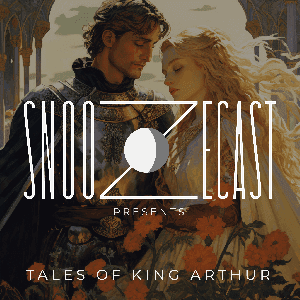
4 Listeners

3 Listeners
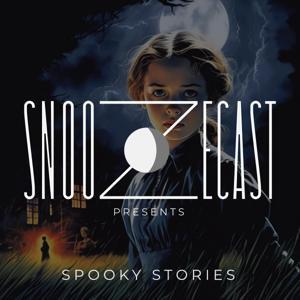
5 Listeners
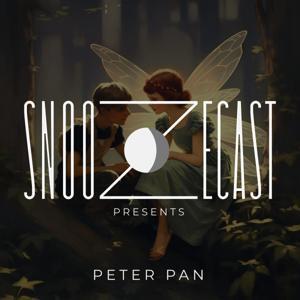
8 Listeners
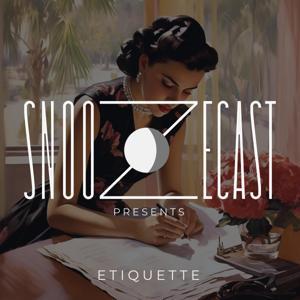
4 Listeners
0 Listeners

8 Listeners
0 Listeners