
Sign up to save your podcasts
Or



Based on Podcast App listening data
Tonight, we’ll read “St. Valentine’s Day” or “The Fair Maid of Perth” written by Sir Walter Scott and published in 1828 as part of the Waverly novels. Inspired by the strange, but historically true, story of the Battle of the North Inch, it is set in Scotland around 1400.
If you enjoy this episode, be sure to check out our other story taken from the Waverly series titled “The Maiden of the Mist” that aired on January 11, 2021.
— read by 'V' —
Sign up for Snoozecast+ to get expanded, ad-free access by going to snoozecast.com/plus!
Learn more about your ad choices. Visit megaphone.fm/adchoices
See Privacy Policy at https://art19.com/privacy and California Privacy Notice at https://art19.com/privacy#do-not-sell-my-info.
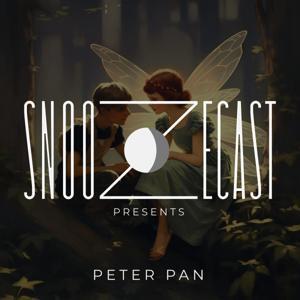
Tonight we shall read the next part to “Peter Pan”, the 1911 novel by Scottish novelist and playwright J.M. Barrie.
An easy way to listen to this continuing story in order is at snoozecast.com/series.
Peter Pan is a free-spirited and mischievous young boy who can fly and never grows up. He spends his never-ending childhood having adventures on the mythical island of Neverland as the leader of the Lost Boys, interacting with fairies, pirates, mermaids, Native Americans, and occasionally ordinary children from the world outside Neverland.
Peter Pan has become a cultural icon symbolizing youthful innocence and escapism. He must forget his own adventures and what he learns about the world in order to stay childlike. His name and playing the flute or pipes suggest the Greek god and mythological character Pan.
When we left off, Mrs. Darling waits patiently and sorrowfully for her children to return home, keeping the nursery window unlocked and opened just in case. Peter and Tinkerbell arrive with a devious plan to secretly close and lock the window, but at the last minute, Peter has a change of heart. The Darling children then fly home to their parents. Afterwards, the 6 lost boys make their appearance and ask if they can be adopted as well.
— read by 'V' —
Sign up for Snoozecast+ to get expanded, ad-free access by going to snoozecast.com/plus!
Learn more about your ad choices. Visit megaphone.fm/adchoices
See Privacy Policy at https://art19.com/privacy and California Privacy Notice at https://art19.com/privacy#do-not-sell-my-info.
Tonight, we’ll read a selection of sweetmeat recipes from “Miss Leslie’s New Cookery Book” published in 1857. A type of sugar confectionery, it is where the term ‘sweets’ comes from nowadays. It has nothing to do with animal flesh, as the Old English word ‘mete’ meant ‘food’ in general. In other words, we are talking about candy.
— read by 'V' —
Sign up for Snoozecast+ to get expanded, ad-free access by going to snoozecast.com/plus!
Learn more about your ad choices. Visit megaphone.fm/adchoices
See Privacy Policy at https://art19.com/privacy and California Privacy Notice at https://art19.com/privacy#do-not-sell-my-info.
Tonight, we’ll read an excerpt from “Great Expectations” that features the iconic character “Miss Havisham.”
A wealthy spinster, once jilted at the altar, who insists on wearing her wedding dress for the rest of her life, she is one of Dickens’s most Gothic characters. Miss Havisham lives in a ruined mansion with her adopted daughter, Estella. Dickens describes her as looking like "the witch of the place".
Although she has often been portrayed in film versions as elderly, Dickens's own notes indicate that she is not quite 40 years old at the start of the novel, and that her reclusive lifestyle without sunlight aged her.
— read by 'V' —
Sign up for Snoozecast+ to get expanded, ad-free access by going to snoozecast.com/plus!
Learn more about your ad choices. Visit megaphone.fm/adchoices
See Privacy Policy at https://art19.com/privacy and California Privacy Notice at https://art19.com/privacy#do-not-sell-my-info.
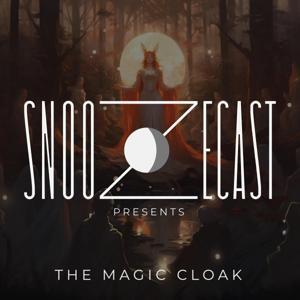
Tonight, we’ll read the final part to our “Magic Cloak” series, from the book “Queen Zixi of Ix, or The Story of the Magic Cloak”, a children's book written by L. Frank Baum and published in 1905.
If you’d like to listen to this continuing story easily in order, go to snoozecast.com/series.
In the last episode, Queen Zixi, King Bud, Princess Fluff and Aunt Rivette search the countryside for the missing cloak. They have to piece and sew the cloak together for it was cut up by a group of enthusiastic quilters, and are still missing one little piece. The group decides to regroup at Zixi’s palace and figure out what to do next.
— read by 'V' —
Sign up for Snoozecast+ to get expanded, ad-free access by going to snoozecast.com/plus!
Learn more about your ad choices. Visit megaphone.fm/adchoices
See Privacy Policy at https://art19.com/privacy and California Privacy Notice at https://art19.com/privacy#do-not-sell-my-info.
Tonight, we’ll read another excerpt from “The Wind in the Willows” by Kenneth Grahame, published in 1908.
This story centers around four small animals: Mole, Rat, Toad, and Badger. Their stories take place in the countryside of Edwardian England.
This series does not require you to follow a plot between episodes, however if you would like to start from the beginning and listen easily in order, go to snoozecast.com/series.
In this episode, Rat encounters a wayfarer, the Sea Rat, and invites him to lunch. The Sea Rat regails him with tales of maritime adventures and invites Rat to join him.
— read by 'V' —
Sign up for Snoozecast+ to get expanded, ad-free access by going to snoozecast.com/plus!
Learn more about your ad choices. Visit megaphone.fm/adchoices
See Privacy Policy at https://art19.com/privacy and California Privacy Notice at https://art19.com/privacy#do-not-sell-my-info.
Tonight, we’ll read more stories about cats written by English author and poet Edith Nesbit, published in 1899. If you enjoy this episode, be sure to check out the other “Cat Tales” episode that aired in September 2021, and also the fairy tale “The White Cat” that aired in July of 2020.
Nesbit wrote or collaborated on more than 60 books of children's literature under the name E. Nesbit, along with being a political activist.
— read by 'V' —
Sign up for Snoozecast+ to get expanded, ad-free access by going to snoozecast.com/plus!
Learn more about your ad choices. Visit megaphone.fm/adchoices
See Privacy Policy at https://art19.com/privacy and California Privacy Notice at https://art19.com/privacy#do-not-sell-my-info.
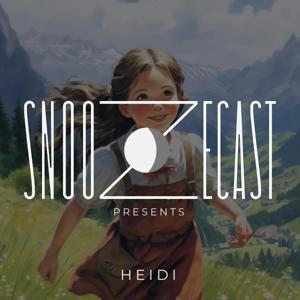
Tonight, we’ll read the final part to the classic children’s story “Heidi”, published in 1881 by Swiss author Johanna Spyri.
If you’d like to listen to this continuing story in order, go to snoozecast.com/series.
In the previous episode, Peter pushes Clara’s wheelchair down the mountainside and then has trouble with his guilty conscience. Enraptured with life on the mountainside, but without her chair, Clara finds the will to live a bigger life, and also the potential to walk towards it on her own.
— read by 'V' —
Sign up for Snoozecast+ to get expanded, ad-free access by going to snoozecast.com/plus!
Learn more about your ad choices. Visit megaphone.fm/adchoices
See Privacy Policy at https://art19.com/privacy and California Privacy Notice at https://art19.com/privacy#do-not-sell-my-info.
Tonight, we’ll read an excerpt from “The Adventures of Tom Sawyer” written by Mark Twain in 1876. It is a story about a boy growing up along the Mississippi River, often with his friend Huckleberry Finn.
Originally a commercial failure, the book ended up being the best selling of any of Twain's works during his lifetime, and is considered to be a masterpiece of American literature. It was also one of the first novels to be written on a typewriter.
— read by 'N' —
Sign up for Snoozecast+ to get expanded, ad-free access by going to snoozecast.com/plus!
Learn more about your ad choices. Visit megaphone.fm/adchoices
See Privacy Policy at https://art19.com/privacy and California Privacy Notice at https://art19.com/privacy#do-not-sell-my-info.
Tonight, we’ll read from “Culinary Herbs” by M.G. Kains, published in 1912.
Herbs are a widespread group of plants, excluding vegetables, with savory or aromatic properties that are used for flavoring and garnishing food, for medicinal purposes, or for fragrances. Herbs generally refer to the leafy green or flowering parts of a plant (either fresh or dried), while spices are usually dried and produced from other parts of the plant, including seeds, bark, roots and fruits.
— read by 'V' —
Sign up for Snoozecast+ to get expanded, ad-free access by going to snoozecast.com/plus!
Learn more about your ad choices. Visit megaphone.fm/adchoices
See Privacy Policy at https://art19.com/privacy and California Privacy Notice at https://art19.com/privacy#do-not-sell-my-info.
From the publisher's feed
Snoozecast is the podcast designed to help you fall asleep.
Episodes air every Monday, Wednesday and Friday.
Learn about our premium listening options at
Ranked by our users in the last 21 days

1,260 Listeners

506 Listeners

912 Listeners

1,057 Listeners
1,455 Listeners

1,590 Listeners

348 Listeners
757 Listeners
3,352 Listeners
786 Listeners
611 Listeners

325 Listeners

72 Listeners
607 Listeners

20 Listeners

6 Listeners
3 Listeners
15 Listeners
2 Listeners
10 Listeners
18 Listeners
6 Listeners
1 Listeners
4 Listeners

3 Listeners
5 Listeners
8 Listeners
4 Listeners
0 Listeners
8 Listeners
0 Listeners