
Sign up to save your podcasts
Or

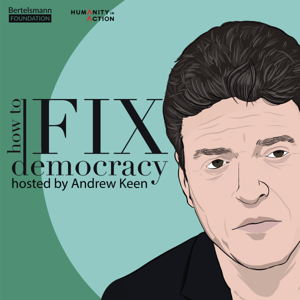

In this episode of How to Fix Democracy, we turn to Turkey to explore what democratic resilience like over the long arc of history. Joined by the political scientist Soli Oezel, the conversation traces more than a century of "bouts of freedom" punctuated by military interventions, constitutional resets, and shifting balances between state authority and popular will.
From the late Ottoman period to the present, Oezel examines how Turkey's political system has repeated oscillated between openness and control, highlighting the military's historical role as both guardian and disruptor of democracy, and the more recent shift toward a fully civilian, yet increasingly liberal, political order. Despite these tensions, one constant remains: the enduring importance of elections and the deep-rooted expectation among citizens that their voices should count.
The episode also probes deeper structural questions. Why have liberal democratic norms struggled to take hold? How do state-centric traditions, nationalism, and unresolved identity questions, particularly around the Kurdish issue, shape political life? And what explains the persistence of democratic aspirations even under pressure?
At its core, this conversation challenges a common assumption: that democracy's resilience is primarly institutional or cultural. Instead, Oezel argues that it hinges on something more tangible, whether democratic systems deliver economic security, opportunity, and a sense of fairness. When they do, they build legitimacy; when they don't, they risk erosion from within.
 View all episodes
 By Bertelsmann Foundation

4.9
1818 ratings
In this episode of How to Fix Democracy, we turn to Turkey to explore what democratic resilience like over the long arc of history. Joined by the political scientist Soli Oezel, the conversation traces more than a century of "bouts of freedom" punctuated by military interventions, constitutional resets, and shifting balances between state authority and popular will.
From the late Ottoman period to the present, Oezel examines how Turkey's political system has repeated oscillated between openness and control, highlighting the military's historical role as both guardian and disruptor of democracy, and the more recent shift toward a fully civilian, yet increasingly liberal, political order. Despite these tensions, one constant remains: the enduring importance of elections and the deep-rooted expectation among citizens that their voices should count.
The episode also probes deeper structural questions. Why have liberal democratic norms struggled to take hold? How do state-centric traditions, nationalism, and unresolved identity questions, particularly around the Kurdish issue, shape political life? And what explains the persistence of democratic aspirations even under pressure?
At its core, this conversation challenges a common assumption: that democracy's resilience is primarly institutional or cultural. Instead, Oezel argues that it hinges on something more tangible, whether democratic systems deliver economic security, opportunity, and a sense of fairness. When they do, they build legitimacy; when they don't, they risk erosion from within.

32,100 Listeners
48 Listeners

10 Listeners

87,529 Listeners

111,948 Listeners

18 Listeners
12,633 Listeners

6,089 Listeners
50,687 Listeners

15,950 Listeners

9,240 Listeners
2,608 Listeners

3,336 Listeners

3,483 Listeners

797 Listeners