
Sign up to save your podcasts
Or

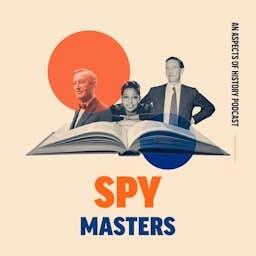


In this lively literary conversation, Antonia Senior and Paul Burke explore the fascinating world of spy and crime fiction — from the golden age of classic espionage novels to the digital dilemmas of modern spy thrillers. As Paul launches Aspects of Crime, a new magazine, and a platform for authors and readers, they discuss how technology reshapes the genre, why characters like Charlie Muffin and Frederick Forsythe still resonate, and how emerging writers are redefining the moral and political edges of spy literature today.
Expect deep dives into literary influences, lesser-known espionage gems, and the enduring tension between secrecy, betrayal, and morality that defines the best spy stories. Whether you love Le Carré, Deighton, Fleming, or new voices in espionage fiction, this episode offers both nostalgia and discovery for fans of intelligent thrillers.
🎙️ Key themes: spy fiction, crime fiction, book recommendations, espionage, modern literature, classic novels, emerging writers, book reviews, literary discussion
spy fiction podcast, crime fiction podcast, espionage literature, classic spy novels, modern spy thrillers, book review podcast, literary podcast, authors interview, Aspects of Crime, Charlie Muffin, Philip Marlowe, spy books, thriller writers, book discussion
Learn more about your ad choices. Visit podcastchoices.com/adchoices
In this episode, Antonia Senior speaks with journalist and author Jason Burke about The Revolutionists, and the extraordinary true story of Gunnar Ekberg — the Swedish spy who infiltrated radical left-wing movements in Europe during the late 1960s and early 1970s.
Ekberg witnessed first-hand a moment of enormous ideological energy: when secular, nationalist and progressive revolutionary groups believed they were the vanguard of global change. Embedded inside these movements, he saw their organising, their fervour, their drift toward violence — and ultimately, their decline.
But Ekberg’s story also marks the hinge-point in modern terrorism. As the decade unfolded, the revolutionary energy that once drove secular movements shifted dramatically. Islamism emerged as the dominant revolutionary force in the Middle East, while Western Europe’s security focus transformed as left-wing groups faded and jihadist networks rose.
Through Ekberg’s eyes — and Burke’s deep analysis — this conversation explores how ideology, violence and global power structures evolved, and why that shift still shapes the world we live in today.
terror history, Gunnar Ekberg, Jason Burke, The Revolutionists, 1970s radicalism, secular nationalism, Islamism, hijackings, European terrorism, Middle East extremism, podcast interview, history of terrorism.
If you enjoyed this conversation, please subscribe, rate us, and check the links below for Jason Burke’s book.
UK: https://amzn.eu/d/4R5tIYd
UK Independent Bookshop: https://uk.bookshop.org/p/books/the-revolutionists-the-story-of-the-extremists-who-hijacked-the-1970s-jason-burke/1c42ef7f8d866dbe?ean=9781847926067&next=t
https://uk.bookshop.org/p/books/the-revolutionists-the-story-of-the-extremists-who-hijacked-the-1970s-jason-burke/1c42ef7f8d866dbe?ean=9781847926067&next=t
Learn more about your ad choices. Visit podcastchoices.com/adchoices
In this episode of Spymasters, Antonia Senior speaks with bestselling historian Dr. Helen Fry about her riveting new book, The White Lady.
Set in German-occupied Belgium during World War I and World War II, Fry’s book uncovers the incredible true story of a secret spy network that risked everything to gather intelligence behind enemy lines. Together, Fry and Senior explore:
How ordinary women became extraordinary spies
The ingenious knitting codes and covert communication systems they used
The bravery of Thérèse de Radiguès
How these early networks inspired were remobilised in the run up to World War II
The untold stories of courage, deception, and sacrifice that shaped modern intelligence work
If you love stories of espionage, resistance networks, women in war, and WWI intelligence, this conversation is not to be missed.
📘 Buy Helen Fry’s The White Lady on Amazon:
https://www.amazon.co.uk/dp/1526779318
“Espionage was a family affair in many cases.”
“The genius of deception saved lives.”
“Bravery and sacrifice — the cost of freedom.”
00:00 — Introduction: Helen Fry and The White Lady
01:07 — The Espionage Networks of World War I
03:47 — The Knitting Women of Belgium
07:20 — The Consequences of Espionage
10:08 — Thérèse de Radiguès’s Heroism
13:41 — The Significance of the White Lady Network
15:56 — How Intelligence Shaped the War
19:33 — The Return of Resistance in WWII
23:45 — Thérèse’s Defiance Against the Gestapo
27:21 — The Legacy of Women in Espionage
31:22 — Closing Reflections
WWI espionage, Helen Fry, The White Lady, women spies, Belgian resistance, SOE, secret agents, female intelligence networks, World War I history, Spymasters podcast, Antonia West, hidden histories, British intelligence, resistance heroes
🔊 Sound Bites⏱️ Chapters🔎 Keywords
Learn more about your ad choices. Visit podcastchoices.com/adchoices
Join host Antonia Senior as she delves into the gripping world of espionage with author Merle Nygate. In this episode, they explore the challenges of writing a spy thriller set against the backdrop of real-world events, focusing on Nygate's latest novel, "The Protocols of Spying." Discover how the Mossad's London station grapples with intelligence failures and what lies ahead for its chief, Eli Amran, in a post-October 7th world. Don't miss this insightful conversation about the art of crafting a compelling spy narrative. Subscribe and follow for more engaging discussions on the world of spies.
Buy the novel: https://amzn.eu/d/4MhdKTb
Learn more about your ad choices. Visit podcastchoices.com/adchoices
In this episode of Spymasters, Antonia Senior interviews historian Roger Moorhouse about the Enigma code and its impact on naval warfare during World War II. The conversation explores the crucial role of Polish codebreakers, the operations of U-boats, and the significant turning points in the Battle of the Atlantic. Morehouse shares insights into the human cost of U-boat warfare, the effectiveness of aerial attacks, and the technological advantages gained through codebreaking, ultimately highlighting the complexities of this critical theatre of war.
Buy the book: https://amzn.eu/d/eDr7o0Z
Learn more about your ad choices. Visit podcastchoices.com/adchoices
In this compelling episode of the Spymasters Podcast, we delve into the extraordinary tales of women who defied the odds during World War II. From Hannah Szenes's daring mission to disrupt the Holocaust to the courageous acts of Polish women in the resistance, these stories reveal the incredible bravery and sacrifice of those who risked everything for freedom. Join us as we explore the personal journeys of these unsung heroines and their indelible impact on history.
With top historian Kate Vigurs, talking about her brilliant book: Mission Europe: The Secret History of the Women of SOE. Buy it here: https://amzn.eu/d/3JjQPCN
Learn more about your ad choices. Visit podcastchoices.com/adchoices
In this episode of the Spymasters Podcast, host Antonia Senior and special guest Oliver Webb Carter explore the enduring influence of Frederick Forsyth, the legendary author behind classics like The Day of the Jackal and The Odessa File. Discover how Forsyth redefined spy fiction with his journalistic precision, insider intelligence, and gritty realism drawn from his time with MI6.
As the genre experiences a compelling renaissance in espionage fiction, Antonia and Oliver spotlight a new generation of contemporary spy authors who are capturing today’s complex geopolitical themes—from cyberwarfare to AI surveillance. Plus, don’t miss the exciting reveal of the inaugural Spymasters Book Prize, which aims to celebrate the best in modern spy thrillers, espionage novels, and literary spy fiction.
Whether you're a fan of classic thrillers, Cold War espionage, or cutting-edge spy stories, this episode is packed with insider commentary, book recommendations, and rich literary analysis of one of the most influential authors in the spy fiction genre.
🔑 Keywords for Apple & Spotify Search :
🎧 Key Takeaways:
Frederick Forsyth brought a new level of authenticity and tension to the spy fiction genre.
His real-world experience as a journalist and MI6 agent added depth to his storytelling.
The digital age presents both challenges and new opportunities for spy narratives.
The human element remains critical to great espionage literature.
Today’s global instability is fueling a creative boom in spy novels and thrillers.
The Spymasters Book Prize will spotlight outstanding contemporary spy fiction.
The podcast features in-depth conversations with today’s top spy fiction authors.
The shortlist for the Spymasters Book Prize will be revealed in October.
🕵️ Chapter Breakdown:
🎙️ Memorable Sound Bites:
"He was an incredibly brave man."
"He had to write five books in five years."
"He wrote it in just 35 days."
"We’re living in quite a strong time for spy fiction."
Learn more about your ad choices. Visit podcastchoices.com/adchoices
Description:
We delve deep into the CIA’s use of torture, the ethics of enhanced interrogation, and the long shadow of Guantanamo Bay. Weiner exposes the battles between intelligence and policy, the resurgence of Russia, and the ongoing crises within the American intelligence community.
We ask what does a a second Trump presidency mean for the CIA, for global intelligence alliances, and for democracy itself?
This is a must-listen episode for anyone interested in espionage, covert operations, national security, and the real story behind the CIA’s role in shaping the 21st century.
Keywords:
Links:
Learn more about your ad choices. Visit podcastchoices.com/adchoices
🎧 Spymasters — The Spy Who Knew Too Much: Vasily Mitrokin and the KGB's Secret History
What happens when the keeper of secrets decides to tell the truth?
We explore:
Mitrokin’s quiet rebellion inside the KGB archive
How the Prague Spring shattered his faith in the Soviet system
The years-long process of secretly copying and hiding thousands of classified documents
His dramatic defection — and the West’s initial skepticism
The long-term impact of the Mitrokin Archive on our understanding of Cold War espionage
🔍 Based on A Spy in the Archive by Gordon Corera
Vasily Mitrokin was a senior KGB archivist who became deeply disillusioned with Soviet ideology.
Over more than a decade, he secretly copied thousands of classified files detailing Soviet espionage around the world.
His work offers unparalleled insights into KGB operations, agent networks, and Cold War strategies.
The defection was logistically and emotionally complex, hampered by the sheer volume of documents.
Western intelligence agencies were at first hesitant to believe him.
The Mitrokin Archive has transformed the study of Cold War intelligence.
00:00 — Introduction to The Spy in the Archive
Vasily Mitrokin, KGB, Cold War, espionage, intelligence, defection, Soviet Union, Prague Spring, archives, whistleblower, Gordon Corera, MI6, CIA, Western intelligence, Mitrokin Archive, communism, secrets, spycraft
Learn more about your ad choices. Visit podcastchoices.com/adchoices
In this episode, Antonia Senior dives deep into Paul Vidich’s gripping spy novel The Poet’s Game. We unpack the central theme of trust in espionage, the moral ambiguity faced by CIA agents, and how contemporary political tensions shape the narrative.
Topics Discussed:
Trust and betrayal between handlers and assets
The CIA director’s discovery of compromising material on the president
How politics and ideology shape spy operations
Psychological depth of characters like Alex Matthews
The renaissance of spy fiction in today’s world
Perfect for fans of:
00:00 – Introduction to *The Poet's Game*
04:00 – Trust and Relationships in Espionage
06:42 – The Complexity of Intelligence Work
10:00 – Moral Ambiguity in Spy Fiction
12:33 – Contemporary Setting and Political Context
15:33 – Character Development and Psychological Depth
18:04 – The Role of Ideology in Espionage
20:57 – The Poet’s Network and Literary Influences
24:06 – The Future of Alex Matthews
26:32 – The Renaissance of Spy Fiction
29:38 – Influences and Responsibilities of Spy Novelists
Learn more about your ad choices. Visit podcastchoices.com/adchoices
From the publisher's feed
86 Listeners
467 Listeners

969 Listeners
1,437 Listeners

37 Listeners
15,626 Listeners

3,024 Listeners
326 Listeners

772 Listeners

785 Listeners
155 Listeners

2,249 Listeners

1,129 Listeners
17 Listeners

181 Listeners