
Sign up to save your podcasts
Or

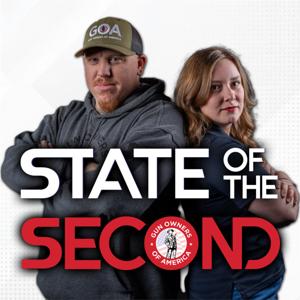


Tracy Lee, known online as Tracy Guns, joins John and Kaylee on State of the Second to talk about how she found her way into firearms and what the industry still gets wrong about women. Tracy grew up in Texas until she was 8, then in Sacramento with a liberal mother, and moved to Las Vegas to expand a business sending photographers to nightclubs. She traveled the world with the UFC as a cage-side photographer, built a relationship with a Las Vegas gun store, and started bringing UFC fighters there to shoot. She took her first firearms and CCW class in 2015, got hooked on real training, separated her gun content into the Tracy Guns account, and is now coming up on 10 years in the space.
The heart of the episode is Tracy's advice for women getting into the shooting sports. Her two biggest points: don't be intimidated by people who tell you things have to be done a certain way, and don't believe anyone who says your first gun needs to be tiny. At Annie Oakley events and National Women's Range Day she handed women a bigger gun first and then a smaller one, and they consistently shot a Glock 19 or a P320 better than a subcompact like a P365, a 43X, or a Hellcat. A small gun has more recoil and is one of the hardest things a new shooter can start on. Tracy and Kaylee also push the value of women-only range days, finding good mentors, getting real training, and the point that a guy usually can't teach his own wife or girlfriend to shoot.
The second half gets into culture and carry. Tracy talks about firearms censorship on social media, the workarounds gun creators used to dodge the algorithm, and how George Floyd and the climate in 2020 and 2021 shifted public tolerance toward firearms and self-protection. She closes with a CVS confrontation that became a lesson in concealed-carry responsibility: as a CCW holder she has to keep her cool, stay aware, and never escalate, because carrying a firearm raises the stakes on every situation. John reinforces that this mindset is what younger carriers need to learn. Tracy points listeners to Tracy Guns across platforms and to the Clapper app, and the show wraps with a plug for GOALS in Knoxville, August 9th and 10th.
Tracy Lee grew up in Texas and Sacramento, ran a business sending photographers to nightclubs, and traveled the world with the UFC as a cage-side photographer. She built a relationship with a Las Vegas gun store, took her first firearms and CCW class in 2015, got hooked on real training, and is now coming up on 10 years in the space.
Tracy says don't be intimidated by people who insist things have to be done a certain way, and don't believe anyone who tells you your first gun needs to be tiny. She also points to women-only range days, finding a good mentor, and getting real training as the fastest way to build real skill.
A small gun has more recoil and is one of the hardest things a new shooter can start on. At women's events Tracy handed shooters a bigger gun first, and they consistently shot a Glock 19 or a P320 better than a subcompact like a P365, a 43X, or a Hellcat.
Tracy and co-host Kaylee push women-only range days, such as National Women's Range Day, as a lower-pressure place to learn from good mentors and get real training. Tracy's blunt take is that a man usually can't teach his own wife or girlfriend to shoot, so an outside instructor works better.
Tracy describes ongoing firearms censorship on social platforms and the workarounds gun creators used to dodge the algorithm. She ties a shift in public tolerance toward firearms and self-protection to the climate of 2020 and 2021.
Tracy says George Floyd and the broader climate of 2020 and 2021 moved public tolerance toward firearms and self-protection, drawing more people, including women, toward owning and carrying.
Tracy recounts a CVS confrontation as a lesson in concealed-carry responsibility: a CCW holder has to keep their cool, stay aware, and never escalate, because carrying a firearm raises the stakes on every situation. Co-host John reinforces that this mindset is what younger carriers most need to learn.
Tracy points listeners to Tracy Guns across Instagram, X, Facebook, and TikTok, as well as the Clapper app. The episode also plugs the Gun Owners Action Leadership Summit (GOALS) in Knoxville on August 9th and 10th.
Tracy Lee, known online as Tracy Guns, is a firearms content creator and shooter based in Las Vegas, Nevada. She grew up in Texas until she was 8 and then in Sacramento, ran a business sending photographers to nightclubs, and traveled the world with the UFC as a cage-side photographer. She took her first firearms and CCW class in 2015 and is coming up on 10 years actively involved in firearms, shooting, and training. She competes in rifle and AK matches, has run full-auto ranges at women's events including National Women's Range Day, and appeared on the TV show American Air Gunner Challenge. She carries a P365 as her EDC and is active on Instagram, X, Facebook, TikTok, and the Clapper app.
Arrowhead Tactical founder Alexander joins State of the Second hosts Kailey and John to tell the story of a brand that started with a real problem he could not solve as a customer. Living in Atlanta and going to the gym at odd hours, he wanted to carry his firearm before, during, and after a workout, but elastic waistbands and drawstrings are not built to hold a gun. The belly bands and free-floating belts he tried did not perform. He saw athletic apparel for concealed carry, built for men, as a blue ocean, and launched in April 2020 with the Carrier Joggers, three colors and a first run of fewer than 500 units. Five years later the brand has expanded into shorts, pants, sweatpants, hoodies, and a women's line it is currently retooling, all built around its twice-patented waistband.
Alexander breaks down the engineering and the philosophy behind it. The design takes a retention belt, turns it inside out, ties it to the apparel, and runs it all the way around the body so the load distributes and nothing shifts. He demonstrates the concept in his own content by carrying two Desert Eagles, roughly 11 pounds loaded. He also explains why his hoodies use pass-through pockets so a carrier can pre-stage a draw and speed up a first shot. His through line is that one of a brand's biggest competitors is inaction. If carrying is a hassle, the gun gets left at home, and a gun at home is no good.
The conversation widens into hot takes and advocacy. Alexander argues that men carrying in crossbody bags may as well open carry because the look gives them away. Kailey counters that there is still nothing maternity-friendly in the gun space, calling it a million-dollar opening. The episode closes on GOA's mission. With Tennessee's Gold Day happening that day, Kailey makes the case that voting once is not enough. Show up for primaries and midterms, call your representatives, and keep the momentum going. She notes it takes about 30 seconds to send a message to your congressman through GOA's website. Alexander points listeners to arrowheadtacticalapparel.com.
Training at odd hours in Atlanta, Alexander wanted to carry during workouts, but elastic waistbands and drawstrings could not hold a gun and the belly bands and belts he tried did not perform. He saw concealed-carry athletic apparel for men as an open market and launched Arrowhead Tactical in April 2020.
The design takes a retention belt, turns it inside out, ties it to the apparel, and runs it all the way around the body so the load is distributed and nothing shifts. Alexander demonstrates the concept by carrying two Desert Eagles, roughly 11 pounds loaded.
Arrowhead launched with the Carrier Joggers in April 2020, offered in three colors. The first production run was fewer than 500 units.
He argues the crossbody bag is a giveaway, so the look telegraphs that the person is carrying. In his view that defeats the point of concealment, making it no different from open carry.
Host Kailey points out there is still nothing maternity-friendly in the gun space, calling it a million-dollar opening. Arrowhead has a women's line that it is currently retooling.
The pass-through pockets let a carrier pre-stage the draw with the hand already on the firearm. That setup speeds up the first shot.
Alexander's first gun was a Colt LE6920 AR-15 that his mother bought in 2009. His everyday carry today is a Glock 19.
Host Kailey argues that casting a ballot once and checking out is not enough; gun owners should show up for primaries and midterms and call their representatives. She notes it takes about 30 seconds to message your congressman through Gun Owners of America's website.
Alexander is the founder of Arrowhead Tactical, which makes athletic apparel for safe and secure concealed carry of firearms. He grew up in Memphis, attended Vanderbilt where he met his wife, and lived in Atlanta for about four years before moving to Nashville. He launched Arrowhead in April 2020 with the Carrier Joggers, a first run of fewer than 500 units in three colors, and the brand is approaching five years. Arrowhead is built around a twice-patented waistband and was mentioned on the Joe Rogan show. Alexander's first gun was a Colt LE6920 AR-15 his mother bought in 2009, and his everyday carry is a Glock 19.
Otis Technology CEO Bill joins State of the Second hosts Kaylee and John for a deep talk on gun cleaning, the science behind lubricants, and why so much common maintenance advice is wrong. Bill opens with his favorite Otis tool, the Ripcord, which uses Nomex woven over the cable to handle a smoking hot barrel up to 700 degrees, and explains how he runs it through the ejection port between competition stages to stay clean. He walks through the company's story: Otis is celebrating its 40th year, founded in 1985 after Doreen Williams got the muzzle of her rifle stuck in the mud while hunting with her dad and went looking through her grandpa's World War II kit for a way to clean it. From a kitchen table to a garage to four decades of family reinvestment, Otis has supplied the U.S. military almost exclusively for the last 30 years, cleaning everything from small arms up to 155mm, and makes its commercial products on the same machines with the same people.
The heart of the episode is the WD-40 warning. Bill explains that WD stands for water displacement, the product was built around the 50s or late 40s to push water out of a mechanical part, and a gun should not have water in it to begin with. Because the viscosity is so low, it migrates everywhere. John backs it up with a story about a Columbus police officer who sprayed his service revolver with WD-40 every day with the ammunition still loaded. When the officer got into a shooting, he pulled the trigger six times and every round failed because the WD-40 had soaked into the ammunition and made the propellant inert. Bill and John also cover real maintenance habits: more lubricant is not better since excess turns to mud and can cause malfunctions, EDC guns should be cleaned every couple of months and more often in humid summer heat to fight rust, and magazine springs should not be compressed for too long so feeding stays reliable.
Bill also covers Otis kits for new owners, noting roughly 20 million new shooters have entered the space since 2019, and details three new products launched at SHOT Show: a suppressor cleaning concentrate, a muzzleloading kit, and an air gun cleaning kit. As a firearms instructor in New York, he closes on the post-Bruin legal landscape, the state's 16-hour CCW classroom requirement, and the three topics he considers most important to teach: de-escalation, situational awareness, and suicide prevention, the last tied to about 1,700 lives lost to suicide a year in New York. The episode wraps with Otis returning to GOA's GOALS event in Knoxville, Tennessee on August 9th and 10th.
WD stands for water displacement, a product built in the late 1940s or 1950s to push water out of mechanical parts, and a gun should not have water in it to begin with. Its viscosity is so low that it migrates everywhere it shouldn't, including into places that cause problems.
The low-viscosity WD-40 seeps into the cartridge and renders the propellant inert. A Columbus police officer who sprayed his loaded service revolver daily had all six rounds fail to fire during a shooting because the propellant had been deadened.
An EDC gun should be cleaned every couple of months, and more often during humid summer heat to fight rust. The goal is to keep it working, not to let it become a safe queen that never comes out.
Yes. More lubricant is not better, because excess turns to mud and can cause malfunctions. A light, correct amount keeps the gun running reliably.
Otis began in 1985 after Doreen Williams got her rifle muzzle stuck in the mud while hunting with her dad and went looking through her grandpa's World War II kit for a way to clean it. It grew from a kitchen table to a garage into four decades of family-reinvested business, now in its 40th year.
Otis introduced a suppressor cleaning concentrate, a muzzleloading kit, and an air gun cleaning kit. They were announced alongside CEO Bill's broader update on the company's lineup for new and existing shooters.
As a firearms instructor in New York, Bill teaches three topics as most important: de-escalation, situational awareness, and suicide prevention. The suicide focus is tied to roughly 1,700 lives lost to suicide a year in New York.
Magazine springs should not stay compressed for extended periods so that feeding stays reliable. Leaving them under load too long can work against consistent function.
Bill is the CEO of Otis Technology, a position he has held for about the last three years. Otis is celebrating its 40th year, having started in 1985 when Doreen Williams looked for a way to clean a muzzle that got stuck in the mud while hunting with her dad. Bill is also a competitive shooter and a firearms instructor who teaches CCW classes in New York State. His surname is given in the episode as Cleftis [VERIFY].
Pete Brownell of Brownells returns to State of the Second to talk about where the firearms market is headed and why building your own gun has become a statement about who you are. He tells hosts John and Kaylee that the industry has moved past the pandemic scarcity buying, when people loaded up the gun vault with AR-15s and pistols. Now owners are pulling those guns back out and customizing them. Brownells is leaning into that shift with build recipes, a deeper gunsmithing product line, and content that teaches people how to accessorize and maintain their firearms. He frames the AR-15 as the Jeep of the firearms industry, an open platform people make their own, and says Sig has opened up its platform in a way that puts it right in the wake of Glock for aftermarket support.
The conversation widens into the right to build and the right to repair. Brownell traces gunsmithing back to before the Constitution and argues the Obama and Biden administrations clamped down on FFLs with zero-tolerance enforcement, thinning out the local gun shops that anchor gun culture in a community. He says 54% of firearm transactions still come through a mom and pop shop, and that the ATF is now inviting those FFLs back. He makes a case for the trades over a default college path, points to gunsmithing trade schools and youth programs like Eddie Eagle, scholastic shooting, hunter safety, and ROTC, and argues firearm education has to start young because abstinence-style 'don't touch' messaging does not work.
On policy, Brownell is direct that firearms leaders cannot sit out politics, and that customers punish companies that quietly work against the Second Amendment. He breaks down the HPA moving to the Senate and his read that removing suppressors from the NFA has the votes while the SHORT Act is a tougher lift for reconciliation. He predicts a summer slowdown ahead of a 90-day enactment window, then a demand spike, a suppressor scarcity, and eventually falling prices as production ramps, possibly into the $100 to $200 range. He and Kaylee also cover state-level wins like PLCA protection in Tennessee, constitutional carry crossing 50% of states, the California Glock-switch fight, and GOA's mission to protect, defend, and restore. Brownell closes on Brownells returning as GOALS title sponsor and urges listeners to get involved in their local 2A community.
During the pandemic, owners stocked up on AR-15s and pistols out of scarcity. Now, Pete Brownell says, those buyers are pulling guns back out of the safe and customizing them, which is why Brownells is leaning into build recipes and a deeper gunsmithing line.
He sees the AR-15 as an open platform people make their own, the same way Jeep owners modify their vehicles. He adds that Sig has opened up its platform enough to sit right behind Glock for aftermarket support.
He argues a company should open its platform to aftermarket and repair support, pointing to how Glock and now Sig built deep accessory ecosystems that owners can customize and maintain themselves.
Brownell traces gunsmithing to before the Constitution and frames building and repairing your own firearm as a long-standing right. He says zero-tolerance enforcement thinned out the local FFLs that anchor gun culture, though 54% of firearm sales still run through a mom-and-pop shop.
He points to gunsmithing trade schools and making the trades a real alternative to a default college path. He also notes the ATF is now inviting FFLs back, which he sees as a path to rebuilding the local shops that support gun culture.
Brownell is direct that firearms leaders cannot sit out politics. He says customers punish companies that quietly work against the Second Amendment, and that customer pressure is the strongest force on how a company behaves.
He reads the votes as there to remove suppressors from the National Firearms Act, with the SHORT Act a tougher lift. He predicts a summer slowdown, then a demand spike and suppressor scarcity after a 90-day enactment window, with prices eventually falling toward the $100 to $200 range as production ramps.
Brownell highlights wins like PLCA protection in Tennessee and constitutional carry crossing half the states as proof the fight is being won locally. He ties this to Gun Owners of America's mission to protect, defend, and restore the Second Amendment, and urges listeners to get involved in their local 2A community.
Pete Brownell is from Brownells, the firearms parts, tools, and accessories company, which he says has been in business 85 years and talking about building community for 66 years. He is a past president of the NRA, a role he references during the episode, and says he has been working in the Second Amendment fight for 30 years. He inherited a miniature Mauser from his father and is an avid mountain biker.
State of the Second hosts Kaylee and John sit down with Eddie from Elite Tactical Systems (ETS) for an episode that runs from magazine engineering into the maze of laws gun owners face when they travel across state lines. Eddie has worked in the firearms industry for about 20 years, including stints at Remington, AOB, Timney, and Crimson Trace, and he explains why he left big companies for a small one. His line is that "big ships turn slow" while small companies stay agile, which is why ETS can develop a brand new magazine for a gun like the Echelon in the same time a large company spends just getting the paperwork done.
Most of the show dismantles magazine myths and explains why the magazine is so often an afterthought in gun design. Eddie says the old advice to never leave mags loaded no longer holds for magazines made in roughly the last decade, because wear comes from cycling, not from sitting loaded. He walks through ETS testing, including laser scanners that measure every critical dimension so a bad batch can be tracked, quarantined, and kept off the market. He says there are probably about eight true magazine engineers in America, calls tuning a magazine a "dark art," and points to the industry trend toward standardizing on AR, Glock, and CZ pattern mags. Kaylee and Eddie also push first-time owners to get training and go shoot, since both hosts note how overwhelming and expensive the first purchase can be.
The Soapbox segment turns to the episode's title question: why traveling armed in America is so complicated. Eddie describes routing a trip through Memphis to add an hour to his drive just so he could legally carry his gun and the rounds he wanted to use. John recounts driving a U-Haul full of guns through Illinois and being "butt puckered" the whole way, then learning later that some restrictions only applied to residents. Kaylee argues the pro-gun side keeps losing "the battle of language" by adopting terms like "high capacity magazine" and "red flag law," which she calls a gun confiscation order. They cover the push for national reciprocity, the absurdity of state rosters that reject a gun over a screw type or the color of a chamber flag, and the way restrictive places like D.C. normalize what they call tyranny. The episode closes with ETS contact info and a plug for GOALS in Knoxville, Tennessee on August 9th and 10th.
Eddie's view is that big ships turn slow, so the large companies he came from move at a crawl. A small company like Elite Tactical Systems stays agile and can develop a brand new magazine for a gun like the Echelon in the time a large company spends just on paperwork.
Eddie says the old advice to never leave magazines loaded no longer holds for mags made in roughly the last decade. Spring wear comes from cycling the magazine, not from sitting loaded, so leaving a modern mag loaded is fine.
Tuning a magazine is what Eddie calls a dark art, and he estimates there are only about eight true magazine engineers in America. Many designers build the gun first and treat the mag as an afterthought, though the better approach is to build the gun around a mag that already works.
ETS uses laser scanners that measure every critical dimension of a magazine. That lets the company track a bad batch, quarantine it, and keep it off the market.
Patchwork state laws force gun owners into detours and uncertainty. Eddie routed a trip through Memphis to add an hour to his drive just to legally carry the gun and rounds he wanted, and John drove a U-Haul of guns through Illinois on edge the whole way before learning some restrictions only applied to residents.
National reciprocity is the push to have a carry permit recognized across state lines, the way a driver's license is. Eddie argues it is disingenuous to hold a Second Amendment right and then have to figure out which inalienable rights you can exercise in each state you travel through.
Eddie and the hosts call the rosters absurd, with states rejecting a gun over something as minor as a screw type or the color of a chamber flag. The episode frames this color-compliance gatekeeping as a way restrictive places normalize what they describe as tyranny.
Kaylee argues the pro-gun side loses the battle of language by adopting the other side's terms, such as high capacity magazine and red flag law. She points out that a red flag law is really a gun confiscation order, and that caving to that wording cedes ground.
Eddie works at Elite Tactical Systems (ETS), where he has been for three years. He has worked in the firearms industry for about 20 years and previously worked at Remington, AOB, Timney, and Crimson Trace, where he was a product manager. He learned to shoot from his mother, who he says owns more than 300 guns. ETS is known for translucent polymer magazines, speed loaders, and the Omega hybrid metal-and-polymer magazine.
In this episode of State of the Second, hosts John and Kaylee sit down with Keebler and Seth from KCI USA, the magazine manufacturer working to rebuild a brand that once carried a rough reputation. KCI makes magazines for AK, Glock, 1911, AR and more, runs a family-owned factory in South Korea, and quietly produces magazines for about 25 OEMs that you would never know made the mag. The guests are open about the past. Seth admits he told KCI in his interview that the mags were trash, and three years later he is still there driving the turnaround. The team is going SKU by SKU, changing springs, followers, and quality control so the product earns trust at an affordable price point.
The central question the episode keeps circling is whether you can sell a magazine for half the price of a Glock mag and still have people believe it works. The answer KCI gives is to put their money where their mouth is: hand skeptics a mag at shows, tell them to run it hard, and let the public decide. Keebler shares an honest line on trust. He would trust his life to a KCI mag for training and video work, but his daily carry stays on a Glock, mostly because Glock has a team of lawyers behind a self defense situation. It is a candid look at how a value brand positions itself next to the OEM standard.
The From the Soapbox segment turns serious. The group warns that gun owners get complacent after an election win, but the midterms have already started and the primary is where Second Amendment candidates are actually decided. They push back on infighting between gun communities, argue that the Second Amendment belongs to everyone, and connect it to history, tradition, and personal responsibility taught in the home. They close on magazine bans, the Assault Weapons Ban that never worked, and the long pattern of governments disarming their people. The conversation also plugs GOA's 2A Adventure Chronicles children's book series and the GOALS summit in Knoxville.
KCI USA is a magazine manufacturer that makes magazines for platforms including AK, Glock, 1911, and AR. The company runs a family-owned factory in South Korea and also produces magazines for about 25 OEMs.
KCI's magazines once carried a rough reputation for poor quality, to the point that Seth told the company in his interview the mags were trash. The team is rebuilding the brand SKU by SKU, changing springs, followers, and quality control so the product earns trust at an affordable price.
KCI's answer is to put their money where their mouth is, handing skeptics a magazine at shows and telling them to run it hard so the public decides for itself. The turnaround focuses on improving springs, followers, and quality control to keep the product reliable at a value price point.
Keebler says he would trust his life to a KCI magazine for training and video work, but his daily carry stays on a Glock. His reasoning is mostly that Glock has a team of lawyers behind a self-defense situation.
KCI hands skeptics a magazine at shows, tells them to run it hard, and lets the public decide rather than arguing the point. The brand backs that up by going SKU by SKU on springs, followers, and quality control so the product holds up under real use.
The hosts warn that gun owners ease off after an election win, but the midterms have already started and the fight is not over. They argue the work of protecting the Second Amendment continues past any single victory.
The hosts argue the primary is where Second Amendment candidates are actually decided, since it determines how strong a pro-2A candidate makes it to the general election. Sitting out the primary means weaker choices later.
The hosts argue they do not, pointing to the Assault Weapons Ban that never worked and a long pattern of governments disarming their people. Their core point is that criminals do not follow laws, so the bans hit law-abiding owners instead.
Keebler and Seth are part of the KCI USA team, a magazine manufacturer that makes magazines for platforms including AK, Glock, 1911, and AR. The company runs a family-owned factory in South Korea and produces magazines for about 25 OEMs. Seth handles KCI's social media and says he told the company in his interview, three years before this recording, that the mags were trash, and stayed on to help rebuild the brand. Keebler's daily carry gun is a Glock.
Faxon Firearms didn't set out to build guns. Bob Faxon explains that the company came out of a manufacturing family that had been machining since he and his brother were teenagers, and it pivoted toward firearms only after work dried up about twelve years ago. Bob's first trip to SHOT Show humbled him out of the AR15 plan. Months later, watching a Discovery Channel top-ten battle rifles countdown with his two boys, he got upset when the AK beat the AR, sat down at the kitchen table, and drew up the ARAC in twenty minutes. That upper, which combines elements of the AK and AR onto any AR15 lower, became the way Faxon broke into the industry, and learning to make its barrels turned into a dominant part of the business.
The conversation runs deep on how Faxon actually makes things. Bob and Dustin Wallace walk through why button rifling works for them once paired with an in-house stress relieving process, why the whole barrel matters and not just the rifling, and how rapid prototyping lets them run a new suppressor iteration every two to three days. They detail the new suppressor lineup announced at SHOT Show, including the three-sided Basilisk design built to add cross sectional volume without rising into the sight line, plus the engineering tradeoff of reducing back pressure without raising noise. They also cover how aftermarket pistol barrels get chosen, from dealer and customer surveys to partnerships like the 338 ARC work with Hornady and the Gray Guns SIG barrels.
The back half turns to the Soapbox. Dustin lays out the marketing catch-22 firearms companies live in: no Google Ads, posts pulled for no clear reason, and whole accounts taken down, which pushes them toward organic reach and partners like Forge Relations. Bob argues firearms manufacturers are treated as second-class businesses despite the freedoms that gun makers helped defend. Kaylee presses the point that platforms want a publisher's power without a publisher's responsibility. Bob closes on what he calls the fellowship of firearms: most rounds are fired in fellowship with family and friends, first-time shooters almost always walk away smiling, and the strongest case for the Second Amendment is letting people experience it for themselves. The episode wraps with the Pump ARAC story, the SHOT Show suppressors, and where to find Faxon at GOALS in Knoxville.
Faxon came out of a machining family that pivoted to firearms about twelve years ago when other work dried up. Bob Faxon designed the ARAC, an upper that blends AK and AR elements onto any AR15 lower, and that product is what broke the company into the industry.
Faxon uses button rifling paired with an in-house stress relieving process that makes the method work consistently for them. Bob stresses that the whole barrel matters, not just the rifling, summed up as it taking everything to make a barrel right and only one thing to make it wrong.
Faxon announced a new suppressor lineup at SHOT Show, using rapid prototyping to iterate every two to three days. The three-sided Basilisk is built to add cross sectional volume without rising into the sight line, while balancing the tradeoff of reducing back pressure without raising noise.
Faxon picks aftermarket pistol barrels using dealer and customer surveys, plus partnerships such as the 338 ARC work with Hornady and the Gray Guns SIG barrels.
Dustin Wallace describes a catch-22: firearms companies can't run Google Ads, have posts pulled with no clear reason, and have whole accounts taken down. That pushes them toward organic reach and partners like Forge Relations.
Bob argues firearms manufacturers are treated as second-class businesses despite the freedoms that gun makers helped defend. The hosts add that platforms want a publisher's power without a publisher's responsibility.
Bob's fellowship of firearms is the idea that most rounds are fired alongside family and friends and that first-time shooters almost always walk away smiling. He believes the strongest case for the Second Amendment is letting people experience it for themselves rather than arguing politics.
The Pump ARAC is an innovation Faxon developed in response to the fear that semi-automatic ARs could be banned, extending the original ARAC concept. The episode covers this story alongside the SHOT Show suppressors.
Bob Faxon is the founder of Faxon Firearms, a Cincinnati-based firearms and components manufacturer. He comes from a manufacturing family and has been machining since he was a teenager working for his older brother. In the episode he describes the company's background in defense and weapon systems work, with parts he says have been made for applications on Mars, the ocean floor, and defense missiles. As of last August, Bob is back running the firearms side of the business, with a stated goal of building a great company that leans hard on innovation. He designed the ARAC upper receiver, the product that brought Faxon into the firearms industry. He appeared alongside Dustin Wallace of Faxon Firearms.
Elijah from Infinite Defense joins John and Kaylee to tell the story behind Infinity Targets, the self-healing rubber targets he started building as a college engineering student. He couldn't afford the $500 rubber-dummy setups on the market, so he ran his own material testing out in the desert, figured out a manufacturing process, and taught himself business off Google. After shutting down during Covid and working construction and landscaping, he restarted the company from a blank slate on April 20, 2022, out of his dad's garage. Three years later it runs out of a warehouse with more than 60 target designs.
The conversation gets into how the targets actually work. The rubber stretches to let a bullet pass through, then closes back up due to its elasticity, so there's no hole left behind, just a bright contrasting mark you can spray over. Elijah explains the Gen 2 vulcanized recycled rubber, the round-count guarantee of 110 rounds of 5.56 per square inch, why hollow points and slugs are the only things that won't work, and the safety case against steel at close range where fragmentation and ricochet become a risk. He makes the value argument too: one Infinity target outlasts roughly 200 cardboard targets, and the Quantico PMO office cut two to three hours off range days just by not swapping targets between shooters.
Marketing is a through-line. As a young founder who grew up on social media, Elijah leaned on free organic content, watched TikTok become his first big platform before it banned him, and built an affiliate and YouTube creator program instead of print ads. He talks about supporting newer creators his own age and still running the social accounts himself. The back half turns to policy, where Elijah and the hosts go after the ATF, the brace ban, SBR rules, the receiver definition, and the $200 tax stamp that traces back to the 1934 cost of a Thompson. Kaylee ties it to GOA's mandate to protect, defend, and restore the Second Amendment, warning that the biggest risk for gun owners right now is taking a win and going apathetic.
Elijah started building self-healing rubber targets as a college engineering student because he couldn't afford the roughly $500 rubber-dummy setups on the market. He ran his own material testing out in the desert, worked out a manufacturing process, and taught himself the business side using Google.
The rubber stretches to let a bullet pass through, then closes back up from its own elasticity, leaving no hole behind, just a bright contrasting mark you can spray over. Infinite Defense guarantees 110 rounds of 5.56 per square inch on its Gen 2 vulcanized recycled rubber.
One Infinity target outlasts roughly 200 cardboard targets, and the Quantico PMO office cut two to three hours off range days by not having to swap targets between shooters. Unlike steel at close range, the rubber avoids the fragmentation and ricochet that create a safety risk.
Elijah says he isn't trying to phase steel out of the industry, and notes the rubber targets won't work with hollow points or slugs. Those rounds are the exceptions where the self-healing rubber falls short.
As a young founder who grew up on social media, Elijah leaned on free organic content and watched TikTok become his first big platform before he was banned. He then built an affiliate and YouTube creator program in place of print ads, and still runs the social accounts himself.
After TikTok banned him, Elijah shifted to an affiliate and YouTube creator program instead of paid print ads, and made a point of supporting newer creators his own age. He continues to run the company's accounts and produce most of its content himself.
They argue the $200 tax stamp traces back to the 1934 cost of a Thompson and no longer makes sense, and they criticize the ATF over the brace ban, SBR rules, and the receiver definition. Co-host Kaylee frames it as a bill of rights, not a bill of needs.
Co-host Kaylee ties the conversation to Gun Owners of America's mandate to protect, defend, and restore the Second Amendment. She warns that the biggest current risk is taking a win and going apathetic, because apathy kills the momentum.
Elijah is the founder of Infinite Defense, the maker of Infinity Targets, self-healing rubber shooting targets. He started the company as an engineering student, transferred to ASU after he stopped playing college football, and later dropped out to run the business. He ran his material testing out in the desert and taught himself business through Google. He restarted Infinite Defense from a blank slate on April 20, 2022, building it out of his dad's garage before moving into a warehouse. He still runs the company's social media accounts and handles most of its content himself. Based in Phoenix.
John and Kaylee sit down with Alan, VP of Public Relations and Brand Management at GunBroker, for a tour through the guns that Hollywood turned into legends and the real-world market that forms around them. GunBroker is a broker, not a maker or a seller. As Alan puts it, the company connects the buyer and seller, which means staggering inventory passes through the site, from commodity Glock 19s, P320s, M&Ps, and Mossberg 500s to weird, obscure pieces that stop the office gun geeks in their tracks. Alan also shares a few buyer tips, including that auctions closing on Tuesdays often go a little undervalue, and penny auctions are worth a look.
The conversation digs into how movies move the market. John Wick guns like the Taran Tactical builds go for staggering amounts, and Alan walks through the icons: the Bren 10 carried by Sonny Crockett in Miami Vice (the Crockett Cooper effect), the MP5 from Die Hard and the SAS embassy raid, the Beretta 92 from Die Hard and Lethal Weapon (same armorer, same guns, even matching serial numbers in some shots), and the Desert Eagle from the Vinnie Jones Snatch line. For sheer impact, Alan argues Dirty Harry and the Smith & Wesson Model 29 win. The gun was about to come out of the catalog and nobody wanted it, then within roughly an 18-month span it went to multiple-year backordered. As Alan puts it, that movie kind of saved an entire product line.
The back half turns serious. Alan and the hosts cover the COVID rush on firearms, when GunBroker was often the only place with inventory and some shops told the company they wouldn't be open today without it. They get into common myths, that you can't buy a gun online and that it ships straight to your door, both untrue, since every purchase still routes through an FFL dealer who knows local law. GunBroker also stays on top of sellers who try to fake-bid their own items. The episode closes on Second Amendment politics: why an executive order is only as good as that administration, why the 60-vote threshold matters, and why the midterms can't be ignored after a presidential year. Alan and Kaylee land on the same point, that the giant group in the middle is where the fight is won.
GunBroker neither makes nor sells firearms; it connects buyers and sellers, which is why Alan calls it a broker. That model means a huge range of inventory passes through the site, from commodity pistols like the Glock 19, P320, and M&P to rare, obscure pieces.
Alan argues Dirty Harry had the biggest market impact of any movie gun. The Model 29 was about to be dropped from the catalog with nobody wanting it, then within roughly 18 months it went to multiple-year backordered, which Alan says essentially saved the product line.
Films turn ordinary guns into icons, and that pop-culture demand follows them to the market. John Wick builds like the Taran Tactical pistols sell for staggering amounts, the same effect that surrounded the Bren 10 from Miami Vice and the Desert Eagle from Snatch.
The two common myths are that you cannot buy a gun online and that it ships straight to your door, and both are untrue. Every purchase routes through a licensed FFL dealer who handles the transfer and knows local law.
Yes. GunBroker actively monitors and acts on sellers who try to fake-bid their own listings, which protects both buyers and honest sellers on the platform.
Demand surged and GunBroker was often the only place with inventory in stock. Alan says a number of shops told the company they would not still be open today if it had not been for GunBroker.
Alan points buyers toward auctions that close on Tuesdays, which he says often go a little under value, and he suggests keeping an eye on penny auctions as well.
An executive order is only as good as the administration that issued it, so lasting Second Amendment protection requires laws passed through Congress, where the 60-vote threshold matters. They argue the midterms can't be ignored, because the large group in the middle is where the fight is won.
Alan is Vice President of Public Relations and Brand Management at GunBroker. Before joining GunBroker he worked as a PR professional at a marketing agency. He co-hosts GunBroker's "No Lowballers" podcast alongside Logan Medish. He describes himself as a gun nerd whose saved searches include the Bren 10 and the AutoMag.
John and Kaylee sit down with Chris from Krate Tactical for an episode that runs from knife history to the grassroots fight for the Second Amendment. Chris has been in the firearms and self-defense industry for five years, most recently at the US Concealed Carry Association before joining Krate in October 2024. He walks through the company's origin: founders Mark and John started Krate Tactical in 2017 as e-commerce sellers who got hooked on shooting steel targets, figured out manufacturing and distribution, and built a reputation in USPSA and IDPA competition circles. The company makes steel targets, cardboard targets, reactive targets, and a growing line of out-the-front knives, with collector's edition designs that show up at events like GOALS.
The legal core of the episode is knife rights. Chris frames knife rights as the cousin of gun rights, both protected under the Second Amendment, and traces two waves of knife bans: the post-Civil War laws targeting dirks, daggers, and Bowie knives, and the 1958 federal Switchblade Act aimed at switchblades and balisongs. He describes the current renaissance as states roll those restrictions back, citing Wisconsin legalizing switchblades and balisongs at the same time it allowed concealed carry with a permit, and points listeners to Kniferights.org and the USCCA reciprocity map to check local laws. From his soapbox he argues that people intent on harm find a way regardless of the tool, using England's violent crime and knife-crime rates as his example, and pushes for addressing root causes like mental health rather than legislating objects out of existence.
The back half turns to strategy. Chris runs a range in Wisconsin called the Highlands, attached to a winery and music venue, where he introduces non-gun visitors to self-defense through non-lethal tools first, then moves them in bite-sized steps toward firearms. He and the hosts talk about moving people from anti-gun to neutral, the danger of accepting an incremental level of tyranny, campus carry, and how restrictions normalize the idea that a tool must be bad. Kaylee makes the grassroots case: politicians respond to pressure, the Second Amendment has to be on the ballot, and the Second Amendment sanctuary movement that started in Virginia spread county by county into constitutional carry. The episode closes on local races, GOA's role fighting national battles, and a Krate Tactical and GOA deal where part of the proceeds from each knife go back to GOA.
Krate Tactical was founded in 2017 by Mark and John, who began as e-commerce sellers, got hooked on shooting steel targets, and learned manufacturing and distribution. The company built its reputation in USPSA and IDPA competition circles and makes steel, cardboard, and reactive targets plus a growing line of out-the-front knives.
Chris from Krate Tactical frames knife rights as the cousin of gun rights, with both protected under the Second Amendment. The argument is that the right to bear arms covers more than firearms, so the same principles that defend gun ownership also defend the right to carry knives.
Chris traces two waves of knife bans: post-Civil War laws targeting dirks, daggers, and Bowie knives, and the 1958 federal Switchblade Act aimed at switchblades and balisongs. He describes the current period as a renaissance in which states are rolling those restrictions back.
Chris cites Wisconsin, which legalized switchblades and balisongs at the same time it allowed permitted concealed carry, as an example of the rollback. He points listeners to Kniferights.org and the USCCA reciprocity map to check the laws where they live.
At his Wisconsin range, the Highlands, Chris introduces non-gun visitors to self-defense through non-lethal tools first, then moves them in bite-sized steps toward firearms. The goal is shifting people from anti-gun to neutral rather than pushing them all the way at once.
Chris argues that people intent on harm find a way regardless of the tool, using England's violent crime and knife-crime rates as his example. He pushes for addressing root causes like mental health instead of legislating objects out of existence.
The Second Amendment sanctuary movement started in Virginia and spread county by county into constitutional carry. Kaylee makes the grassroots case that politicians respond to pressure, so local races and putting the 2A on the ballot are where the fight is won.
Krate Tactical and Gun Owners of America have a deal in which part of the proceeds from each knife go back to GOA. It ties a knife purchase to funding the organization's national fight for the Second Amendment.
Chris is a representative of Krate Tactical, where he has worked since October 2024. He has been in the firearms and self-defense industry for five years, and before joining Krate he was a business development manager at the US Concealed Carry Association (USCCA). He also runs a range in Wisconsin called the Highlands, which includes a winery and a music venue, where he teaches a non-lethal tools for self-defense class. His last name is not stated in the episode.
From the publisher's feed

227,534 Listeners
1,637 Listeners
882 Listeners
883 Listeners
872 Listeners
267 Listeners
8,914 Listeners
6,888 Listeners
5,859 Listeners

1,539 Listeners
436 Listeners

46,068 Listeners
1,324 Listeners

39,342 Listeners

89 Listeners