
Sign up to save your podcasts
Or

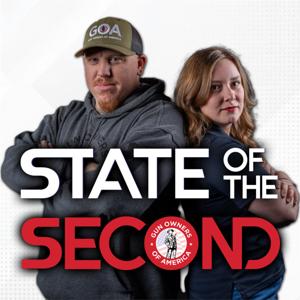


State of the Second hosts John and Kaylee sit down with Brian from Caliber Coffee, the coffee brand that now sits under Tactical Eats and shares ownership with Palmetto State Armory through JJE Capital. The conversation opens loose, with rapid-fire coffee questions, brewing-method debates, and a long, funny detour into 90s snacks, kids, and impulse buys. Then it turns to the real reason Caliber exists. Brian explains that money spent on the coffee goes right back into manufacturing guns and ammunition and into funding amicus briefs the PSA team is part of. The brand's motto, "freedom in every cup," is described not as a message but as the actual model. Through the Joe 2A Joe program, a portion of proceeds donates coffee to active-duty members, veterans, and first responders, with about three to four tons given away in the company's first year.
The heart of the episode is the idea Kaylee calls your "second vote": voting with your dollar. The hosts and Brian argue that consumers are increasingly choosing where their money goes once it leaves their account, and that a growing "parallel economy" lets people buy quality products from companies that are openly pro-America and pro-Second Amendment. Brian is candid that taking that stance can cost a brand shelf space, and his answer is blunt: if a store won't carry them because of who they are, they don't want that store. John pushes the convenience problem too, noting people grab the easy $8 Starbucks latte or a Coca-Cola-family energy drink rather than picking a brand that supports their values.
Brian also walks through the product line and his own path in. A former sports-partnerships professional, he accepted a dream job in Atlanta in March 2020 right as live sports and entertainment shut down, started making hot sauces during COVID, and was recruited by ownership to launch the coffee brand. Caliber is now in Food Lion, some Ace Hardware locations, and hundreds of independent retailers, with online subscriptions that have tripled. The lineup is expanding into Reload Energy drinks built on nostalgic 90s flavors with zero sugar and no artificial dyes, Bull Barrel beef jerky sold exclusively through PSA, and a future sauce line. Coffee runs about $14.99 a bag. The episode closes on the recurring pitch: supporting the mission can be as small as the energy drink or bag of jerky you were going to buy anyway, plus the standing plug for GOA's GOALS event in Knoxville on August 9th and 10th.
Caliber Coffee sits under the Tactical Eats umbrella and shares ownership with Palmetto State Armory through JJE Capital. That common ownership is why buying the coffee ties directly into PSA's firearms and rights work.
Money spent on the coffee goes back into manufacturing guns and ammunition and into funding amicus briefs the PSA team is part of. Brian frames the brand's motto, "freedom in every cup," as the actual business model rather than just a slogan.
Joe 2A Joe donates a portion of proceeds as coffee to active-duty members, veterans, and first responders. About three to four tons were given away in the company's first year.
Your second vote is the choice of where your money goes once it leaves your account, treating each purchase as a vote for the values a company stands for. Caliber's pitch is that buying from openly pro-America, pro-Second Amendment brands is part of a growing parallel economy that lets consumers spend on their values.
Brian came from sports partnerships and accepted a dream job in Atlanta in March 2020, right as live sports and entertainment shut down. He started making hot sauces during COVID, which led ownership to recruit him to launch the coffee brand.
Beyond coffee, the lineup includes Reload Energy drinks built on nostalgic 90s flavors with zero sugar and no artificial dyes, Bull Barrel beef jerky sold exclusively through PSA, and a sauce line still to come. Coffee runs about $14.99 a bag.
Taking an open pro-Second Amendment stance can cost a brand shelf space, but Brian's answer is blunt: if a store won't carry them because of who they are, they don't want that store. The bet is that customers who share those values will seek the brand out anyway.
Caliber Coffee is sold in Food Lion, some Ace Hardware locations, and hundreds of independent retailers, plus online subscriptions that have tripled. Bull Barrel beef jerky is carried exclusively through Palmetto State Armory.
Brian leads the coffee brand at Caliber Coffee, which sits under Tactical Eats and shares ownership with Palmetto State Armory through JJE Capital. He started his career in sports partnerships and had accepted a dream job in Atlanta in March 2020, around the time live sports and entertainment shut down. During COVID he began making hot sauces from scratch, which led ownership to recruit him to start the coffee brand. He describes himself as a brand guy and has since helped expand the product line into energy drinks, beef jerky, and a coming sauce line. He has three kids under five, two boys and a newborn girl. [VERIFY] Full name and title not stated in the episode beyond "Brian."
The Armed Attorneys join host John on GOA's State of the Second to walk through what actually happens after a self-defense shooting, and why so many lawful gun owners end up in handcuffs. Emily and Richard are firearms attorneys in Texas and former felony prosecutors for Galveston County. They explain that self-defense is a justification that excuses what would otherwise be a crime, which means you can be charged with murder or aggravated assault and forced to raise self-defense at trial. As Richard puts it, even people who are acquitted do not feel like winners because the process is the punishment. They break down the five factors they use, drawn from Andrew Branca's framework: innocence, imminence, proportionality, reasonableness, and avoidance. Roughly 95% of self-defense cases, they say, land in a gray area where a jury decides whether the shooting was justified.
Much of the episode is practical. They lay out a plan for the worst night of your life: keep your 911 call to five or six words, give a short truthful statement about the defensive incident, then hang up and stop talking. If police arrive before you have a lawyer, say enough to point them at what happened, then clearly state you will not give a further statement until you speak to an attorney. If you are arrested, actually say the words to invoke your right to remain silent and your right to an attorney. They stress that finding a real firearms and self-defense lawyer ahead of time matters, because your wills-and-probate uncle cannot help you at 2 in the morning.
The conversation then turns to the title's myths. Dragging a body inside the doorway destroys your credibility the moment physical evidence stops matching. Stickers, signs, and social media posts all become potential state's exhibits. Emily points to Daniel Perry in Austin, convicted in part on his own messages about handling protesters. They argue this is a calculated risk decision each person should make on purpose, not wander into. In the policy segment, as GOA's legislative counsel in Texas, they preview goals for the 89th legislative session: bolstering self-defense rights, letting defenders raise an affirmative defense earlier to dismiss a case, shielding justified defenders from civil shakedowns, decoupling Texas from federal law on items like short-barreled rifles, and ending gun-free zones. They credit GOA for constitutional carry and the law banning firearm merchant category codes. Find them on YouTube and X as Armed Attorneys, and at Walker Taylor Law in Texas.
Self-defense is a justification that excuses what would otherwise be a crime, so you can still be charged with murder or aggravated assault and forced to raise self-defense at trial. The Armed Attorneys note that even acquitted defendants do not feel like winners, because the process itself is the punishment.
Because self-defense is a legal justification rather than a finding of innocence, prosecutors can still bring charges and leave it to a jury. The Armed Attorneys estimate roughly 95% of self-defense cases land in a gray area where a jury decides whether the shooting was justified.
Drawing on Andrew Branca's framework, the Armed Attorneys use five factors: innocence, imminence, proportionality, reasonableness, and avoidance. Richard says that having all five makes for a rock-solid self-defense case.
Keep the 911 call to five or six words, give a short truthful statement about the defensive incident, then hang up and stop talking. Saying more risks creating evidence that can be used against you.
If arrested, actually say the words to invoke your right to remain silent and your right to an attorney rather than just staying quiet. The Armed Attorneys stress that clearly stating these rights out loud is what protects you.
Stickers, signs, and social media posts can all become state's exhibits used against you in court. Emily points to Daniel Perry in Austin, who was convicted in part on his own messages about handling protesters.
As Gun Owners of America's legislative counsel in Texas, they want to bolster self-defense rights, let defenders raise an affirmative defense earlier to dismiss a case, shield justified defenders from civil shakedowns, decouple Texas from federal law on items like short-barreled rifles, and end gun-free zones.
Moving a body destroys your credibility the moment the physical evidence stops matching your account. The Armed Attorneys treat this as the kind of myth that converts a defensible shooting into a conviction.
The Armed Attorneys are Emily and Richard, firearms attorneys based in Texas. Both were felony prosecutors for Galveston County, Texas before leaving the district attorney's office to build a practice focused entirely on Second Amendment work, including criminal defense for people charged after using self-defense. They are GOA's legislative counsel in Texas, a role they began in 2021, and they work at the Texas capitol on firearms bills. They run the Armed Attorneys YouTube channel, where they focus on myth-busting and putting gun law in plain English, and they practice at Walker Taylor Law as licensed Texas attorneys. They are married with young children.
Adam, the founder of GoonTape, joins host John on GOA's State of the Second to explain how a heat-resistant athletic tape became a brand with a community behind it. The product started during COVID. Adam was doing enterprise software sales, commuting four hours a day, and hated it. He trained at the Executive Protection Institute, ran black-tie security gigs in New York City, then watched that work disappear when corporate events stopped. As an AK shooter, he wanted a cheap, disposable way to handle a barrel that gets hot fast. After some hillbilly testing across metals and cloth types, he landed on a cotton-poly blend, committed to a factory minimum, and ended up with 10,000 rolls of tape in his apartment and the sudden realization that he now had to sell them.
The name does double duty. A goon is an enforcer and a goon is a bad guy, and Adam saw goon culture in the Second Amendment space as a way to say he carries to defend his family, not to hunt deer. The marketing leans into what he calls advertainment, the kind of weird, artistic gun content people either love or hate. That approach pulls in people who tell him they have no interest in guns but liked the marketing. Adam talks through the surreal feeling of seeing GoonTape stickers and shirts in the wild, the handwritten notes the company still puts in every package, and the bro community that has formed around something as simple as tape. He also recaps GOALS in Knoxville, where smaller companies and big names like Smith and Wesson all felt approachable.
The back half is the soapbox. Adam's gripe is that the gun community needs to recruit people on the fence instead of preaching at them, reaching gamers, airsoft and paintball players, and people overseas who only know guns from mass-shooting coverage. He and John trade real situational-awareness stories, from a near home invasion to being followed on the Las Vegas Strip, and argue the police often arrive after the danger is over. They cover constitutional carry, the racist origins of gun control, Virginia's 2020 turnout in Richmond, and why a concealed-carry event might bring more people in than open-carrying rifles. Adam closes on the gun-store experience as many newcomers' first impression, praising welcoming ranges and calling out egotistical salespeople who run people off.
GoonTape is a heat-resistant athletic cloth tape made from a cotton-poly blend, marketed toward firearms and combative sports as a cheap, disposable way to handle gear that gets hot, like an AK barrel. Adam describes it as soft tape for rough work that can be used for anything.
Adam started GoonTape during COVID after working in enterprise software sales and running black-tie security gigs in New York City that dried up when corporate events stopped. As an AK shooter, he tested metals and cloth types, landed on a cotton-poly blend, and committed to a factory minimum of 10,000 rolls.
Adam chose the name because a goon is both an enforcer and a bad guy, and he saw goon culture in the Second Amendment space as a way to say he carries to defend his family, not to hunt deer.
GoonTape leans into what Adam calls advertainment, weird and artistic gun content that draws in viewers who tell him they have no interest in guns but liked the marketing. Reaching those on-the-fence people is the entire goal, reinforced by handwritten notes in every package and a bro community around the tape.
Adam and host John trade real stories, including a near home invasion and being followed on the Las Vegas Strip, and argue that police often arrive after the danger is already over. The takeaway is that staying aware of your surroundings is your first line of defense.
Adam argues the gun community preaches at people instead of recruiting those on the fence, and should reach gamers, airsoft and paintball players, and people overseas who only know guns from mass-shooting coverage. The goal is growing the Second Amendment community, not just talking to insiders.
Adam points out that the gun store is many newcomers' first impression of the community, so a welcoming range can bring people in while an egotistical salesperson runs them off. He also suggests a concealed-carry event may draw more newcomers than open-carrying rifles.
Adam recapped the Gun Owners Action Leadership Summit (GOALS) in Knoxville, where both smaller companies and big names like Smith and Wesson felt approachable.
Adam is the founder of GoonTape, which makes a heat-resistant cotton-poly blend cloth tape marketed toward firearms and combative sports. He is from Long Island, New York and now lives in Northern Virginia. Before starting GoonTape he worked in enterprise software sales, then trained through the Executive Protection Institute's driving school and seven-day bodyguard program and worked black-tie security gigs in New York City. He started GoonTape during COVID and has run it for over four years. He is a self-described revolver fan and FUD who carries firearms for self-defense.
State of the Second host John welcomes the crew behind Whiskey & Windage, the cigar-smoking, bourbon-drinking trio of Adam, Mike, and Matt Brass. The conversation opens with a Blackout Coffee rapid-fire round (time travel, aliens, firearms movies, what they're binge watching, and current EDCs) before settling into the real subject: what their show is and why they do it. Mike, the founder, explains the idea came from the way guys talk guns around a campfire, and the mission is to humanize an industry people assume is full of heartless companies. The group makes the case that even the big names are still family-owned American businesses, and that a lot of the manufacturing is shared across the industry like 'two A farmers' crop sharing parts. Mike even owns up to being the kind of guy who used to poor-shame budget guns before he learned how the supply chain actually works.
From there the episode turns to the media landscape and why podcasting is on the uptick as a place people go for unbiased news and real conversation, with a side complaint about America's gnat-sized attention span and the way pure stupidity goes viral while valuable content stalls. The crew agrees the election went the way they wanted but warns against letting the pendulum swing too far, and presses the point that voted-in politicians have to be held accountable to preserve the Constitution. The show's 'From the Soapbox' segment, brought to you by Patriot Mobile, is where it gets pointed. Mike argues America has a judicial system, not a justice system, and that anyone deemed fit to return to society should get their rights back, including the right to own a gun. Adam frames it as three options: termination, incarceration, or full citizenship with no felon label hanging over you. They apply the no-compromise logic to Hunter Biden, agreeing that if he's not in prison and not violent, he has the same right to protect himself as anyone.
The back half digs into veterans and rights. Adam, an active-duty Army drill sergeant and medic, calls the VA a failed system and explains why the fear of losing firearms keeps service members from seeking behavioral health care. Mike, speaking as a non-veteran, argues a VA card should be accepted at any hospital, the same care politicians and four-star generals get. The episode closes on the ATF, where Mike says the chant should shift from 'abolish' to 'reform,' and lays out a plan to move suppressors out of ATF control by building a uniform, OSHA-compliant hearing-safety standard the silencer industry could compete on. John thanks the guests and notes Palmetto State Armory and AAC sponsored gift packages for season two guests. Find Whiskey & Windage at whiskeyandwindage.com and across YouTube, Instagram, Facebook, Spotify, and Apple.
Whiskey & Windage is a firearms podcast hosted by a cigar-and-bourbon trio: Mike, founder and owner of a Nashville firearm shop; Adam, an active-duty Army drill sergeant and medic; and Matt Brass, a collector. It started October 1, 2023 on Tyler Hoover's Antihero channel, then went solo January 1, 2024.
The trio's mission is to push back on the assumption that the firearms industry is full of heartless companies by showing that even the big names are still family-owned American businesses. Founder Mike modeled the show on how guys talk guns around a campfire, putting real people behind the brands.
The crew argues a lot of manufacturing is shared across the industry, with companies crop-sharing parts the way farmers do rather than each making everything in-house. Mike admits he used to poor-shame budget guns before he understood how the supply chain actually works.
They see podcasting on the uptick as a place for unbiased news and real conversation, in contrast to mainstream media. Their side complaint is America's short attention span and the way pure stupidity goes viral while valuable content stalls.
Mike argues America has a judicial system, not a justice system, and that anyone deemed fit to return to society should get their rights back, including the right to own a gun. Adam frames it as three options: termination, incarceration, or full citizenship with no felon label attached.
The crew applies its no-compromise logic to Hunter Biden, agreeing that if he is not in prison and not violent, he has the same right to protect himself as anyone else. Their broader position is that a non-violent person returned to society should have full rights restored.
Adam, an active-duty Army drill sergeant and medic, says the fear of losing a basic constitutional right stops many service members from seeking behavioral health care, and he calls the VA a failed system. Mike argues a VA card should be accepted at any hospital for the same care politicians and four-star generals get.
Mike says the chant should shift from abolish to reform the ATF, and proposes moving suppressors out of ATF control by building a uniform, OSHA-compliant hearing-safety standard the silencer industry could compete on.
Whiskey & Windage is a firearms podcast made up of three people. Mike is the founder of Whiskey & Windage and the owner of a firearm shop in Nashville, Tennessee. Adam is an active-duty Army drill sergeant and a medic. Matt Brass describes himself as a collector. The show started unofficially on October 1, 2023 as part of a daily-drop channel organized by Tyler Hoover of the Antihero podcast, then went out on its own on January 1, 2024. The crew says they put in around 40 hours a week on the back end of the show between the three of them.
Cameron Hillman, president and CEO of Devil Dog Concepts, joins hosts John and Kaylee on State of the Second to tell the story of a company he calls an accident. A former Marine who served as an MP and canine handler, he went into law enforcement and spent about five years on a SWAT team in New York. He got sick of fighting with the standard AR charging handle while running failure drills in gloves, so he sat down drawing one day and came up with a side charging handle system for the AR platform. Eleven years later it has grown into a full product line, and he is now retired from the job and running the business full time.
The conversation gets into why building a firearms brand is so hard. Advertising the product directly is, in his words, practically impossible, so the company started a separate coffee brand (Crayon Eater Coffee) and an apparel company (Precision Custom Apparel) as a workaround to run paid advertising outside the firearms industry and backlink it to the main company. Cameron walks through how the side charger works, the engineering problems it solves, and the markets it found beyond tactical use, including competition shooters, hunters, people with injuries, and compliance states like California and Pennsylvania where it can turn an AR into a straight pull. He also details the roughly six-to-seven year fight to make a version that works across the fragmented AR10 market and a separate armorer's tool he developed with John from Hera Arms and the company American Resistance Gear.
Cameron shares a rough stretch earlier in the year when the company's social media and business bank accounts were hacked and everything got wiped, two weeks after he retired. Social media was a vast majority of sales, and he only recovered access after working through a local assemblyman and congressional contacts to reach Meta. The episode covers GOALS as a breakthrough convention because of its media day, what it's like owning guns in New York, the failure of district attorneys to hold criminals accountable, mental health, and GOA's closing message that contacting your senator and congressman takes 30 seconds and that elected officials serve the people, not the other way around.
It is a side charging handle system Cameron Hillman designed for the AR platform after he got tired of fighting with the standard charging handle while running failure drills in gloves on a SWAT team. The concept turns an AR into a side charger without having to machine, modify, or change anything on the rifle.
Advertising a firearms product directly is practically impossible, so he launched Crayon Eater Coffee and Precision Custom Apparel as a workaround to run paid ads outside the firearms industry and backlink that traffic to the main Devil Dog Concepts company.
He got sick of fighting with the standard AR charging handle while running failure drills in gloves on a New York SWAT team, sat down drawing one day, and came up with the side charging handle system. Eleven years later it has grown into a full product line.
About two weeks after he retired, the company's social media and business bank accounts were hacked and wiped, which hit hard because social media drove the vast majority of sales. He only recovered access after working through a local assemblyman and congressional contacts to reach Meta.
The Gun Owners Action Leadership Summit (GOALS) was a breakthrough for Devil Dog Concepts because of its media day, which Cameron Hillman says opened the door and brought eyes and awareness to his product.
Cameron Hillman, who lives in New York and spent about five years on a SWAT team there, speaks at length about the difficulty of owning guns in the state, and the episode ties it to compliance restrictions and the failure of district attorneys to hold criminals accountable.
He frames the issue as letting the person be qualified for the gun rather than the gun qualified for the person, connecting it to district attorneys failing to hold criminals accountable and to mental health rather than the firearm itself.
Gun Owners of America (GOA) closes the episode noting that contacting your senator and congressman takes about 30 seconds, and that elected officials serve the people, not the other way around.
Cameron Hillman is the president and CEO of Devil Dog Concepts and the inventor of the company's side charging handle system for the AR platform. He is a former Marine who served as a military police canine handler, and he went on to a career in law enforcement, including about five years on a SWAT team in New York, before recently retiring. He started Devil Dog Concepts after getting frustrated with the standard AR charging handle, and the company is now in its eleventh year. He also runs a coffee brand, Crayon Eater Coffee, and an apparel company, Precision Custom Apparel. He lives in New York.
United Patriot Coin's Chad Burge and Clay join host John on State of the Second for a plain-spoken primer on buying gold and silver. The company was started by brothers Scott and Glenn Hynen, farmers in the agriculture industry in Kansas who had bought precious metals for years and made the same mistakes a lot of first-time buyers make. They built an education-first company around helping customers avoid those pitfalls instead of leading with whatever they want to sell. Chad runs the business as general manager. Clay handles the metals as numismatist and Director of E-Commerce, and he has been in the market for about 30 years.
The conversation walks a complete beginner through the whole process. The most popular entry product is the Patriot Pack, which starts around a $200 price point and includes divisible one-ounce silver rounds, one-gram silver bars, and a one-gram piece of gold in a small carry bag. It was designed for an affordable entry and for a bartering situation, since the pieces break into smaller amounts. The guests explain that smaller pieces carry a higher premium because they are harder to make, walk through how orders ship (mailed to your billing address after fraud verification, FedEx with a signature over a certain dollar amount), where to store metals (a gun safe works for most people), and confirm there are no reporting requirements for a purchase. They frame precious metals as a savings account and a mid-to-long-term wealth-preservation tool, not a buy-today-sell-tomorrow play, and tie it back to firearms: you protect your family with guns and your wealth with gold and silver.
The soapbox segment turns serious. Chad warns about a tech support scam that turns into a gold scam, where a pop-up tells the victim to call a fake Microsoft or official-sounding company, then a caller posing as the Department of Treasury or FTC convinces them their accounts are compromised and they need to convert their money into gold and hand it over for safekeeping. Victims, often the elderly, have met scammers in person or sent gold by third-party carrier, sometimes under threat of arrest. The takeaway is blunt: no government official will ever ask you to hand over gold, silver, or money. United Patriot Coin has put processes in place to question suspicious orders, has saved some customers, and runs fraud-prevention software that checks IP and address mismatches on every order. The two also share what they saw at the GOALS show in Knoxville and where to find them: unitedpatriotcoin.com, the Patriot Dispatch newsletter, and their phone line.
United Patriot Coin runs as an education-first company, so the guidance is to start small with an affordable entry product rather than buying whatever a dealer wants to sell. The most popular starting point is the Patriot Pack, an entry-level kit built for first-time buyers.
The Patriot Pack is United Patriot Coin's most popular entry product, starting around a $200 price point. It includes divisible one-ounce silver rounds, one-gram silver bars, and a one-gram piece of gold in a small carry bag, designed for an affordable entry and for bartering since the pieces break into smaller amounts.
Smaller, divisible pieces are easier to use for bartering because they break down into smaller amounts. Those smaller pieces carry a higher premium because they are harder to make.
The guests frame precious metals as a savings account and a mid-to-long-term wealth-preservation tool, not a buy-today-sell-tomorrow play, so the focus is holding for the long term rather than timing a quick flip.
Orders are mailed to your billing address after fraud verification, with FedEx requiring a signature over a certain dollar amount. There are no reporting requirements for a purchase.
A gun safe works for most people. The guests tie it back to firearms: you protect your family with guns and your wealth with gold and silver.
It starts as a tech support scam: a pop-up tells the victim to call a fake Microsoft or official-sounding company, then a caller posing as the Department of Treasury or FTC claims their accounts are compromised and pressures them to convert their money into gold and hand it over for safekeeping. No government official will ever ask you to hand over gold, silver, or money.
United Patriot Coin presents metals as a savings account and a mid-to-long-term way to preserve wealth, framing the choice around stability and protecting what you have rather than short-term market gains.
Chad Burge is the general manager at United Patriot Coin, where he makes sure everything runs smoothly on all sides of the business. Clay is the company's numismatist and Director of E-Commerce, buying and selling the metals and fulfilling online orders; he has been in the market for about 30 years and has a particular interest in ancient coins. United Patriot Coin was started by brothers Scott and Glenn Hynen, who are in the agriculture industry in Kansas, and is built as an education-first company. Its sister company, United Patriot Supply, has a physical store in Seneca, Kansas, and United Patriot Coin is located in Shenandoah, Texas, north of Houston.
Host John sits down with Alex Costa, owner and CEO of ANR Design, the New Hampshire shop behind Kydex holsters, mag carriers, a farmed-out nylon line, and the ANVL aluminum optic-mount and gun-parts brand. Alex walks through how the company grew from a broke college grad pressing Kydex in a basement into an 11-person manufacturer making white-label holsters for PSA, HK, SIG, FN, Beretta, and others. The two open by breaking down how little of the industry actually makes its own parts, then run through rapid-fire questions on mistakes, EDC choices, recent guns, and aliens.
A big stretch of the episode is a hands-on marketing argument. Alex says the major gun companies overpay a small pool of 'poster child' personalities and would get more by building a Rolodex of smaller creators. John, who ran marketing for an ammo company, agrees and lays out his own tiered system of creators from 1,000 to 250,000 subscribers, arguing that a stable of grateful smaller channels beats a few big names on reach, ROI, and risk. They cover the downside of betting a brand on one famous person, plus the value of giving product to garage shops that will put in 150% effort.
Competitions run through the whole conversation as the practical backbone of Alex's gun knowledge and content. He breaks down USPSA, PRS, two-gun, and NRL Hunter matches, why long range teaches you how your AR really behaves, how density altitude and wind shifts wreck your data, and the gear that helps, from Kestrels to ranging binos. The episode closes on review philosophy: Alex argues for candid, honest reviews that name a product's problems, gives examples of cans blowing up and overpriced rifles, and explains why the diverse American firearms market rewards companies that take feedback and improve.
Alex Costa and host John open the episode by breaking down how little of the industry actually manufactures its own components, with most brands relying on outside shops. ANR Design itself makes white-label holsters for companies including PSA, HK, SIG, FN, and Beretta, which sell under those names.
Alex argues the major gun companies overpay a small pool of 'poster child' personalities and would get more from building a Rolodex of smaller creators. A stable of grateful smaller channels beats a few big names on reach, ROI, and risk.
John, who ran marketing for an ammo company, lays out a tiered system of creators from 1,000 to 250,000 subscribers and argues a deep stable wins on return. Betting a brand on one famous person carries real downside, while smaller garage shops will put in 150 percent effort for the product they receive.
Alex started pressing Kydex after college rather than pay for a custom holster, and built the company from a broke college grad in a basement into an 11-person manufacturer. ANR Design now runs a facility in Manchester, New Hampshire and makes white-label holsters for PSA, HK, SIG, FN, and Beretta.
Alex says competitions are the practical backbone of his gun knowledge, and long range teaches you how your AR really behaves. Factors like density altitude and wind shifts wreck your data, and gear such as Kestrels and ranging binos helps you keep up.
The episode walks through the .40 caliber phase and why it once caught on. It is treated as a poor choice to pick now during the show's rapid-fire run through guns and EDC decisions.
Alex argues for candid reviews that name a product's actual problems, pointing to examples of cans blowing up and overpriced rifles. The pattern of every new gun being called the best ever is not real, and honesty serves buyers better.
Alex calls the United States the most diverse firearms market on the planet, which rewards companies that take feedback and improve. That competitive variety pushes makers to fix problems rather than coast.
Alex Costa is the owner and CEO of ANR Design, a firearms equipment manufacturer he runs with business partner John Blevins. The company's main business is Kydex holsters, mag carriers, and inside-the-waistband concealment gear, with a nylon division farmed out to a partner in South Dakota and an aluminum optic-mount and gun-parts line called ANVL built by partners in Michigan. ANR Design has about 11 employees and makes white-label holsters for companies including PSA, HK, SIG, FN, and Beretta. Originally from Massachusetts, Alex grew up shooting in Boy Scouts and started pressing Kydex after college rather than pay for a custom holster. The company's manufacturing facility is in Manchester, New Hampshire. He holds a bachelor's in mechanical engineering and started an MBA before dropping out close to finishing. He shoots USPSA and two-gun and previously shot PRS competitions.
Michael Cox of Cox Arms USA joins host John on GOA's State of the Second to explain why he left a brick-and-mortar dealership of about 15 years in Queen Creek, Arizona to build his own AR-15s. The breaking point was COVID. As prices climbed, the quality of the rifles he could get fell, and some would, in his words, fall apart in a box. He decided he could do it better and give the customer what they actually pay for or more. The result is a company built on one rule: if it's not right, it's not right. Cox checks every part by hand, throws away product most shops would sell, and backs every firearm with a lifetime guarantee that ignores whose fault the damage was.
The conversation gets into how AR-15s are actually made and why parts that work in one rifle fail in another. Every manufacturer builds to a set of specs, and Cox explains that mixing a barrel from one company with a bolt carrier group from another often creates tolerance stacking, not a defective part. Because Cox Arms machines to its own tolerances, the EMR (every man's rifle) ships as a solid $1,100 foundation gun with the upgrades most owners add later already included. Cox also makes the case that with the House, Senate, and presidency in hand, gun owners have roughly a year to be vocal before the next Senate race takes over, and he points to GOA's email alerts and pre-filled letter form as the low-effort way to stay in the fight.
The second half is Cox's soapbox. On the ATF, his complaint is a holier-than-thou double standard and a lack of consistent training: the agency loses guns with no consequences but will shut down a 50-year family shop over paperwork, and inspectors won't put their answers in writing. He and John trace how financial pressure after Fast and Furious pushed banks like Chase to close gun businesses' loans and personal accounts, and how cities now sue mom-and-pop shops as public nuisances. His sharpest frustration is social media advertising: a federally legal firearms business can't boost a post, while THC products advertise freely, and platforms hide behind world policies set by countries that don't share American rights.
After about 15 years running a dealership in Queen Creek, Arizona, Cox watched rifle quality fall while prices climbed during COVID, with some guns falling apart in the box. He decided he could do it better and give customers what they actually pay for or more.
Cox checks every part by hand and throws away product that most shops would still sell, working from one rule: if it's not right, it's not right. He would rather a customer wait a couple extra weeks than receive a gun he isn't confident in.
The EMR (every man's rifle) is a roughly $1,100 foundation AR-15 from Cox Arms. It ships with the upgrades most owners add later already built in, because the company machines to its own tolerances.
Every manufacturer builds to its own set of specs, so mixing a barrel from one company with a bolt carrier group from another often causes tolerance stacking rather than a defective part. Cox Arms machines to its own tolerances to avoid that mismatch.
Cox backs every firearm with a lifetime guarantee that ignores whose fault the damage was. It stands behind the gun regardless of how it got broken.
Cox argues that with all three in hand, gun owners have roughly a year to be vocal before the next Senate race takes over the agenda. He points to Gun Owners of America's email alerts and pre-filled letter form as the low-effort way to stay in the fight.
Cox describes a holier-than-thou double standard and inconsistent training: the agency loses guns with no consequences but will shut a 50-year family shop over paperwork. He also faults inspectors for refusing to put their answers in writing.
Cox notes that a federally legal firearms business cannot even boost a post while THC products advertise freely. He says platforms hide behind world policies set by countries that do not share American rights.
Michael Cox is the founder of Cox Arms USA, a small manufacturer specializing in the AR-15 platform. Before starting the company, he ran a brick-and-mortar firearms dealership for about 15 years in Queen Creek, Arizona. He started building rifles after watching firearm quality drop and prices rise during COVID, deciding he could give customers more than they paid for. He hand Cerakotes his rifles, backs them with a lifetime guarantee, and launched the EMR (every man's rifle) as a foundation gun. He is a Marine.
State of the Second host John sits down with Dave from Hi-Point Firearms, the man some industry circles call "Handsome Dave" and the voice behind the Yeet Cannon. Dave has worked with Hi-Point for about 15 years and walks through what most people get wrong about the brand. Hi-Point isn't a single company. It's a brand built on several outfits: MKS Supply handles marketing and distribution, Strassell's Machine produces most of the firearms, Haskell Manufacturing makes the .45 and now the .40 handgun, and Mid Ohio Graphics does the hydro dipping. Dave knocks down the myth that each gun is made in a different facility to dodge lawsuits, and pushes back on the "Saturday Night Special" and "Ring of Fire" labels people throw at Hi-Point. He points out the company has been around 35 years, is a real manufacturer that carries insurance, and builds a gun meant to be affordable so everyone can own a firearm.
The conversation covers the 2019 "name our gun" campaign that produced the Yeet Cannon, the wider MKS lineup including Full Forge Gear and Inland Manufacturing's reproduction M1 carbines, and the loss of Barnaul ammunition after the Biden administration's action on imported Russian ammo. Dave details the scramble to bring in ammo on two-year import licenses, the rumor of a Russian-government seizure at port once the war in Ukraine started, and why building a new imported-ammo relationship is slow and risky. He defends steel-case ammo as solid and explains why Hi-Point won't chase a stainless slide or a Browning tilt-lock action that would price the gun out of reach.
In the Soapbox segment, Dave's take is a warning against complacency. He's a longtime Trump supporter, but his message is that the government is still not your friend, and gun owners need to stay vigilant at the state level even under a friendly federal administration. He and John point to Colorado's ammo tax, a Memphis AR-ban lawsuit, and background-check problems in Washington, and urge listeners to contact lawmakers through GOA's site to push bills like the Hearing Protection Act and national reciprocity. They close on Hi-Point's lifetime warranty, the gun found with 32 to 34 rounds of .45 stacked in the barrel, why most torture tests are pointless, and the new pistol-format carbines (995P, 4595P, 1095P) dropping at SHOT Show.
Hi-Point is a brand, not a single company. It is built on several outfits working together, with MKS Supply handling marketing and distribution and separate manufacturers producing the firearms.
Strassell's Machine produces most of the firearms, Haskell Manufacturing makes the .45 and now the .40 handgun, and Mid Ohio Graphics handles the hydro dipping, while MKS Supply manages marketing and distribution.
No. Dave knocks down that myth, explaining Hi-Point is a real manufacturer that has been around 35 years and carries insurance, not a setup designed to dodge liability.
The Yeet Cannon name came out of Hi-Point's 2019 'name our gun' campaign, in which customers were invited to name the firearm.
The wider MKS Supply lineup includes Full Forge Gear and Inland Manufacturing's reproduction M1 carbines, alongside the Hi-Point brand.
Hi-Point lost Barnaul ammunition after the Biden administration's action on imported Russian ammo, which forced a scramble to bring in ammo on two-year import licenses, complicated by a reported port seizure once the war in Ukraine began.
Hi-Point won't chase a stainless slide or a Browning tilt-lock action because those changes would price the gun out of reach, and the goal has always been to make a firearm everyone can afford.
Dave, a longtime Trump supporter, warns that the government is still not your friend, urging gun owners to stay vigilant at the state level and contact lawmakers through Gun Owners of America even under a friendly federal administration.
Dave represents Hi-Point Firearms and has worked with the brand for about 15 years. He works for MKS Supply, the marketing and distribution company behind the Hi-Point brand, and deals with writers, media people, and end-user customers on social media and by phone. He is known in some industry circles as "Handsome Dave" and is associated with Hi-Point's "Yeet Cannon."
In this episode of State of the Second, host John sits down with Ton Jones, Director of Operations and Marketing Director at Firebird Targets and a film and television veteran who has worked on shows like Auction Hunters, Man vs Wild, Ink Master, and Shark Week since 1996. After a Rapid Fire round that covers pineapple on pizza, Bigfoot, and a Ruger PCC Ton bought at 9:30 the morning of the recording, the conversation digs into what Firebird actually makes and why it exists.
Ton breaks down Firebird's reactive targets in plain terms. You peel it, stick it to steel, and shoot it. There is no mixing, no permits, and no licenses, and the minimum safe distance is 50 feet so objects do not come back at the shooter at ballistic speeds. He walks through the line: the 50mm and 65mm bio targets at a full 145 decibels, the moderated M50 and M65 versions at 65 decibels for suppressor and sound-sensitive use, an IR version for night vision shooting, and a new signal marker puck that throws a colored chalk plume in nine colors. The targets render inert if anyone tries to break or compound them, which keeps bad actors from taking them further. The goal he repeats is responsible, safe fun that grows the sport instead of injuring it, a direct contrast to the 10-pound exploding-target videos that get the industry legislated.
The back half gets spicy. As a California native, Ton argues the state was once a hunting and fishing paradise before people from other states moved in and changed how it votes. He then turns to Hollywood, where he refused to be anti-gun his whole career. His claim: the same people who trashed gun owners in groups would privately pull him aside and ask how to buy a gun without their friends or the government knowing, convinced they were the only ones responsible enough to own one. The episode closes on the Alec Baldwin shooting, where Ton makes the case that on a film set the armorer, not the actor, owns firearm safety, so an actor who fires a gun he was handed is not the one at fault. He contrasts that with his own sets, where eight years of Auction Hunters filming ran without a single injury because he put human life over getting the shot.
Firebird makes peel-and-stick reactive targets you attach to steel and shoot, with no mixing, permits, or licenses required. The minimum safe distance is 50 feet so debris does not come back at the shooter at ballistic speeds.
Unlike the heavy exploding-target mixes that get the industry legislated, Firebird targets work with no mixing and no permits or licenses. They also render inert if anyone tries to break or compound them, which keeps bad actors from taking them further.
The moderated M50 and M65 targets fire at 65 decibels for suppressor and sound-sensitive use, versus 145 decibels on the standard 50mm and 65mm bio targets. The IR version is built for shooting with night vision.
As a California native, Ton Jones argues the state was once a hunting and fishing paradise. He says people who moved in from other states changed how it votes and pushed it away from that gun-friendly culture.
Ton Jones says the same people who trashed gun owners in groups would privately ask him how to buy a gun without their friends or the government knowing. Each was convinced they were the only one responsible enough to own one, so none would admit it publicly.
Ton Jones argues the armorer, not the actor, owns firearm safety on a film set. The actor's job is to act out the scene with the gun, while the armorer is responsible for making sure it is safe.
Because on a set the armorer owns firearm safety, Ton Jones makes the case that an actor who fires a gun he was handed is not the one at fault. The responsibility for the weapon's condition sits with the armorer, not the performer.
Ton Jones says eight years of filming Auction Hunters ran without a single injury because the crew was meticulous and put human life over getting the shot. As he frames it, he would rather be overkill than on the way to the hospital with a kill.
Ton Jones is the Director of Operations and Marketing Director at Firebird Targets, where he makes reactive targets. He has worked in the film and television industry since 1996, on or behind the scenes of shows including Auction Hunters, Man vs Wild, Ink Master, Shark Week, Nat Geo Speed of Life, and a survival show called Darkness, and has done work on music videos for artists including Toby Keith and Slash. He is a California native, born and raised in Southern California. He holds his own FFL and keeps a small firearms collection. He says he was on Auction Hunters for eight years of filming. He can be found as Tun Jones Official on Instagram.
From the publisher's feed

227,534 Listeners
1,637 Listeners
882 Listeners
883 Listeners
872 Listeners
267 Listeners
8,914 Listeners
6,888 Listeners
5,859 Listeners

1,539 Listeners
436 Listeners

46,068 Listeners
1,324 Listeners

39,342 Listeners
89 Listeners