
Sign up to save your podcasts
Or

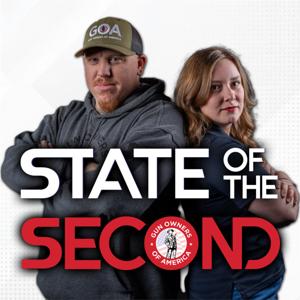


Jon Patton, founder of The Gun Collective (TGC), joins hosts John and Kaylee to talk about nine years of covering the firearms industry and what he thinks the industry keeps getting wrong. Patton has made YouTube videos since 2011 and built TGC into a go-to source for gun news, new product launches, and his blunt, often sarcastic takes. He explains why he says exactly what he thinks, even when it angers a company, and why his audience rewards that honesty. He recounts companies threatening to sue him and one telling him to take a video down because he called a product unsafe, and his answer was no.
The conversation moves from creator philosophy to activism. Patton describes starting GunCon, a panel idea he borrowed from seeing Rooster Teeth's RTX, then grew into a weekend event that lets everyday viewers meet the creators they watch. He and Kaylee dig into his speech at GOALS and the core point that not every gun owner is an enthusiast. The job, as they frame it, is reaching the casual owner, the first-time buyer, and the hunter, and reminding them the Second Amendment matters at the local and state level, not just in a presidential race. Kaylee argues it is far easier to stop a bad bill before it passes than to fight it later, and that grassroots advocacy has driven the recent wave of constitutional carry states.
The second half turns to the industry itself. Patton says brands are too big and too slow to listen, releasing reintroductions and 'me too' products instead of anything truly innovative, while charging prices the economy will not support. He and the hosts trade frustrations over the patchwork of state gun laws and the stress of traveling across the country with firearms. Kaylee presses on an underserved market: shooters with limited mobility or smaller frames who get handed a J-frame revolver or a snappy compact instead of a gun they can actually control. Patton agrees it is being ignored, mostly over money, and the episode closes on shared stories from their gun-store days.
Jon Patton is the founder of The Gun Collective, a firearms news and product channel he has run for nine years. He has made YouTube videos since 2011 and built it into a go-to source for gun news and new product launches, delivered with a blunt, sarcastic style.
Patton says whether he upsets a company matters zero to him, and his audience rewards that honesty because they get the perspective of a normal gun owner. He recounts brands threatening to sue and one demanding he pull a video after he called a product unsafe, and he refused.
GunCon is a weekend event that lets everyday viewers meet the firearms creators they watch. Patton borrowed the panel idea from seeing Rooster Teeth's RTX, then grew it into a full gathering connecting creators and their audiences face to face.
Patton argues many gun owners are casual owners, first-time buyers, and hunters rather than enthusiasts, and the job is reaching them. The point matters because those owners need reminding that the Second Amendment is decided at the local and state level, not only in a presidential race.
Co-host Kaylee argues it is far easier to stop a bad bill before it passes than to fight it after the fact. She credits grassroots advocacy at the state level with driving the recent wave of constitutional carry states.
Patton says big brands are too large and too slow to listen, putting out reintroductions and me-too products instead of anything truly innovative. He adds that companies chase trends rather than set them, while charging prices the economy will not support.
Kaylee presses that shooters with limited mobility or smaller frames often get handed a J-frame revolver or a snappy compact instead of a gun they can actually control. Patton agrees the market is ignored, mostly over money.
Jon Patton is the founder of The Gun Collective (TGC), which has been running for nine years. He has made videos on YouTube since 2011 and focuses primarily on gun industry news, new products, and Second Amendment topics, delivered with a sarcastic, opinionated style. He scripts most of his content, including the jokes. Patton started in a gun store in 2012 and says he works in the firearms industry. He created GunCon, a panel-turned-weekend event for gun creators and their audiences, after seeing Rooster Teeth's RTX. He also runs a separate channel about his van build and is moving into overlanding. He carries an HK VP9 and holds a Pennsylvania license to carry a firearm and a Utah permit.
Tyler from Tundra Tactical joins hosts Kaylee and John on Gun Owners of America's State of the Second to talk about why so much firearms content feels the same, and what changed when comedy entered the space. Tyler runs Tundra Tactical full time and describes himself as a satirist who makes content poking fun at stereotypes in the gun industry. He went to school for audio engineering and wanted to be a musician, but found he was better at being funny than at delivering serious information, so the channel became his creative outlet. A former 82nd E5 sergeant started writing scripts for him, and the breakout video, "what your pistol caliber says about you," put the channel on the map. Tyler says he was terrified the industry would hate him, expecting to get punched in the face at SHOT Show, and instead found companies like CMMG with a sense of humor that were willing to be roasted.
A big part of the conversation is the argument that humor humanizes gun owners. Tyler and the hosts agree that the community can come across as gatekeepy and unwelcoming, like you need tactical clothing and thousands of dollars in gear to belong. Comedy lowers that barrier and gives people an on ramp. Kaylee shares her own path into gun ownership: a five-foot college student in East Tennessee who bought a Bursa 380 off the clearance rack for her 21st birthday after a shooting and a stabbing happened at her apartment complex. That experience pushed her into gun ownership and then advocacy. The group talks about how facts and figures rarely move people the way a human face and a laugh can.
The episode's soapbox segment turns to platforms. Tyler explains how a wave of YouTube demonetization cut his channel's earnings and views hard, and why he moved to Rumble after friends at the I Came With Fire podcast connected him with someone there. He reports 120,000 views in 24 hours and 220,000 in 48 on Rumble, and argues the platform works because it is not gun-only, giving the Second Amendment community an on ramp the same way comedy does. He lays out a three-pillar theory of audience, creators, and sponsors, and floats the idea of a lawsuit against YouTube framed as us-versus-them rather than left-versus-right. He closes by begging viewers to support their favorite creators on Rumble instead of feeding YouTube.
Most firearms content leans on serious gear reviews and facts, which start to blur together. Tundra Tactical broke from that by using satire, making comedy that pokes fun at the stereotypes inside the gun industry.
Tyler went to school for audio engineering and wanted to be a musician, but found he was better at being funny than at delivering serious information, so the channel became his creative outlet. A former 82nd Airborne E5 sergeant began writing scripts for him.
Tyler expected the industry to hate him and braced to get punched in the face at SHOT Show. Instead he found companies like CMMG had a sense of humor and were willing to be roasted.
Tyler and the hosts argue the community can feel gatekeepy, as if you need tactical clothing and thousands of dollars in gear to belong. Comedy lowers that barrier and gives newcomers an on ramp that facts and figures rarely provide.
A shooting and a stabbing at her apartment complex pushed her toward gun ownership. As a five-foot college student in East Tennessee, she bought a Bersa 380 off the clearance rack for her 21st birthday, and that experience led her into advocacy.
A wave of YouTube demonetization cut his channel's earnings and views, and friends at the I Came With Fire podcast connected him with someone at Rumble. There he reports 120,000 views in 24 hours and 220,000 in 48 hours.
Tyler argues Rumble works precisely because it is not gun-only, which gives the Second Amendment community an on ramp the same way comedy does. A broader platform exposes new audiences to 2A content instead of preaching to the same crowd.
Tyler asks viewers to support their favorite creators on Rumble instead of feeding YouTube. He frames it around a three-pillar model of audience, creators, and sponsors all moving together.
Tyler runs Tundra Tactical, a satirical firearms content channel he describes as making content that pokes fun at stereotypes in the gun industry. He does it full time and has been at it with his team for roughly eight or nine years. He went to school for audio engineering and originally wanted to be a musician. He spent 11 years in the military. The channel's breakout video was "what your pistol caliber says about you," and he cites around 120,000 subscribers and 2.2 million views on Rumble in a single month. He has a five-year-old daughter. He also streams video games daily as Tundra Gaming Live.
On this episode of State of the Second, host John sits down with Othais and Mae from C&Rsenal, the deep-research firearms channel known for hour-long documentary videos on World War I small arms. The conversation is a wide-ranging history dive rather than a policy debate. Othais explains how the show started: he picked up shooting after college with a Mosin M38, became a gun collector chasing answers the books did not have, and started writing blog posts and posting his own photography on Reddit. When the channel moved to video, Mae came on as the designated markswoman so Othais could film, and the two now run the operation full time alongside their animator, Bruno.
Most of the episode is gun-nerd territory. They get into why World War I was such a brutal subject to cover (Battlefield 1 and the YouTube series The Great War drove prices up while Othais kept his promise to finish the era), and how John Moses Browning's real genius was efficiency and iteration rather than pure invention, with credit also owed to designers like Whiting at Webley. Othais makes the case that the modern revolver was essentially settled by an 1874 patent and that much of revolver history traces to Britain and Belgium, not America. They cover Sam Colt as a salesman who pushed economy-of-scale manufacturing through constant overselling, the cyclical history of 9mm versus .45 and .40 caliber debates, Ballistol's strange medical history, surplus collecting, and why old guns cannot be cheaply reproduced today because the old-growth walnut, the milling knowledge, and the primer-limited ammo supply are all gone.
C&Rsenal brings a Winchester 97 trench gun and a Remington Model 10 into the room, and Othais talks through restoring sporterized rifles, hunting auctions for matching parts, and the obscure guns he still wants, including a Fedorov Avtomat. They also pull back the curtain on production: four or five cameras, eight channels of sound across four mic layers, and shooting between passing clouds. The back half turns to industry gossip, including a chaotic Gundies awards-show bus ride with Brandon Herrera, Rapid Fire Rachel, Ian McCollum, and Matt Larosiere, plus a story about meeting Liberty Doll. John admits they never really got to gun policy because Othais is the gun nerd of GOA and Kaylee is the policy person, so they agree to have him back for a policy episode. You can find C&Rsenal on YouTube or at the redirect domain oldgunshow.com.
Othais took up shooting after college with a Mosin M38, became a collector, and built a following by blogging and posting his own firearms photography on Reddit before moving to video. Mae joined as the designated markswoman so Othais could film, and the two now run it full time with their animator, Bruno.
Interest from Battlefield 1 and the YouTube series The Great War drove up prices for World War I small arms while Othais kept his promise to finish covering the era. The subject was a brutal, expensive one to document, but he stuck with it rather than abandon the period.
Othais argues Browning's real genius was efficiency and iteration rather than pure invention, deeply refining and combining ideas from the pre-Browning era more than inventing from nothing. He also credits other designers, including Whiting at Webley, for work behind designs often attributed to Browning alone.
Othais makes the case that the modern revolver was essentially settled by an 1874 patent and that nobody really noticed. He says much of revolver history traces to Britain and Belgium rather than America, crediting Belgian patents and British designers for the core of the design.
Othais frames Colt as a salesman who pushed economy-of-scale manufacturing through constant overselling. His importance came from driving mass-production economics, not just from the gun itself.
The old-growth walnut, the milling knowledge, and the primer-limited ammunition supply that built those guns are all gone. As Othais puts it, the knowledge pool, talent, and industrial capacity behind them keep diminishing, so cheap reproduction is no longer possible.
A shoot runs four or five cameras and eight channels of sound across four microphone layers, with filming timed between passing clouds. Mae handles much of the camera and audio work alongside editing and the business side.
C&Rsenal is on YouTube and at the redirect domain oldgunshow.com.
Othais and Mae are the team behind C&Rsenal, a firearms history channel known for long-form documentary videos focused heavily on World War I small arms. Othais does most of the research and writing; he came to guns after college, started as a collector, and built a following by photographing and documenting firearms online (including on Reddit) before moving to video. Mae was a shooter before Othais and joined as the show's designated markswoman so he could film; she now handles much of the editing, the business-management side, and a lot of the camera and audio. Their first video published in June 2015. They work with an animator, Bruno, and are based in the Charleston, South Carolina area. In this episode Othais describes himself as "the gun nerd of GOA." [VERIFY their full real names and individual roles beyond what is stated here]
Shawn Herrin from We Like Shooting joins State of the Second hosts John and Kaylee for a wide-ranging conversation that opens with old friendship stories and turns into a serious look at how gun rights are won and lost. Shawn lives in Colorado Springs and walks through how a state most people still picture as frontier and cowboy country has swung anti-gun over the last decade. He points to gerrymandering and redistricting around Denver, Boulder, and Fort Collins, people moving in from California and bringing their politics, and a quieter problem: most gun owners do not even realize what passed. He shares living with Colorado's magazine restrictions since July 1, 2013, sitting 13 hours to speak for 60 seconds against an assault weapons ban, and the long, costly climb of fighting through the courts after a loss.
Shawn tells the story of how We Like Shooting started by accident about 11 years ago. He was a software engineer who built a website to post pictures of his guns with his buddy Aaron, then recruited co-hosts off Reddit by looking for people with strong opinions. The show became the number one downloaded program on the Firearms Radio Network, and when owner Jake had had enough of running it, Shawn bought the network mostly because he did not want anyone bossing him around. He talks about being deplatformed across YouTube, Facebook, and Amazon, including a YouTube rule against touching a gun on a live stream, and the move to Rumble that took the show from dozens of YouTube viewers to tens of thousands. He also explains why podcasting works for advertisers: people listen alone, with earbuds in, at the gym or in the car, and that intimacy makes the recommendations stick.
The back half is the soapbox segment on gun owner and hunter apathy, recorded before the election. Shawn argues that people who do not vote should not complain later, and shares messages from listeners who voted after he called them out. John ties it to the slippery slope: when they came for bump stocks, hunters sat it out, and now out-of-state activists are pushing a Colorado proposition to ban mountain lion hunting. Both land on the same point. If it shoots a projectile, fight for it. John connects it to GOA's no-compromise philosophy, the 27 words of the Second Amendment, Second Amendment sanctuary ordinances spreading after Virginia's Lobby Day, and constitutional carry now covering over half the country. Shawn closes with his motto: choose dangerous freedom over peaceful slavery.
Shawn Herrin points to gerrymandering and redistricting around Denver, Boulder, and Fort Collins, along with people moving in from California and bringing their politics. He adds that most gun owners do not even realize what laws have passed.
Shawn Herrin started We Like Shooting about 11 years ago as a software engineer who built a website to post pictures of his guns with his friend Aaron. He then recruited co-hosts off Reddit by looking for people with strong opinions.
After We Like Shooting became the number one downloaded program on the Firearms Radio Network, its owner Jake had had enough of running it. Shawn bought the network mostly because he did not want anyone bossing him around.
We Like Shooting was deplatformed across YouTube, Facebook, and Amazon, including a YouTube rule against touching a gun on a live stream. The move to Rumble took the show from dozens of YouTube viewers to tens of thousands.
Shawn Herrin explains that people listen to podcasts alone, with earbuds in, at the gym or in the car. That intimacy makes the advertiser recommendations stick.
Shawn Herrin has lived with Colorado's magazine restrictions since July 1, 2013, and once sat 13 hours to speak for 60 seconds against an assault weapons ban. He describes the long, costly climb of fighting through the courts after a loss.
Shawn Herrin argues that people who do not vote should not complain later, and host John ties it to the slippery slope: when activists came for bump stocks, hunters sat it out, and now out-of-state groups are pushing a Colorado proposition to ban mountain lion hunting. Their shared point is that if it shoots a projectile, you fight for it.
Host John connects Gun Owners of America's no-compromise philosophy to Second Amendment sanctuary ordinances spreading after Virginia's Lobby Day. He notes that constitutional carry now covers over half the country.
Shawn Herrin is the host of the We Like Shooting podcast and the owner of the Firearms Radio Network (firearmsradio.net). He lives in Colorado Springs and holds an FFL. He was a software engineer and web developer before podcasting became his full-time job. He started We Like Shooting about 11 years ago with a friend named Aaron after building a website to post pictures of their guns, then recruited co-hosts off Reddit, including Jeremy, Savage, and Nick. The show became the number one downloaded program on the Firearms Radio Network, and Shawn bought the network from its previous owner, Jake. His motto is to always choose dangerous freedom over peaceful slavery.
State of the Second hosts John and Kaylee sit down with Caleb, the photographer and videographer behind the YouTube channel Twelve Spies, for a conversation that moves from gear talk to the harder questions about gun rights in America. Caleb came into the firearms industry late, during COVID, bringing a video and photography background with him, and now works in the industry full time. After a round of rapid-fire questions covering his most recent purchase, his home defense setup, his everyday carry, and the pineapple-on-pizza debate, the group settles into the real subject: why the fight over the Second Amendment is as much about language and control as it is about firearms.
Caleb and the hosts spend a long stretch on GOA's first Knoxville event, GOALS, which Caleb names his favorite industry event of the year. They talk about the camaraderie, the unexpected demographics on the show floor, and the breakout sessions that drew standing-room-only crowds, from stop the bleed training to the homeschooling panel to citizens sharing their stories as the good guy with a gun. The point both sides keep returning to is that the gun owner base is not a monolith, and treating it like one is a mistake.
From there the discussion turns pointed. Caleb breaks down how the left reshapes terminology, from red flag laws to high capacity magazines to the claim that gun violence is the leading killer of children, and argues that conceding that language means conceding the ground. They cover the taxation of a constitutional right, the NFA's $200 stamp and what inflation has done to it, the West Virginia and Tennessee tax examples, and the broader problem of an unelected bureaucracy passing rules that can turn law-abiding gun owners into felons overnight. Caleb closes with a case for grassroots accountability, homeschooling, and a belief that rights come from God rather than government.
Caleb points to Gun Owners of America's first Knoxville event, the Gun Owners Action Leadership Summit (GOALS), where unexpected demographics filled the show floor and breakout sessions on stop the bleed, homeschooling, and citizen self-defense drew standing-room crowds. Treating gun owners as one group is a mistake.
Caleb argues that reshaping terms like red flag laws and high capacity magazines is how the other side controls the debate, because conceding the language means conceding the ground. As he puts it, change the words and you change how people perceive reality.
Caleb treats that claim as an example of the left reshaping terminology to win the argument before it starts, and he warns that accepting the framing means conceding the ground. He does not break the statistic itself down further in this conversation.
Caleb argues that taxing a constitutional right creates costs of entry designed to be prohibitive, putting protected activity out of reach. He cites West Virginia and Tennessee tax examples and the National Firearms Act stamp as cases of that problem.
Caleb frames the National Firearms Act's $200 stamp as a deliberately prohibitive cost of entry, and notes that inflation has changed what that figure once meant. He uses it to show how taxing a right keeps protected items out of ordinary owners' hands.
Caleb's concern is that an unelected bureaucracy can pass rules that turn law-abiding gun owners into felons overnight, without facing voters. That lack of accountability, he argues, is what makes it harder to push back against than an elected official.
Caleb makes a case for grassroots accountability, telling representatives how their constituents expect them to vote and staying engaged rather than doing nothing. The hosts agree that silence lets rights get walked over.
An outspoken advocate of Christ and a father of two, Caleb ties the future of the Second Amendment (2A) to homeschooling and to the belief that rights come from God rather than government. That conviction anchors his closing case for staying in the fight.
Caleb is a photographer and videographer by trade who runs the YouTube channel Twelve Spies. He got into the gun industry during COVID, bringing an existing video and photography background, and now works full time in the industry. He is a Second Amendment advocate, a father of two, and has been married for 16 years. He describes himself as an outspoken advocate of Christ. He lives in Tennessee, moved there from California, and is originally from Minneapolis. He shoots in a Sony ecosystem, using a Sony a7R III for photography and a Sony FX3 as his main video camera. He says he has been doing work with Trigger Hill, an app launching soon for Second Amendment freedom of speech.
John and Kaylee sit down with Robert from Tennessee Silencers in Seymour, East Tennessee, south of Knoxville. He calls his shop the biggest silencer sales place in Tennessee. It has an outdoor test range where customers can fire a suppressor on their own gun before buying, sells night vision, and rents machine guns. NFA items make up about 80% of the business. Robert lays out what the National Firearms Act covers (silencers, short barrel rifles, short barrel shotguns, AOWs, destructive devices, and machine guns), why it passed in 1934, and how the $200 tax stamp has gone from near-prohibitive to affordable over time.
Much of the conversation tracks the recent collapse in wait times. Approvals that once ran six to sixteen months on paper are now coming back in days, with one customer approved the next morning. Robert explains how eForms replaced the old paper backlog at Martinsburg, West Virginia, and walks through possible reasons for the speedup, from background-check system changes to political and legal pressure like the Texas attorney general lawsuit. He shares his read on the SUSH Act and the Hearing Protection Act, why bills get introduced even under unfriendly administrations to put lawmakers on the record, and how state-level wins and the hunting community build pressure. Suppressors are now legal in 43 states, and OSHA recommends suppressor use while shooting, which gives the legalization argument added weight.
Robert clears up common myths. Owning an NFA item does not waive your Fourth Amendment rights; agents still need a warrant for an individual who owns on a Form 4. Silencers are inheritable tax-free through a Form 5, so owners should have a will. He covers traveling with NFA items: silencers need no travel form, but short barrel rifles, shotguns, machine guns, and destructive devices require a Form 5320.20. He also explains engraving rules, why a whole suppressor must go back to the manufacturer for a baffle strike repair because ATF treats every part as a silencer, the difference between cleanable and welded silencers, wet versus dry use, wipes, and how the demographic of buyers has broadened from a niche to ordinary gun owners. He closes on the open question of whether the fast wait times are temporary or the new norm, and the risk that creates for retailers and manufacturers.
The National Firearms Act covers silencers, short barrel rifles, short barrel shotguns, any other weapons (AOWs), destructive devices, and machine guns, and it passed in 1934. Each item carries a $200 tax stamp that was near-prohibitive at the time but has become affordable as its value eroded.
Approvals that once ran six to sixteen months on paper now come back in days, with one customer approved the next morning. Robert credits the shift from the old paper backlog at Martinsburg, West Virginia to eForms, along with background-check system changes and political and legal pressure such as the Texas attorney general lawsuit.
No. Robert clears up this myth directly: owning an NFA item does not waive your Fourth Amendment rights, and agents still need a warrant for an individual who owns a suppressor on a Form 4.
Yes. A silencer is inheritable tax-free through a Form 5, so Robert advises any owner who registered the item as an individual to have a will in place.
Silencers need no travel form, but short barrel rifles, short barrel shotguns, machine guns, and destructive devices require a Form 5320.20 to cross state lines.
Robert covers cleanable versus welded silencers and wet versus dry use, including the role of wipes. He also explains that a whole suppressor must go back to the manufacturer for a baffle strike repair because the ATF treats every part as a silencer.
Robert shares his read on the SUSH Act and the Hearing Protection Act and explains that bills get introduced even under unfriendly administrations to put lawmakers on the record. State-level wins and the hunting community keep building pressure, with suppressors now legal in 43 states.
OSHA recommends suppressor use while shooting, which Robert says adds weight to the legalization argument because one government body endorses the device while another taxes it.
Robert runs Tennessee Silencers in Seymour, East Tennessee, south of Knoxville, which he describes as the biggest silencer sales place in Tennessee. The shop has an outdoor test range where customers can fire a suppressor on their own gun before buying, sells night vision, and rents machine guns, with NFA items making up about 80% of the business. He holds an FFL and an SOT and has run the store for eight or nine years. He uses "Robert Ware" as his registration-name example on a Form 4. [VERIFY]
John Keys spent twelve years on active duty in the Marine Corps and another eight as a federal civilian marine before working as an executive at a broadcast media company in DC. For most of that time he was not a gun owner. As he tells hosts John and Kaylee, the bad examples he saw made him feel the responsibility of gun ownership was a challenge for the people around him, so he kept it out of his life. The pandemic changed that. His first firearm purchase was reactionary, driven by isolation, civil unrest, and the fear that gun stores might close for good. The rabbit hole opened almost immediately, and as friends and family joined him at the range and bought their own firearms, the idea for Guns Out TV took shape.
The show started on local television on ABC 7 in the Washington, DC area, got two episodes out, and was canceled close to January 6, which the station used as the reason. Keys and his partner Shermichael Singleton found out by email while filming in Texas. Warrior Poet Society Network gave them a season to tell their origin story, GOA backed them before and after the cancellation, and their YouTube took off. Now approaching year four, Guns Out runs as a media platform and a full production company built around three pillars: keep it lighthearted but grounded in responsibility, keep it grounded in training and education, and humanize firearms culture.
Much of the conversation is about access. Keys talks about diversity in the gun community, the narrative on the left that gun owners are all old white men, and his work going into underserved communities where people own guns but were never taught to handle them. He argues the community needs more people who aren't against firearms, not just more gun owners, and that reaching them means making the conversation palatable and meeting people where they are. The hosts build on that with the idea of an on ramp into the Second Amendment community and an off ramp for people leaving anti-gun positions. Keys also makes the case for free, government-subsidized mandatory training for first-time buyers, and the group covers the veterans funding win GOA fought for, zero-tolerance enforcement against small dealers, and the lead ammo ban that GOA members flooded with comments. He closes with Range Day 2024 and the first GOA convention in Knoxville.
John Keys is a Marine Corps veteran and former broadcast media executive who was not a gun owner until the pandemic, when isolation, civil unrest, and the fear that gun stores would close drove a reactionary first purchase. As friends and family joined him at the range, the idea for Guns Out TV took shape.
After two episodes on ABC 7 in the Washington, DC area, the show was canceled close to January 6, which the station cited as the reason, and Keys learned by email while filming in Texas. Warrior Poet Society Network gave the team a season to tell their origin story, and Gun Owners of America backed them through it.
Guns Out is built on three pillars: keep it lighthearted but grounded in responsibility, keep it grounded in training and education, and humanize firearms culture. Now approaching its fourth year, it runs as both a media platform and a full production company.
For Keys, humanizing firearms culture means showing the human side of gun ownership and making the conversation palatable to people who were never taught to handle firearms. He frames guns as tools, with the focus on the person, the intent, and the responsibility of whoever wields them.
Keys argues for making the conversation palatable and meeting people where they are, saying the community needs more people who aren't against firearms rather than just more gun owners. The hosts frame this as building an on ramp into the Second Amendment community and an off ramp for people leaving anti-gun positions.
Keys makes the case for mandatory training for first-time buyers that is free and government-subsidized, so cost is not a barrier to learning safe handling. He ties this to his work in communities where people own guns but were never taught how to use them.
Keys goes into underserved communities where people already own firearms but were never taught to handle them, focusing on access and education. He also addresses diversity in the gun community and pushes back on the narrative that gun owners are all old white men.
Beyond the show, Guns Out runs as a production company spanning news and films that show the human side of firearms culture. The episode also covers GOA policy fights, including a veterans funding win, enforcement against small dealers, the lead ammo ban, and the first GOA convention in Knoxville.
John Keys is the co-founder of Guns Out TV. He is a Marine Corps veteran with twelve years of active duty and another eight years as a federal civilian marine, working at the Pentagon and at Headquarters Marine Corps Quantico. He later worked as an executive at a broadcast media company in DC. He was not a gun owner until the pandemic, when he bought his first pistol and rifle, an experience that led him to build Guns Out into a media platform and production company alongside his partner Shermichael Singleton. He describes himself as apolitical.
Ross Martin is one of the newest names in the firearms industry, and on this episode of State of the Second, co-founder Chris Toomer sits down with hosts John and Kaylee to explain how it got off the ground. Chris and his wife Stephanie, both working in the industry at the time, started shaping the idea around 2019 and 2020 as they watched a wave of new people come into the firearms space. After about three to four years of working through the red tape and framework that comes with starting a firearms company, they hit their goal and launched their first pistol at SHOT Show 2024. The name carries family history: Rost is Stephanie's grandfather's middle name, and Martin is Chris's great grandmother's maiden name.
The conversation centers on the company's first product, the RM1C, a compact pistol made in Dallas, Texas with an MSRP of $459. Chris walks through the design philosophy: not everyone has $700 or $1,000 to spend, so the goal was a feature-rich, reliable pistol that works straight out of the box without aftermarket upgrades. Built on a partnership with Slovenian company Arex and a re-engineered platform produced in the US, the gun adds touches like top slide serrations and an extended trigger guard. Chris is candid about the hurdles, from years of engineering to securing physical space, permits, and the right size team, plus the discipline to stop adding features and actually get to market, since you only get one chance to launch.
Stephanie is the daughter of Springfield Armory CEO and owner Dennis Reese and worked at Springfield for nine years; Chris is a former Marine Corps infantry officer who also worked at Springfield after the Marines and business school. They built Ross Martin as a completely separate company with Springfield's blessing. The episode also gets into advocacy and community. Chris and Stephanie attended GOA's national women's range day in Texas, where Chris helped many women shoot a firearm for the first time. They talk about being hands-on owners who answer customer calls themselves, about representing a part of the gun-owning community the media often overlooks, and about why they see the Second Amendment fight as one of expansion, not just preservation. Chris closes with where to find the company online and a note that more announcements are coming this summer.
Both were working in the firearms industry and began shaping the idea around 2019 and 2020 as they saw a wave of new people enter the space. After about three to four years of working through the regulatory framework, they launched their first pistol at SHOT Show 2024.
The name carries family history. Rost is Stephanie's grandfather's middle name, and Martin is Chris's great grandmother's maiden name.
The RM1C is Rost Martin's first product, a compact pistol made in Dallas, Texas with an MSRP of $459. It was designed to be feature-rich and reliable straight out of the box, without needing aftermarket upgrades.
The RM1C is built on a partnership with the Slovenian company Arex and a re-engineered platform produced in the US. It adds touches like top slide serrations and an extended trigger guard.
Chris cites years of engineering, securing physical space, permits, and the right-sized team, plus the discipline to stop adding features and get to market. As he puts it, you really only get one chance to launch.
Stephanie is the daughter of Springfield Armory CEO and owner Dennis Reese and worked at Springfield for nine years; Chris worked there after the Marine Corps and business school. They built Rost Martin as a completely separate company with Springfield's blessing.
Chris and Stephanie attended the Gun Owners of America (GOA) national women's range day in Texas, where Chris helped many women shoot a firearm for the first time. They frame their advocacy as expanding gun rights, not just preserving them.
The goal was an accessible option for buyers who don't have $700 or $1,000 to spend, so the company built a reliable, feature-rich compact that works out of the box. Chris and Stephanie are hands-on owners who answer customer calls themselves.
Chris Toomer is the co-founder of Ross Martin, a firearms company he started with his wife Stephanie. He is a former Marine Corps infantry officer who later worked for Springfield Armory after the Marines and business school. Stephanie is the daughter of Springfield Armory CEO and owner Dennis Reese and worked at Springfield for nine years. The couple began shaping the company around 2019 and 2020 and launched their first pistol, the RM1C, at SHOT Show 2024. The company is based in Dallas, Texas, and they have two young kids at home.
Kurt from Blue Alpha Gear joins John and Kaylee to tell the story of how a complaint about an overpriced belt became a concealed carry and EDC company. Blue Alpha started in 2016 when Kurt and his business partner Jesse, who worked together as aircraft mechanics, wanted a side business. Kurt was frustrated with a belt he had bought from a top name brand: it was expensive, the shipping was overcharged, and there were no sizing exchanges if the size was wrong. They bought a used sewing machine, Jesse learned to sew in his garage, and they made some rough belts for friends before getting good at it. A Kickstarter and their hybrid EDC belt followed. That belt used a Cobra buckle that actually fits through the belt loops, and Kurt says they were the first to do that in 2016. The company moved five times in its first three years as it outgrew each space.
Customer service is where Kurt says the brand was really built. They run free shipping, free sizing exchanges, and free returns. Their sizing exchange sends a customer a new belt with a return mailer for the old one, so the customer briefly has two belts and the process stays easy. The thinking was simple: treat customers the way they would want to be treated. High quality products and word of mouth drove repeat business and growth, and the line expanded from concealed carry into tactical gear like battle belts, duty belts, magazine pouches, and tourniquet holders. Kurt also talks about building real friendships with content creators and even direct competitors, the kind of relationships where you talk trash and then give each other big hugs.
The conversation moves into where concealed carry is heading. Kurt is a big proponent of the fanny pack as a tool for concealed carry, especially for road trips, because it stays comfortable and goes with you into the gas station instead of getting left in the car. He sees the fashion industry leading the way and more options coming for everyone, including women carrying. Kurt also shares his own path into firearms, from a kid who liked history and war video games to buying a hundred dollar Mosin Nagant and cleaning the cosmoline off in a bathtub. On activism, he recounts skipping the NRA trade show over a decision he disagreed with and donating the deposit to another gun rights organization, which landed Blue Alpha on page three of the Wall Street Journal in early 2019. He closes with a push for local involvement, pointing to his own county in Georgia becoming a Second Amendment sanctuary county after he talked with the sheriff.
Blue Alpha started in 2016 when Kurt and his partner Jesse, both aircraft mechanics, wanted a side business after Kurt got fed up with an overpriced top-brand belt that overcharged shipping and offered no sizing exchanges. They bought a used sewing machine and Jesse learned to sew in his garage.
Blue Alpha's hybrid EDC belt used a Cobra buckle that actually fits through standard belt loops, and Kurt says they were the first to do that in 2016. It came out of a Kickstarter and helped define the brand's everyday carry line.
Kurt says the brand was really built on customer service: free shipping, free sizing exchanges, and free returns. The sizing exchange ships a new belt with a return mailer for the old one, so the process stays easy, all built on the idea of treating customers the way they would want to be treated.
Kurt values real relationships in the industry, including friendships with content creators and direct competitors. He describes the kind of bond where you can talk trash and then give each other big hugs, and credits high-quality products and word of mouth for the brand's repeat business and growth.
Kurt is a proponent of the fanny pack as a tool for concealed carry, particularly on road trips, because it stays comfortable and goes with you into the gas station instead of getting left in the car. He frames it as one tool among many, not a replacement for other carry methods.
Kurt traces his path from a kid who liked history and war video games to buying a hundred-dollar Mosin Nagant and cleaning the cosmoline off it in a bathtub. That early curiosity grew into his work building gear for the firearms community.
Kurt recounts skipping the NRA trade show over a decision he disagreed with and donating the show deposit to another gun rights organization. The move landed Blue Alpha on page three of the Wall Street Journal in early 2019.
Kurt pushes people to stay involved at the local community level, not just federally and at the state level. He points to his own county in Georgia becoming a Second Amendment sanctuary county after he talked with the sheriff.
Kurt is a co-founder of Blue Alpha Gear, which he started in 2016 with his business partner Jesse. The two worked together as aircraft mechanics before launching the company. Blue Alpha began making belts on a used sewing machine in a garage and grew into a concealed carry and EDC brand known for its hybrid EDC belt and its customer service. The company is based in Coweta County, Georgia.
State of the Second hosts John and Kaylee sit down with Dan and Danielle, the husband-and-wife team behind Ammo Squared, to break down an ammo model that works nothing like the gun store. Ammo Squared started in their garage in 2015, right as the country was coming out of an ammo shortage. Dan, who was working in tech as a product marketer with a SaaS background, had a simple thought: what if you could put away a little ammo every month the way you put money into a 401k, then pull it when there's a shortage. The first version ran on WordPress, sold ammo in $5 increments, and vacuum-sealed small quantities like seven rounds of 45 ACP. That pivoted fast. The company has since moved through a string of warehouses, from a 1400 square foot space up to 7500, and is now looking at a 20,000 to 30,000 square foot space, probably in Texas.
The core of the conversation is how the program actually works. You set a budget, pick your calibers by percentage like a mutual fund, and the system auto-buys on the schedule you choose. Ammo accumulates in your online account down to a fraction of a round, priced just below the market median, until you have full shippable boxes. You decide when to ship with triggers like every $300, every thousand rounds, or every six months. Because you can buy without taking delivery, customers can exchange calibers, sell their inventory back at the market price, or hold ammo as what Dan and Danielle call a security blanket. They walk through 2020, when the model got its real test: customers who had been accumulating for years just hit the ship button while everyone else stood in line. New signups came in so fast the company had to start a waitlist. PMC came through with pallets when distributors ran dry, a relationship that started with an unplanned booth visit at SHOT Show.
Much of the back half is a shared war-story session about the shortages. John, who worked behind a gun counter and on the manufacturing side, recounts empty shelves, a single store order of 996 guns, a steel-case case of 9mm for $112 per thousand rounds, and people reselling 22 ammo at gun shows. Kaylee ties it back to new and rural shooters, the intimidation of the gun store, and why a clearly labeled practice-versus-defense breakdown helps people who do not know what they do not know. They cover state shipping rules like California's background-check requirement, the trouble with Alaska and Hawaii, catalog trimming from 500 variations down to about 60 common calibers, free shipping over $250, and Ammo Squared's pending-state system for handling shortages. To find it, the team points to ammosquared.com and a newsletter signup.
Ammo Squared is an ammunition subscription and storage service that lets people accumulate ammo over time instead of buying it all at once. Husband-and-wife co-founders Dan and Danielle started it in their garage in 2015, coming out of an ammo shortage, after Dan imagined funding ammo monthly like a 401k.
You set a budget, pick your calibers by percentage like a mutual fund, and the system auto-buys on the schedule you choose. Ammo accumulates in your online account down to a fraction of a round until you have full shippable boxes, and you choose when to ship with triggers like every $300 or every thousand rounds.
Yes. Because you can buy ammo without taking delivery, customers can exchange calibers, sell their inventory back at the market price, or just hold the ammo as a security blanket. This flexibility is built into the program and is part of what sets it apart from a normal purchase.
Customers who had been accumulating for years simply hit the ship button and received their ammo while everyone else stood in line at empty stores. Demand was so high that new signups came in faster than the company could handle, forcing it to start a waitlist.
Ammo is priced just below the market median, and it accumulates in your account down to a fraction of a round until you have full, shippable boxes. Because customers buy without taking immediate delivery, they can also sell inventory back at the current market price.
Shipping is free on orders over $250, and you control when it happens through triggers like a dollar amount, round count, or time interval. The company handles state-specific rules such as California's background-check requirement and the added difficulty of shipping to Alaska and Hawaii.
New and rural shooters often find the gun store intimidating and don't always know what they don't know, so a clearly labeled practice-versus-defense breakdown helps them choose. Co-host Kaylee notes the program lets people start somewhere small and build up at their own pace.
The PMC relationship began with an unplanned booth visit at SHOT Show. It mattered because when distributors ran dry during the shortage, PMC came through with pallets of ammo, keeping Ammo Squared supplied while the broader market went empty.
Dan and Danielle are the husband-and-wife co-founders of Ammo Squared, an ammunition subscription and storage service they started out of their garage in 2015 as the country came out of an ammo shortage. Dan was working in tech as a product marketer with a SaaS background and built the first version of the site on WordPress. The company has grown through a series of warehouses, from a 1400 square foot space to its current 7500 square foot space, and in 2020 raised about $400,000 from roughly 650 small investors through a WeFunder equity crowdfund, most of them customers. Danielle has been a firearms owner for a long time; she and Dan went shooting on their first date when she was 19. [VERIFY their roles/titles beyond co-founders]
From the publisher's feed

227,534 Listeners
1,637 Listeners
882 Listeners
883 Listeners
872 Listeners
267 Listeners
8,914 Listeners
6,888 Listeners
5,859 Listeners

1,539 Listeners
436 Listeners

46,068 Listeners
1,324 Listeners

39,342 Listeners

89 Listeners