
Sign up to save your podcasts
Or

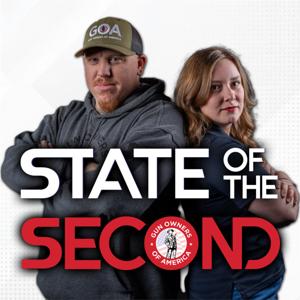


On this episode of GOA's State of the Second, host John sits down with Adam and Jared from SDS Imports to take apart the long-running stigma around Turkish-made firearms. Jared, the company's digital marketing manager, and Adam, the product manager who was calling in from a hot hotel room in Istanbul, walk through how a company that once carried a so-so reputation for imports turned things around by finding the right manufacturers and building guns to American specs rather than just buying whatever was on the shelf. The reality, as they put it, is that the right factories in Turkey are running brand new CNC machinery, clean facilities, and quality assembly teams following prints, and some of those shops rival what's here in the US.
The conversation runs through the brands under the SDS umbrella and the thinking behind each one. They cover bringing back nostalgic names like Mac and Inglis, the double-stack 1911 push with Tisas and Mac at price points like $799 and around $1,050, and why phasing out MIM parts starting in late 2022 mattered to the US shooter even though it added a couple bucks to the gun. They get into the Turkinelli shotguns, where SDS went back to the drawing board after an early misstep, vetted the guns at Gunsite and through Rangemaster and Apache Solutions courses, and pointed to Agency Arms using their guns for the 1014 and M2 Tradesman lines. Jared makes the case for the PX9 as the most slept-on polymer striker-fired gun on the market, built around the widely available P226 and 228 magazines instead of a proprietary mag.
The back half turns to the future of the sport and the business. Spandau over-unders, with parts hand-fitted and wood hand-checkered, are aimed at youth shooting sports and competitive shooters, and Jared connects that to a state high school championship with 2,000 youth shooters and the SCTP Nationals as the future of firearms ownership. The hosts tie shotgun sports to an on-ramp to the Second Amendment, echoing a point from Pete Brownell. They also talk 5.7 and its resurgence, the constant churn of new SKUs and the marketing headaches that come with continual improvement, the retro trend driving demand for guns like the US Army 1911 and the soon-to-be-released Mac 5, and where to find SDS at sdsimports.com and across social media.
The stigma traces to older imports that earned a so-so reputation, but SDS Imports argues it is outdated. The right Turkish factories run brand new CNC machinery in clean facilities with quality assembly teams building to American specs, and some rival US shops.
SDS picks the right factories and builds guns to American specs rather than buying whatever is on the shelf, the same way a US company selects its vendors and manufacturing partners. Adam inspects the guns in person at the factories in Turkey.
SDS revives nostalgic American names like Mac and Inglis because there is real demand for those familiar marks, which fits the retro trend driving interest in classic-style guns.
SDS runs its double-stack 1911 push through the Tisas and Mac brands, offering models at roughly $799 and around $1,050 while still building to American specs.
SDS began phasing out MIM (metal injection molded) parts in late 2022 because the US shooter demanded it, even though it added a couple of dollars to each gun. Jared notes MIM done right can be decent, but customer preference drove the change.
Jared calls the PX9 the most slept-on polymer striker-fired gun on the market, largely because it is built around the widely available P226 and 228 magazines instead of a proprietary mag, which makes feeding it easier.
The Spandau over-unders are hand-fitted with hand-checkered wood and aimed at youth and competitive shooters. Jared ties them to events like a 2,000-shooter state high school championship and the SCTP Nationals, which he sees as the future of firearms ownership.
SDS pointed to the soon-to-be-released Mac 5 and discussed the resurgence of the 5.7 cartridge, alongside a constant churn of new SKUs driven by continual improvement and the retro trend.
Adam and Jared both work for SDS Imports. Jared is the company's digital marketing manager, handling its website and social media, and is the person they put in front of the camera at booth shows; he describes himself as an outdoorsman, a hunter, and a global war on terror veteran. Adam started with SDS at the end of 2020 when there were four employees besides the owners, and worked his way from warehouse lead to general manager to operations manager to product manager; he has been in firearm manufacturing since 2015 and recorded this episode from Istanbul, Turkey, where he was inspecting guns at the factories.
Kelly came to firearms late and on purpose. She grew up in Clearwater, Florida, didn't grow up around guns, and her only early exposure was the wooden rifles her dad kept with a trigger lock. She got her carry permit in 2017 and then did nothing with it for years. What changed everything was March 27, 2023, the day of a school shooting in Nashville. She had friends with kids who went to school there, it hit home, and she decided to stop being unprepared. The day after, she joined a gym and joined the Armed Women of America.
From there she went all in. She took beginner, intermediate, and advanced pistol classes, the Carry for Life class through LFX Firearms Training, vehicle defense training, and a women's situational awareness class where one line stuck with her: in a stressful situation you don't rise to the occasion, you fall to your level of training. She talks through the real process of becoming a carrier, trying firearms at a range rental and at a women's event called Gals Day, figuring out what fit her hand and her body, carrying unloaded for a while, then loaded, then finally feeling confident enough to carry outside the house. She landed on a SIG 365 with a Holosun 407 red dot. She also found her way into the industry through photography and videography work with Kenzie, the Gals Day organizer, which led to her first SHOT Show.
Hosts John and Kaylee, who work as media faces of GOA, dig into how welcoming and safety-focused the firearms community is, what it's like to walk into a gun store or SHOT Show for the first time, and how much of the industry still runs on handshakes and relationships. The back half turns to advocacy. Kelly makes the case that a firearm is an equalizer and that the conversation itself is the bridge for people who would never call themselves gun people. Kaylee breaks down how loaded language like the Safer Community Act and red flag laws is used to sell gun control, why the loopholes are the criminals, and why restoring the Second Amendment right matters as much as good training.
Kelly got her carry permit in 2017 but did nothing with it for years. The March 2023 Nashville school shooting, which hit close to home because friends had kids in school there, pushed her to stop being unprepared, and the day after she joined a gym and the Armed Women of America.
Kelly built confidence in stages, carrying unloaded for a while, then loaded, then finally outside the house. She leaned on stacked training and repetition until she felt ready, summing it up as needing to practice and get all the instruction she could until she felt confident.
Kelly recommends trying firearms hands-on, using a range rental and a women's event called Gals Day to find what fit her hand and body. That process led her to a SIG 365 with a Holosun 407 red dot.
Kelly and the hosts describe the firearms community as welcoming and safety-focused for newcomers, and much of the industry still runs on handshakes and relationships. Her own path led to her first SHOT Show through photography and videography work.
Kelly argues a firearm is an equalizer and that the conversation itself is the bridge for people who would never call themselves gun people. She frames carrying as a personal choice to take your own self-protection into your hands.
Host Kaylee breaks down how loaded terms like the Safer Community Act and red flag laws are used to sell gun control, arguing the real loopholes are the criminals and that restoring the Second Amendment right matters as much as good training.
The episode makes the case that restrictive gun laws restrain law-abiding citizens while criminals ignore them, which is why Kaylee frames the criminals themselves as the loopholes and calls for restoring the 2A right rather than adding restrictions.
Kelly's experience and the hosts' discussion paint the firearms community as welcoming and safety-focused, with women's events like Gals Day and groups like the Armed Women of America helping her find her tribe and get started.
Kelly is a Tennessee mom who came to firearms as an adult. She grew up in Clearwater, Florida without guns in the home, moved to Tennessee with her family after high school, and got her carry permit in 2017. After the March 2023 Nashville school shooting, she committed to training and joined the Armed Women of America, where she became a chapter leader. She has taken beginner, intermediate, and advanced pistol classes, the Carry for Life class through LFX Firearms Training, and vehicle defense training. She carries a SIG 365 with a Holosun 407 red dot. She works in photography and videography in the firearm industry alongside Kenzie, the organizer of the women's event Gals Day, and attended her first SHOT Show. She runs a small Instagram platform called Kelly Carries focused on helping women arm themselves and get involved.
State of the Second sits down with TC from Smoky Mountain Knife Works and Smoky Mountain Guns and Ammo, recorded in Gatlinburg, Tennessee ahead of GOA's convention in Knoxville. TC traces an unlikely path into the industry. He grew up on a cattle farm in South Alabama, saved his money all year as a kid to visit the world's largest knife store once a year, met Chuck Buck there at nine, then spent years as a singer and entertainer in Nashville and later at the Smoky Mountain Opry and Dolly Parton's Stampede before his wife spotted a job posting for a media personality. He started on the knife side almost four years ago, and about a year and a half ago took on the gun store's content too.
Most of the conversation digs into what it actually takes to be a retailer in the firearms and knife space online. TC and John lay out the hard math: social platforms and Google won't let gun and knife sellers pay for advertising, so all growth has to be organic. Margins on firearms run roughly 10 to 15 percent, maybe 20 if you're lucky, and manufacturers, not the store, often set the price through MAP, minimum advertised price. As John puts it, if you got into the gun industry to make millions, you're in the wrong industry. TC also explains the tightrope of speaking for a company rather than as an individual influencer, where he can't just give an opinion but can back a top-five list with real sales reports.
The back half turns to community and advocacy. TC contrasts the wide, mixed demographic of the knife world with the more like-minded gun community, and argues both sides are too quick to tear each other down online in ways that scare off newcomers. Kaylee makes a direct case for action, walking through escalating levels of advocacy from a 30-second pre-typed email to calling representatives to showing up at lobby days, and points to Tennessee's fast-moving legislation, including school carry for teachers headed to the governor's desk. They cover the slippery slope of bans from bump stocks to pistol braces to a lead ammo ban, the censorship and shadow banning retailers face, and the collaboration that John credits as the firearms industry's strength. TC closes with what's next: an expanded gun selection at the former Food Lion location, around 600 to 650 new firearm SKUs, vendor events, and his plan to document jumping into three-gun competition for the first time.
Social platforms and Google won't let gun and knife sellers pay for advertising, so every bit of growth for retailers like Smoky Mountain Knife Works has to come organically. That makes content, not ad spend, the main engine for reaching new customers.
Margins on firearms run roughly 10 to 15 percent, maybe 20 if you're lucky. The store often doesn't set the price either, because manufacturers control it through MAP, or minimum advertised price.
MAP, or minimum advertised price, is the floor a manufacturer sets on what a product can be advertised for, so the price is dictated by the maker rather than the retailer. It's a major reason firearm margins stay thin for stores.
TC describes the knife world as a wide, mixed demographic, while the gun community is more like-minded. He also notes both sides are too quick to tear each other down online in ways that scare off newcomers.
Speaking for a company rather than as an individual influencer, TC can't simply offer his own opinion, but he can stand behind a top-five list backed by real sales reports. The data does the talking instead of personal preference.
Kaylee walks through escalating levels of Second Amendment advocacy, from a 30-second pre-typed email to calling representatives to showing up at lobby days. The message is to find whatever level you're comfortable with and start there.
The conversation traces a slippery slope of bans from bump stocks to pistol braces to a proposed lead ammo ban, showing how restrictions expand over time. A lead ammo ban in particular would reach hunters who assume firearm bans don't touch them.
Smoky Mountain Guns and Ammo is expanding into a former Food Lion location with an added gun selection of roughly 600 to 650 new firearm SKUs plus vendor events. TC also plans to document jumping into three-gun competition for the first time.
TC is a media personality and spokesperson for Smoky Mountain Knife Works and Smoky Mountain Guns and Ammo, where he produces the companies' on-air, radio, and social media content. He grew up on a cattle farm in South Alabama as the son of a welder and machinist, and describes himself as a third-generation welder and machinist. Before joining the company almost four years ago, he worked as a singer and entertainer, living in Nashville to pursue music and later performing at the Smoky Mountain Opry and Dolly Parton's Stampede. He came to guns through hunting rather than law enforcement or the military. He lives on a small horse farm in Seymour with his wife.
Patriot Mobile's Scott Corburn joins State of the Second hosts Kaylee and John to explain how a cell phone provider can be a tool for defending Second Amendment rights. Founded a little over 10 years ago by founder and CEO Glenn Story, Patriot Mobile was built to give back to Christian conservative causes after Story saw a competitor on the left funding efforts against gun rights. Scott puts the company's purpose plainly: its mission has nothing to do with cell phones and everything to do with defending freedom. A portion of every customer's monthly bill is carved out and donated to organizations working across four pillars: First Amendment, Second Amendment, sanctity of life, and support for military and first responders. Gun Owners of America is one of those partners, chosen for its effectiveness in the lobbying space.
The conversation digs into how the business actually works. Patriot Mobile is an MVNO that buys data wholesale from the three main carrier networks, made possible by a law Congress passed years ago, and repackages it under its own brand with its own marketing, billing, and 100% US-based customer support. Scott says customers get the same or better coverage and points to new products including Patriot Mobile One, which runs two active lines on two different networks on a single phone, and Patriot Mobile Connect, a carrier-agnostic internet-on-the-go option. He recounts setting up Kash Patel with all three networks on a single device. He also addresses common objections: switching is done online and over the phone with eSIM and QR codes, a contract buyout program offers up to $500 per line in statement credit, and the company has raised prices only once in its 10-plus-year history.
Kaylee frames the larger stakes around voting with your dollar and personal responsibility, and raises the censorship issue of some carriers blocking gun manufacturers, stores, and ranges from texting customers who opted in. The episode closes by confirming a formal partnership between GOA and Patriot Mobile, with Patriot Mobile helping raise money for lawsuits. Scott shares the offer for GOA members: go to patriotmobile.com/goa or call 972-Patriot, use the code GOA for a free month of service, plus 15% off the monthly bill. Patriot Mobile will also be at GOA's convention in August ready to activate new customers on site.
Patriot Mobile is a conservative cell phone service provider founded a little over 10 years ago by founder and CEO Glenn Story to give back to Christian conservative causes. Story started it after seeing a competitor on the left fund efforts against gun rights.
Patriot Mobile carves out a portion of every customer's monthly bill and donates it to organizations defending freedom across its four pillars. Gun Owners of America is one of those partners, chosen for its effectiveness in lobbying.
Patriot Mobile directs its giving to four causes: First Amendment rights, Second Amendment rights, the sanctity of life, and support for military and first responders.
Patriot Mobile is an MVNO that buys data wholesale from the three main carrier networks, made possible by a law Congress passed years ago, and repackages it under its own brand. Scott Corburn says customers get the same or better coverage.
Patriot Mobile One runs two active lines on two different carrier networks on a single phone. Scott Corburn recounts setting up Kash Patel with all three networks on one device.
Switching is done online and over the phone using eSIM and QR codes. If you still owe on your device, a contract buyout program offers up to $500 per line in statement credit.
Patriot Mobile staffs 100% US-based customer support, run from Grapevine and Tyler, Texas, and Lancaster, California. There are no overseas call centers.
GOA members can go to patriotmobile.com/goa or call 972-Patriot and use the code GOA for a free month of service plus 15% off the monthly bill. Patriot Mobile will also activate new customers on site at GOA's convention in August.
Scott Corburn represents Patriot Mobile, a cell phone service provider that has been in business for about 10 years. Patriot Mobile was founded a little over 10 years ago by founder and CEO Glenn Story to create a provider that gives back to Christian conservative causes. The company is an MVNO that buys data wholesale from the three main US carrier networks and resells it under its own brand, with its own marketing, billing, and 100% US-based customer support staffed from Grapevine, Texas, Tyler, Texas, and Lancaster, California. Scott's specific title at Patriot Mobile is not stated in this episode. [VERIFY]
State of the Second hosts Kaylee and John sit down with Opie of Opie in the Smokies for a wide-ranging conversation that starts with patches and ends on the fight for the Second Amendment. Opie walks through his path from a Glock 17 and an Uncle Mike's holster to a full-time presence in the firearms world. A patch side hustle, including the Trump Train design and a money patch where one random buyer got a real hundred-dollar bill, grew into reviews, work with Liberty Bell Firearms, Smoky Mountain Guns and Ammo, Sylvan Arms, Forge, and Gun Maid, and eventually into training and his own night vision event, Naughty After Dark.
The middle of the episode is about people. The three trade stories from SHOT Show and other events about how patches, YouTube, and firearms forums turn strangers into friends for life, and how welcoming the community is to anyone who shows up. They talk about building an on-ramp for new shooters and content creators, mentoring people who are just getting started, and Naughty After Dark as a low-cost way to let someone try a machine gun, a suppressor, and night vision for the first time. A long, funny stretch on Smoky Mountain wildlife, a coyote attack that cost Kaylee over 40 ducks on her farm, and tourists asking when the national park releases the bears keeps the tone light before the turn.
The final third gets serious on policy. Kaylee and John make the case that the Second Amendment is not about hunting, but hunters should be about the Second Amendment, and that false environmental claims like the lead ammo ban are used to chip away at the shooting sports. They cover the NFA at 90 years old, the push to get suppressors out of the NFA, AR platforms replacing traditional hunting guns, and why GOA sues carefully to avoid setting bad precedent. Opie and John argue the firearm used to be the nucleus of the family and that mentorship, youth programs, and self-reliance have eroded. The close is a call to action: Kaylee says she timed the form email at 28.7 seconds, and the other side is counting on you sitting out the fight. The episode wraps with plugs for GOALS in Knoxville on August 17-18 and Naughty After Dark on October 25-26.
Opie started with a Glock 17 and an Uncle Mike's holster, then built a morale patch side hustle, including a Trump Train design and a money patch. That grew into reviews, training, and partnerships with Liberty Bell Firearms, Smoky Mountain Guns and Ammo, Sylvan Arms, Forge, and Gun Maid.
The patch community pulls people together across brand and platform debates, turning strangers into lasting friends. Opie's money patch, where one random buyer received a real hundred-dollar bill, is an example of the novelty and collectibility that give patches value.
Naughty After Dark is Opie's night vision event built as a low-cost way for someone to try a machine gun, a suppressor, and night vision for the first time. It serves as an on-ramp that lets new shooters experience gear they might never otherwise access.
Kaylee and John make the case that the Second Amendment is not about hunting, but hunters should be about the 2A. They argue that false environmental claims are used to chip away at the shooting sports, so hunters have a direct stake in defending the right.
The hosts argue that false environmental claims, such as the lead ammo ban, are used as a pretext to chip away at the shooting sports incrementally. Framing ammunition as an environmental hazard becomes a lever to restrict shooting without addressing firearms directly.
Gun Owners of America sues carefully to avoid setting bad precedent that could harm the broader fight. Choosing cases selectively keeps a loss from creating a ruling that weakens Second Amendment protections for everyone.
Opie and John argue the firearm used to be the nucleus of the family, and that mentorship, youth programs, and self-reliance have eroded over time. They point to mentoring new shooters and youth programs as the way to rebuild that foundation.
Kaylee says she timed sending a Gun Owners of America form email at 28.7 seconds, showing how little effort action takes. The point is that the other side is counting on gun owners sitting out the fight.
Opie is the firearms content creator behind Opie in the Smokies, based in East Tennessee. He grew up in Evansville/Boonville, Indiana, and moved to Tennessee for an ATM job almost a decade ago, which is where his shooting started. He began with a Glock 17, built a morale patch side hustle (including the Trump Train design), and exhibited at the NRA show in Atlanta in 2018. He works with Liberty Bell Firearms, Smoky Mountain Guns and Ammo (about four years of reviews), Sylvan Arms, Forge, and Gun Maid. He offers pistol, rifle, shotgun, night vision introduction, everyday carry, and women's pistol classes in East Tennessee, and runs the Naughty After Dark night vision event. He is 36 years old and has a wife and a young child, and mentions Wyatt as someone who may carry on Opie in the Smokies one day.
State of the Second 1x46 brings on competitive shooter, instructor, and firearms writer Kenzie for a conversation about how to actually get into the gun industry and the shooting sports. Hosts John and Kaylee open from Gatlinburg, Tennessee, where they're prepping for GOA's convention in Knoxville this August. Kenzie shares her path: she grew up around guns and hunting, joined the rifle association at Florida State University, made its pistol team, and spiraled into nearly every discipline she could find, from GSSF and Steel Challenge to USPSA, three gun, cowboy action, IDPA, NRL 22, and PRS. She got her permit in Florida at 21, taught concealed carry for a decade across Florida and Tennessee, and now writes, runs YouTube, and hosts her own podcast.
A large part of the episode is about lowering the barrier to entry. Kenzie and the hosts push listeners to try at least one competition even if they're terrible at it, because the pressure test is worth it. They talk about how easy it is to start with a Glock at a GSSF match, the camaraderie at the range, and people like Battle Buddy 3 Gun and shooters with disabilities who prove there are no excuses. Kenzie describes bringing friends to matches with gear, ammo, and guns in hand, and running a women-only event that's grown to roughly 92 attendees in its fifth year.
The group gets candid about women in the industry. Kenzie says it took ten years and a lot of work to be taken seriously, and that brands and gun shops are finally listening instead of trying to 'shrink it and pink it.' They talk through slimline carry guns built for women, the importance of fit and reaching the trigger, and a gun-shop scene where a clerk tried to sell a beginner a 500 S&W Magnum. The back half turns to training: the state minimum is a floor not a finish line, constitutional carry has driven demand for more class options, and you should vet instructors hard because an NRA credential alone proves little. Practicescore rankings, round counts, and whether an instructor can demonstrate a drill on command are the real tells. Kenzie can be found at her website and on Instagram as 3gunkenzie, and GOA's convention runs August 17th and 18th in Knoxville.
Just sign up and try one match even if you're terrible at it, because the pressure test is worth it. Kenzie started by joining her university's rifle association, making the pistol team, and then branching into nearly every discipline she could find.
Start with a Glock at a GSSF match, which is an easy on-ramp with a welcoming, camaraderie-driven range crowd. Kenzie also brings new shooters to matches with the gear, ammo, and guns already in hand so cost and equipment aren't barriers.
Kenzie says it took about ten years and a lot of work to be taken seriously in the industry. The upside is that brands and gun shops are finally listening to women instead of trying to 'shrink it and pink it.'
Not always. Kenzie recounts a clerk who tried to sell a beginner a 500 S&W Magnum, which is why she stresses that you have to have a voice in a gun shop and not just take what you're handed.
Slimline carry guns designed with women in mind, where fit matters and the shooter can actually reach the trigger. The episode frames proper fit as more important than marketing a gun as a 'women's' model.
The state minimum is a floor, not a finish line. As constitutional carry has driven demand for more options, Kenzie and the hosts argue the bare-minimum class is just a starting point and ongoing training beyond it is the real goal.
Vet them hard, because a credential like an NRA certification alone proves little. The real tells are Practiscore rankings, round counts, and whether the instructor can demonstrate a drill on command.
Bring friends to matches and lean on the built-in range camaraderie, and create the event you want if it doesn't exist. Kenzie runs a women-only shooting event that has grown to roughly 92 attendees in its fifth year.
Kenzie is a competitive shooter, firearms instructor, and writer in the firearms industry. She grew up around guns and hunting, with both grandfathers and her father into firearms. At Florida State University she joined the school's rifle association and made its pistol team, then competed across disciplines including GSSF, Steel Challenge, USPSA, two gun, three gun, cowboy action, IDPA, NRL 22, and PRS. She got her permit in Florida at 21 and taught concealed carry for ten years in Florida and Tennessee, and is now 31. She also does private training, runs a YouTube channel and her own podcast, and hosts a women-only shooting event now in its fifth year. Her surname is not stated in this episode. [VERIFY]
Josh from Black Diamond Guns and Gear joins hosts Kaylee and John for a wide-ranging conversation about building a firearms YouTube channel from nothing, how welcoming the gun community is, and why budget guns matter. Josh tells the origin story of Black Diamond, which started around 2017 when he was making holsters under Black Diamond Holsters and the other Josh (Small Josh) suggested they try YouTube. Their first video, shot on a phone, was rough, but Facebook live shows pulled big audiences early on, with as many as 60,000 people watching live, and the channel grew from there. Josh shares that he lost about 90 pounds after gastric sleeve surgery and that he did it for his kid.
A big chunk of the episode is about getting into content creation. Josh and John encourage anyone interested to pick up a phone and start, because the camera in your pocket is good enough now and the first hundred videos are going to be rough anyway. John recalls Mr. Guns and Gear reframing 142 subscribers as 142 people he had touched, and Kaylee makes the case that sharing your story, even with one person, builds an on ramp into the Second Amendment community. They talk about how welcoming the YouTube gun crowd has been, naming friends like Steve (Mr. Big Kid), Patton, Sean Herron, and Opie of the Smokies.
Josh launched fattac.com, a site built for bigger guys, selling Fat Tac low-riding holsters that let larger people carry appendix comfortably, plus apparel, armor, belts, and medical gear. The back half turns to budget firearms and Josh's reaction video to GOA's earlier episode with Jamin from PSA, which became the show's most-viewed podcast at over 190,000 views. They dig into why budget guns get views, why $300 to $400 is real money in this economy, and the idea that you are not locked into one gun for life. Kaylee closes on going on the offensive politically, points to teachers being able to carry in schools as a step in the right direction, and invites listeners to the free Gun Owners Advocacy and Leadership Summit (GOALS) in Knoxville, Tennessee.
Black Diamond began around 2017 when Josh was making holsters under Black Diamond Holsters, and the other Josh (Small Josh) suggested they try YouTube. Their first video was shot on a phone and came out rough, but early Facebook live shows pulled big audiences, with as many as 60,000 watching live.
Fat Tac is Josh's site, fattac.com, built for bigger guys. It sells Fat Tac low-riding holsters that let larger people carry appendix comfortably, along with apparel, armor, belts, and medical gear.
Budget guns draw views because $300 to $400 is real money in this economy, so most people shopping for a first gun are looking in that range. Josh's reaction video to a budget-gun episode became the show's most-viewed podcast at over 190,000 views.
Josh reacted to Gun Owners of America's earlier episode featuring Jamin from PSA because it centered on budget firearms, a topic that consistently draws views. His reaction became the show's most-viewed podcast at over 190,000 views.
Yes. The hosts and Josh make the case that $300 to $400 is real money in this economy, which is why budget guns matter, and they stress you are not locked into one gun for life.
No. Josh and John encourage anyone interested to just pick up a phone and start, because the camera in your pocket is good enough now and your first hundred videos are going to be rough anyway.
Josh, John, and Kaylee describe the YouTube gun crowd as welcoming, naming friends like Steve (Mr. Big Kid), Patton, Sean Herron, and Opie of the Smokies. Kaylee argues that sharing your story, even with one person, builds an on ramp into the Second Amendment community.
Kaylee pointed to teachers being able to carry in schools as a step in the right direction and framed it as part of going on the offensive politically rather than staying on defense. Josh agreed, calling it a great step in the right direction.
Josh is one of the two people who run Black Diamond Guns and Gear, a firearms YouTube channel that started around 2017 and picked up in 2019. He began by making holsters under Black Diamond Holsters and does the channel's editing and posting himself. He later founded fattac.com, a site built for bigger guys that sells Fat Tac low-riding holsters, apparel, armor, belts, and medical gear. He played in a band before getting into content. He lost about 90 pounds after gastric sleeve surgery.
State of the Second host John sits down with Tony and Ryan from Vertx, the tactical bag and apparel brand whose parent company, Flying Cross, has been making first responder and law enforcement uniforms for more than 180 years. The conversation traces how Vertx grew out of that uniform business: after 9/11, one of the three-letter agencies asked the company to build low-visibility gear so people deploying overseas wouldn't be a target on day one, and that work eventually turned into the commercial bags and clothing the brand is known for. The guests explain the core idea behind everything they make, which they call tactical function, not tactical fashion. The goal is normal-looking gear that quietly carries a folded AR, a pistol, a med kit, or an armor panel without announcing itself.
Much of the episode is about real-world carry and preparedness. John shares stories about backpack guns, the GoBag, the Gamut, and using his bag's first-aid setup when his sister-in-law slipped on a Smoky Mountains trail and cut her knee open. The hosts and guests dig into off-body and hybrid carry, the surge in fanny packs (one top-three account saw seven of its top ten Vertx items become fanny packs in a year), and the partnership with Lena that built a women's line designed for how women actually dress and carry rather than the shrink-it-and-pink-it approach. They cover Vertx's work with Premier Body Armor on NIJ-certified panels, including the uncomfortable reality that parents buy panels for school-age kids, and the bag's luggage pass-through that doubles as a way to use the pack as a shield.
The back half turns to the Second Amendment and the gun industry itself. John makes the case for GOA membership at 25 dollars a year, points to wins like Bruen and the bump stock case, and explains why GOA won't back constitutional carry bills loaded with red flag laws. Tony delivers a guard-the-gate argument that the Second Amendment is only what the Supreme Court says it is, which is why elections and court appointments matter. They also talk about the close, supportive culture of the firearms industry, where people congratulate the company for landing a good hire rather than the other way around, and where brands compete for customers but still support each other. The episode closes with a pitch for GOA's first GOALS event in Knoxville, where Vertx shares a footprint with Premier Body Armor and people can put hands on the product.
Vertx grew out of its parent uniform company, which has made first responder and law enforcement uniforms for more than 180 years. After 9/11, a three-letter agency asked it to build low-visibility gear so personnel deploying overseas wouldn't be targeted, and that work became the commercial bags Vertx sells today.
It means building normal-looking gear that quietly does a tactical job rather than advertising it. A Vertx bag or piece of clothing carries a folded AR, a pistol, a med kit, or an armor panel without announcing itself as tactical.
Fanny packs took off because off-body and hybrid carry are surging; one top-three account saw seven of its top ten Vertx items become fanny packs in a single year. The partnership with Lena built a women's line designed for how women actually dress and carry, rather than the shrink-it-and-pink-it approach.
Vertx partners with Premier Body Armor on NIJ-certified panels that fit inside its bags. Certification matters because it is the tested standard that tells a buyer the panel meets a real protection level, a point that hits home given that parents buy panels for school-age kids.
Beyond a firearm, a Vertx bag carries a med kit, an armor panel, and everyday organization; the host recounts using his bag's first-aid setup after a family member cut her knee on a Smoky Mountains trail. The luggage pass-through slides the pack onto a suitcase handle and doubles as a way to hold it as a shield.
Gun Owners of America (GOA) won't back constitutional carry bills that come loaded with provisions like red flag laws, because the added restrictions undercut the right the bill claims to expand. The episode frames restrictive language wrapped around the Second Amendment as a noose that keeps tightening.
Tony makes a guard-the-gate case that the Second Amendment is worth only what the Supreme Court rules it to mean, which is why elections and court appointments matter so much. He points to wins like Bruen and the bump stock case as proof that the courts decide the right's real scope.
The Gun Owners Action Leadership Summit (GOALS) is GOA's first event, held in Knoxville. Vertx shares a footprint there with Premier Body Armor so attendees can put hands on the product in person.
Tony and Ryan represent Vertx, the commercial tactical bag and apparel brand. Vertx's parent company is Beckmann Brothers / Flying Cross [VERIFY], a maker of first responder and law enforcement uniforms that the guests describe as a 183 to 184 year old company. Tony and Ryan focus on the commercial side of the business. Ryan was a teacher in Florida before joining Vertx and previously coached youth female athletes. The brand's positioning is tactical function, not tactical fashion, and it partners with Premier Body Armor on NIJ-certified panels and with Lena on a women's line.
Brownells turns 85 this year, and CEO Pete Brownell joined State of the Second hosts Kaylee and John to walk through how a 1939 gunsmithing supply company became one of the longest-running family businesses in the firearms industry. Pete is third generation. His grandfather started the company as Brownell's Gun Mart, writing how-to articles for NRA publications and stocking the Smith & Wesson and Colt parts that local gunsmiths could not get from factories that only wanted to make guns. The mission was to professionalize the gunsmithing trade with the right tools, the right education, and good product at the right price. Pete also tells the story of moving the company online in 1996, when it was larger than Amazon at the time and his father wrote off the internet as a passing fad.
Much of the conversation is about gunsmithing and the home build. Pete explains why traditional brick-and-mortar gunsmiths faded as CNC machining and tighter tolerances let the AR-15, Glock, and Sig come together without hand fitting, which opened the door for hundreds of thousands of people to personalize firearms at home. He argues America needs more gunsmiths. The number has stayed flat for about a decade while gun ownership climbed toward 100 million people, and there are now 22 gunsmithing schools offering both two-year hands-on programs and distance learning. He points to bolt guns and long-range shooting as the next home build trend, built off a good barreled action.
The back half turns to advocacy. Pete frames Two A Day, the national range day that started on February 22, 2022, around the idea that a civil liberty not exercised ceases to be a civil liberty. He and the hosts press the case for showing up at state lobby days, taking a legislator or a friend to the range without an I-got-you attitude, and welcoming minority and first-time owners into a constitutional tent that is for everybody. Pete praises GOA's stand and the company's choice to support organizations on mission, noting Brownells stepped back from the NRA convention to do so. He closes on what's new at Brownells: a frictionless online experience, an FFL Finder to drive traffic to local shops, the BRN-180 and a Baron 4 launch, and a deeper focus on owning the gunsmith's bench with lifetime-guaranteed tools. Brownells is the title sponsor of GOA's first convention, GOALS, in Knoxville.
Pete Brownell's grandfather founded the company in 1939 as Brownell's Gun Mart, stocking the Smith & Wesson and Colt parts local gunsmiths could not get from factories. Pete is the third generation to run what is now one of the firearms industry's longest-running family businesses.
The founding mission was to professionalize the gunsmithing trade by giving gunsmiths the right tools, the right education, and good product at the right price. Brownells stayed focused on supplying parts and tools rather than expanding into brick-and-mortar retail stores.
CNC machining and tighter tolerances let platforms like the AR-15, Glock, and Sig come together without hand fitting, so the brick-and-mortar gunsmith who once did that fitting faded. That same shift opened the door for hundreds of thousands of people to personalize firearms at home.
Pete argues America needs more gunsmiths: the number has stayed flat for about a decade while gun ownership climbed toward 100 million people. There are now 22 gunsmithing schools offering both two-year hands-on programs and distance learning.
Pete points to bolt guns and long-range shooting as the next home build trend, built off a good barreled action. It follows the same path that made the AR-15 and polymer pistols popular projects to assemble at home.
Two A Day is a national range day that started on February 22, 2022, built around the idea that a civil liberty not exercised ceases to be a civil liberty. The goal is to get people out exercising their Second Amendment rights so those rights stay meaningful.
Pete urges showing up at state lobby days and taking a legislator or a friend to the range to educate rather than ambush them, without an I-got-you attitude. He also frames the Second Amendment as a constitutional tent that welcomes minority and first-time owners.
Brownells is building a frictionless online experience, an FFL Finder to drive traffic to local shops, the BRN-180 and a Baron 4 launch, and a deeper focus on owning the gunsmith's bench with lifetime-guaranteed tools. It is also title sponsor of Gun Owners of America's first GOALS convention in Knoxville.
Pete Brownell is the third-generation leader of Brownells, the gunsmithing supply company his grandfather started in 1939 as Brownell's Gun Mart. The company turns 85 in June this year. Before joining the business, Pete worked in construction management in Miami and then in the Bay Area during the early days of e-commerce, and he brought the internet back to the company, which launched one of the first e-commerce sites in the firearm industry in 1996. He is a past president of the NRA. Brownells now includes AR15.com as part of its family of companies.
In this episode of Gun Owners of America's State of the Second, hosts Kaylee and John sit down in East Tennessee with Mike Darter, founder and CEO of CCW Safe, to talk through what actually happens after a self-defense incident and why a plan matters before you ever carry. Mike spent 20 years in law enforcement, and the company grew out of a shooting he was involved in on a raid that left two drug dealers dead and led to a federal lawsuit he won at summary judgment. His Fraternal Order of Police membership covered the year-and-a-half case, and when he left law enforcement he realized he no longer had that protection. He and his stepbrother Kyle Sweet, a former cop turned attorney, looked for something comparable for civilians, found only insurance, and started CCW Safe in 2012.
Mike walks through how the service works in practice. CCW Safe is a membership, not insurance, a deliberate choice because insurance cannot cover intentional acts and an attorney could argue pulling a trigger is intentional. A member calls a 24-hour center, the call is patched to one of two on-call attorneys, and attorney-client privilege starts within minutes. A critical response team of former homicide detectives gets boots on the ground that day or the next, and national trial counsel Don West vets and hires the best local attorney for that specific case rather than pulling from a pre-set list. Coverage runs beyond the courtroom to investigators, expert witnesses, biohazard cleanup, counseling, and even workout and diet plans, which he illustrates through the Stephen Maddox murder-one case in Wilson, North Carolina. He explains why CCW Safe covers brandishing and non-firearm self-defense, why they pulled out of Washington and New Jersey to stay in 48 states, and how they keep members healthy mentally, emotionally, and physically.
The back half turns to culture and education. Mike, Kaylee, and John talk about an increasingly anti-gun climate, the media's rush to judgment, and the case for being prepared whether or not you buy coverage. Mike points listeners to the free case studies on CCW Safe's site, including the Ted Wafer case, and shares how one member avoided a shooting because he remembered it. The hosts and Mike trade range-day stories about new and green shooters, immigrants who fight to exercise the freedom they never had, and the need to rebuild youth shooting sports. They close on GOA's inaugural Gun Owners Advocacy and Leadership Summit, August 17 and 18 in Knoxville, Tennessee, where CCW Safe will have a booth.
CCW Safe is a self-defense legal-coverage membership for gun owners, founded in 2012 by Mike Darter and his stepbrother Kyle Sweet. Darter spent 20 years in law enforcement and was sued over a raid shooting; his police union covered that case, and he saw civilians had no comparable protection.
It is a membership by design because insurance cannot cover intentional acts, and an attorney could argue that pulling a trigger is an intentional act. The membership model lets CCW Safe fund a self-defense legal defense without that coverage gap.
A member calls a 24-hour center, the call is patched to one of two on-call attorneys, and attorney-client privilege begins within minutes. A critical response team of former homicide detectives gets on the ground that day or the next, and national trial counsel Don West hires the best local attorney for the case.
National trial counsel Don West vets and hires the best local attorney for that specific case rather than pulling from a pre-set list, matching the defense to the facts and jurisdiction of each incident.
Coverage extends past the courtroom to investigators, expert witnesses, biohazard cleanup, counseling, and even workout and diet plans, with the goal of keeping members healthy mentally, emotionally, and physically. CCW Safe also covers brandishing and non-firearm self-defense, not just shootings.
CCW Safe pulled out of Washington and New Jersey so it could keep operating in 48 states. Darter frames it as a deliberate choice to stay viable across the rest of the country.
Darter's core message is that you need to be prepared before you carry, treating yourself as your own first responder. He points listeners to the free case studies on CCW Safe's site, including the Ted Wafer case, and notes one member avoided a shooting because he remembered one.
Gun Owners of America's inaugural Gun Owners Action Leadership Summit (GOALS) is August 17 and 18 in Knoxville, Tennessee, where CCW Safe will have a booth.
Mike Darter is the founder and CEO of CCW Safe. He spent 20 years in law enforcement, including time as a gang unit officer. While on a raid he was involved in a shooting that left two drug dealers dead, was sued in federal court, and won the case at summary judgment after about a year and a half, with his Fraternal Order of Police membership covering the costs. He co-founded CCW Safe with his stepbrother Kyle Sweet, a former police officer turned trial attorney who serves as general counsel, starting the company in 2012. Mike has three daughters, leads wildlife photo tours several times a year, and previously ran a judo school. He is an Oklahoma fan and played rugby at OU. CCW Safe operates a range outside Oklahoma City.
From the publisher's feed

227,534 Listeners
1,637 Listeners
882 Listeners
883 Listeners
872 Listeners
267 Listeners
8,914 Listeners
6,888 Listeners
5,859 Listeners
1,539 Listeners
436 Listeners
46,068 Listeners
1,324 Listeners
39,342 Listeners
89 Listeners