
Sign up to save your podcasts
Or

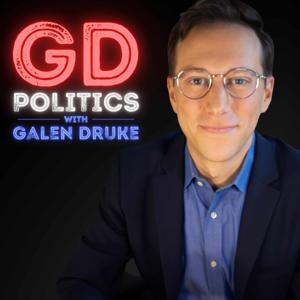

A question that political analysts often ask is whether something is “breaking through.” Is a piece of information reaching the masses? And is it not just the case that everyone knows it, but does everyone know that everyone else knows it too.
Did we all see that Super Bowl ad? Did we all see that political gaffe? Or as today’s guest would put it: Is it common knowledge?
When people know that something is known or believed by others, it can change human behavior. Think about the watershed moment that President Biden’s 2024 debate caused. Polling already showed that a majority of Americans – even a majority of Democrats – believed Biden was too old for the job. The debate didn’t so much change the facts, as it made it obvious that everyone else knew them too.
Or think about the many Democratic voters in the 2020 primary who wanted to vote for the candidate they believed others would vote for. In an instance like that, simply publishing polling results can influence who voters might support.
This is a phenomenon that shapes electoral politics, but it extends well beyond that, to stock market bubbles and bursts and online mob behavior. With me on today’s podcast to break it down is Steven Pinker. He’s a psychology professor at Harvard University and author of many books, the latest of which is, “When Everyone Knows That Everyone Knows . . . Common Knowledge and the Mysteries of Money, Power, and Everyday Life.”
 View all episodes
 By Galen Druke

4.9
557557 ratings
A question that political analysts often ask is whether something is “breaking through.” Is a piece of information reaching the masses? And is it not just the case that everyone knows it, but does everyone know that everyone else knows it too.
Did we all see that Super Bowl ad? Did we all see that political gaffe? Or as today’s guest would put it: Is it common knowledge?
When people know that something is known or believed by others, it can change human behavior. Think about the watershed moment that President Biden’s 2024 debate caused. Polling already showed that a majority of Americans – even a majority of Democrats – believed Biden was too old for the job. The debate didn’t so much change the facts, as it made it obvious that everyone else knew them too.
Or think about the many Democratic voters in the 2020 primary who wanted to vote for the candidate they believed others would vote for. In an instance like that, simply publishing polling results can influence who voters might support.
This is a phenomenon that shapes electoral politics, but it extends well beyond that, to stock market bubbles and bursts and online mob behavior. With me on today’s podcast to break it down is Steven Pinker. He’s a psychology professor at Harvard University and author of many books, the latest of which is, “When Everyone Knows That Everyone Knows . . . Common Knowledge and the Mysteries of Money, Power, and Everyday Life.”
26,012 Listeners
8,474 Listeners
5,130 Listeners

87,868 Listeners
12,741 Listeners

8,121 Listeners
5,832 Listeners

90 Listeners

16,525 Listeners

2,608 Listeners

2,328 Listeners

3,186 Listeners

263 Listeners

1,082 Listeners