
Sign up to save your podcasts
Or



Today's show is part two of red flags that buyers should look out for to avoid big and expensive issues when checking out properties.
Windows is one to look at first, especially the type of windows that potentially are going to rot. Tessa advises giving windows a gentle push or touch to see if they are solid or rotted. She highlights that replacing windows can be a huge expense for home buyers. Reuben shares about looking out for aluminum-clad wood windows that were installed in the 90s or early 2000s.
Another on the list is the deck. Reuben discusses how to check the deck and ensure that everything is plumb and level. He also talks about the materials used in the deck and their life span and painted decks. Tessa highlights that it's very important to check the entire structure and ensure proper attachments. She adds checking for deterioration, loose guardrails, flashing at the ledger board, and visible signs of rot in wood, joists, beams, and deck boards.
Next is the structure of the house and the foundation. Reuben discusses stacked stone foundations, foundation cracks, and the typical areas where foundation problems can be seen. While not common in Minnesota, he also talks about wood foundations. Tessa talks about finished basements but there's so much that can't be seen and can go wrong—including the foundation, plumbing, and electrical. They also discuss in-slab ductwork and the potential moisture that is building up in the slab.
Another is plumbing and sewer lines. While a lot of problems with plumbing are more present in older houses, the thing to really look out for is galvanized water distribution pipes and galvanized drains. Reuben shares how to do a simple little test to check the water flow.
They also talked about appliances such as the water heater, the furnace, and the air conditioner and the importance of knowing their ages. Then they talked about electrical concerns such as bad panels and aluminum wiring. Reuben discusses the Federal Pacific Electric (FPE) or Stab-Lok, Zinsco or Sylannia, or fuse panels that need to be replaced. Tessa shares that the knob and tube wiring is not designed to handle the current household load. These are red flags for fire hazards and concerns insurance companies.
Visit StructureTechCE.com to join the full 1.25 hour class with all photos and a polished video presentation about these red flags.
E-mail your questions and podcast topics to [email protected].
Today's show is about red flags buyers should look out for when buying a property.
Reuben and Tessa run through tips and recommendations when checking a house. Tessa shares where and how to look at the roof for any defects, damages, or irregularities. Reuben adds that there's a lot that can be seen from the ground to alert buyers of a bad roof. He highlights that it's important to know the age of the roof and shares about obvious roof defects in old and new constructions. They talk about shingles, sagging ridgelines and edges, discoloration, heat loss, ice dams, and insurance claims.
They talk about issues and irregularities with chimneys such as cracks, gaps, patchings, and rebuilt chimneys. Tessa mentions that it's difficult to determine the true condition of the bricks by a visual analysis from the outside or with a level two chimney inspection. Then they discuss water management- where the water goes and where it's concentrated. Reuben shares his focus on the front door, rotted windows, rotted sidings, the basement as well as the areas outside the house. They discuss the use of stucco and vinyl as sidings and share building practice failures in the previous decades.
Before looking at houses, Reuben shares that it's important to have the right tools such as a quality flashlight and good winter boots. He also highlights that they have a class about all things showing red flags for real estate agents. The 1.25-hour Continuous Education class is accessible at StructureTechCE.com .
Send your questions and comments to [email protected].
Today, the three-legged stool breaks down and digests the recent podcast about insulation with Patrick Huelman.
Tessa starts the discussion by talking about Patrick's applied research and development in residential houses with the Building America Program that is led by the Department of Energy. This program focuses on energy efficiency and building performance issues, (durability, quality, affordability, comfortability, and indoor air issues) by upgrading the insulation in exterior walls. She shares the nationwide data about homes that could benefit from this project and the type of homes this can be applied to. They also talk about insulation R-values.
Reuben highlights that identifying the best method to retrofit an uninsulated wall depends on the type of the house, the design, materials, climate, and water management strategy, among others. He discusses the drill-and-fill method which he thinks is the best method. He also discusses other methods and the possible return on investment on energy costs. Bill asks why the concept of the perfect wall is not a priority among homeowners. He also asks about the best value-for-money method.
As a takeaway from the session, Tessa shares that the order of changes and improvements in the house matters. She adds that before focusing on energy efficiency, interior issues should be addressed.
For comments and questions, send an email at [email protected] or visit structuretalk.com
Brock Verville shares his unique perspective as a home inspector and a firefighter for the City of Albertville and talks about fire safety and fire codes.
Brock quotes that fire codes are written in blood. He explains that the purpose of codes is to correct something that caused injury or death in the past and they are driven out of tragedies or avoidable things that had occurred. They talk about the importance of smoke alarms, the type of alarms, their battery life, and the failure rate of old alarms. Brock highlights that the number one reason for fire deaths is non-operable or non-existing smoke alarms. Reuben shares about his smoke alarm set up at home, then Brock shares his two cents on it. Brock mentions how sprinkler systems are remarkably effective.
They also talk about lightweight building materials and composite materials, window ventilation, and how they affect fire progression. According to Brock, most fires start in the kitchen, most also start with electrical fires. He talks about the fire tetrahedron where a sustained chemical chain reaction is required for fire to occur. He discusses the transitional and defensive attacks in putting out a fire and shares how to limit ventilation during a fire and what to do when trapped in rooms. He gives a summary of what happens when the fire department arrives on the scene. He highlights that the number one cause of firefighter death is heart attack and cancer because they're exposed to so many chemicals that leach to their skin.
Brock explains that his report as a home inspector during fire inspection is to highlight the intent of the codes. Then he shares examples of the intent of certain codes such as the sprinkler systems in commercial areas. He then shares reminders and best practices to prevent fire and be safe at home.
Owner of Inspection WerXs and Appraisal WerX, Lanny Freng joins the show to talk about the property appraisal industry.
Lanny talks about the Home Valuation Code of Conduct (HVCC) and the Appraisal Management Company (AMC) and how it changed the industry and the appraiser's relationship with mortgage companies since 2008. While appraisers continue to carry through, Lanny explains that appraisers need to transact with AMCs and can no longer directly connect with banks. He also talks about the guidelines being used in the property comparable and appraisal reports format.
They also discuss the technology and modern tools that appraisers use and an appraisal database. Lanny highlights that property appraisals are based on historical data and that the lender is their client and that they are the intended user of the appraisal. He explains how they make time adjustments with their appraisals in accordance with the market. He also talks about Reconsideration of Value (ROV).
Reuben asks how home inspections affect the property appraisal and vice versa. Lanny shares about the changes in the appraisal industry. He talks about the differences between Fannie Mae's products such as Hybrid appraisal and Desktop appraisal. Lanny mentions that there are price ceilings, especially with townhouses. He explains how costs do not equate to value.
Contact Lanny Freng by calling 612-386-2660 or visiting appraisalwerx.com.
Reuben and Tessa are joined by Patrick Huelman, an Associate Professor at the University of Minnesota, to talk about insulation.
Patrick Huelman shares his extensive background in architecture and building science. He talks about their recent experimental work with the Department of Energy through Pacific Northwest National Laboratories to investigate thermal wall systems by in-situ energy and moisture modeling. Patrick then discusses the controls that a high-performing building enclosure needs: insulation, air control, water control, and vapor control. He shares that the layers have to be done in the right order and that this is the challenge in existing homes.
Reuben asks about the approaches to retrofitting a house, the common mistakes, and the better way to do it. Tessa asks about recommendations based on the 14 different wall set-ups from the experiment and which is the most cost-effective. Patrick shares his ideas and the results of their study. He mentions that it will take a while until the panel-like wall system is accepted in residential constructions and for the industry to start catching up with this science.
Patrick highlights that getting home inspectors and building science professionals is essential for risk assessment and management.
Today we're going to talk about giving context and putting things into perspective for buyers and homeowners.
Reuben and Tessa talk about the factors needed to be considered when reporting about different kinds of houses: the age and condition of the house and the unique or typical defects. Tessa shares that being a home inspector is a difficult job and it's more than just the technical side of looking at defects and finding problems. It's looking at the house, understanding clients and their concerns, and being able to communicate effectively and potentially address concerns that are outside the scope of the home inspection. She adds that it's important that clients have a good understanding of what they are buying.
Tessa discusses the steps in inspecting, reporting, taking the inspection one step further, and collating important information for the client. They talk about categorizing the critical items in home inspections: health and safety, expensive or big repairs, and building performance. She highlights that effective communication is as important as doing a good technical inspection: it's about what to say and how to say it. Reuben shares examples where proper context is necessary for discussing safety hazards.
Today we're going to deconstruct critical items of a home inspection and how the home inspection is integrated and overlaps with building science.
Tessa shares that home inspectors look at specific separate systems and structural things and then identify potential defects. While the industry is chopped into specialized systems, Tessa highlights that home inspectors are positioned with a unique opportunity to assess a house holistically. She explains that homeowners expect a lot from their house: they want it to be safe, healthy to live in, comfortable, and energy-efficient.
Reuben mentions that the industry holds on to the standards and there are risks and potential liabilities if inspectors go outside the standard practice. He also mentions that some home inspection companies in the country do healthy home assessments by troubleshooting pain points that people have. Bill clarifies if these companies are observing the ASHI standards of practice. Bill also asks if this can be a different product and if this service has a market.
They talk about indoor air quality, comfort, performance, durability, and installation. Tessa and Reuben talk about how they integrate some building science with home inspections and how Structure Tech trains inspectors to widen their perspectives and effectively communicate to the client. Tessa mentions that some comments in the home inspection reports are above and beyond the SOP; these are concerns for comfort and building performance. She adds that mentioning these to the client will impact the quality of their day-to-day life. Reuben also shares his experiences with clients who he gave additional information to ahead of time.
Bill starts the show by talking about the City of St Paul’s decision to get rid of lead supply lines. Reuben shares that around 28% of the city or over 26,000 properties are using lead supply lines. Also, the city will be funding the 10-year program and will be spending $250M. He then explains what lead supply lines are and highlights that it’s a health hazard.
Tessa shares that lead supply lines have been buried for 100 years now. She explains how to identify lead and what to do when it’s present in the water piping. Reuben describes what a galvanized pipe looks like.
Reuben highlights that the standard of practice in home inspections exclude reporting about lead, and doesn’t record the kind of water supply a house has. However, inspections describe the type of water distribution piping in the house and reports if the material is copper or plastic. He explains how lead gets into drinking water.
Read more about lead water supplies here https://structuretech.com/lead-water/
Travis McKenzie, Sales Director of Aquarius Homes Services joins today's show to talk about Soft Water and the Kinetico Water System.
Aquarius Homes Services, formerly Aquarius Water Conditioning, specializes in heating, cooling, plumbing, electrical, and water treatment. They provide a water treatment and conditioning system and offer free consultation and baseline testing for homeowners and buyers. Travis mentions that they encounter common customer concerns such as iron or hard water, staining, and build-up. These things affect home appliances and fixtures.
Travis talks about water quality and safety as well as various sources of water and the use of chemicals for treatment. He identifies the substances that are present in water and their potential hazards. He discusses the cons of using chlorine such as its byproduct and trihalomethanes, which are known to be cancer-causing. Bill mentions that there is a low water quality in the Minneapolis area and water conditioning is something that homeowners need to consider.
Travis explains how the Kinetico Water System works and how it provides unlimited conditioned water. He discusses degeneration, the use of salt in the water softening, the levels of water treatment to meet the conditioned quality, and how the system cleans with its own water. Also, he talks about the investment cost and the longevity of the American-built system. He highlights that this machine will prevent damages and clogging of plumbing, fixtures, and appliances.
Learn more about Kinetico Water System and Aquarius Home Services, visit aquariushs.com.
From the publisher's feed
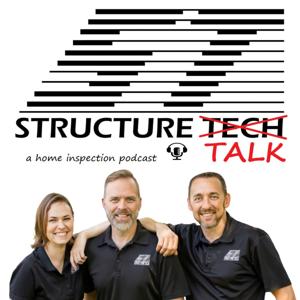
Structure Talk is a podcast about houses, home maintenance, home ownership, buying and selling houses, and of course, home inspections.
The show is hosted by Reuben Saltzman at
Our podcast is sponsored by Inspector Empire Builder.
Email us at [email protected]

16,689 Listeners

4,380 Listeners

32,776 Listeners
33,477 Listeners

46 Listeners

52 Listeners

2,647 Listeners
230 Listeners
380 Listeners

888 Listeners

9 Listeners

12 Listeners

33 Listeners

12 Listeners

3 Listeners